ReportDutch Games Association
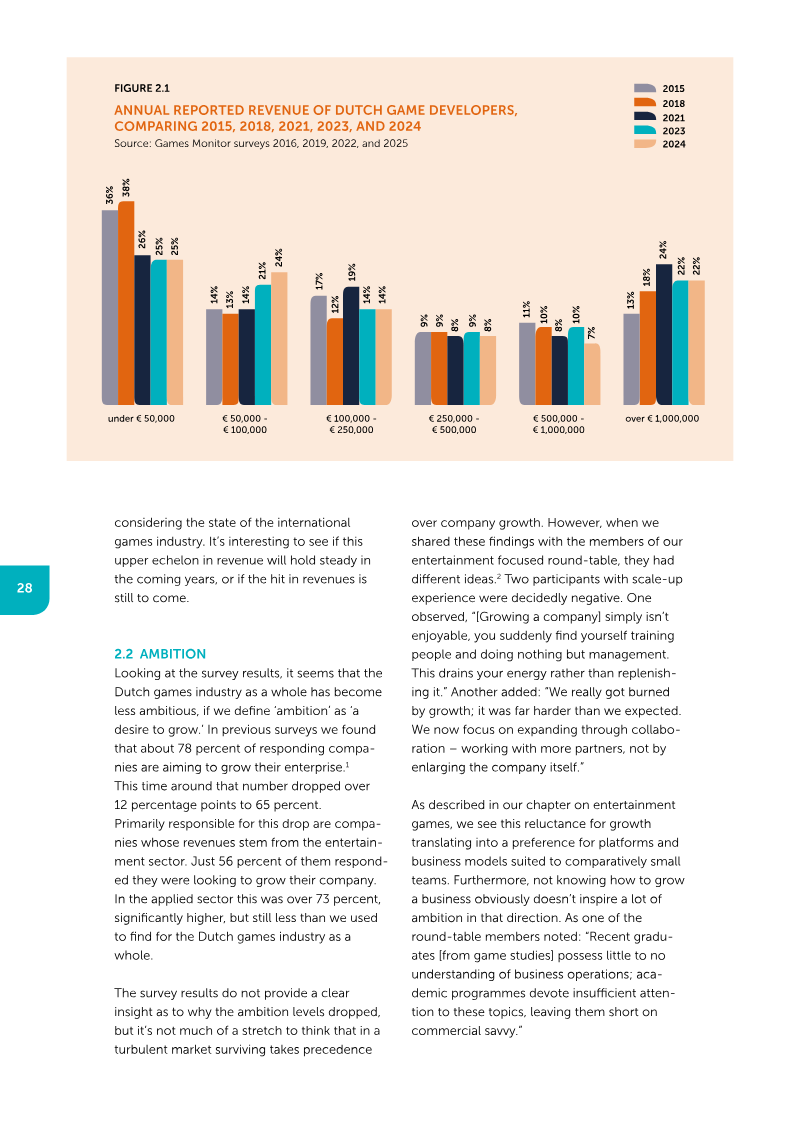
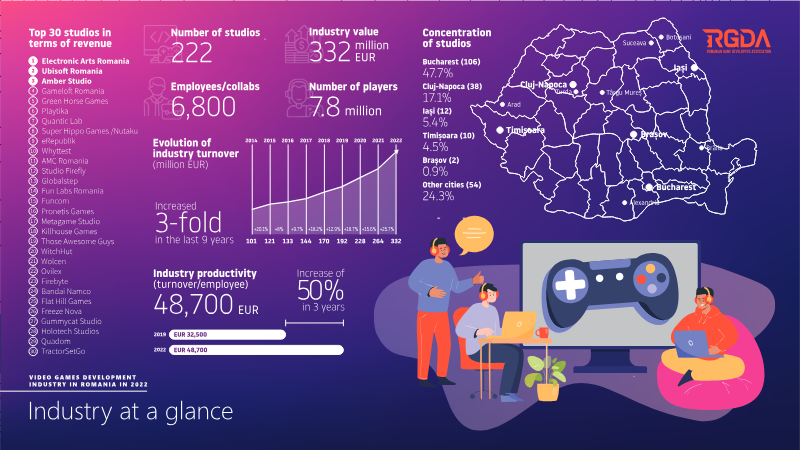
Employment decreased by 3% per year between 2021 and 2023. Revenue increased by an average annual rate of 10.5% to €763 million.
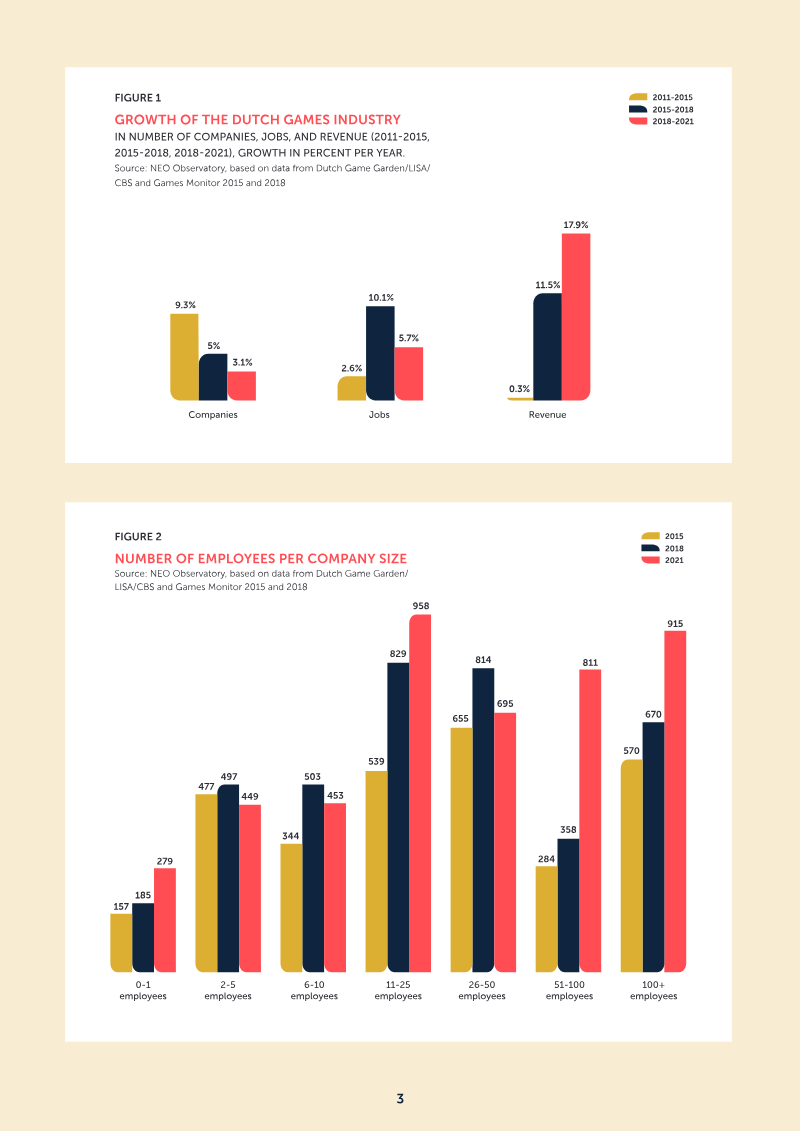
Page 18 of the reportThe Dutch games industry is currently navigating a period of maturation and consolidation, characterized by moderate financial growth despite a challenging global economic climate. Between 2021 and 2023, the sector reached 614 active companies and generated €763 million in revenue, representing a 10.5% annual increase. However, this financial performance masks underlying structural pressures, including a 3% annual decline in total employment to 4,291 jobs and a pervasive risk-aversion regarding aggressive scaling. While the industry has proven more resilient to post-pandemic downturns than its counterparts in the United States or the United Kingdom, it remains constrained by a lack of later-stage investment and a reliance on self-financing.
The industry landscape is increasingly polarized, with entertainment studios struggling against market saturation and the winner-takes-all dynamics of the premium PC market. In response, many developers are diversifying their strategies, exploring web-based platforms, and shifting toward software-as-a-service models, particularly within the applied games sector. This segment remains a vital component of the Dutch ecosystem, though it is evolving as gamification becomes a standard feature across broader corporate and international industries. Simultaneously, the integration of generative AI is accelerating, primarily for coding and pre-production, though entertainment studios remain cautious regarding the ethical implications of AI-generated assets.
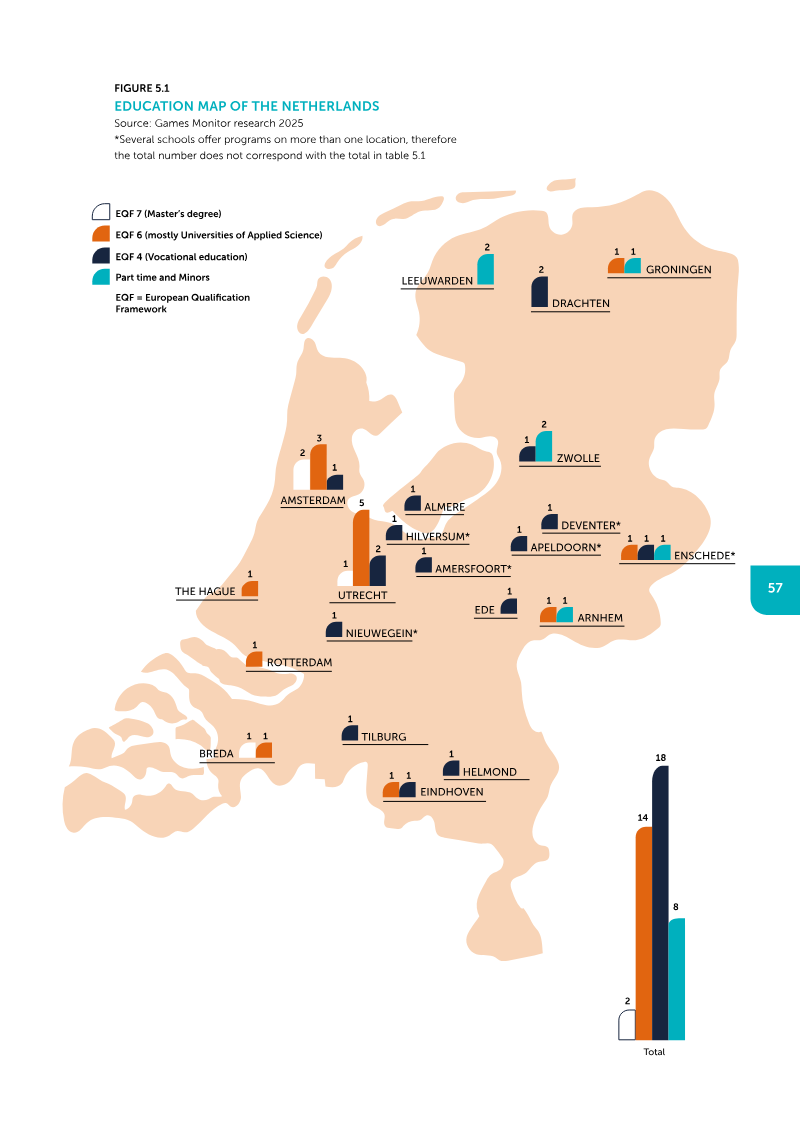
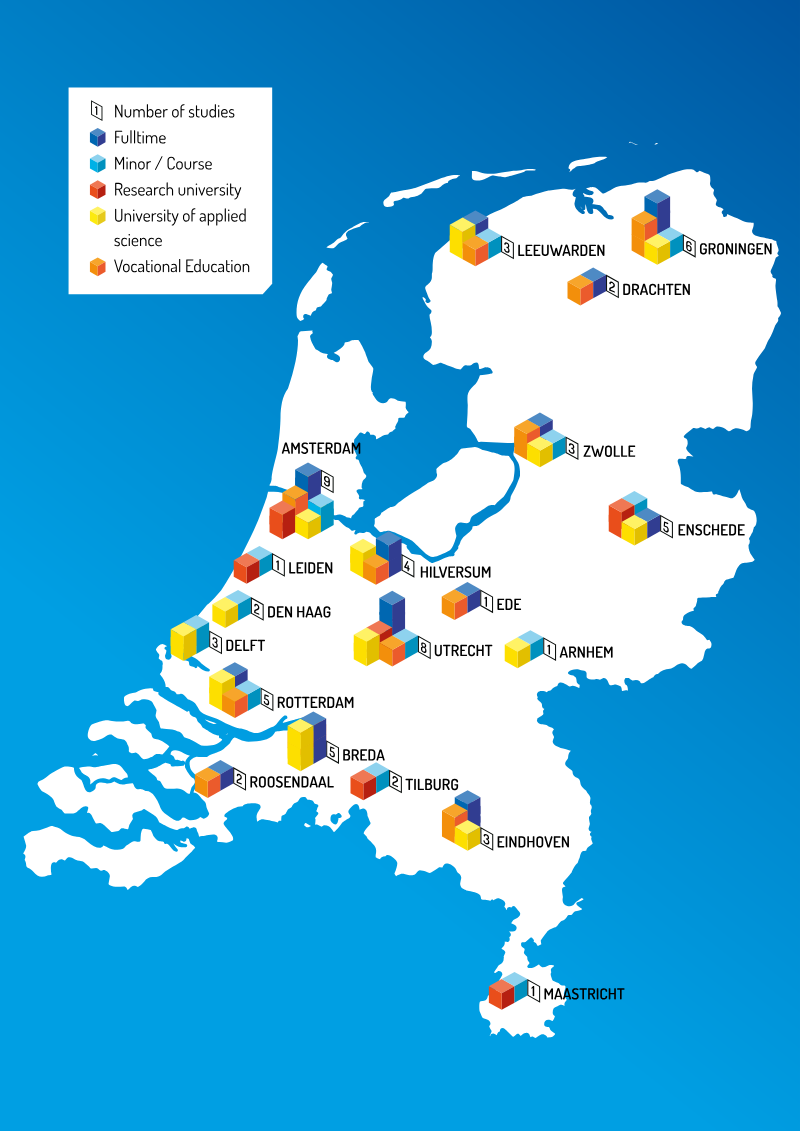
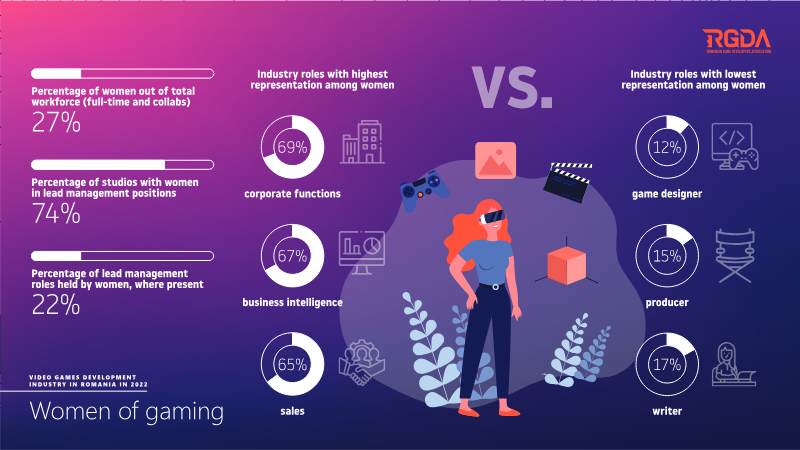
Human capital and sustainability remain critical areas of concern. While the workforce is becoming more diverse, with female and non-binary representation showing positive trends, the sector faces a demographic challenge as student enrollment in game-specific education programs declines. Furthermore, the industry’s environmental impact remains significant, with sustainability initiatives currently sidelined in favor of immediate financial survival. As the Netherlands seeks to solidify its status as a European "Rising Star," it faces a competitive disadvantage due to insufficient government support and tax incentives compared to neighboring nations, necessitating a strategic pivot toward organic growth and cross-sector collaboration to ensure long-term viability.
Dutch Games Association · 2022
Dutch Games Association · 2022
Dutch Games Association · 2018
Dutch Games Association · 2018
Dutch Games Association · 2015
Dutch Games Association · 2015
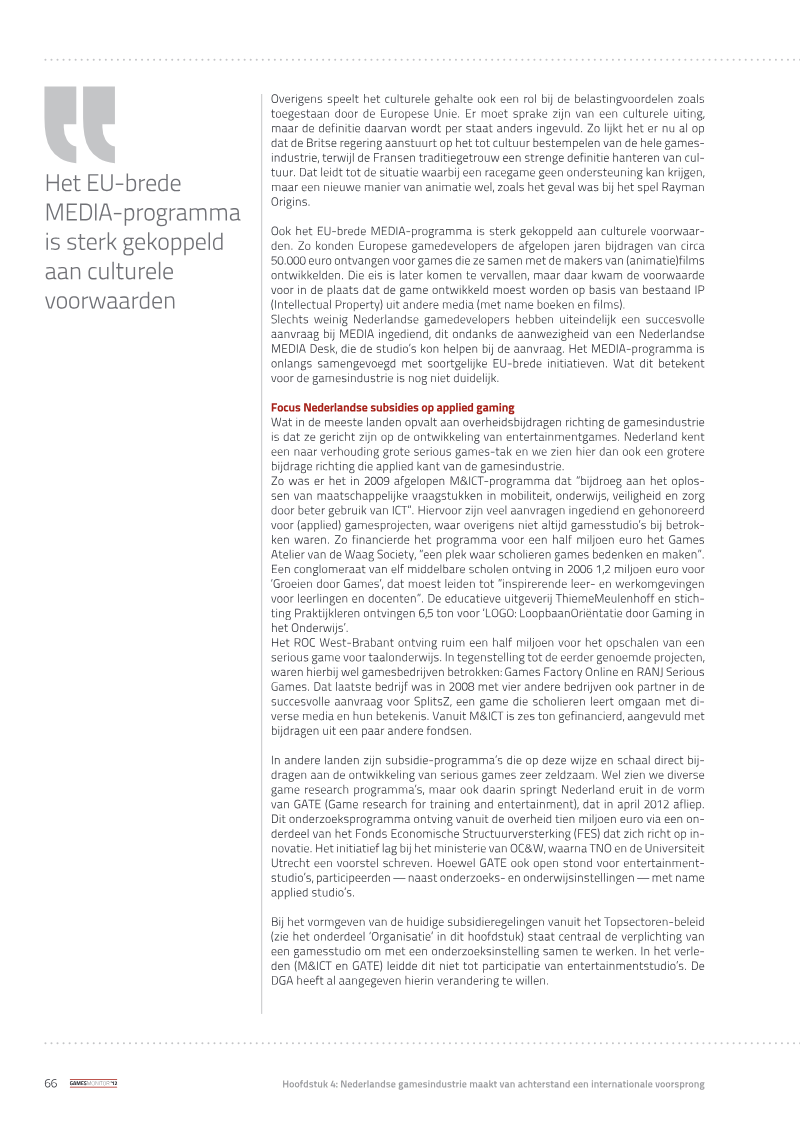
Dutch Games Association · 2012
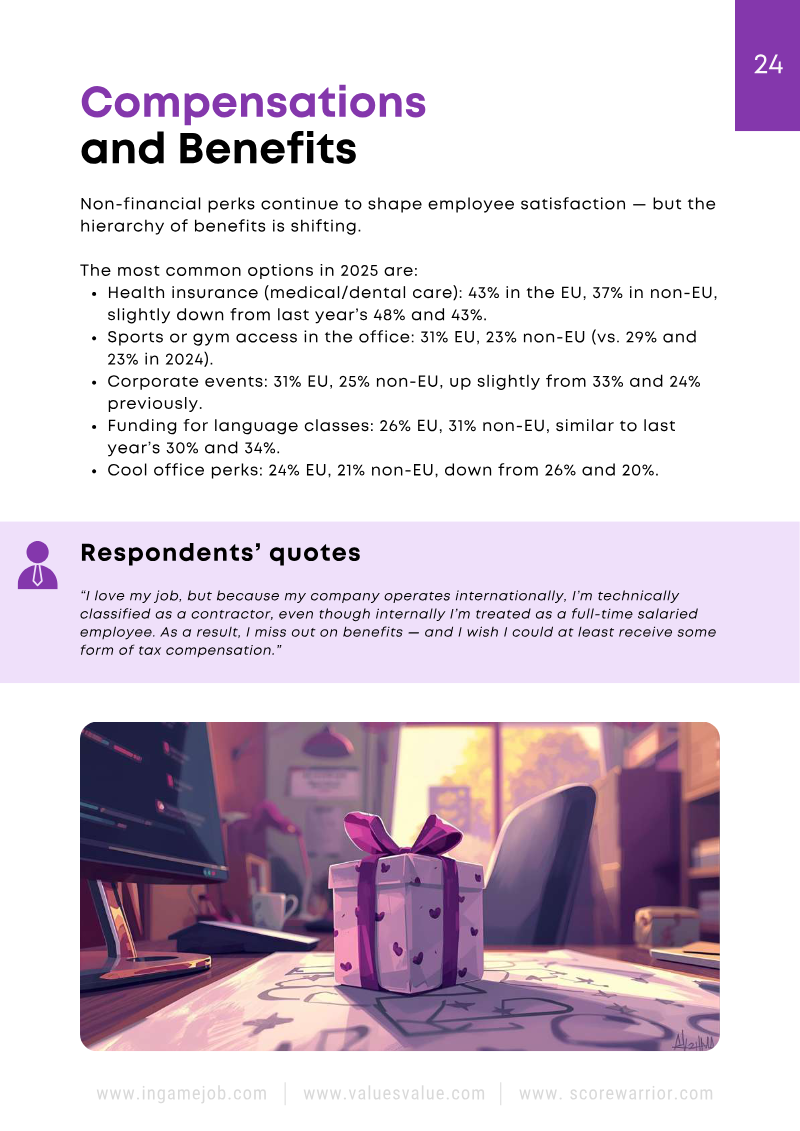
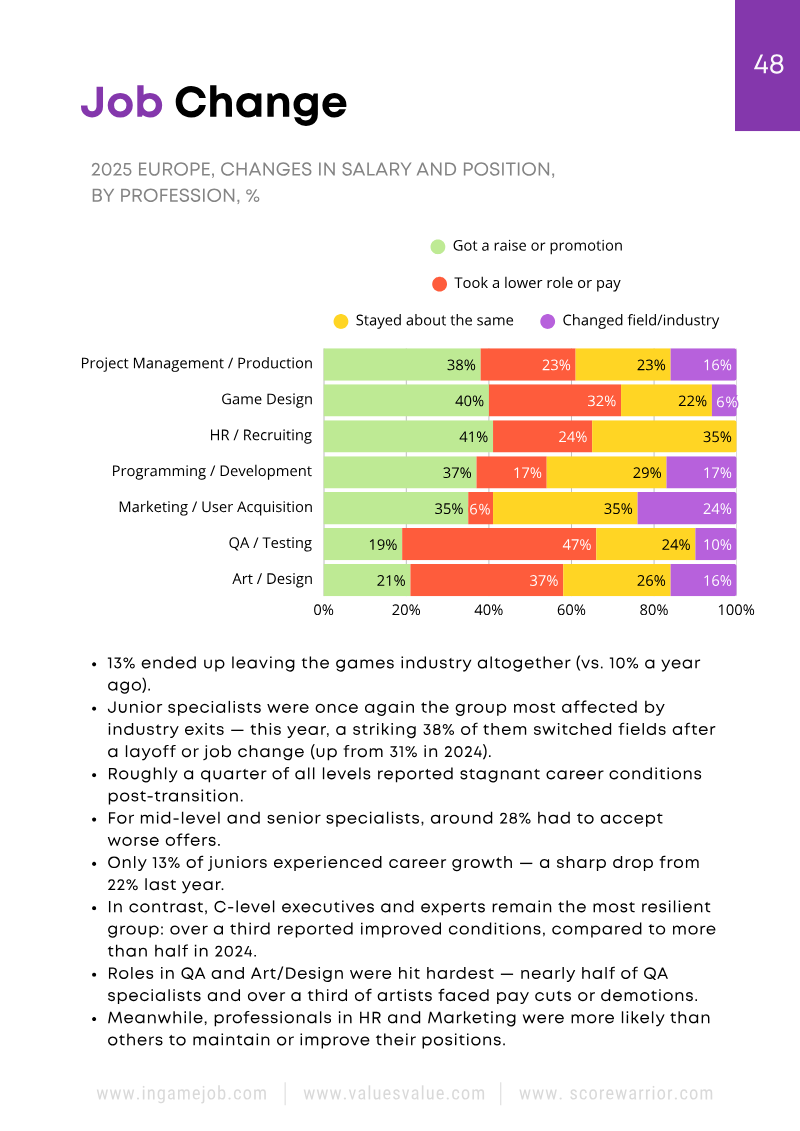
InGameJob & Values Value · 2025


Comments