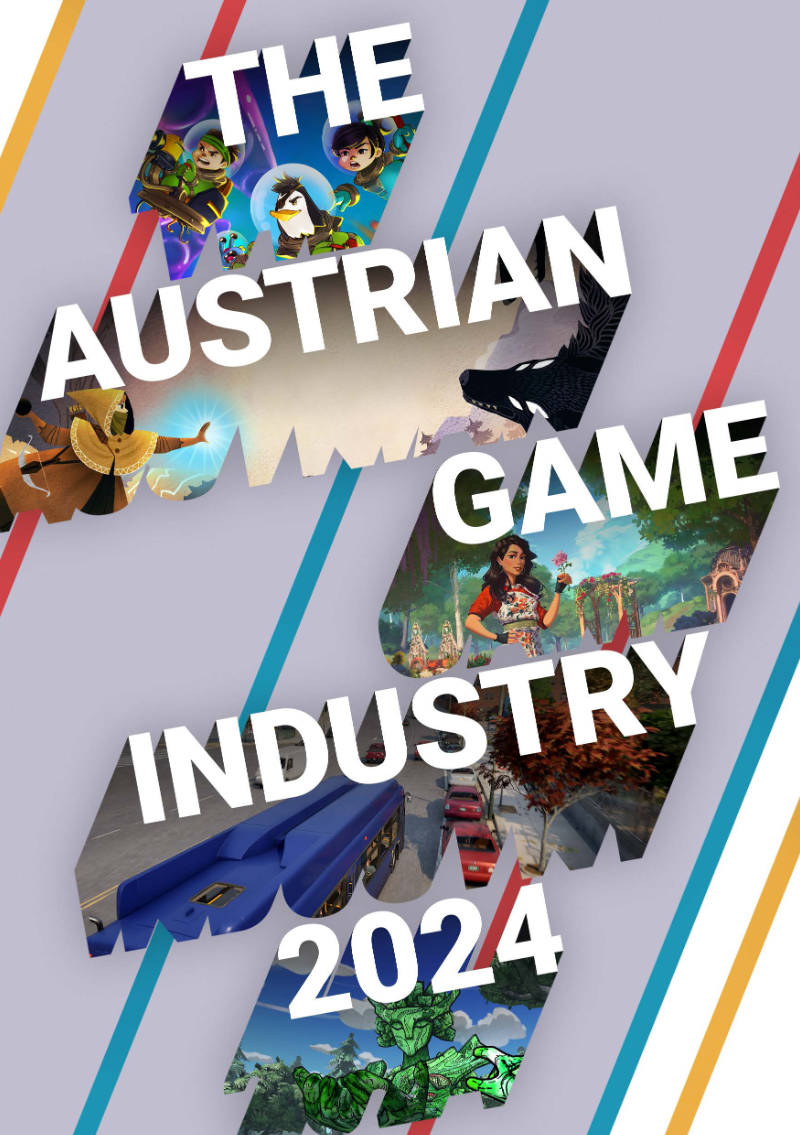
The Austrian Game Industry 2024
202420 pages~11 min full read
The Austrian game sector is portrayed as a youthful, fast‑growing cluster of predominantly small and micro enterprises whose economic relevance has expanded dramatically over the past six years. A 2023‑2024 survey commissioned by the Austrian Professional Association of Management Consultancy, Accounting and IT and executed by the Institute of Industrial Research gathered responses from roughly 150 active developers, with detailed data supplied by 78 firms on production output and by 23 firms on serious‑game activities. The study combines firm‑level questionnaires with macro‑economic modelling to assess direct, indirect and induced effects on the national economy.
Revenue generated by domestic developers reached €92.8 million in 2023, a nominal increase of more than 285 % compared with 2017, and still represents a 180 % rise after price‑level adjustment. Employment rose from 474 jobs in 2017 to 1 080 in 2024, a 128 % increase, and the sector’s multiplier effect creates roughly 2 260 jobs across Austria. Projections that assume a slowdown to one‑third of recent growth still forecast revenues of €149 million and a workforce of over 1 500 by 2029. In the preceding three years, the surveyed firms produced 405 games, while serious‑game developers now number 20‑30 companies employing 130‑150 staff, chiefly to raise awareness of social issues such as climate change.
The workforce is highly qualified: almost 80 % hold tertiary degrees, with the 25‑34 age group dominating. Educational provision is concentrated in three regional hubs—Salzburg, Upper Austria and Carinthia—where 25 university programmes supply the bulk of IT talent. Financing remains largely internal, with self‑funding cited by 92 % of firms; public subsidies rank second but are considered insufficient, reflected in the finding that 77 % of developers rate Austria’s location policy as poor or very poor. Nonetheless, only 5 % contemplate relocation, and the majority anticipate continued employment growth over the next three years.

8Bit · 2026

Ukie · 2025

Direcció General d’Innovació i Cultura Digital · 2025

InGameJob · 2025
Polish Agency for Enterprise Development · 2025
PGDA – Pioneers of Game Development Austria · 2024

European Games Developer Federation · 2016

Asociación Española de Empresas Productoras y Desarrolladoras de Videojuegos

Asociación Española de Empresas Productoras y Desarrolladoras de Videojuegos
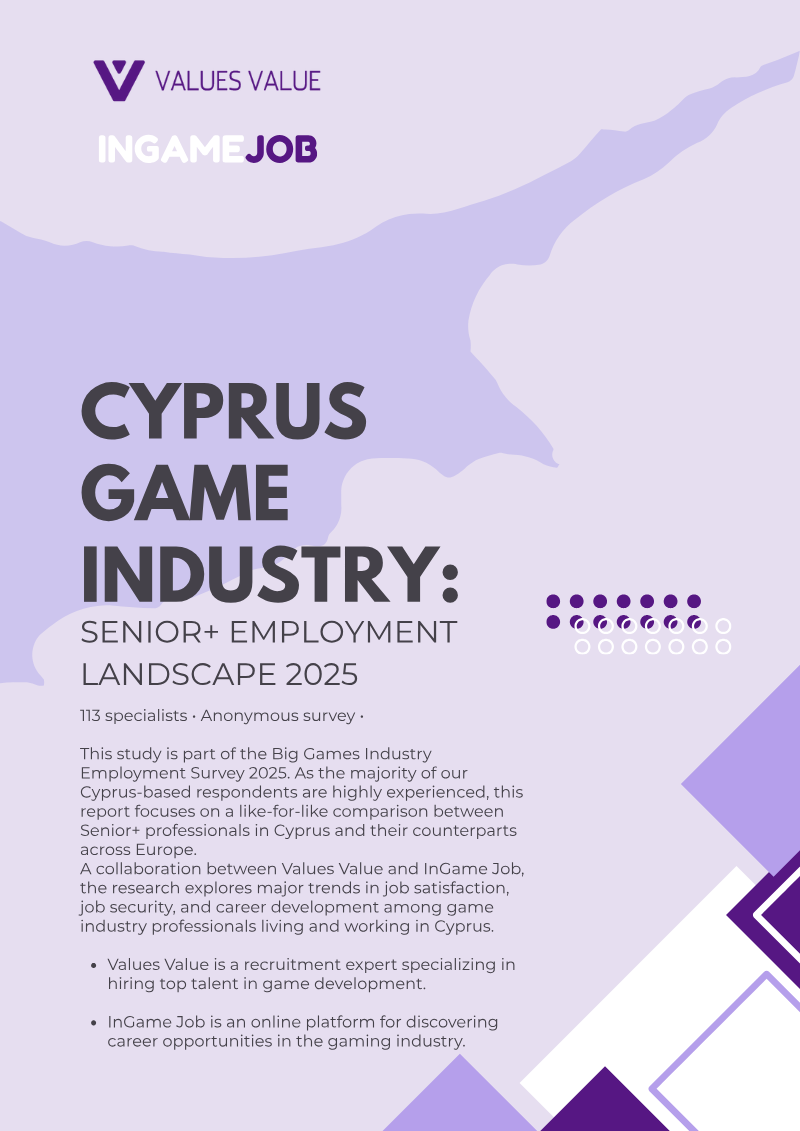
Values Value · 2026

PCF Group · 2025
PCF Group · 2025