Europe reports and market data
Documents
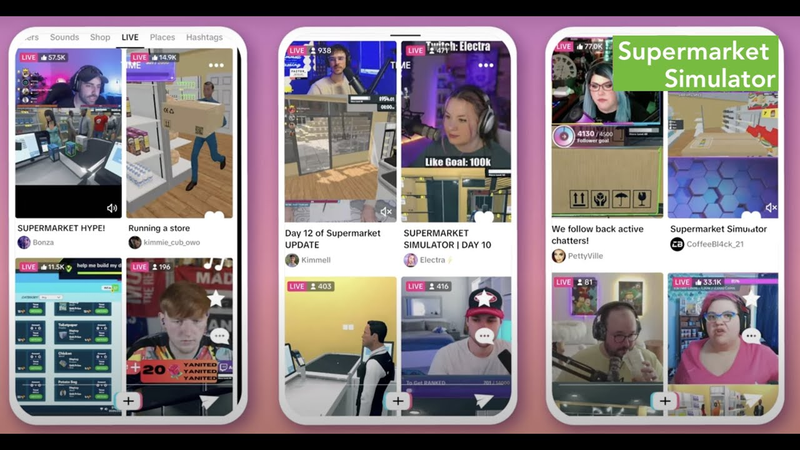
Supermarket Simulator Mobile: Why is it so popular? Start your own Supermarket now! (#109)
Supermarket Manager Simulator, developed by Digital Melody, has emerged as a prominent example of the successful transition of PC-based simulation concepts to the mobile market.
- Digital Melody’s Supermarket Manager Simulator has achieved 1.5 million daily active users and $900,000 in monthly ad revenue by adapting PC simulation concepts for mobile.
- The game is currently under-monetized due to overly generous interstitial cooldowns and a lack of standard industry practices like banner ads in emerging markets such as Brazil and Mexico.
- Analysts estimate that implementing basic optimizations, such as increased ad density and scaling payouts to player progression, could significantly boost current daily revenue figures.

AI Character in Games: Didimo's Journey with Veronica Orvalho | 343
The gaming industry faces a persistent bottleneck in the labor-intensive production of high-quality, diverse digital characters.
- Didimo has secured 17 million euros in funding to develop an AI-driven pipeline that automates 3D character creation for complex game genres like RPGs, MMOs, and simulators.
- The company’s technology integrates directly into existing game engine workflows to streamline character reconstruction while maintaining technical precision and artistic control.
- Didimo has established strategic partnerships with major industry entities, including Amazon, Sony, and Colossal Order, to validate its deep-tech solutions.
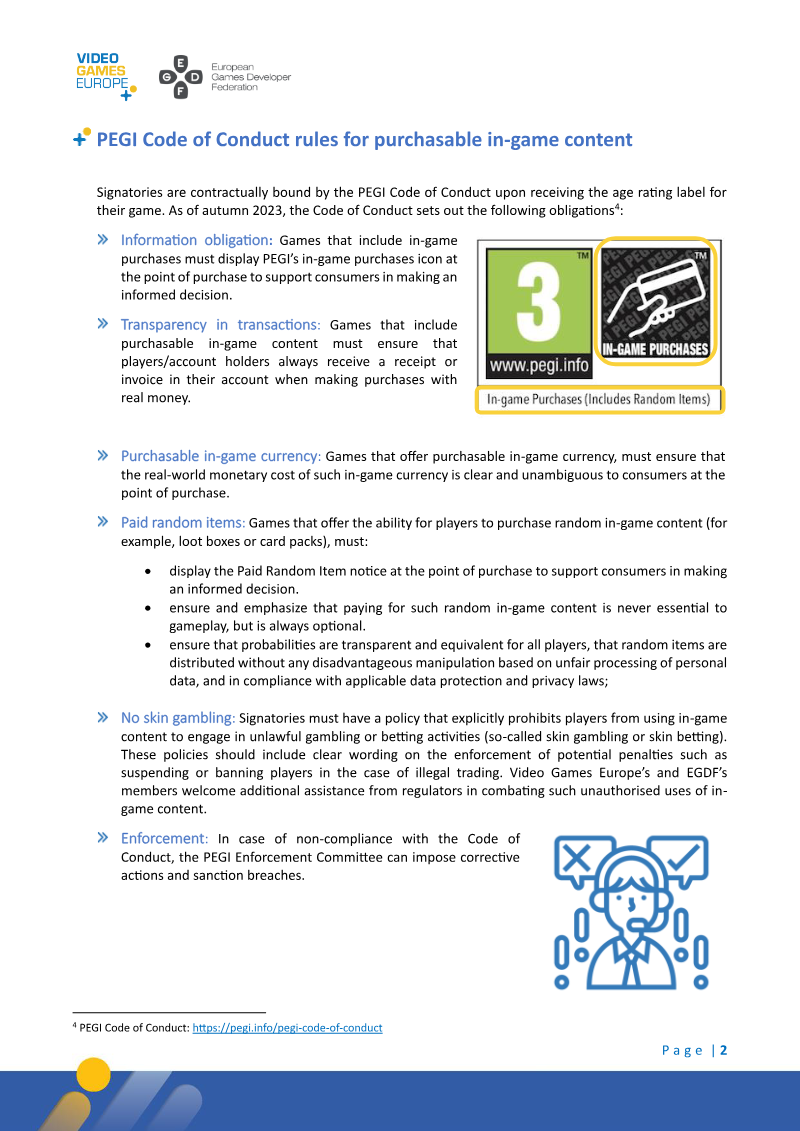
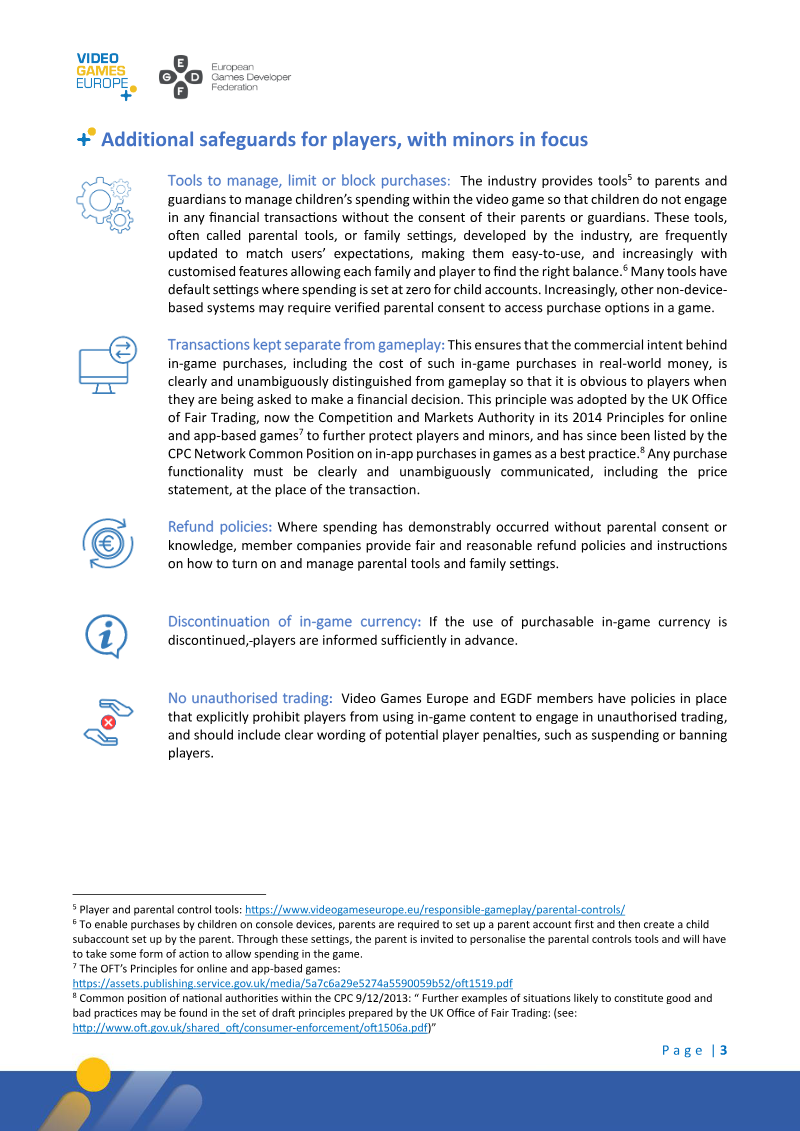
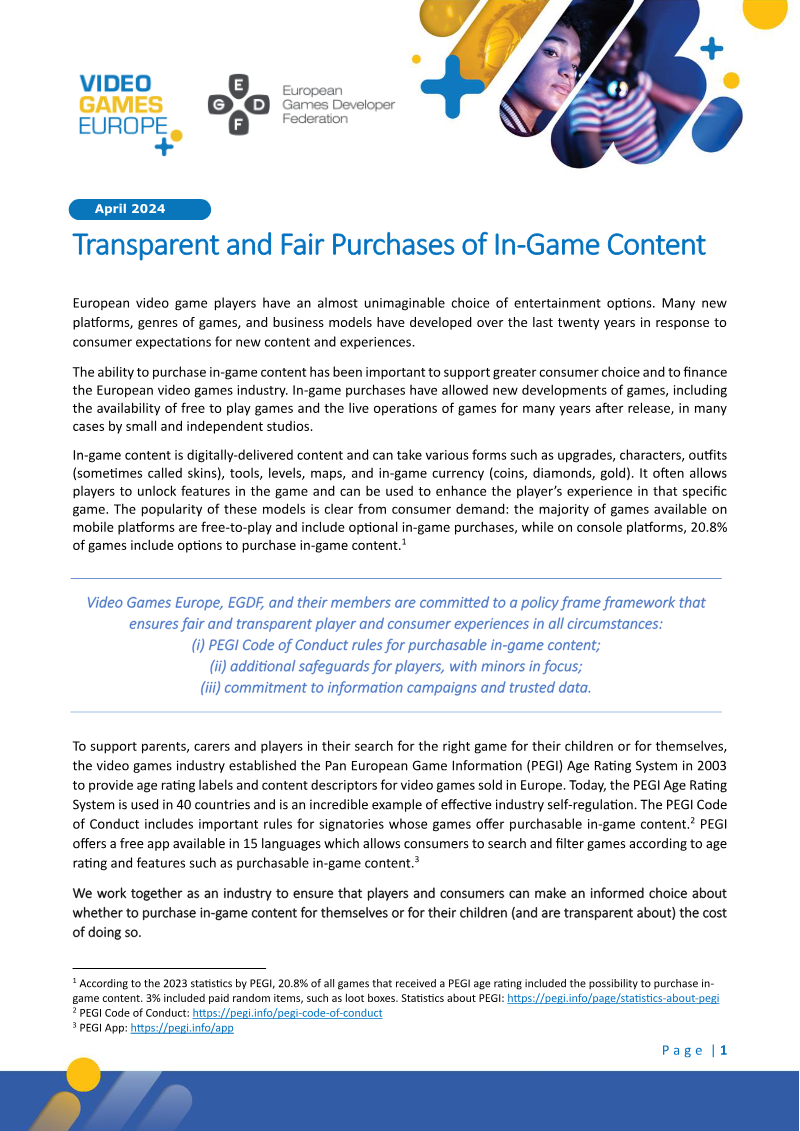
Transparent and Fair Purchases of In-Game Content
The initiative seeks to ensure that European players can make informed, transparent decisions when purchasing in-game content, while safeguarding minors from unintended spending.
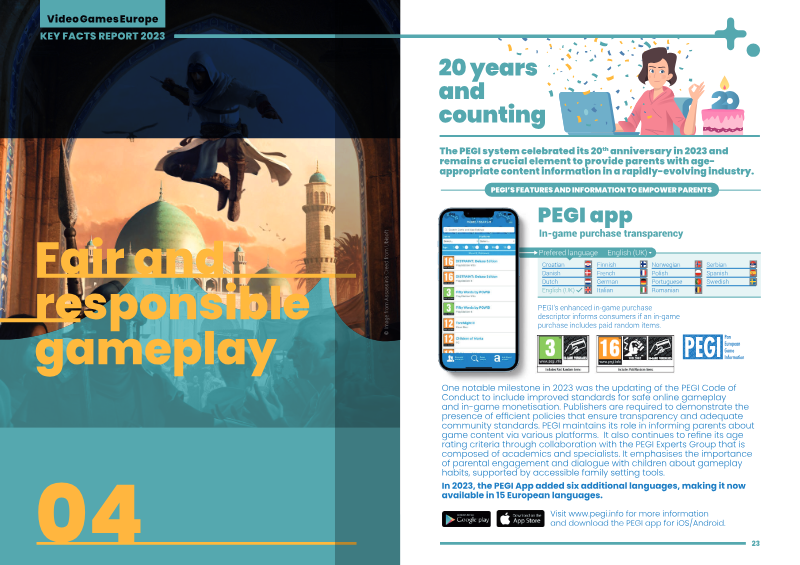
- The PEGI Code of Conduct mandates that signatories display purchase icons, provide receipts, and disclose real-world costs for virtual currency, while requiring transparent probability disclosures for paid random items like loot boxes.
- Only 20.8% of PEGI-rated games include in-game purchase options, with just 3% of all rated games offering paid random items.
- Parental supervision remains robust, with 76% of parents reporting their children do not make in-game purchases, a figure that has remained stable since 2020.


AI and Copyright
The paper advocates a balanced approach to artificial-intelligence deployment in the European video-games sector, emphasizing that AI should be nurtured as a driver of creativity and economic growth while preserving the core objectives of the existing copyright framework.
- The European video-games sector, valued at €24.5 billion with a player base comprising 53% of the population, advocates for a balanced regulatory approach that protects human creators while fostering AI-driven innovation.
- Generative AI tools should be classified as creative aids, meaning content remains eligible for copyright protection as long as it reflects the original choices of a human author.
- The industry supports the existing text-and-data-mining exceptions within the EU’s DSM Copyright Directive as the appropriate legal framework for training AI models, opposing any new legislation that could create market uncertainty.
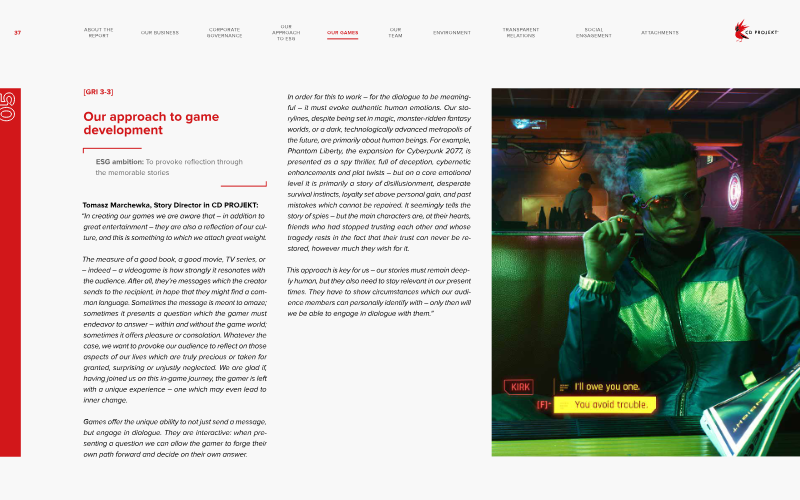
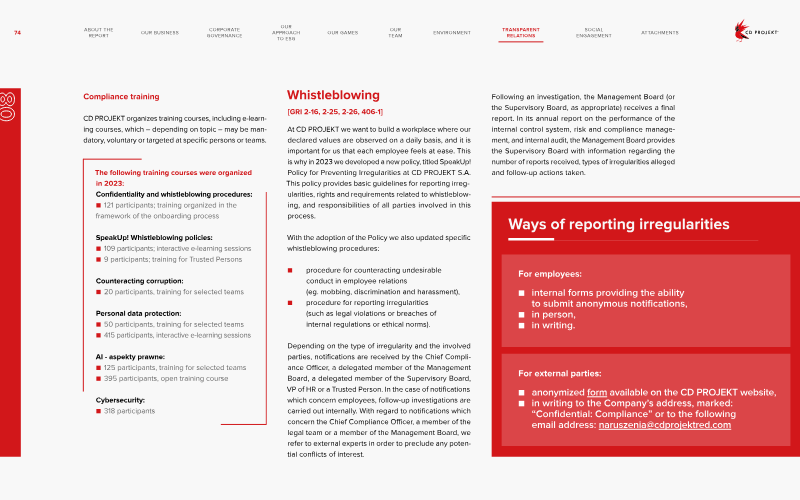

CD PROJEKT Group Sustainability Report 2023
The CD PROJEKT Group’s 2023 sustainability disclosure marks a pivotal transition toward formal non-financial reporting, aligning the organization with upcoming CSRD and ESRS standards.
- CD PROJEKT Group reported 1.23 billion PLN in consolidated revenue for 2023 while maintaining a global workforce of 1,168 employees.
- The company achieved high EU Taxonomy alignment, with 81.3% of revenue and 83.9% of capital expenditures classified as environmentally sustainable.
- CD PROJEKT became the first Polish game developer to secure EU EMAS certification, despite an increase in Scope 1 and 2 greenhouse gas emissions due to the return to office-based work.

The State of the European Game Industry: Unleashing Full Potential
The European game industry currently commands an 11 percent share of the global market, yet it faces a structural trade deficit characterized by a reliance on foreign distribution platforms and a lack of major publishing conglomerates.
- The European game industry aims to double its annual turnover to over 40 billion euros by 2030 to compete with the dominant U.S. and Chinese markets.
- Europe currently holds an 11 percent share of the global market but suffers from a structural trade deficit due to a lack of major publishing conglomerates and heavy reliance on foreign distribution platforms.
- Growth is currently hindered by an investment winter, high marketing costs, platform-imposed revenue commissions, and restricted access to user data.

A Mario Movie Sequel / Activision's New Union / Apple's EU Troubles / Toys x Games
The gaming industry is currently undergoing a period of structural transformation characterized by the aggressive expansion of intellectual property, shifting labor relations, and evolving regulatory pressures.
- Microsoft has officially recognized a 600-person union representing quality assurance staff, marking a significant shift toward collective bargaining in the North American gaming sector.
- The EU's Digital Markets Act now mandates that Apple permit third-party app stores and alternative payment methods, though restrictive compliance requirements continue to limit the practical benefits for developers.
- Major toy manufacturers like Mattel are shifting from traditional licensing to internal co-development and self-publishing to capture more value from digital-first younger demographics.
Call for Contributions - Competition in ‘Virtual Worlds’ and Generative Artificial Intelligence
Video Games Europe submits a focused perspective on competition in virtual worlds and generative artificial intelligence, emphasizing that both technologies are central to the European video-games sector’s ongoing innovation and consumer value.
- The EU video game sector remains highly competitive and dynamic, evidenced by over 5,500 active companies in 2021 and the entry of approximately 500 new developers in that year alone.
- Regulatory policy for virtual worlds and generative AI should rely on existing frameworks like the Digital Markets Act (DMA) and the AI Act, avoiding new, overly prescriptive legislation that could stifle innovation.
- While the industry is trending toward open standards and interoperability, mandatory interoperability requirements are discouraged as they risk impeding the development of diverse business models.

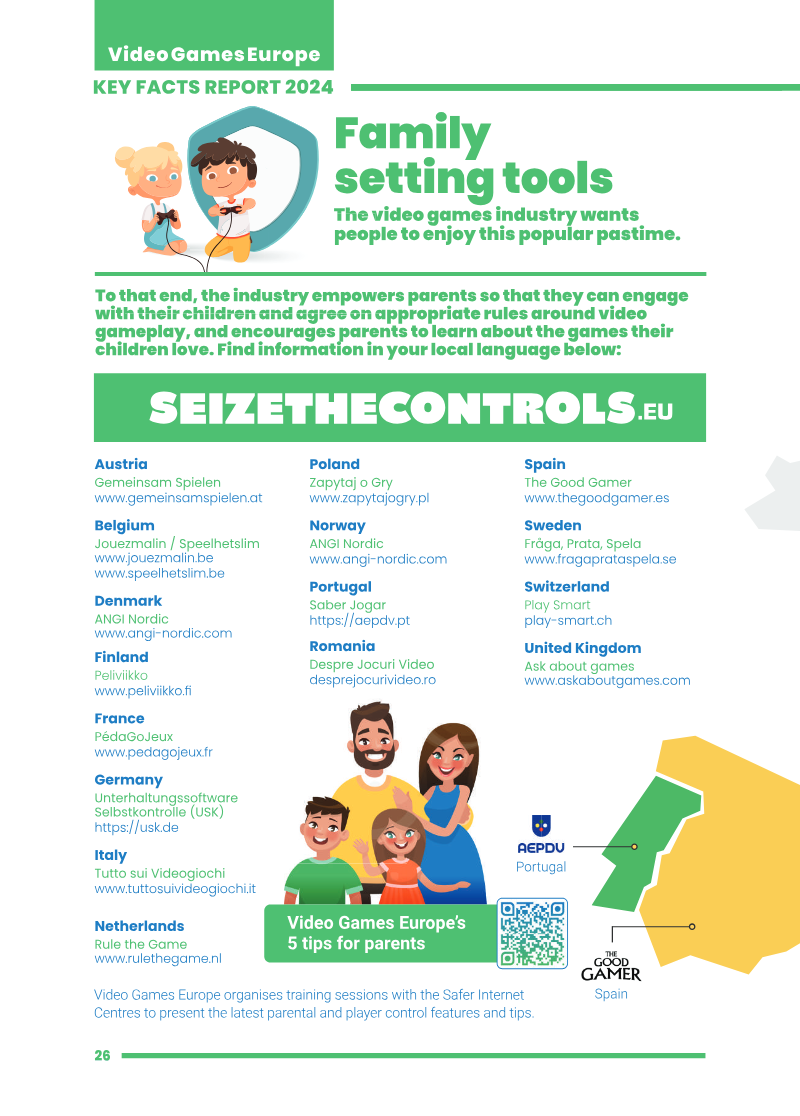
European Key Facts 2024: Video Games
The European video games industry represents a high-growth strategic sector that generated €26.8 billion in revenue in 2024, with digital channels accounting for 90% of all sales.
- The European video games industry generated €26.8 billion in 2024, with digital channels accounting for 90% of total sales.
- The sector supports 116,000 professionals across 6,000 studios and serves 127 million players, representing 54% of the European population.
- Mobile gaming is the primary platform in the region, utilized by 71% of the total player base.
European Key Facts 2023: Video Games Industry
The European video games industry is a significant cultural and economic driver, characterized by steady growth and a commitment to responsible gameplay.
- The European video games industry generated €25.7 billion in revenue in 2023, representing a 5% year-on-year growth.
- The sector employs 115,000 people across Europe, with 90,000 of those roles based within the EU.
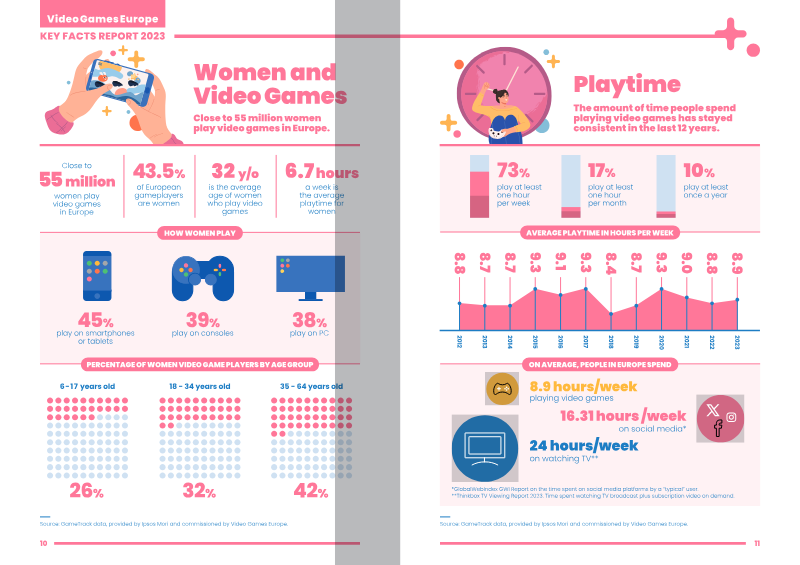
- Video games reach 53% of the European population aged 6–64, with an average player age of 31.4 years, 75% adult representation, and 43.5% female participation.
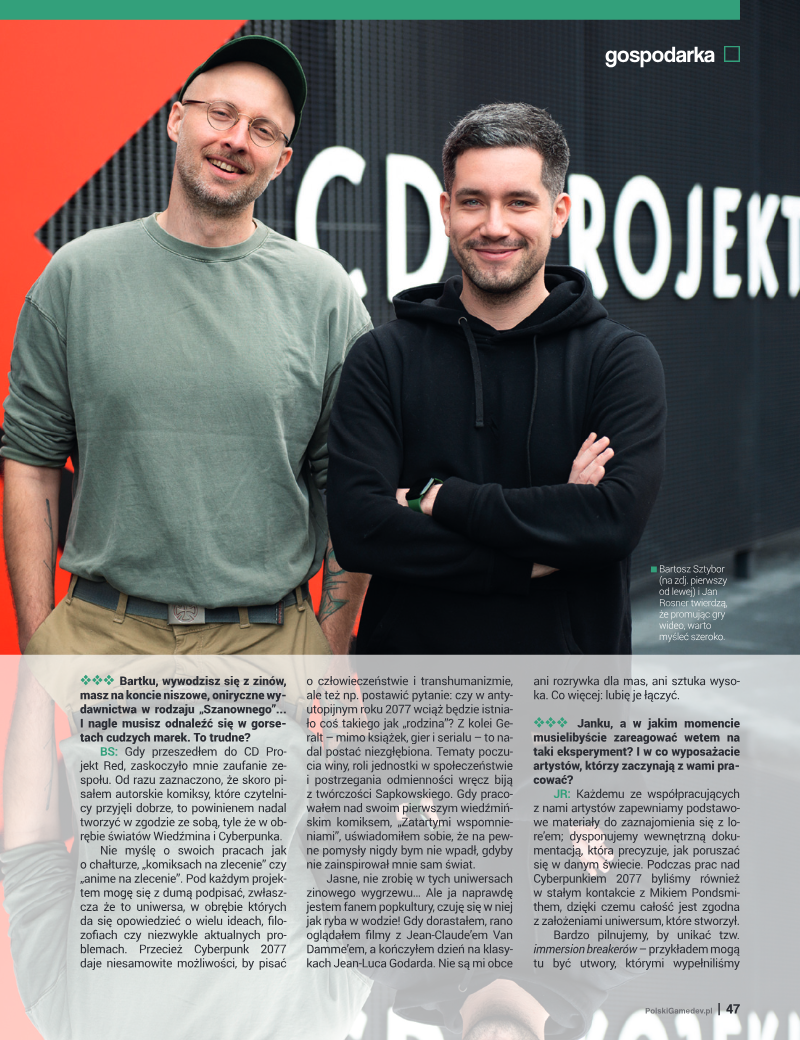
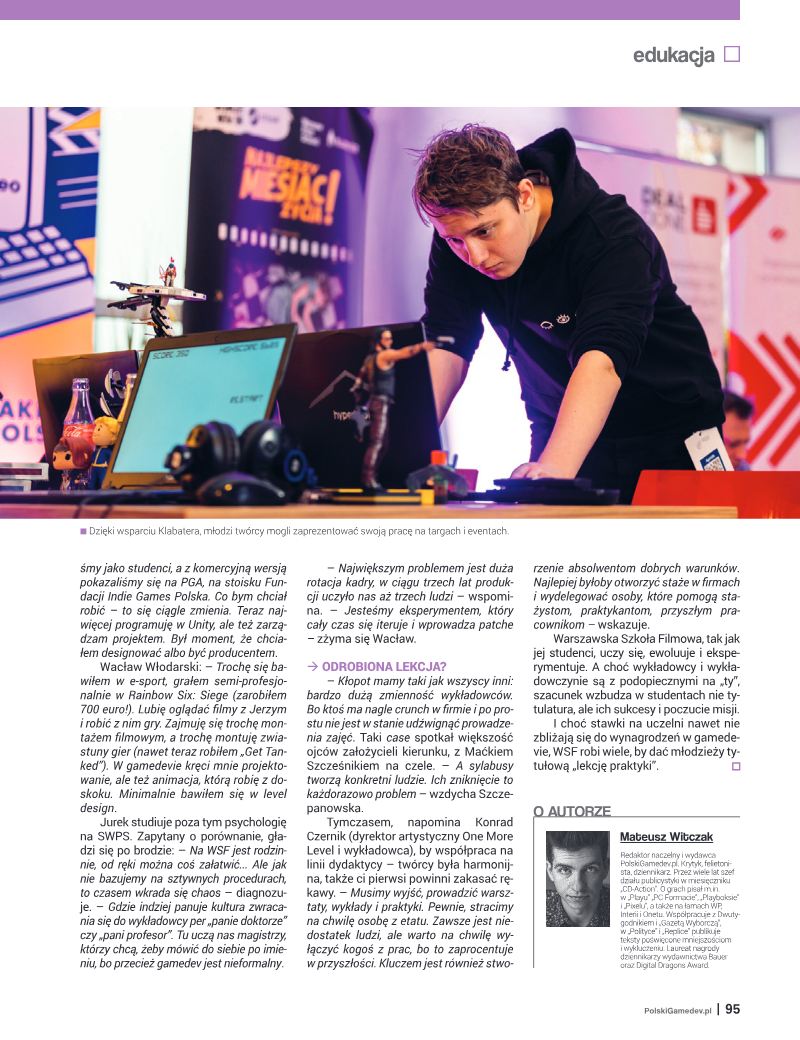

The Largest Report on the Condition of the Polish Gamedev Industry: 2022/23
The Polish game development industry has established itself as a significant global player, characterized by a strong export orientation and a reliance on digital distribution platforms like Steam.
- The Polish game development sector has transitioned from a period of rapid growth between 2019 and 2020 to a current landscape characterized by a flattening trend in both employment and the formation of new studios.
- Industry sustainability is currently threatened by high market volatility, insufficient capitalization, and high staff attrition rates driven by unsustainable 'crunch' work cultures.
- Polish studios are increasingly adopting advanced production technologies, specifically Unreal Engine, photogrammetry, and AI, to improve narrative depth and operational efficiency.

Fireside Chat: How the Home of Dead by Daylight has Stayed Independent. Charlie Scowen & Danni Pratt
Behaviour Interactive, a Canadian game developer with over 30 years of industry experience, maintains its independence by balancing original intellectual property development with strategic co-development services.
- Behaviour Interactive has maintained independence for over 30 years, currently employing over 1,300 people across six global studios.
- The studio enforces a strict 'no-crunch' policy, a culture spearheaded by CEO Rémy Racine that prioritizes work-life balance and employee retention.
- Behaviour Interactive utilizes a 'passion-first' service model, refusing to accept external development projects unless at least one team member is personally obsessed with the specific IP.