Esports statistics and market reports
Documents
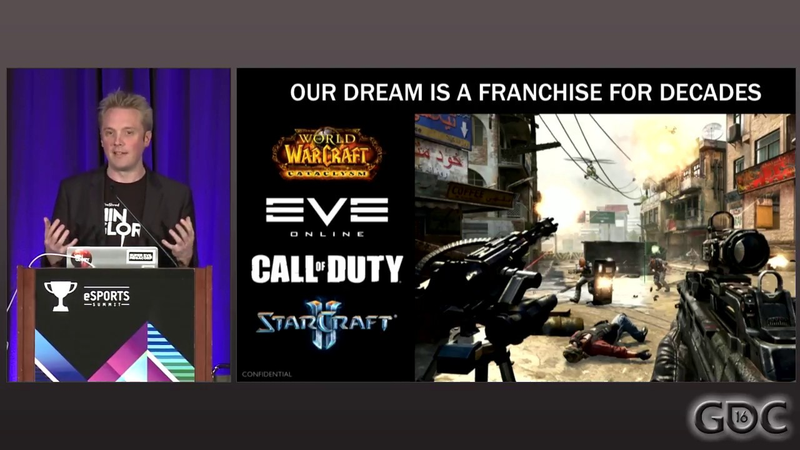
The Vainglory Story - 5 Lessons From Building a Touch Screen eSport
The mobile gaming industry is undergoing a fundamental shift as developers increasingly prioritize deep, core-gaming experiences over casual, short-form content.
- Competitive integrity is non-negotiable for mobile eSports; business models must be strictly orthogonal to player power to avoid the 'pay-to-win' stigma prevalent in the mobile industry.
- Successful mobile eSports require high-quality, low-latency networking optimizations to mitigate the inherent instability of Wi-Fi and LTE connections, as players will not use fixed-line networks.
- Contrary to industry assumptions that mobile sessions must be under three minutes, Vainglory successfully established a 20-minute average session length by prioritizing deep, competitive gameplay.

Storytellers of eSports
Storytelling serves as the foundational pillar of the esports industry, acting as the primary driver for fan retention and long-term community growth.
- Human-centric storytelling, rather than gameplay mechanics or prize pools, is the primary driver for long-term fan retention and community growth in esports.
- Organizations must shift from scripted public relations to authentic, character-driven narratives that highlight the personal journeys and rivalries of individual competitors.
- Content creators must prioritize clear narrative arcs over the inclusion of every prominent figure, often requiring ruthless editorial decisions to maintain engagement.
Understanding Media Rights in Esports
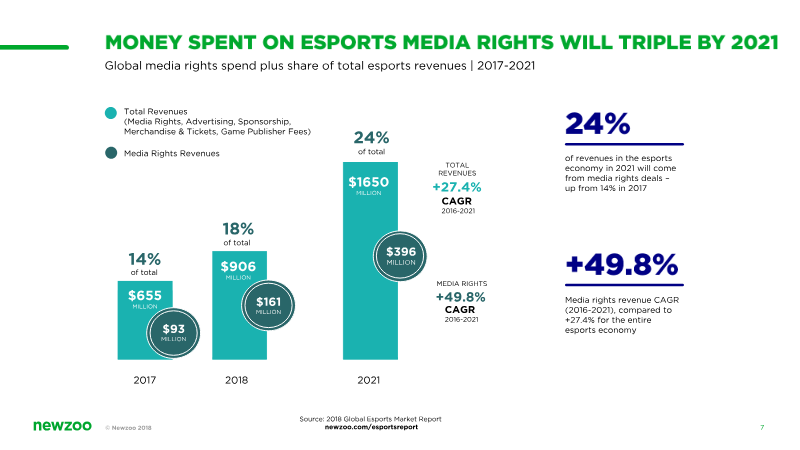
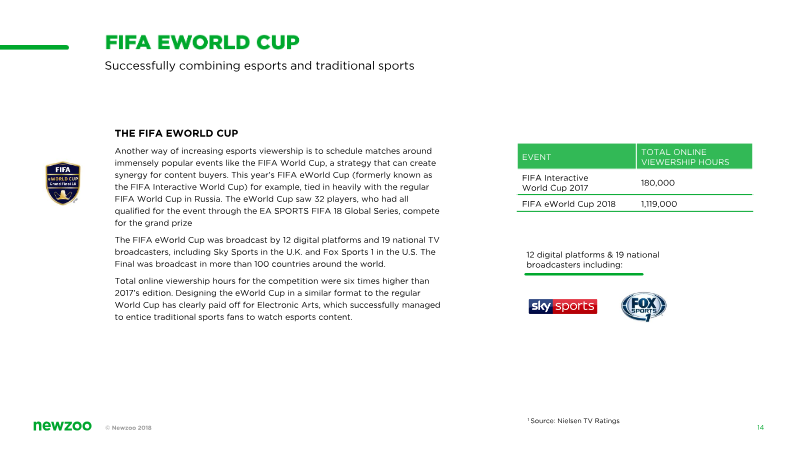
The esports media rights landscape is undergoing rapid expansion, positioning itself as the fastest-growing revenue stream within the global esports economy.
- Esports media rights revenue is projected to grow from 14% of total industry revenue in 2017 to 24% by 2021, with market value expected to rise from nearly $100 million to $400 million in the same period.
- North America dominates the global market with a 44% share of media rights revenues, bolstered by an established sports culture and the influence of major media conglomerates.
- The industry is increasingly adopting traditional sports business models, such as those used by the UFC, to maximize the value of esports properties.
2018 Global Esports Market Report
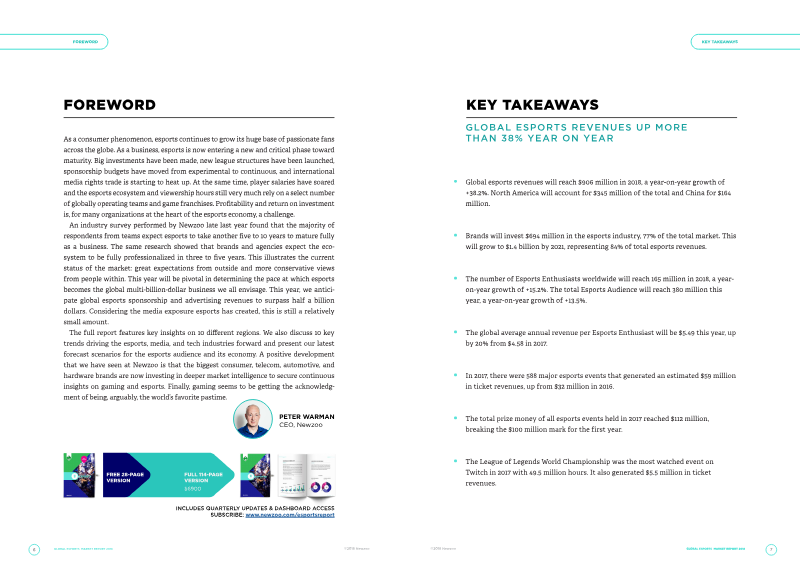
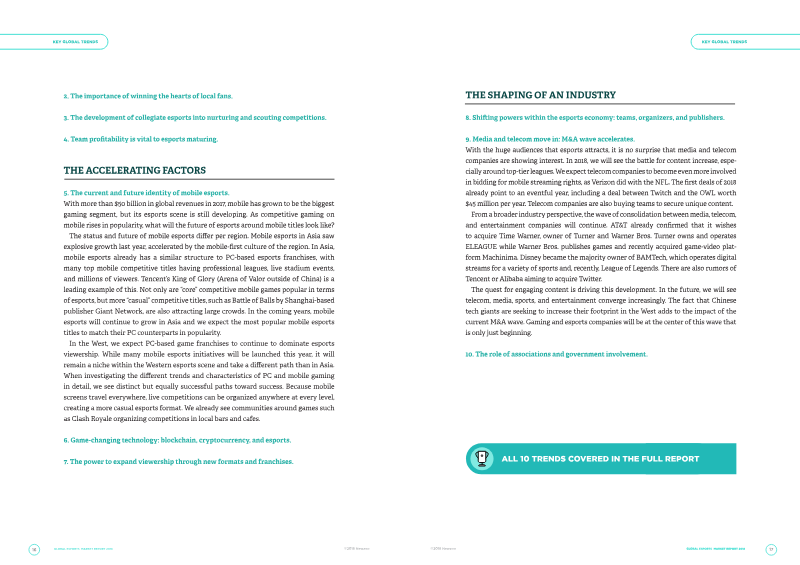
The 2018 Global Esports Market Report provides a comprehensive analysis of the esports industry as it transitions toward a mature, multi-billion-dollar business model.
- Global esports revenue is projected to reach $906 million in 2018, marking a 38.2% year-on-year increase.
- Brands drive 77% of total market revenue, signaling a shift from experimental spending to long-term sponsorship commitments.
- Media rights represent the fastest-growing revenue stream, with a projected compound annual growth rate of 49.8% through 2021.
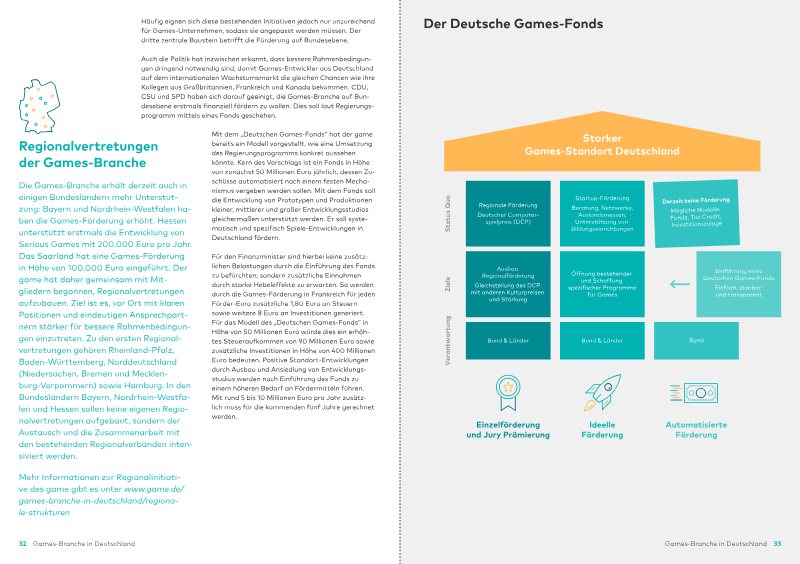
Jahresbericht der Deutschen Games-Branche 2018
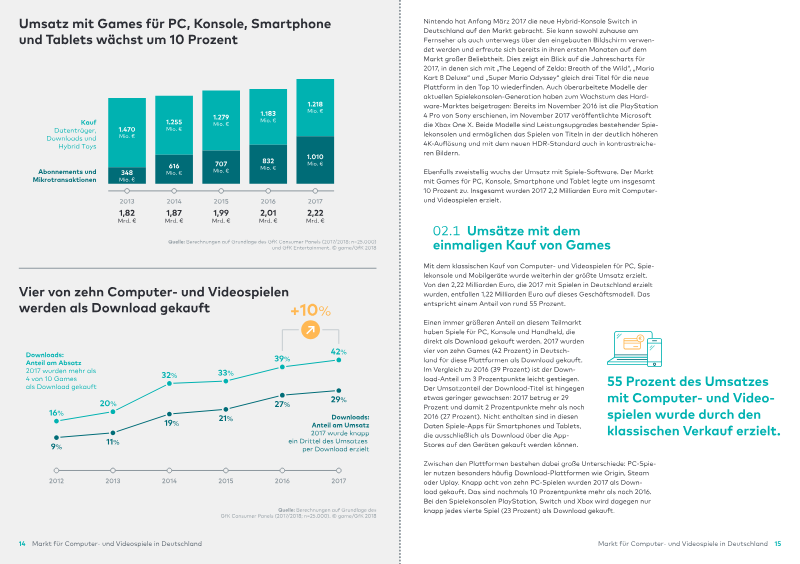
The German games industry experienced a transformative period in 2017 and early 2018, characterized by robust market expansion and a strategic consolidation of industry representation.
- The German games market generated 2.2 billion Euros in 2017, growing 10% from 2016. This growth was driven by a 21% increase in revenue from virtual goods and additional content (reaching 1.01 billion Euros) and a 57% increase in revenue from online network fees (reaching 179 million Euros).
- Smartphone gaming has surpassed PC as the most popular gaming platform in Germany, with 18.2 million smartphone gamers compared to 17.3 million PC gamers in 2017. Console gaming also saw significant engagement with 16 million players.
- The German games industry is largely mid-sized, with 90% of companies generating up to 5 million Euros in annual revenue. It also boasts a high export quota, with 46% of its revenue earned outside Germany, significantly higher than the music (9%) and film/TV (4%) industries.
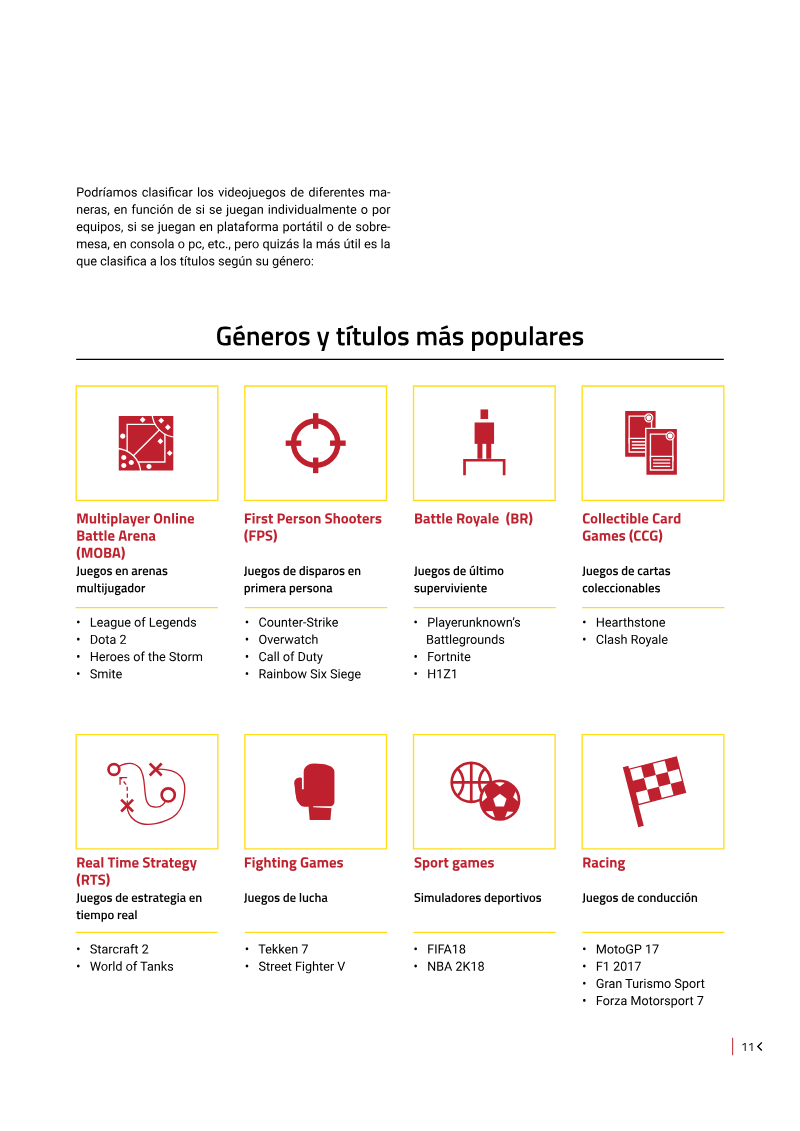
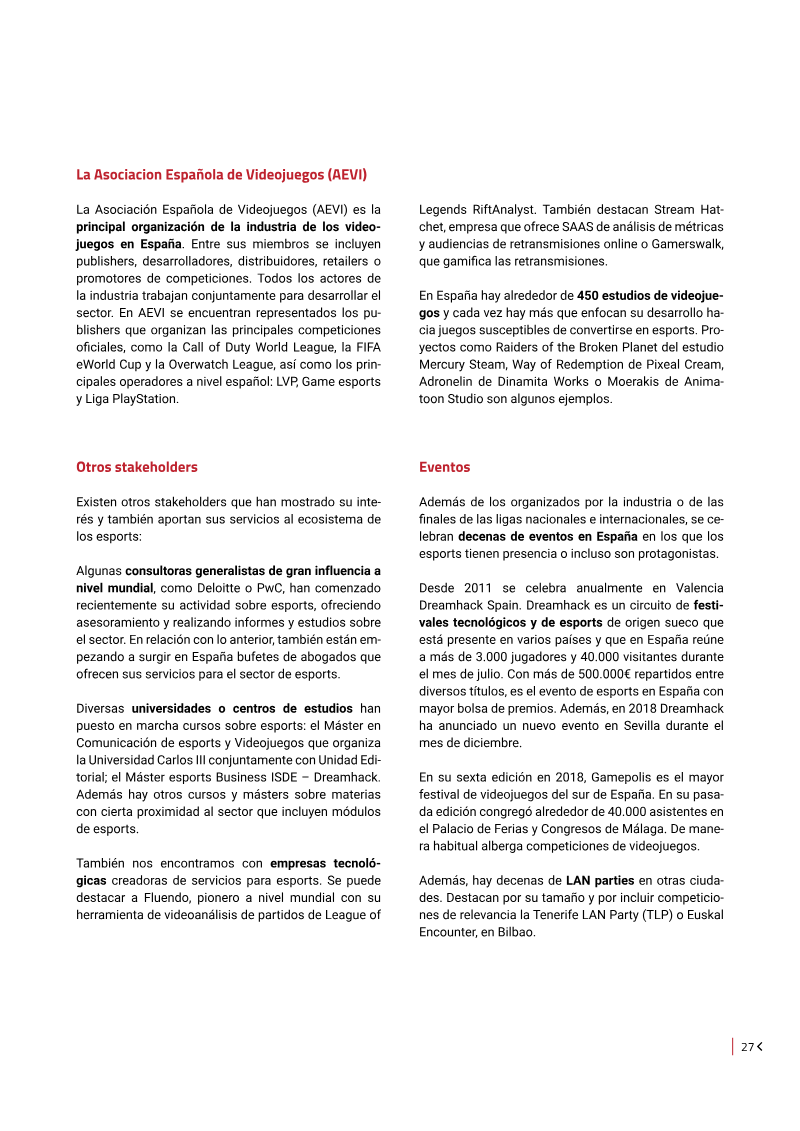

Libro Blanco de los Esports en España
Spain’s esports ecosystem is emerging as a distinct economic sector, yet it remains in an early-stage development phase.
- The Liga de Videojuegos Profesional (LVP) reached 9.7 million unique Twitch viewers in the first half of 2017, marking a 57 percent year-on-year increase.
- Spain's broader video game market generated €1.163 billion in 2016, providing a stable financial foundation for the emerging esports sector.
- Spanish esports teams are transitioning into professional limited companies that employ full technical staff and utilize structured gaming houses.
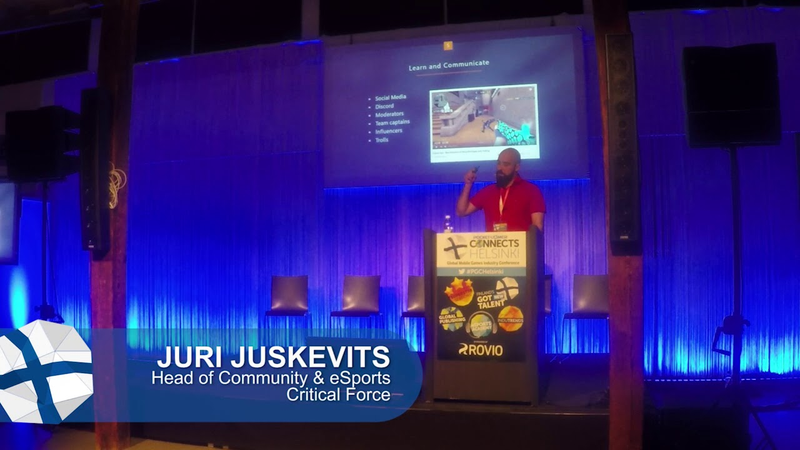
Critical Ops: A success story for mobile gaming
Critical Force achieved significant growth for its mobile first-person shooter, Critical Ops, by prioritizing community-driven development and grassroots engagement over traditional paid user acquisition.
- Critical Ops achieved over 28 million total downloads by prioritizing community-driven development over traditional paid user acquisition.
- The game sustains 65,000 to 75,000 daily organic downloads through a strategy that treats the player base as a development partner.
- Critical Force scales its community by supporting smaller content creators with resources and in-game promotion rather than relying on expensive, high-profile influencer marketing.
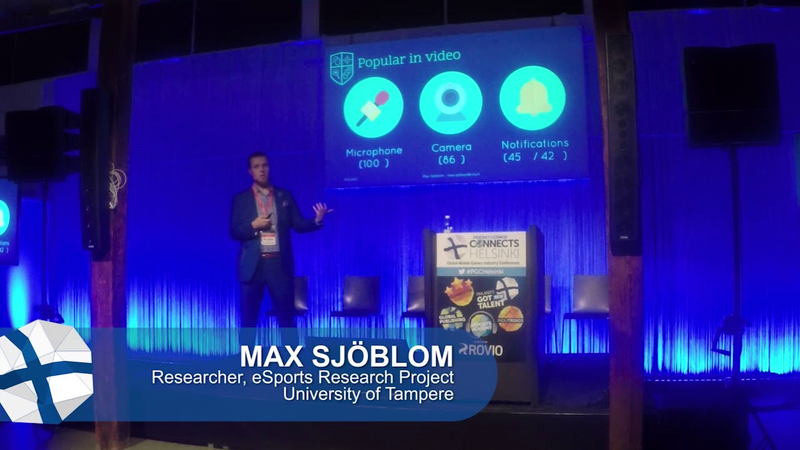
Elements of streaming – How streamers are building their content and why you should care
Streaming has emerged as a critical component of the modern gaming ecosystem, functioning in tandem with the growth of eSports.
- Developers should design for 'streamability' by incorporating downtime for audience interaction and utilizing Twitch API integrations for dynamic overlays.
- Games with minimal user interfaces or 'dead space,' such as Hearthstone, offer superior real estate for streamers to overlay sponsor banners and interactive graphics compared to information-dense titles like League of Legends.
- Successful streamers utilize real-time notifications for subscriptions and donations to trigger competitive viewer behavior, which serves as a primary monetization stream.
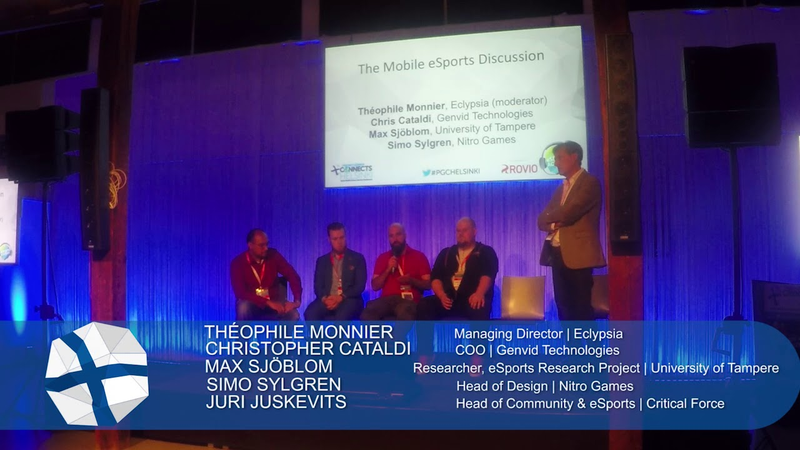
The mobile esports games discussion
The mobile esports sector is currently transitioning from a nascent, marketing-heavy phase toward a more sustainable model defined by organic community engagement and platform-specific innovation.
- Mobile esports must move away from imitating PC-based models and instead leverage the unique technical accessibility and platform-specific features of mobile devices.
- As of 2016, mobile titles already accounted for 30 percent of total esports prize money, demonstrating significant market scale.
- Long-term sustainability relies on developer-provided infrastructure that empowers grassroots tournament organization rather than relying on unsustainable, high-budget tournament production.
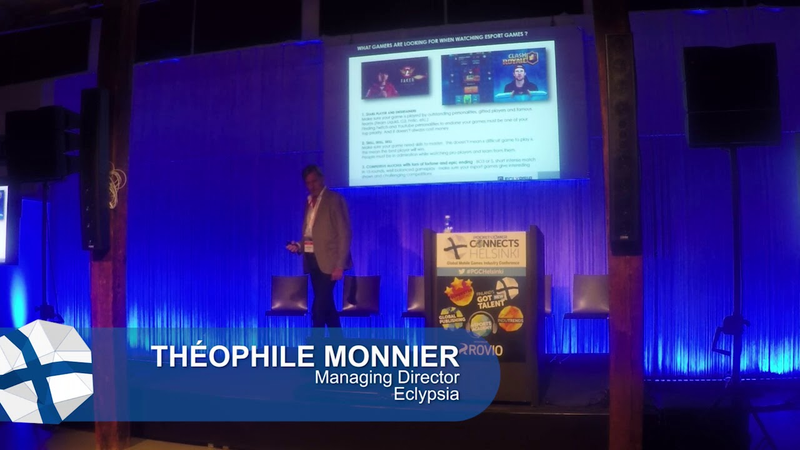
How to make your esports game media friendly
Esports serves as a powerful marketing and media vehicle for video game developers, offering a unique opportunity to generate organic coverage and reach large, engaged audiences.
- To ensure media friendliness, developers must prioritize a robust spectator mode, high-level skill requirements, and a clear visual language that allows viewers to easily follow the action.
- Maintaining competitive integrity is essential, requiring rigorous anti-cheating systems and the total avoidance of pay-to-win mechanics to ensure fair play.
- Developers should integrate real-time data and statistics into their games to enable casters and analysts to provide professional-grade coverage similar to traditional sports.
Piloting my way up – Being a competitive woman In gaming
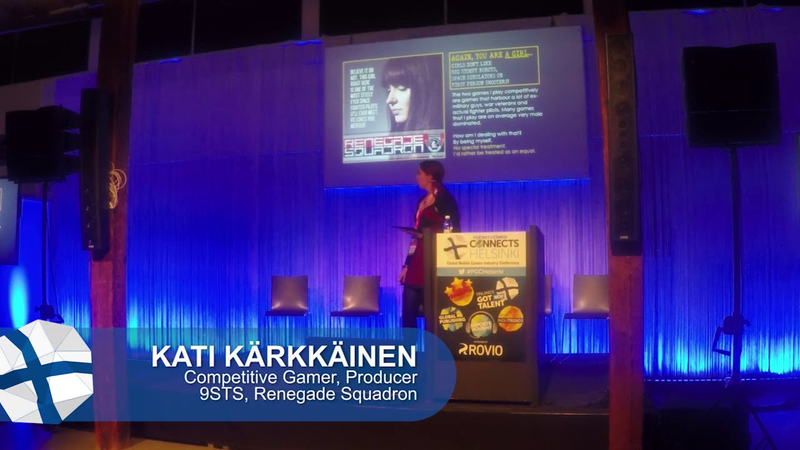
Kati Kärkkäinen, a producer and competitive gamer, explores the cultural and psychological barriers preventing women from participating in esports.
- The underrepresentation of women in esports is primarily driven by societal conditioning that discourages girls from developing traits like aggression, competitiveness, and assertiveness, rather than solely by harassment.
- Competitive success in high-performance gaming requires specific, non-gendered psychological traits including stress tolerance, resilience, and ego strength, all of which can be cultivated through deliberate practice.
- Women often gravitate toward games marketed to their gender or those perceived as requiring 'hard work' over 'brilliance,' reflecting broader societal beliefs about gendered capabilities.

An Overview of Esports in Europe: December 2017
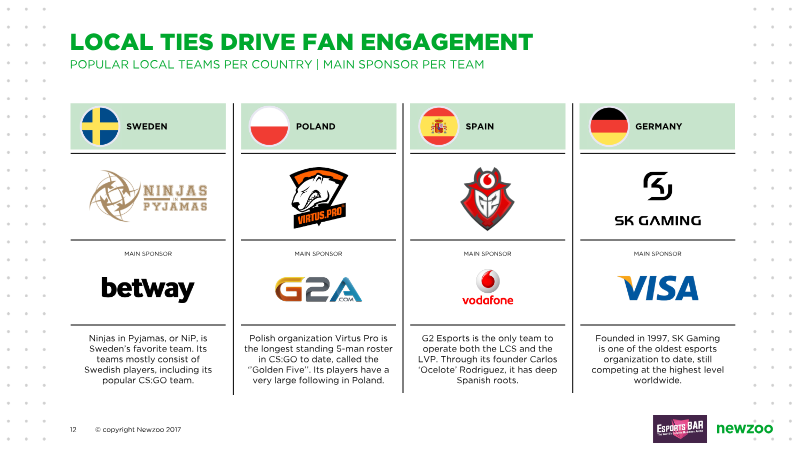
The European esports market is currently transitioning from an adolescent phase toward a mature, multi-billion-dollar industry.
- Europe is a major global esports hub, accounting for 32% of total global esports revenues and hosting over 70 million viewers in 2017.
- The European esports economy is growing rapidly, with total revenues projected to reach $403 million in 2017 and a CAGR of 32.3% expected between 2015 and 2020.
- Media rights revenue in Europe is a primary growth driver, forecasted to increase by more than 500% between 2016 and 2020.