Employment reports and market data
Documents

Tough Times at Naughty Dog and the State of Contract Work with Shora Farahani | Game Dev Unchained
The modern game development industry faces a critical sustainability crisis driven by an over-reliance on short-term contract labor.
- The game industry is facing a sustainability crisis driven by an over-reliance on short-term contract labor, which studios like Naughty Dog use to manage overhead and development cycles.
- The current reliance on temporary workers creates a high-pressure environment where junior staff engage in self-imposed crunch to prove their value, leading to high turnover and eroded team synergy.
- Studios are prioritizing short-term cost-cutting over long-term talent retention, a trend mirroring the visual effects sector that weakens the creative foundations of game development.

What COVID19 Closing all Game Dev Events Means for Indie Dev with Renee Gittins | Game Dev Unchained
The cancellation of major industry gatherings like GDC and E3 during the COVID-19 pandemic forced a rapid, structural transformation within the global game development sector.
- The cancellation of major physical events like GDC and E3 forced a permanent transition to remote-work models, which expanded the global talent pool while exposing infrastructure vulnerabilities in AAA studios.
- Independent developers are increasingly mitigating financial instability by prioritizing self-reliance, digital marketing, and the cultivation of strong personal brands to maintain project visibility.
- The industry is shifting away from unsustainable crunch culture toward talent-focused practices, with studios now competing for professionals by offering improved compensation and work-life balance.
How to Operate in a Brave New World | How Companies and Employees Must Change
The modern professional landscape is undergoing a fundamental transformation driven by the erosion of traditional corporate boundaries and the rise of digital transparency.
- Organizations can achieve efficiency gains of four to five times by moving operations from high-cost metropolitan centers to global hubs that offer tax incentives and lower labor costs.
- Corporate success now depends on culture and values as primary competitive advantages, as these human-centric elements are more stable than rapidly evolving technological innovations.
- Professionals should replace traditional resumes with a personal digital footprint, using public documentation of expertise to establish a 'PageRank' that serves as a more accurate indicator of value.
GameStop is an Essential Business? | Games ReCAP
The retail landscape for video games faced significant disruption during the early stages of the COVID-19 pandemic, highlighted by the controversial operational decisions of GameStop.
- GameStop faced severe financial instability entering the pandemic, reporting a negative free cash flow of nearly $500 million in fiscal 2019 and struggling to compete with digital distribution models.
- During the early pandemic, GameStop attempted to classify its physical storefronts as 'essential businesses' to remain open, a move that triggered widespread backlash from employees and lawmakers.
- Internal directives instructed staff to resist local law enforcement closure orders and use makeshift protective gear, such as plastic bags, leading to significant criticism regarding the prioritization of profit over employee safety.
Intuitive Practicality with Igor Puskaric | GduX.me
The professional trajectory of game developer Igor Puskaric illustrates the viability of self-taught career paths within regions lacking formal industry infrastructure.
- Self-taught developers can overcome geographic isolation and a lack of formal infrastructure by using digital platforms like Sketchfab to build international reputations and portfolios.
- Prioritizing high-quality, optimized asset production for marketplaces creates a dual-income model that combines passive revenue with a public portfolio that attracts high-value client work.
- Adopting the 'rule of cool'—trusting personal aesthetic judgment—allows artists to build flexible, efficient production pipelines that balance creative drive with market demands.

Career Options Beyond “Traditional” Game Development with John Podlasek | GduX.me
Game development expertise is increasingly transcending the boundaries of traditional consumer entertainment, finding critical applications in sectors such as architectural visualization, military modeling, medical simulation, and corporate training.
- Game development skills in programming, UI/UX design, and 3D modeling are increasingly being applied to high-stakes sectors including architectural visualization, military modeling, medical simulation, and corporate training.
- The maturation of engines like Unity and Unreal has enabled developers to solve complex, real-world problems that require high-fidelity technical sophistication outside of traditional consumer entertainment.
- Developers are transitioning to simulation fields to escape the high-risk, hit-driven nature of the AAA gaming industry, which is often characterized by market saturation and restrictive intellectual property policies.

Initial Research & Analysis Report: Higher-ed Programmes for Careers in Game Design & Development
The GAMEHIGHED project, a three-year Erasmus+ strategic partnership, examines the alignment between higher education and the evolving requirements of the global game industry.
- Higher education institutions face a persistent disconnect between traditional academic structures and the project-based, fast-paced requirements of the professional game industry.
- Successful programs like Bahçeşehir University’s BUG Lab and Charles University’s Gamedev Cuni effectively bridge the theory-practice gap by utilizing sandbox environments, game jams, and direct industry mentorship.
- European game development hubs in Poland and the Czech Republic are experiencing a significant talent gap, with current educational output failing to fill hundreds of annual job openings.
Challenges and Wins of Pausing the Game Industry with Collin Fogel | GduX.me
The modern game industry faces a systemic crisis defined by burnout, inefficient management, and a pervasive culture of crunch that frequently stifles creative autonomy.
- Systemic burnout and inefficient management in the modern game industry are primarily driven by a lack of structured pre-production and top-down production cycles that undermine creative autonomy.
- The prevailing culture of crunch forces high-level developers to adopt a transactional, emotionally detached relationship with their work to preserve mental health.
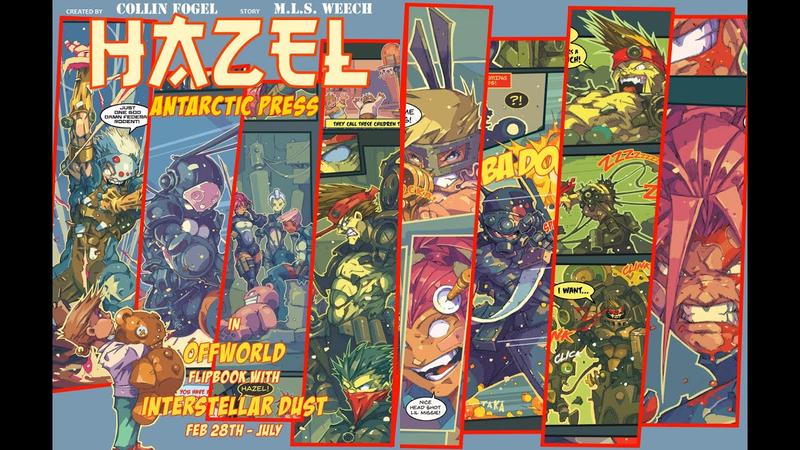
- Transitioning to independent creative pursuits, such as graphic novel development, allows artists to reclaim creative agency and develop original intellectual property outside of rigid corporate structures.

Surviving the Artist Apocalypse with Kinman Chan | GduX.me
Long-term career sustainability in the entertainment and game art industries depends on a strategic synthesis of technical proficiency, professional adaptability, and interpersonal intelligence.
- Long-term career sustainability requires transitioning from a focus on individual technical output to a broader professional identity centered on adaptability and interpersonal intelligence.
- Artists must treat their craft as a set of fundamental principles rather than static routines to facilitate pivoting across diverse sectors like management, AR, and VR.
- Creative stagnation typically manifests after five to ten years of professional practice, requiring proactive interventions to maintain innovation and prevent burnout.
5 Reasons Why Game Development is the Best Job!
Game development is presented as a premier career path, particularly for independent creators, due to its unique combination of financial potential, low operational barriers, and creative versatility.
- Indie game development offers the potential for six-figure earnings that frequently surpass the salary caps associated with traditional corporate design or marketing roles.
- The business model requires minimal overhead, as digital production eliminates the need for physical infrastructure and limits expenses primarily to personal salary and software subscriptions.
- Developers can maximize financial returns by 'double dipping,' which involves generating simultaneous revenue streams from game sales alongside ad revenue from content creation and live-streaming.
Scumbag Randy Pitchford Keeps Borderlands 3 Bonuses | Games ReCAP
Gearbox Software, a Texas-based game developer, has faced significant internal backlash following a decision to drastically reduce royalty bonuses for employees who worked on the commercially successful title Borderlands 3.
- Gearbox Software significantly reduced royalty bonuses for Borderlands 3 employees, despite the game achieving billion-dollar status as a global brand.
- The studio historically utilizes a compensation model featuring below-average base salaries supplemented by quarterly revenue-sharing bonuses.
- Leadership attributed the reduced payouts to increased development costs and an expanded headcount, specifically citing a mid-development transition from Unreal Engine 3 to Unreal Engine 4 that necessitated restarting production work.

After Crisis | Games & Life in a Post Coronavirus World
The global gaming industry currently occupies a complex position, serving as a resilient hedge against broader economic instability while simultaneously navigating a transition toward heightened capital caution.
- The gaming industry is experiencing a bifurcated market where major public companies benefit from high engagement, while growth-stage and independent firms face stalled funding and widespread layoffs due to investor risk aversion.
- Investors have shifted from opportunistic spending to a focus on data-driven capital preservation, forcing firms to abandon pre-crisis business plans in favor of adaptive, value-focused strategies.
- Mid-tier companies must prioritize operational momentum and strategic planning to survive the current climate, as they lack the insulation enjoyed by large-cap entities.