Employment reports and market data
Documents

Annual Report of the German Games Industry 2021
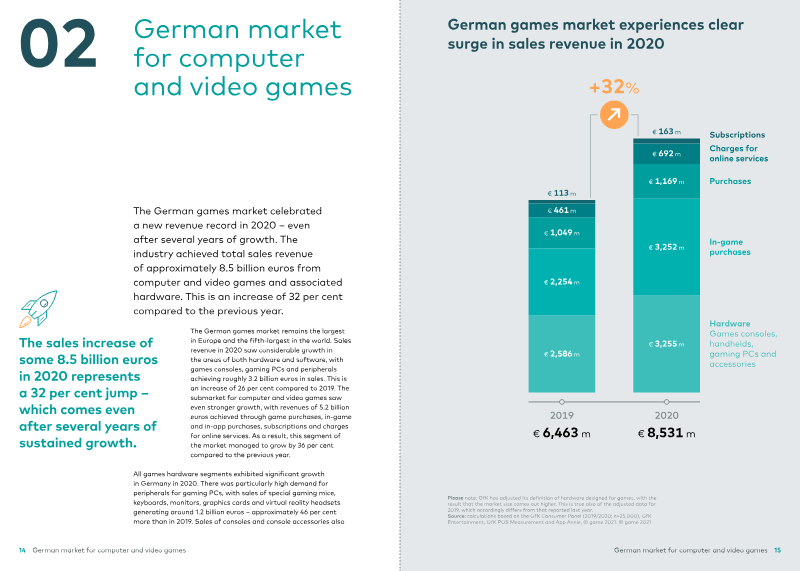
The German games industry achieved unprecedented expansion in 2020, recording a 32 percent revenue increase to approximately 8.5 billion euros.
- The German games market experienced significant growth in 2020, with overall sales revenue increasing by over 30% due to the COVID-19 pandemic. Hardware sales, including consoles and gaming PCs, reached a record high, and subscription services saw a 44% increase in sales revenue.
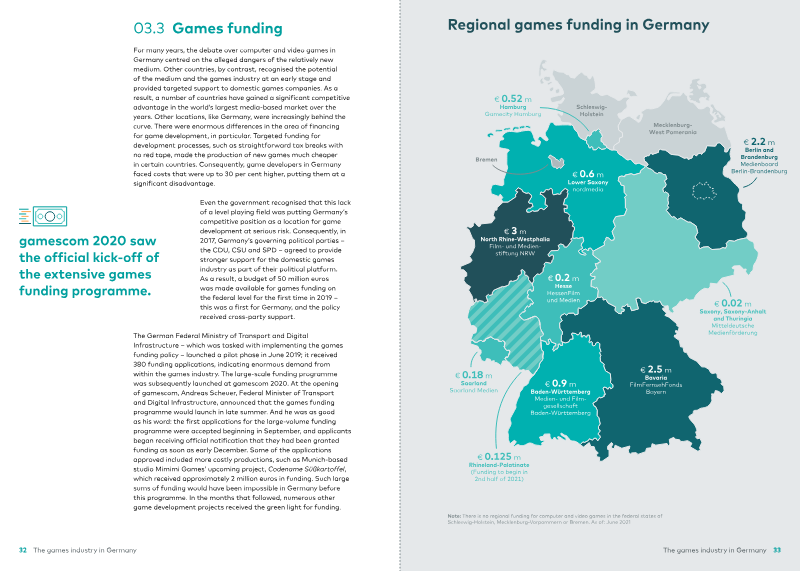
- Germany launched a major EU-notified games funding guideline in late 2020, with several studios receiving over one million euros in funding, marking a significant first for the country's games industry.
- The number of companies in the German games industry increased by 5% for development and publishing companies and 7% for publishing-focused companies in 2021. However, employment in the core market grew by only 8% to 10,906 people, indicating that most new companies are microenterprises.

European Video Games Industry Insight Report: 2021
The European video games industry experienced a period of significant expansion throughout 2021, solidifying its position as a major economic contributor across the continent.
- In 2021, the EU video game industry comprised 5,500 game developer studios and over 250 game publishers, employing 85,000 people and generating a turnover of €18.3 billion, up from 78,000 employees and €15.1 billion in 2020.
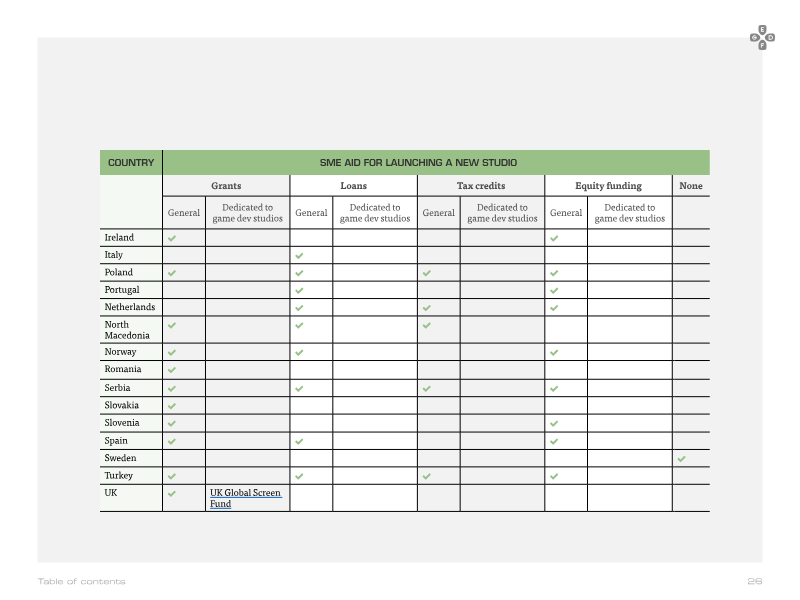
- Many European countries offer cultural aid for video game production, with common forms including grants (e.g., Austria, Denmark, Finland), loans (e.g., Belgium, France), and tax credits (e.g., Belgium, France, Germany, Greece).
- Europe has a robust educational infrastructure for game development, with numerous institutions offering study programs; for example, Austria has 13 institutions, Belgium 8, and the Czech Republic 8.

Serbian Gaming Industry Report 2021
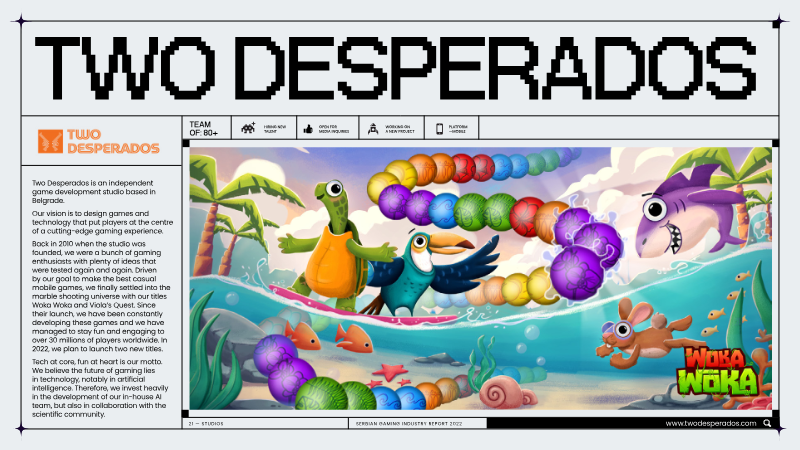
In 2021 Serbia’s gaming ecosystem emerged as a rapidly expanding, export-oriented sector that combined a sizable studio base with a vibrant indie community.
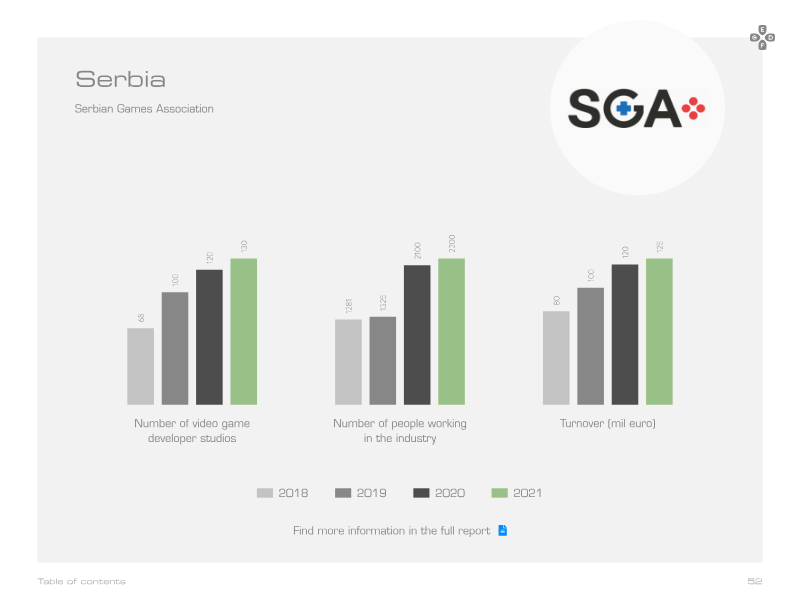
- In 2021, Serbia’s gaming sector comprised approximately 130 studios employing 1,548 people, generating $125 million in revenue with 75% to 100% of earnings derived from international exports.
- The industry is heavily reliant on the free-to-play model, which accounts for 64% of all games produced, while the total output reached roughly 2,200 titles.
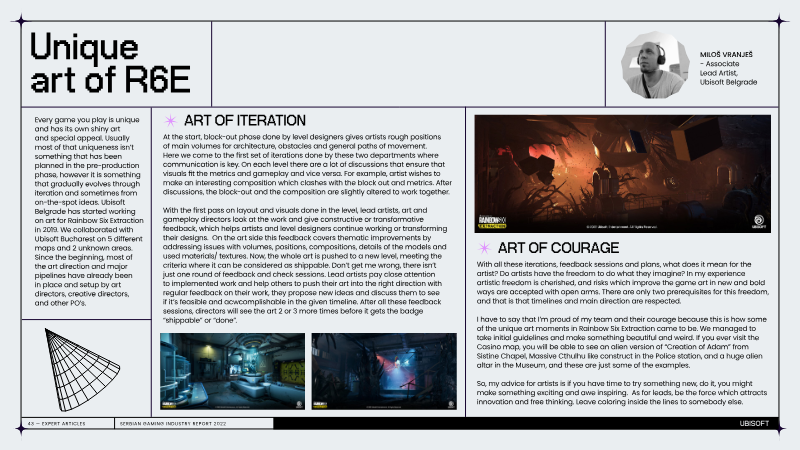
- The ecosystem supports a diverse production scale, ranging from indie developers using high-fidelity tools like MetaHuman Creator to major contributors such as Nordeus, Playrix RS, and Ubisoft Belgrade.

Romanian Game Development Industry Report: 2020
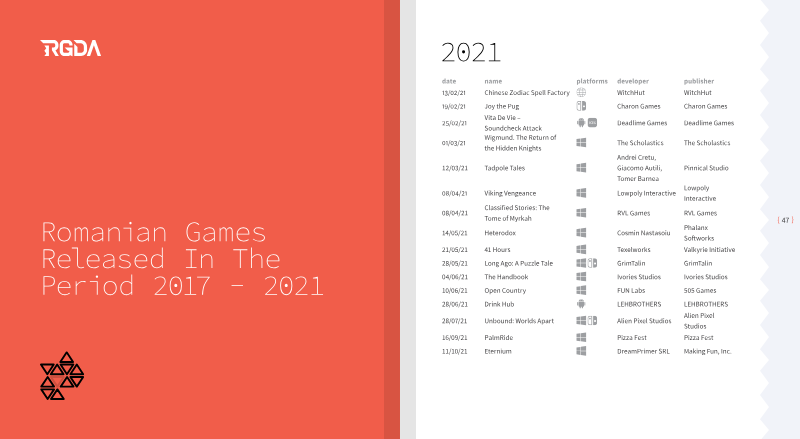
The Romanian game-development sector has emerged as a rapidly expanding component of the national digital economy, delivering €218.5 million in revenue in 2020—a 19.1% year-on-year increase that pushed total earnings beyond the €200 million threshold.
- The Romanian game development industry generated €218.5 million in revenue in 2020, marking a 19.1% year-on-year growth rate.
- The broader IT sector, bolstered by state-aid schemes and tax exemptions, employed over 113,000 people and contributed approximately 6.8% of Romania's GDP in 2020.
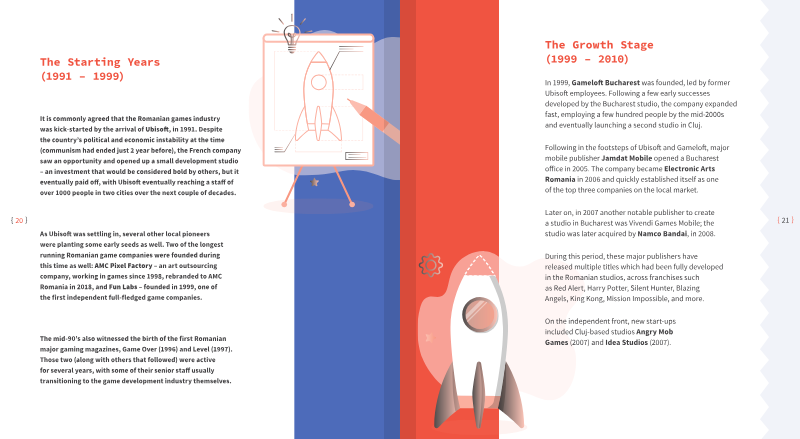
- Major AAA support studios including EA Romania, Ubisoft, and Gameloft employ roughly 750 developers in the country, contributing to global franchises like FIFA and Assassin’s Creed.
The Game Industry of Finland 2020
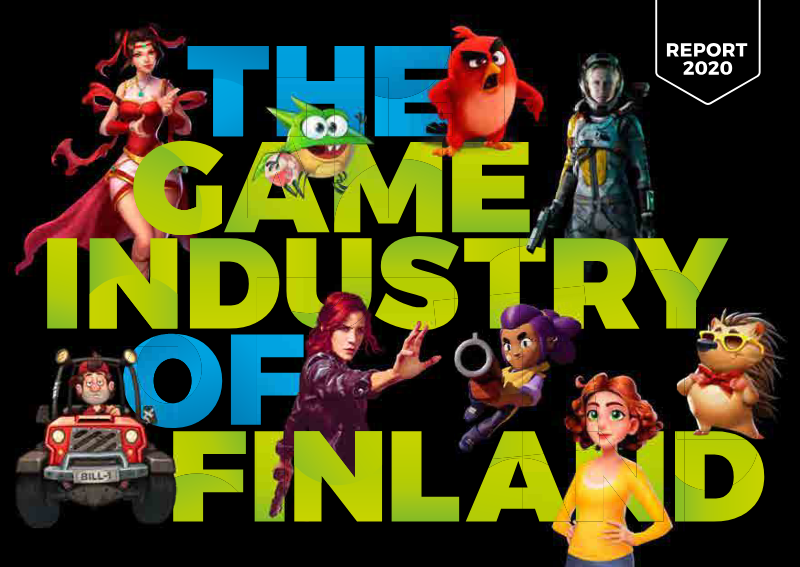
The Finnish game industry has transitioned from a hobbyist niche into the nation’s largest cultural export, maintaining an annual turnover exceeding €2 billion for six consecutive years.
- The Finnish game industry generated €2.4 billion in turnover in 2020, marking six consecutive years of exceeding the €2 billion threshold.
- Industry stability has improved as Supercell’s share of total turnover declined to 54%, supported by a maturing 'middle class' of 46 studios each generating over €1 million annually.
- Despite a consolidation in the number of active studios to approximately 200, the sector reached a record high of 3,600 professional employees.

Best of 2020 | Game Dev Unchained Episode 248
The game industry in 2020 experienced a period of profound transformation, characterized by rapid technological advancement, shifting labor dynamics, and the normalization of remote work.
- The industry is experiencing a fundamental shift in business models, evidenced by Epic Games' legal challenges against platform holders over commission structures and ecosystem control.
- Technological advancements like Unreal Engine 5’s Nanite and Lumen systems are setting new benchmarks for real-time rendering, though they currently require significant optimization for practical production use.
- Systemic labor issues, including 'crunch' culture and the treatment of independent contractors and QA staff, remain critical challenges often stemming from poor management and unrealistic project scoping.

Is The Indie Game Dev Dream Real? - The Full Truth
Achieving long-term success in the independent game development industry requires a fundamental shift from viewing game creation as a purely artistic endeavor to treating it as a disciplined, entrepreneurial business.
- Long-term sustainability in indie game development requires transitioning from an artistic-focused mindset to a disciplined, entrepreneurial business model.
- Financial stability should be built by diversifying income streams through crowdfunding, platform partnerships, and personal branding rather than relying solely on individual game sales.
- Developers must cultivate a loyal audience through consistent social media engagement and email marketing to guarantee a reliable customer base for future projects.

Remedy Capital Markets Day 2020: A Highly Attractive Home to World-Class Talent
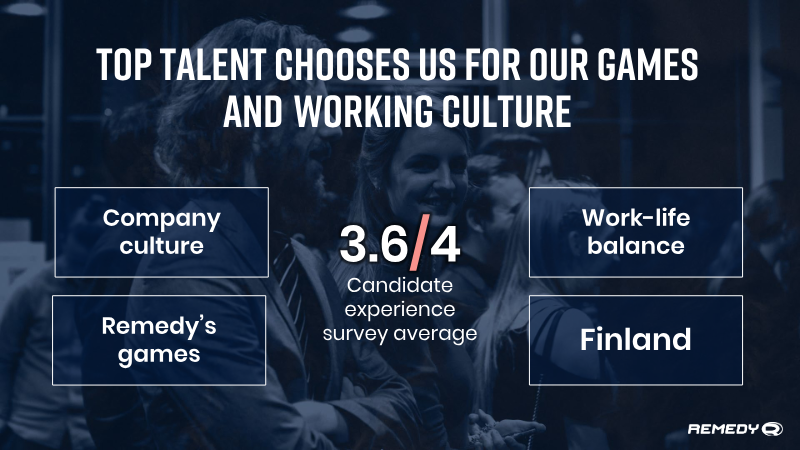
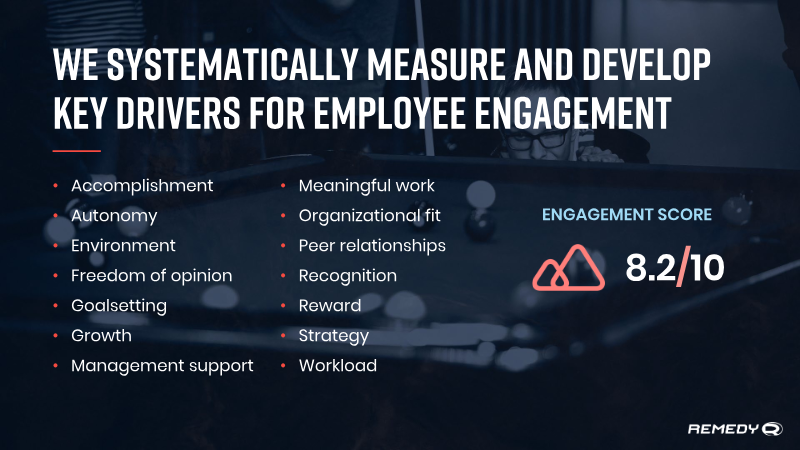
Remedy Entertainment positions itself as a premier destination for global gaming talent by fostering a creative, high-performance culture that prioritizes employee engagement and professional development.
- Remedy Entertainment successfully reduced its annual employee turnover rate from 14.3% in 2017 to 7.1% by late 2020.
- The studio maintains a highly selective recruitment process, hiring only 42 individuals out of 2,620 applicants between January and November 2020.
- Internal organizational health is strong, with employees reporting an engagement score of 8.2 out of 10, driven primarily by autonomy and clear goal setting.
More Contract Positions equals Less Full time Jobs | Unchained Report
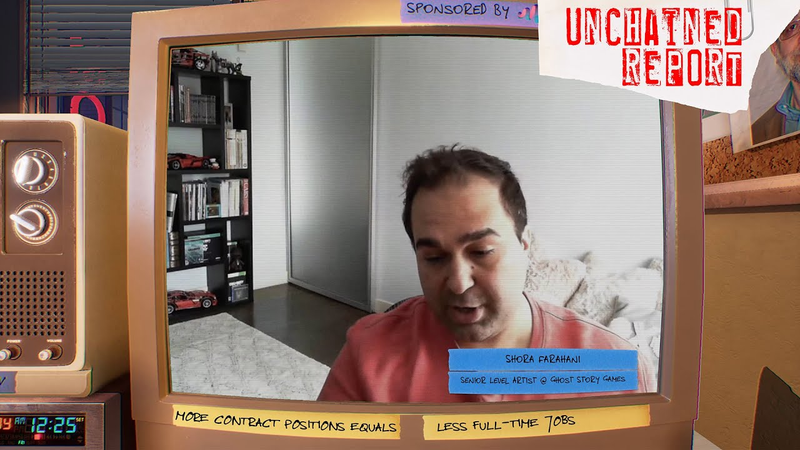
The game industry faces significant cultural and structural challenges regarding labor practices, particularly within high-profile AAA studios.
- The reliance on short-term contract labor in AAA studios creates a systemic lack of institutional belonging, leading to high turnover rates as contractors are cycled through projects without integration.
- Crunch culture in AAA development is frequently driven by internal peer pressure and the competitive desire to prove value, rather than explicit management mandates.
- There is a significant cultural divide between full-time staff and contract workers, with the latter often treated as disposable assets excluded from company perks and social engagement.

Distributed Work Past, Present, and Future with Scott Millard | Game Dev Unchained Episode 243
The game industry has demonstrated remarkable resilience by adopting distributed work models, which have successfully expanded talent acquisition beyond geographic constraints.
- The game industry is shifting toward subscription-based access models, signaling a decline in traditional distribution methods as consumer habits solidify around digital-first media consumption.
- Distributed work models have successfully expanded talent acquisition beyond geographic constraints, though they introduce significant operational hurdles regarding security for proprietary hardware and development kits.
- Remote work environments struggle to replicate the creative synergy and collaborative efficiency of physical offices, leading many industry professionals to seek a return to in-person collaboration.


Análisis del Impacto del COVID‑19 y Mejores Prácticas de Teletrabajo en el Sector de los Videojuegos: Dec 2020
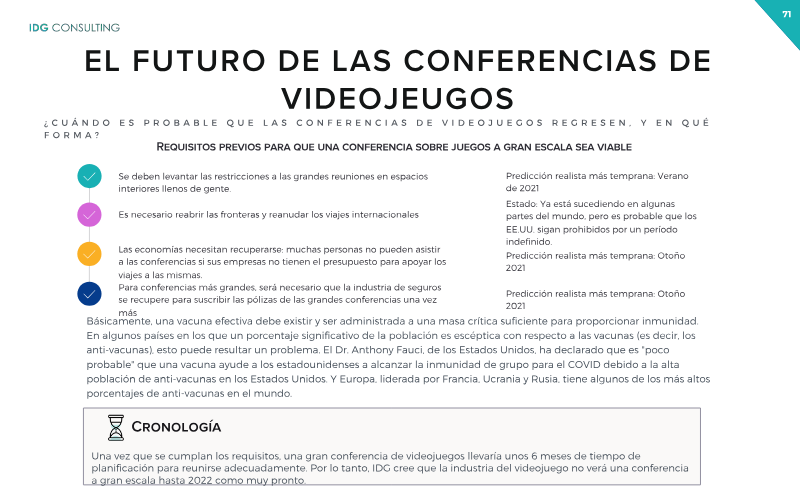
The global video game industry experienced a profound transformation during the 2020 pandemic, functioning as a critical pillar for social connection and entertainment while navigating significant operational volatility.
- Video game stocks, including companies like Tencent and Ubisoft, outperformed global market indices during the pandemic, establishing the sector as a defensive asset class with long-term growth potential.
- Consumer demand shifted decisively toward digital channels between March and May 2020, causing a sharp decline in physical sales while hardware platforms offering portability, such as the Nintendo Switch, saw significant spikes in sales.
- Subscription services like Xbox Game Pass and PlayStation Now proved resilient, becoming a central pillar of revenue strategy that necessitates ongoing investment in LiveOps and DLC content.

Big and Small Companies Setting up for Remote Workers | Unchained Report
The shift toward remote work during the pandemic has accelerated the need for robust, scalable infrastructure capable of supporting distributed teams, particularly within the game development industry.
- The game development industry is shifting from local, server-based workflows to cloud-integrated infrastructure to support distributed teams and maintain high-performance access to large-scale assets.
- Managing high-fidelity data, specifically 4K and 8K assets, across global teams has become a critical competitive advantage for studios attempting to maintain production schedules during remote operations.
- Advanced replication technologies are being deployed to eliminate latency and performance degradation, ensuring developers in different geographic regions can collaborate on shared codebases and assets.