Employment reports and market data
Documents

Panel: Building the Perfect Team
The pursuit of a high-performing game studio team necessitates a fundamental shift in priority from individual technical prowess to the cultivation of collective health and collaborative synergy.
- The team itself is the studio’s most valuable asset, often outweighing the importance of a rigid initial product vision.
- High-performing teams are built on psychological safety, mutual trust, and a shared mission rather than the acquisition of singular technical talent.
- Hiring strategies must prioritize cultural alignment over technical skill to mitigate the organizational stability risks associated with value misalignment.

Crunch Culture in 2020 | Unchained Report
The discourse surrounding crunch culture in the video game industry highlights a persistent tension between creative ambition and sustainable production practices.
- Crunch remains deeply embedded in the development of large-scale, high-profile AAA titles despite reports of a marginal decrease in overall industry frequency.
- The primary drivers of extended work hours are systemic failures, including poor project management, unrealistic scheduling, and the inability to accurately scope features.
- Large-scale development cycles often suffer from 'front-loading,' where multi-year projects inevitably collapse into periods of extreme intensity to meet final release deadlines.

How To Start A Game Studio (LEGALLY)
Establishing a game studio as a Limited Liability Company (LLC) serves as a critical step for independent developers to manage legal risks and tax obligations.
- Forming an LLC establishes a corporate veil that protects an owner’s personal assets from business-related lawsuits, including claims of negligence or tort liability.
- LLCs utilize pass-through taxation, which prevents the double taxation typically associated with corporations by taxing profits at the individual owner level.
- Developers can reduce their tax burden by deducting legitimate business expenses, such as game development costs, bug fixing, and operational overhead, from their gross income.
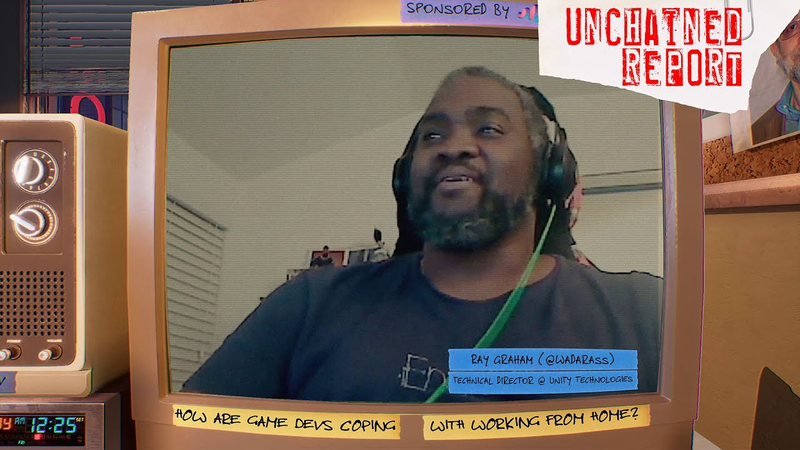
How Game Devs Are Coping with Working from Home? | Unchained Report
The shift to mandatory remote work during the COVID-19 pandemic has fundamentally altered the operational landscape of the game development industry.
- Game development studios successfully stabilized operations within weeks of the initial pandemic transition, with many teams reporting that productivity levels have remained stable or increased under remote models.
- The industry is managing a complex dichotomy characterized by record consumer demand and high sales for hardware like VR headsets alongside the financial strain caused by the cancellation of major events like GDC and E3.
- Management is prioritizing the mitigation of employee burnout as the dissolution of physical boundaries between work and home has led to staff working longer hours, including nights and weekends.
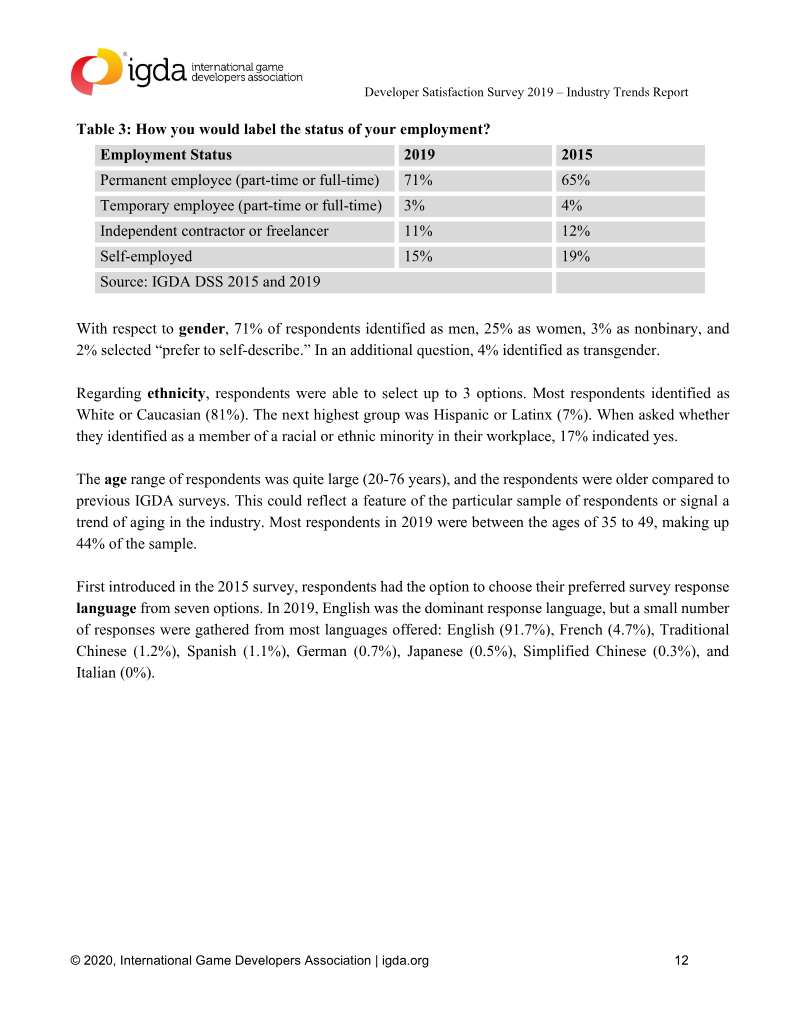
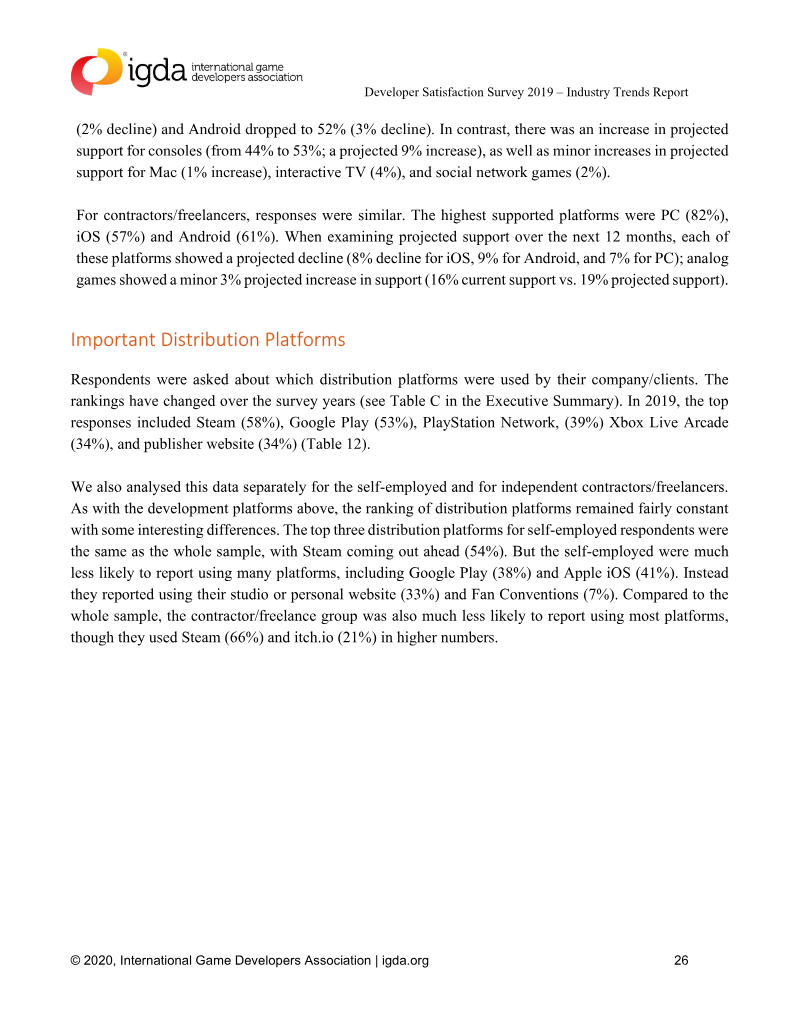
Developer Satisfaction Survey 2019: Industry Trends and Future Outlook Report
The 2019 game industry landscape reflects a period of significant transition, marked by a tension between technological innovation and systemic workplace challenges.
- 90 percent of industry professionals project moderate to considerable growth for the sector over the next three years, driven primarily by investments in PC and console platforms.
- Nearly 50 percent of the game development workforce supports unionization as a mechanism to address professional grievances and improve workplace standards.
- The industry is experiencing a decline in job satisfaction and growing pessimism regarding its current trajectory despite a strong focus on game design and storytelling.
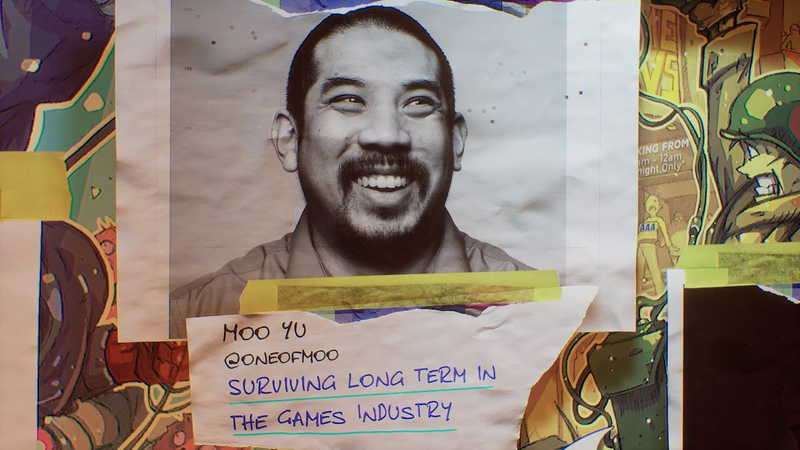
Surviving Long Term in the Game Industry with Moo Yu | GDuX.me 2020
Long-term sustainability in the game industry depends on a fundamental shift from passive employment to active career stewardship.
- Long-term career sustainability requires shifting from passive employment to active stewardship by intentionally aligning projects with personal values rather than reacting to volatile market trends.
- Developers should treat career development as an iterative process of trial and error, mentorship, and network building rather than a linear climb to avoid professional stagnation.
- Geographic location significantly impacts creative outcomes, as ecosystems like the United Kingdom provide social safety nets that allow for more artistic experimentation compared to the highly commercialized United States market.

Don't follow your dreams (it's a scam)!
The pursuit of professional dreams in the indie game industry is often mischaracterized as a linear path toward a singular, life-changing outcome.
- Shift the entrepreneurial focus from chasing a singular, life-changing financial windfall to building a sustainable system that generates long-term professional freedom.
- Treat every project as a foundational asset rather than a final destination, ensuring that even failed ventures contribute to your future credibility, experience, and reputation.
- Adopt an iterative mindset where each output serves as a building block, allowing for exponential increases in productivity and capability over time.

Unchained Life Thus Far 1.5 Years Working for Myself | SoapBox | Game Dev Unchained Episode 240
Game developers face an increasingly volatile professional landscape characterized by high-crunch environments and the systemic inefficiencies of large-scale AAA studios.
- The game development industry is experiencing systemic instability characterized by high-crunch environments, project cancellations, and the failure of speculative development models in large-scale AAA studios.
- Developers should mitigate professional risk by transitioning from single-employer reliance to a diversified portfolio of independent ventures and income streams.
- Achieving a sustainable, independent business model requires a long-term commitment of approximately five years of consistent effort and strategic market analysis.

Crunching with CD Projekt Red on Cyberpunk 2077 | Roundtable News | Episode 239
The video game industry remains deeply entrenched in a cycle of mandatory overtime, commonly referred to as crunch, which persists despite significant public backlash and documented health consequences for developers.
- The gaming industry continues to rely on mandatory overtime, with developers at studios like CD Projekt Red reporting 12-to-15-hour workdays despite public backlash regarding health consequences.
- Management frequently ties performance reviews and discretionary bonuses to overtime participation, effectively penalizing staff who prioritize efficiency over total hours logged.
- Financial incentives like profit-sharing bonuses are insufficient to address systemic burnout and the long-term erosion of developer well-being caused by the current labor model.

AMA: Diverse Teams
The game industry faces a persistent stagnation in diversity, characterized by Black representation remaining at a marginal 1–2% for over three decades.
- Black representation in the game industry has remained stagnant at a marginal 1–2% for over three decades.
- Systemic hiring barriers, including an over-reliance on elite university pipelines and subjective cultural fit assessments, must be replaced by a focus on candidate capability and direct outreach to historically Black colleges.
- The industry’s reliance on unsustainable development models like crunch culture and rigid, traditional hiring backgrounds limits both creative potential and long-term cultural relevance.
AMA: Hopping and Skipping Your way into Last Place Q&A with Zaire Lanier
Securing a sustainable career in the game industry requires a strategic shift away from traditional cold applications toward the cultivation of a genuine, peer-based professional network.
- Professional advancement in the game industry is driven primarily by peer-based networking and referrals rather than traditional cold applications.
- Building a portfolio through game jams and small-scale projects like Twine games is the most effective way to demonstrate skills and gain community entry.
- Financial literacy is essential for career longevity, requiring freelancers to account for taxes, benefits, and overhead when setting rates.
Adapting: Working in Games with Chronic Illness
The game industry faces a significant challenge regarding inclusivity, as approximately 60% of U.S. adults live with a chronic disease.
- Approximately 60% of U.S. adults live with a chronic disease, highlighting a critical need for the game industry to adapt its high-stress development environments to be more inclusive.
- Early disclosure of chronic illness is recommended to proactively secure necessary accommodations, such as ergonomic equipment, flexible scheduling, or remote work, before health crises occur.
- Workplace accommodations should be framed as essential tools for equity rather than preferential treatment to ensure employees can maintain productivity without exceeding their physical limits.