1 free read left. Create a free account for unlimited reading + AI research.
Create free account
Big and Small Companies Setting up for Remote Workers | Unchained Report
Key insights
5 takeaways- 01The game development industry is shifting from local, server-based workflows to cloud-integrated infrastructure to support distributed teams and maintain high-performance access to large-scale assets.
- 02Managing high-fidelity data, specifically 4K and 8K assets, across global teams has become a critical competitive advantage for studios attempting to maintain production schedules during remote operations.
- 03Advanced replication technologies are being deployed to eliminate latency and performance degradation, ensuring developers in different geographic regions can collaborate on shared codebases and assets.
- 04Consumer spending on gaming has increased despite industry speculation that users would shift toward lower-cost or mobile-only gaming during periods of social restriction.
- 05Corporate strategies such as relaxing data caps and extending loyalty benefits are being used to build brand goodwill and influence long-term customer loyalty during the transition to remote-work environments.
Ask AI about this video
Transcript
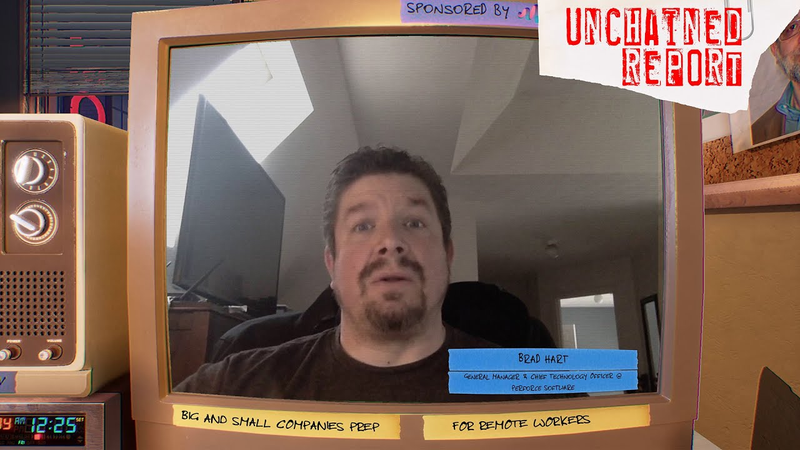
i think you were somewhat prophetic the last time you were on talking about having people source up to to per force 10 000 companies is less impressive than having 10 000 people onto ontario at the same time from the same company and that was almost a year ago yeah it was almost like crazy that you kind of foresee this type of near future issue for prayer for us that you've been warning everybody about and it is so much happening i mean the game industry themselves who are the hugest proponent for using perforce for over two decades now are are still having a lot of issues just thinking at a different angle with everybody being remote uh i can't imagine other industries at this point who are 10 steps behind learning learning where they i mean how how's that uh handling all that type of uh questions coming in at this time
yeah i mean it's interesting like you said it's kind of been you know scale across the globe and thinking about remote teams and all that has kind of always been in our wheelhouse so we we design for it um part of the vision that i've had with the product is that that's only going to increase and it's going to get more difficult as you know 4k 8k all that you know comes to fruition it's not getting easier to work in these environments right with the size of the data so we're we're always trying to stay ahead of that curve and build that culture in our company to support those kinds of environments and we have stuff in our roadmap that's gonna just take this all to a new level from a scalability perspective for people working remotely working locally it really doesn't matter to us i want it to be ubiquitous where wherever somebody seed is in the globe they should experience the same performance and the same ability to do work
uh regardless of where they're located so that's really driving the strategy on um you know a lot of our products so we're well suited for it fortunately so uh aside from that though like um as this was happening around the globe and finally hitting north america i think about a month delay uh you guys are already set up for this type of situation where you even with the preparedness were you ready for the whole world to kind of plug in and kind of use the number one files file management system out there i mean i can't think of any other type of um product out there that is allowing teams to kind of coordinate cooperate and work with each other at this scale literally every company in the world right now is is needing this type of file management system to talk to each other essentially aside from you know video chatting all the time
yeah no i mean it's it's been it's been uh from an infrastructure perspective on our part we were ready because we saw sort of the it's kind of the mold that people were working in anyway so where you know you can use perf like the perforce products anywhere but where we really shy right where we really stand out is when there's some dimension of scale right whether it's you know lots of files huge files lots of products lots of product variants um or you know lots of people working on it or certainly teams distributed across the globe so we it's been always it's just been part of our messaging right and part of our enablement is to allow this sort of global spread of data and collaboration regardless so a team in the uk can just as easily contribute uh to the same set of code or assets that a team in california or boston is right and there's literally
no difference there's no um restrictions uh that are slowing them down and so it's just it just really fit in line with how we work anyways and you know we've been seeing the trends as well where people are moving their uh infrastructure using our platform where traditionally um you know certainly across all across the board 10 years ago and earlier it was all local right so massive files large servers um you know all the people are working locally and if per chance somebody was to do something remote it would have to be through some sort of vpn kind of situation or you know remote access etc whereas we've seen some of our biggest customers are now looking to move and have already started moving a lot of their infrastructure of uh perforce into the cloud they've already started that and they're looking at and being very attentive to the different regions where they set up
servers and with our products they're setting up the the different replication technologies we have again so that somebody on this side of the the globe we don't want to have a positive experience and somebody on the other side of the globe to have a negative experience so with our products and our replication capabilities which we've been working with customers for years with they replicate that data all across the globe so it really doesn't matter where you are um we're going to give that same sort of local like experience whether it's local hardware or it's in the cloud it doesn't matter which sort of ubiquitous with us so that's kind of this situation is just sort of right in our wheelhouse for what we're what we're doing anyways so we've been fortunate and it's and it's shown too the certainly with the gaming market with people at home and uh you know some people aren't working unfortunately um or even people that are working but can't go out to dinner or go bowling or go to the movies gaming their demand is up right i'd love
to get your your take on that we're certainly seeing it i know want personally you know me and my wife play like you know golf on the ps4 every night right after we put the kids to bed i didn't wasn't doing that before um and uh it's it's kind of an interesting you know trend so our customers are they're they're under the wire they've got to deliver software and you know games because they're seeing a lot of pressure to to produce content for people uh what have you seen there no i i definitely agree i think at first when people were anticipating how many were going to be at home and turning usually to to entertainment to kind of ease the time suffering basically a lot of people were kind of guessing that they won't be spending as much money but more like going towards freeware or uh mobile games you know on a cheaper side but uh data are in saying that people are spending more
money uh towards game industry stuff um which is great for us um for everybody essentially because there's only so many times i can lap in my backyard very limited space before i have to go back in the house and do something and so uh and not knowing how long this will be people are saying summer or even this is 2020 basically um right a lot of people are adjusting to the new normal and everything something that you touched on a bit that has been somewhat controversial and i just want to know your opinion on it since it kind of correlates you know to your company but also to the industry overall has been data cap right that is a very new concept in the last year and a half and more than ever thankfully recently a lot of the internet companies have relaxed their measures on data cap letting people actually spend more time uh how do you see that conversation returning after this kind
of subset because that's a pretty insane thing to think that um we should limit any of that in charging people yeah i think you know my from a personal consumer perspective i mean i'm completely against that right uh and the data throttling and all that um and i think it would be a you know to your point it would be a horrible look in today's climate you know for them to be enforcing that and uh trying to garner more dollars out of the consumers um i think uh it's interesting to see how that will play out moving forward once we're kind of out of the out of the fray here even if it's late this year or next year whatever when things are back to whatever normal we're gonna have um it's gonna be interesting i think uh you know i i heard something like you know people people were kind of talking at the beginning of all this like
you know you can learn a lot about your company or the people that you do business with the people the the restaurants the stores the you know your own employment you're going to learn a lot about um companies and people based on how they treat people during the situation right so i think the companies that are being you know empathetic towards uh you know the situation where people are home a lot of people aren't working um you know and then how they deal with it now and how they you know how quickly do they kind of go back to business as normal and try to try to try to squeeze right i mean everybody's in business to make money but um you know it's going to be i think there's going to be a chance for some companies to sort of separate themselves based on their approach right you're seeing it with the airline industries right like so uh you know i fly delta a lot and they kind of came out and basically just said your status whatever you had is good till 2021
right like don't worry about it marriott did the same thing so it's like some of these companies are they're thinking about what the daily person's thinking about um and what life's gonna be like when they go back to normal and um it's just it's just one example right so um you know i know uh my cell phone carrier they're increasing the amount of free hot spot usage you can you can use right now i think those are good things to do i mean a little bit of good grace and goodwill i think goes a long way um it like to your point though i i i don't have a forecast on what they're going to do once once they can kind of start to leverage things again it's going to be interesting but i think it's an opportunity to sort of separate out a company's mindset and their persona you know once once things kind of loosen up a little bit
Summary
The shift toward remote work during the pandemic has accelerated the need for robust, scalable infrastructure capable of supporting distributed teams, particularly within the game development industry. As organizations transition from traditional local, server-based workflows to cloud-integrated environments, the primary challenge remains maintaining high-performance access to large-scale data and assets regardless of a user's geographic location. Modern file management systems are increasingly designed to provide a ubiquitous experience, utilizing advanced replication technologies to ensure that developers in different regions can collaborate on the same codebases and assets without latency or performance degradation.
The game industry has experienced a notable surge in demand as consumers turn to interactive entertainment during periods of social restriction. Despite initial industry speculation that users might gravitate toward lower-cost or mobile-only gaming, data indicates that consumer spending on gaming has increased. This trend places significant pressure on developers to maintain consistent production schedules despite the logistical hurdles of remote operations. Consequently, the ability to manage complex, high-fidelity data—such as 4K and 8K assets—across global teams has become a critical competitive advantage for studios.
Beyond technical infrastructure, the current climate has highlighted the importance of corporate empathy and long-term relationship management. The temporary relaxation of data caps by internet service providers and the extension of loyalty benefits by various service-oriented companies serve as examples of how businesses can build goodwill during periods of crisis. The long-term impact of these policies remains uncertain, but the current approach to consumer support is likely to influence brand perception and customer loyalty as industries eventually transition toward post-pandemic operations.





















Comments