Employment reports and market data
Documents

Ewin Racing Chair Review
Prolonged sedentary behavior inherent in professional game development and remote learning necessitates the use of high-quality ergonomic seating to mitigate physical strain.
- High-quality ergonomic seating is a fundamental requirement for professionals and students spending upwards of six hours daily at a desk to mitigate physical strain.
- Ewin Racing chairs demonstrate high durability and structural integrity, maintaining stability and performance after months of heavy daily usage.
- The assembly process for Ewin Racing chairs is efficient, typically requiring only 20 minutes to complete.

Panel: The Challenges & Advantages of Creating a Game Remotely
The transition to remote game development necessitates a fundamental shift in management philosophy, moving away from traditional oversight toward a model defined by radical transparency, clear expectations, and individual empowerment.
- Remote development requires shifting management from traditional oversight to a model of radical transparency, clear goal-setting, and individual empowerment.
- Digital communication channels improve inclusivity by providing a more equitable platform for quieter team members compared to traditional, personality-driven office meetings.
- Studios must replace organic office interactions with structured social initiatives, such as virtual coffee chats, game nights, and formal buddy systems, to maintain company culture.

Being Pro at Being a Noob
Career advancement in the game development industry is fundamentally driven by a commitment to continuous learning, the cultivation of authentic professional relationships, and the strategic presentation of one’s work.
- Prioritize small, polished projects over ambitious, unfinished concepts in your portfolio to demonstrate core competency and execution skills to recruiters.
- Develop the discipline to ship functional prototypes within one-week timeframes to effectively showcase your ability to deliver finished work.
- Seek direct, critical feedback from established industry professionals as the primary method for refining technical skills and professional judgment.

How To Become A Great Manager!
Effective management in the games industry requires a dual commitment to achieving clear business objectives and fostering the professional development of individual team members.
- Effective management requires balancing business objectives with individual professional development by fostering trust and authenticity rather than relying on micromanagement.
- Operational excellence is best achieved by replacing infrequent, high-stakes performance reviews with a continuous feedback loop and regular, real-time coaching check-ins.
- Managers should utilize structured frameworks like skills matrices to define clear career progression expectations and help employees transition from technical tasks to broader organizational responsibilities.

Developing UA Skills Over a Career
User acquisition (UA) is evolving from a channel-specific discipline into a broader growth function that requires a blend of storytelling, product intimacy, and data-driven experimentation.
- UA is shifting from a channel-specific discipline to a holistic growth function that requires managing complex, multi-channel ecosystems rather than focusing on individual platforms.
- Successful growth marketing relies on four core pillars: omnichannel orientation, empathetic storytelling, deep product understanding, and data-centricity.
- Marketers must move beyond immediate ROAS metrics to prioritize long-term retention and account for the 'honeymoon phase' of user behavior.

Can the industry go fully remote? | Roundtable News Episode 253
The game development industry has undergone a fundamental shift toward remote work, proving that high productivity is achievable outside of traditional office environments.
- The game development industry is shifting toward a hybrid model that balances the flexibility of remote operations with periodic in-person gatherings to preserve creative culture.
- Management styles have evolved from monitoring logged hours to a task-driven culture focused on project milestones and feature progress.
- Remote work has successfully expanded recruitment pools globally and improved work-life balance, though it requires more intentional communication and rigorous production processes.
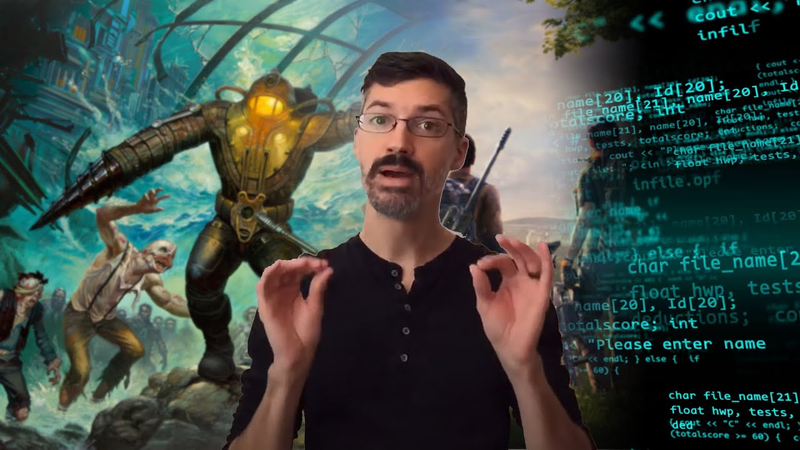
From Designer to Programmer with Scott Lagrasta | Game Dev Unchained Episode 251
The game development industry is currently undergoing a significant shift, driven by the need for greater professional adaptability and a move away from the high-stress, high-turnover models prevalent in major AAA studios.
- Designers are increasingly acquiring programming skills to bridge the gap between creative vision and engineering, creating a cross-functional skillset that enhances job security during industry instability.
- Practical competency and self-taught technical problem-solving are becoming more valuable to employers than traditional academic credentials.
- Developers are strategically migrating from high-cost U.S. hubs like the Bay Area to regions like Sweden to access better social safety nets and sustainable work-life balance.

More "I", Less "A" in AI Interviews
Effective technical hiring in the game industry requires a shift away from abstract trivia and toward practical, iterative assessment.
- Replace abstract trivia and whiteboard tests with a structured, three-phase evaluation process consisting of a take-home programming task, a foundational phone screen, and an in-person architectural discussion.
- Prioritize assessments that evaluate code maintainability, data structure selection, and the ability to adapt to design changes rather than testing for memorized API details or obscure language quirks.
- Use hands-on programming tests as a primary filter to distinguish developers with genuine technical proficiency from those who rely on rehearsed buzzwords.
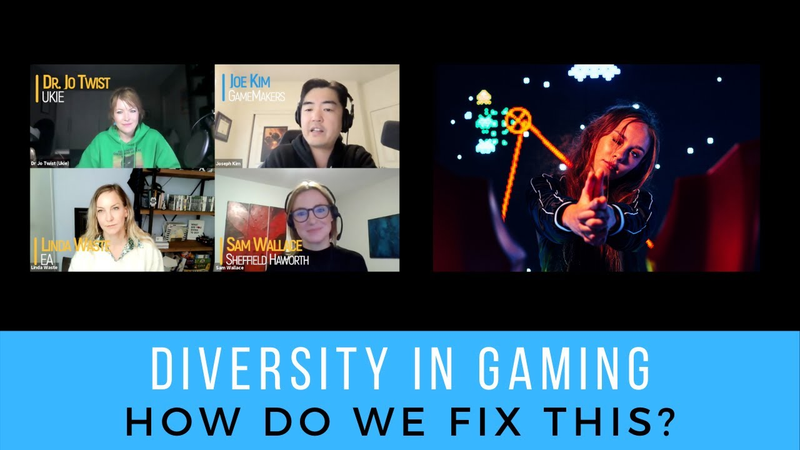
Diversity in Gaming | Addressing Inequality for Women
The gaming industry faces a persistent gender diversity gap rooted in systemic supply-side barriers, including inadequate early education in technical fields and entrenched stereotypes.
- Achieving gender parity requires viewing diversity as a core business imperative, as recruiting female talent requires approximately 30% more interaction than traditional hiring processes.
- Organizations must move beyond performative gestures by holding managers directly accountable for the retention and advancement of women rather than relying on superficial mentoring programs.
- Recruitment strategies must shift from narrow, legacy-based hiring criteria to prioritizing transferable skills to overcome systemic supply-side barriers and unconscious bias in executive search networks.
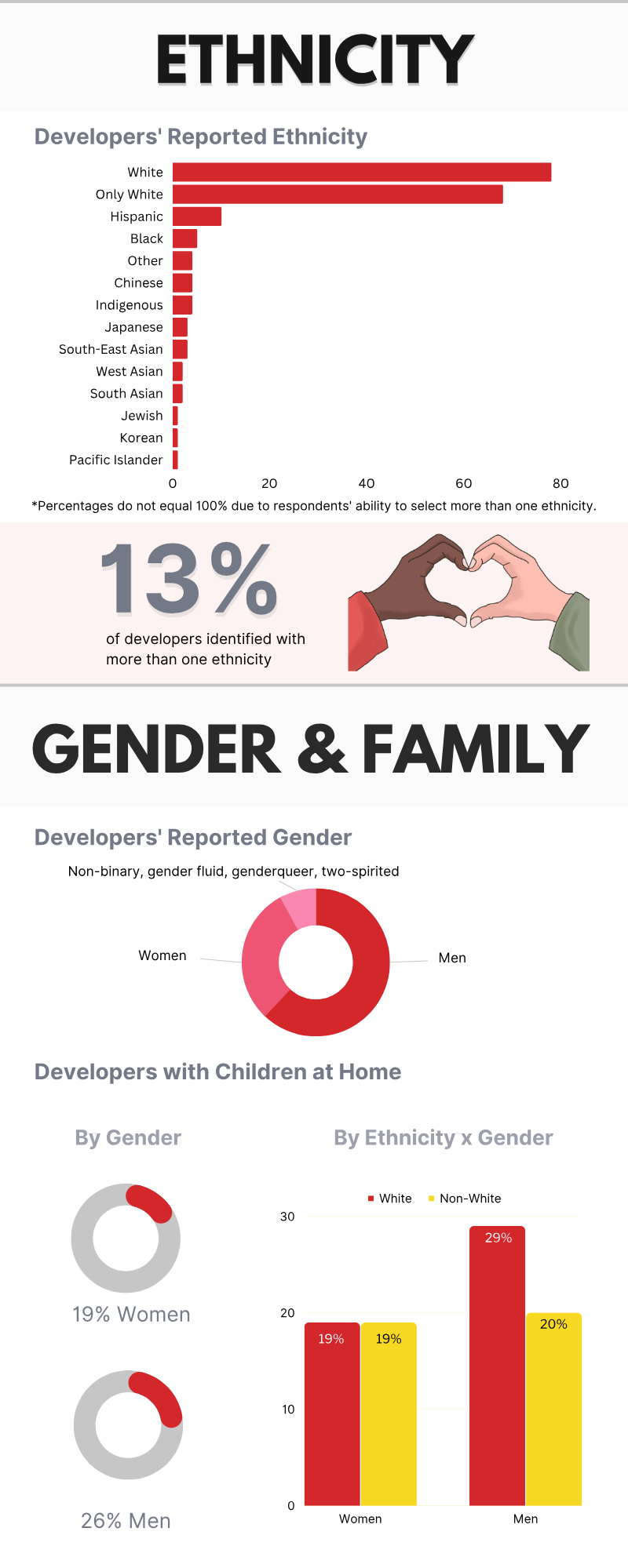
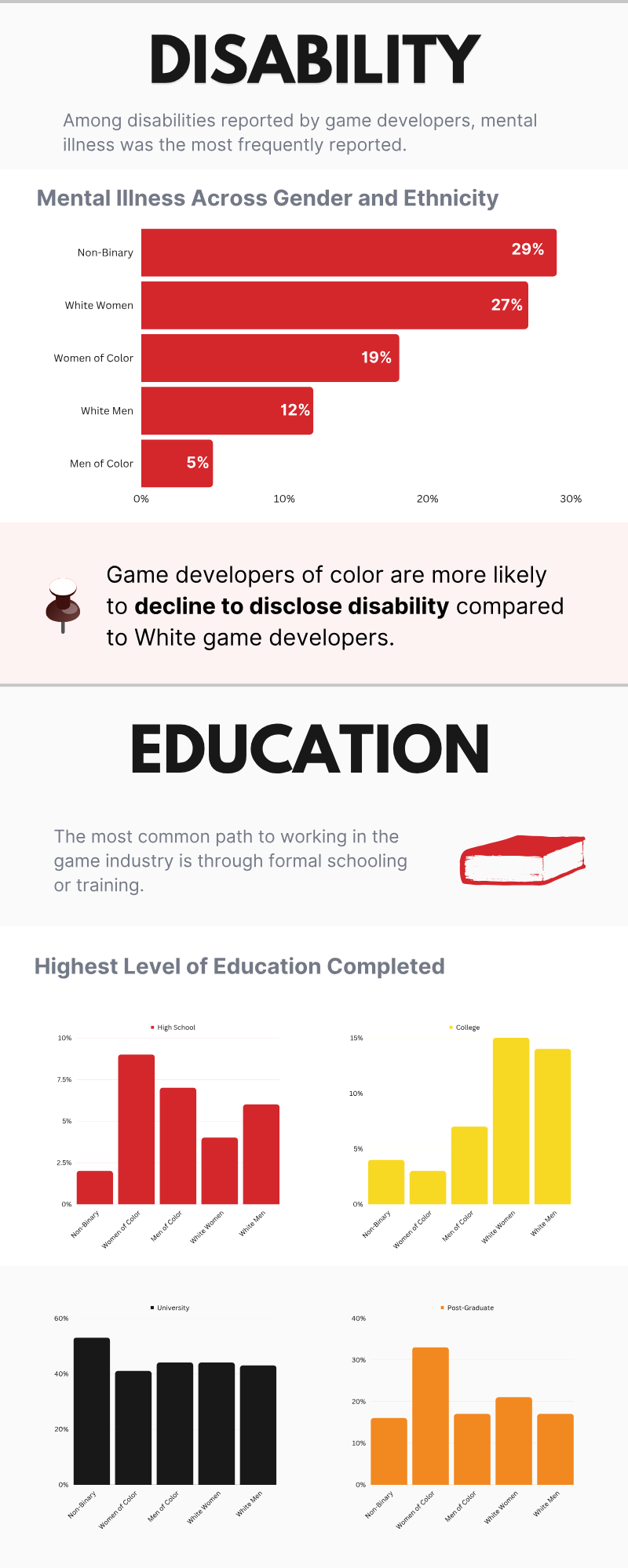
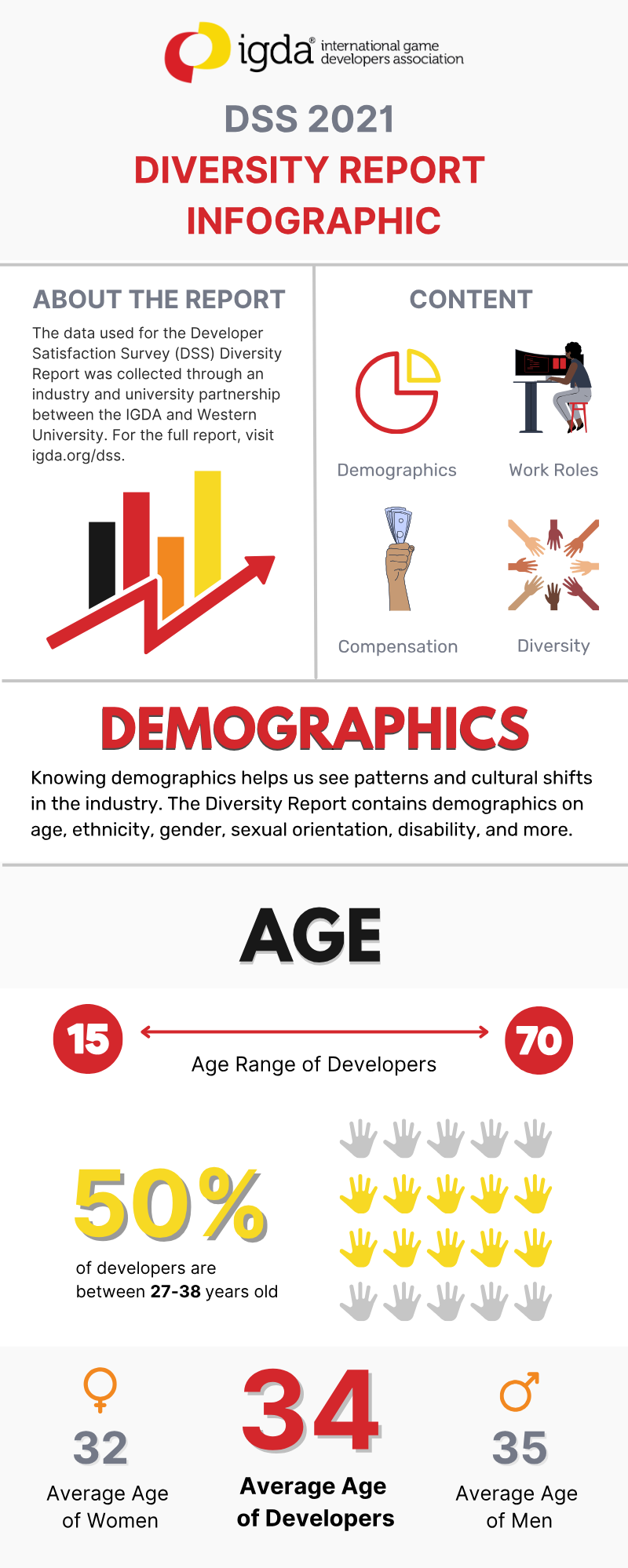
DSS 2021 Diversity Report: Infographic
The 2021 Developer Satisfaction Survey (DSS) Diversity Report provides a comprehensive analysis of the demographic landscape, compensation structures, and workplace experiences within the global game development industry.
- 74% of industry professionals believe that equal treatment and opportunity are not currently achieved within the game development sector.
- Senior management roles remain disproportionately occupied by White workers, reflecting a significant lack of demographic diversity in leadership.
- A persistent pay gap exists where men and White employees are more likely to occupy higher income brackets, while women and people of color are concentrated in lower-income or precarious roles like freelancing.
White Paper on Video Game Development Sector in Spain
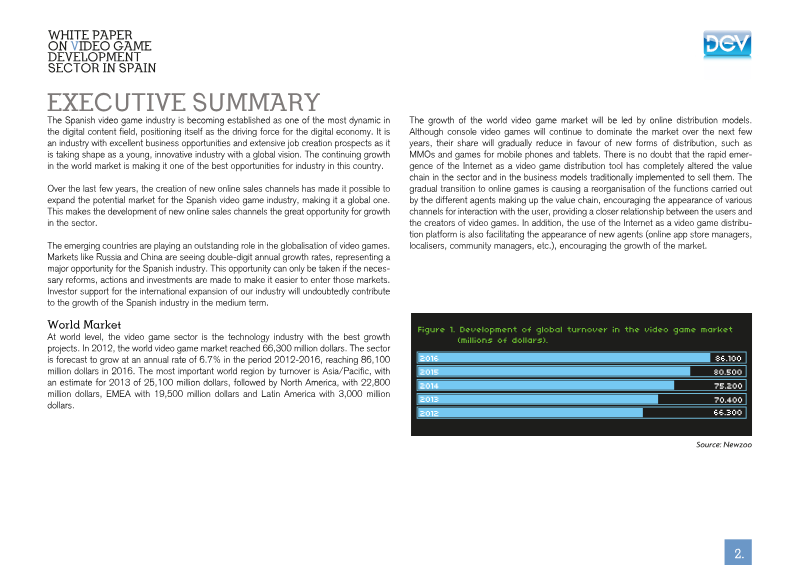
The Spanish video game development sector has emerged as a vital component of the national digital economy, characterized by rapid growth, high innovation, and a strong global orientation.
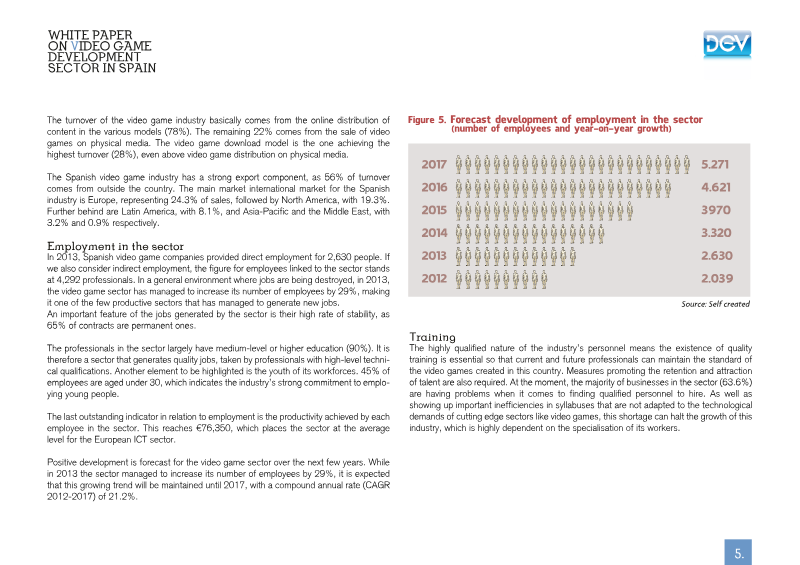
- The Spanish video game sector generated 313.7 million euros in 2013, with a projected compound annual growth rate of 23.7% through 2017.
- Online distribution models drive the industry's financial performance, accounting for 78% of total revenue, while exports represent 56% of sales.
- The industry is characterized by rapid expansion and youth, with 68% of the 330 existing companies established within the five years prior to 2013.

Annual Barometer of the Video Game Industry in France 2021
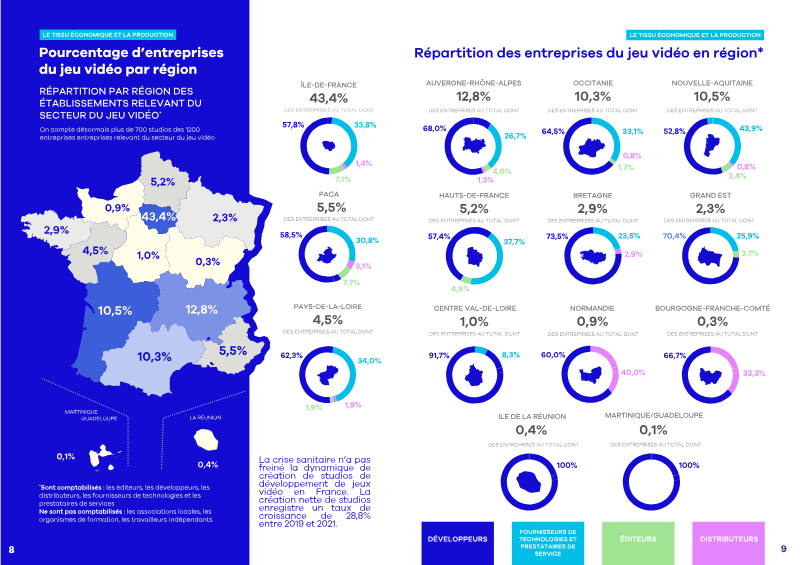
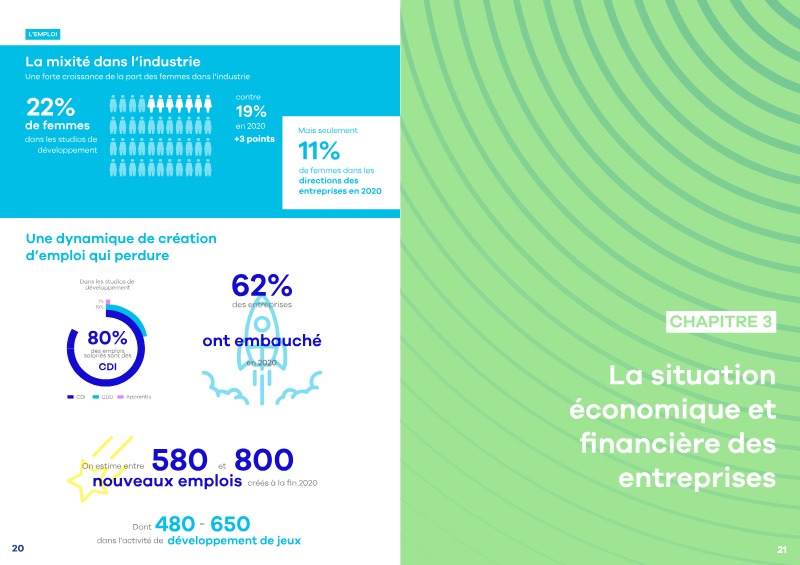
The 2021 Annual Barometer of the Video Game Industry in France provides a comprehensive analysis of the sector’s economic health, employment trends, and production landscape.
- France is the second most attractive country globally for video game development, supported by a strong reliance on national tax credits and regional funding utilized by 41% of companies.
- The industry is highly productive with approximately 1,350 games in development during 2021, 92% of which are original intellectual properties.
- Despite high levels of optimism regarding the market, 36.5% of studios reported a financial deficit in 2020, marking the highest rate of insolvency since 2014.