Employment reports and market data
Documents
Slovak Game Development Industry 2023
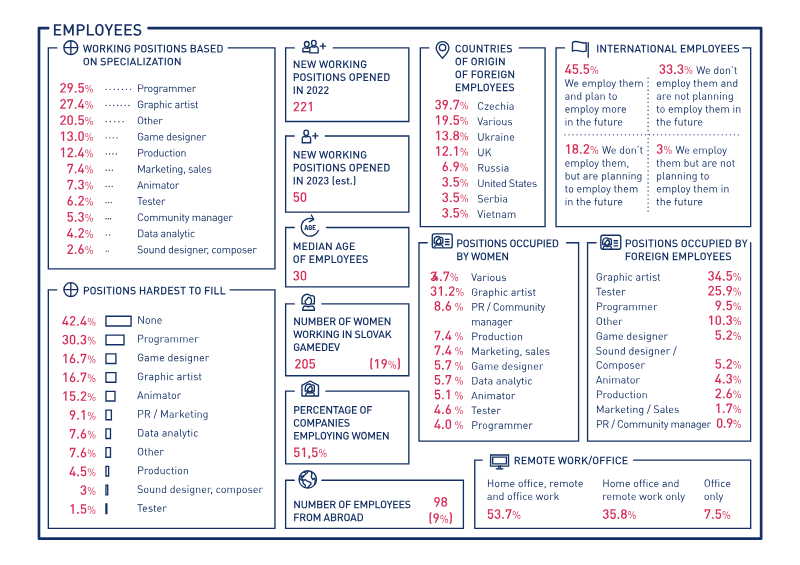
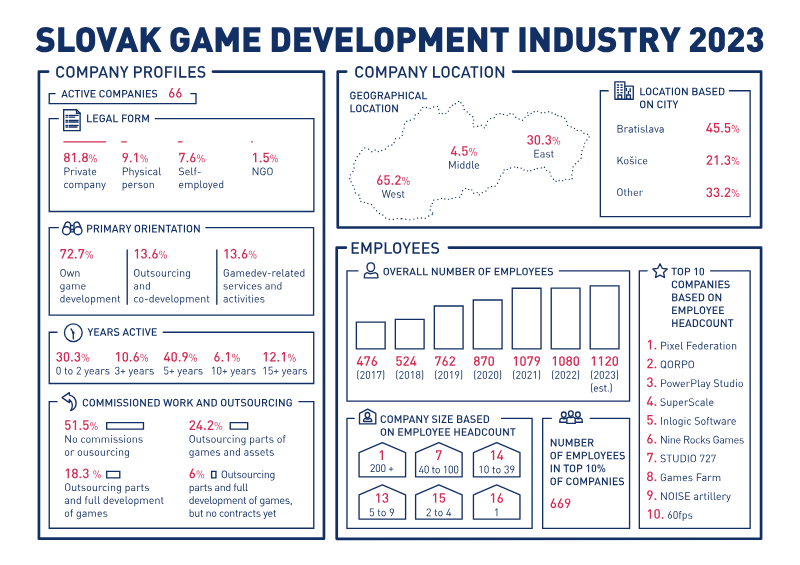
The Slovak game development industry in 2023 is characterized by a stable ecosystem of 66 active companies, primarily concentrated in the western region of the country.
- The Slovak game industry is highly centralized, with the top 10% of companies accounting for 60% of the 1,120-person workforce and 84.6% of the total annual turnover.
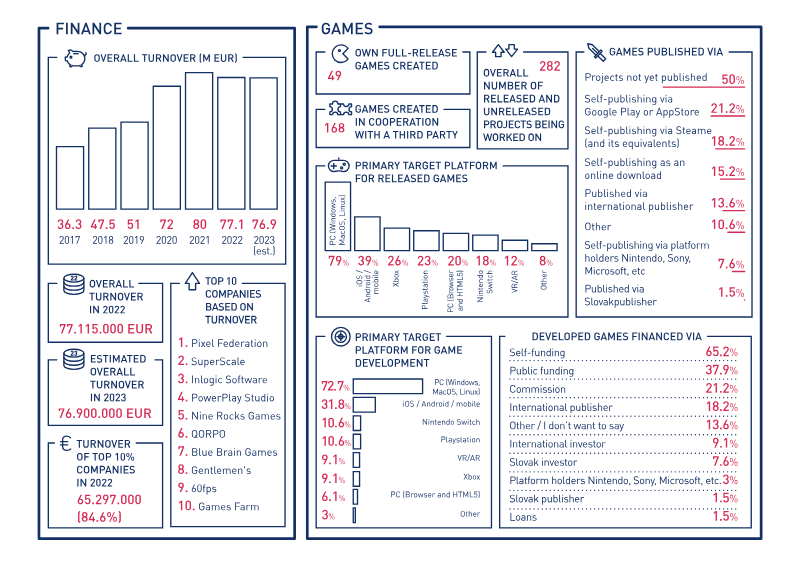
- Industry revenue has plateaued, with turnover reaching €77.1 million in 2022 and an estimated €76.9 million in 2023.
- Pixel Federation, SuperScale, and Inlogic Software are the dominant market leaders in both headcount and revenue.
State of the Game Industry 2023
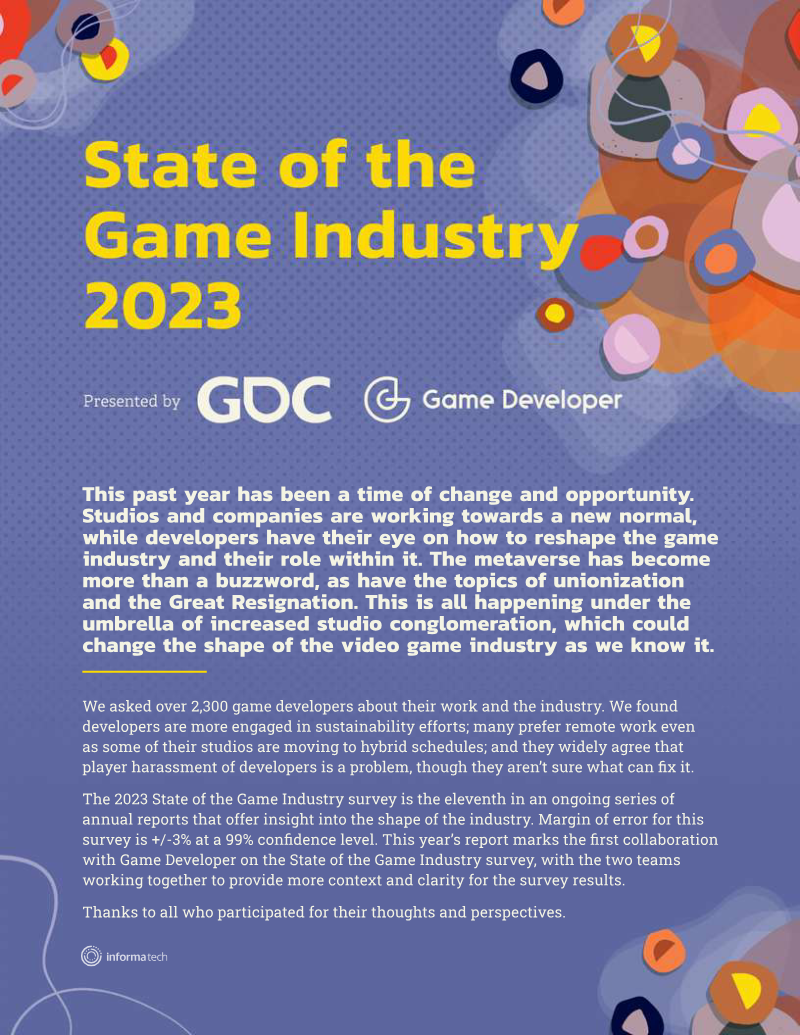
The global game development landscape in 2023 is characterized by a return to established platforms and a growing skepticism toward speculative technologies.
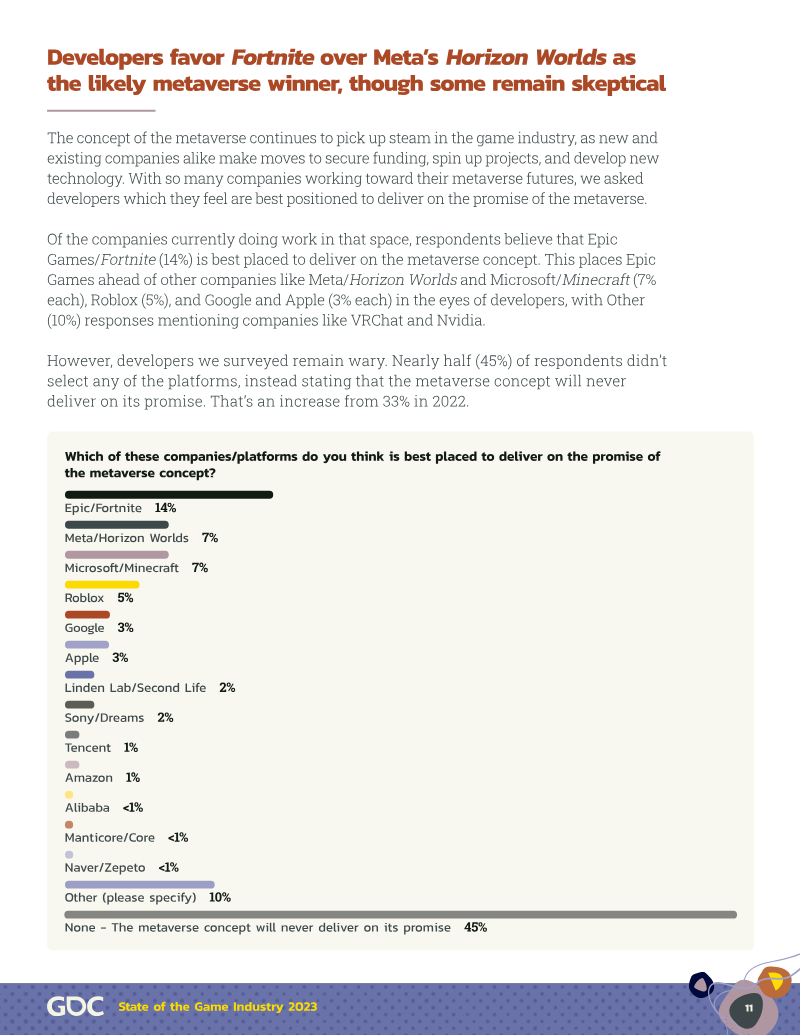
- The industry is pivoting toward technological pragmatism, with PC as the primary development focus and PlayStation 5 as the preferred console, while interest in blockchain and the metaverse has significantly declined.
- Workplace culture is under scrutiny as 40% of the workforce reports experiencing player harassment, with community managers and marginalized groups being the most affected.
- Labor tensions are rising, characterized by majority support for unionization among developers and widespread concern regarding the market impact of large-scale studio acquisitions.
State of Game Development & Design Report 2023
The 2023 State of Game Development & Design Report provides a comprehensive analysis of the current trends, technological preferences, and operational hurdles facing the global gaming industry.
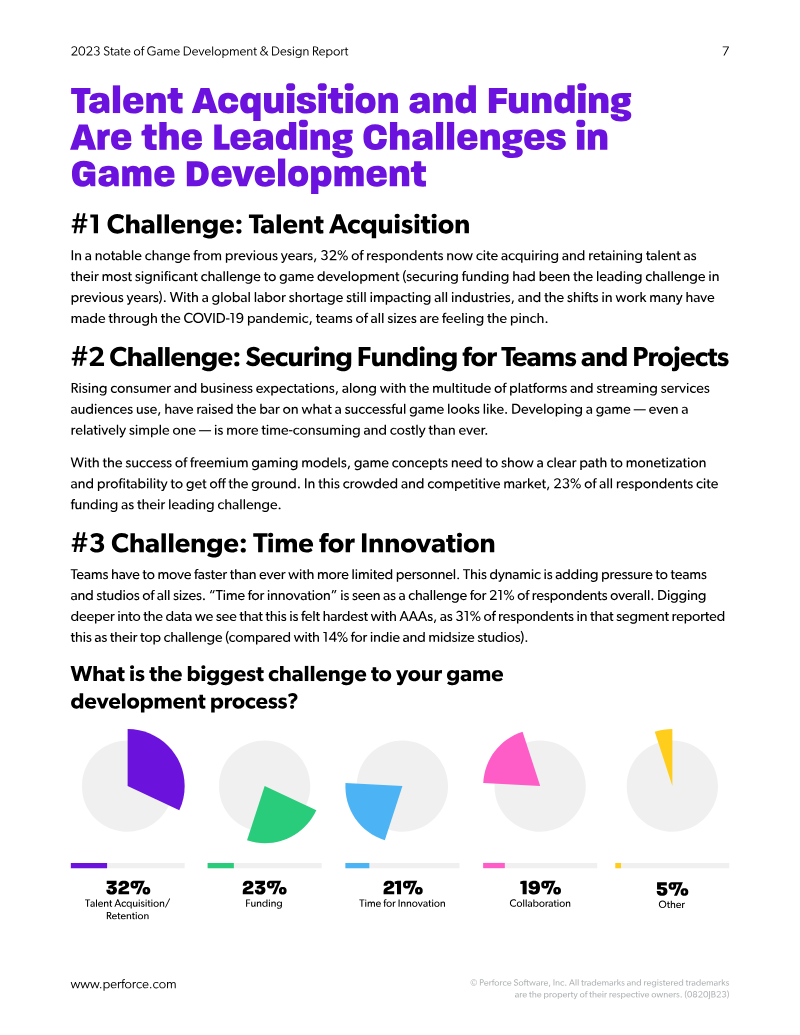
- Talent acquisition and retention has overtaken funding as the industry's primary challenge, cited by 32% of developers as their leading hurdle.
- Development velocity is a critical issue for AAA studios, with 49% of respondents identifying time-related bottlenecks and lengthy build times as their greatest operational obstacle.
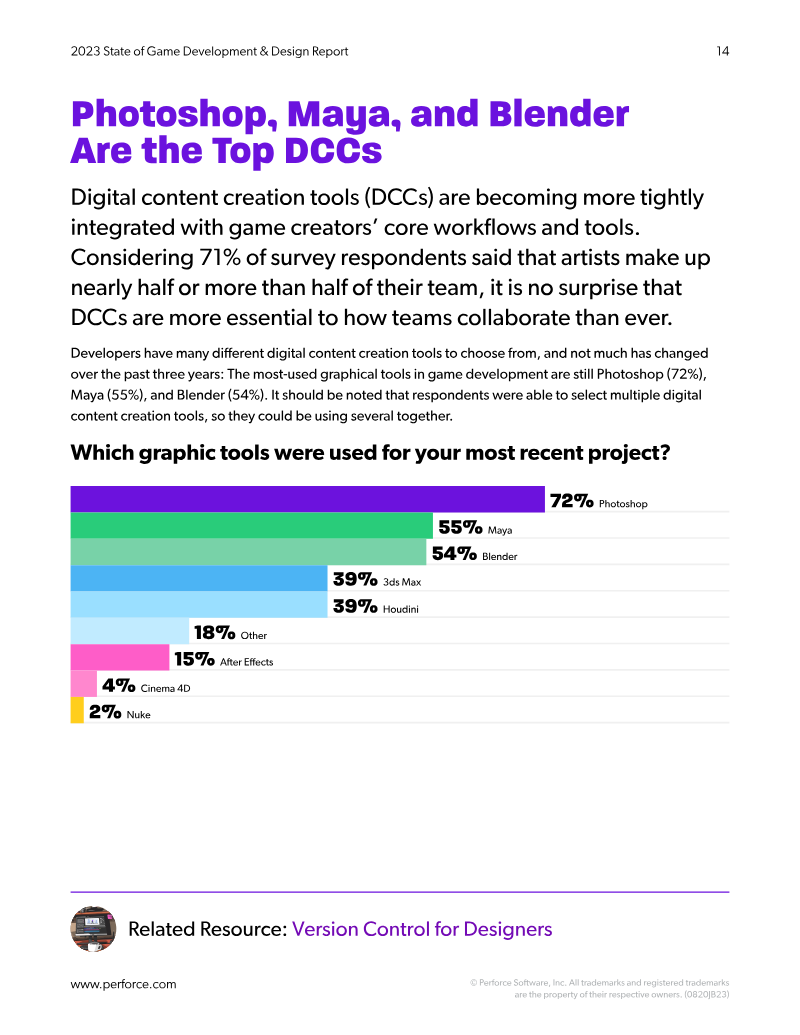
- Unreal Engine is the industry's leading game engine with 57% usage, while Perforce Helix Core has become the standard for version control, utilized by 73% of developers.

Living the Dream or Surviving the Nightmare: Making Commercial Indie Games as a Professor
The integration of academic tenure-track roles with commercial indie game development offers a unique pathway for creators to pursue experimental projects while enhancing their pedagogical efficacy.
- Academic game developers should prioritize securing exhibitions, awards, and grants over commercial sales figures, as these metrics carry significantly more weight during tenure and promotion evaluations.
- University-based game development requires a modified production pipeline where projects are designed as extended, long-term experiences to accommodate the high turnover and limited availability of student collaborators who typically contribute only 10–15 hours per week.
- To ensure project coherence when working with students, faculty should adopt a 'key-frame' workflow where the professor handles core design and animation, then delegates in-betweening or specific feature implementation to students based on their individual talents.

Survey on Student Game Creators and Career Formation 2022: Japan
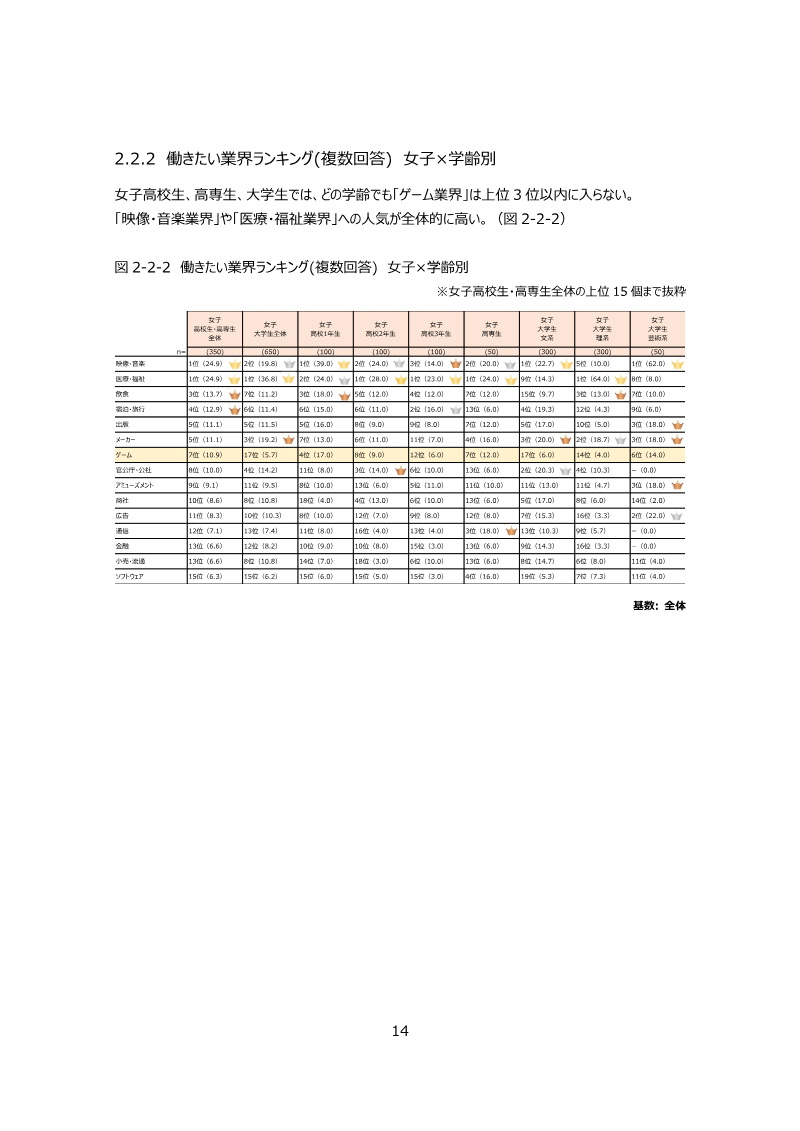
The game industry in Japan faces a complex landscape regarding future talent pipelines, as career aspirations for game creators fluctuate significantly based on age, gender, and educational background.
- Interest in game development careers drops significantly as students transition from middle school to university, where career goals shift toward broader IT engineering or other sectors.
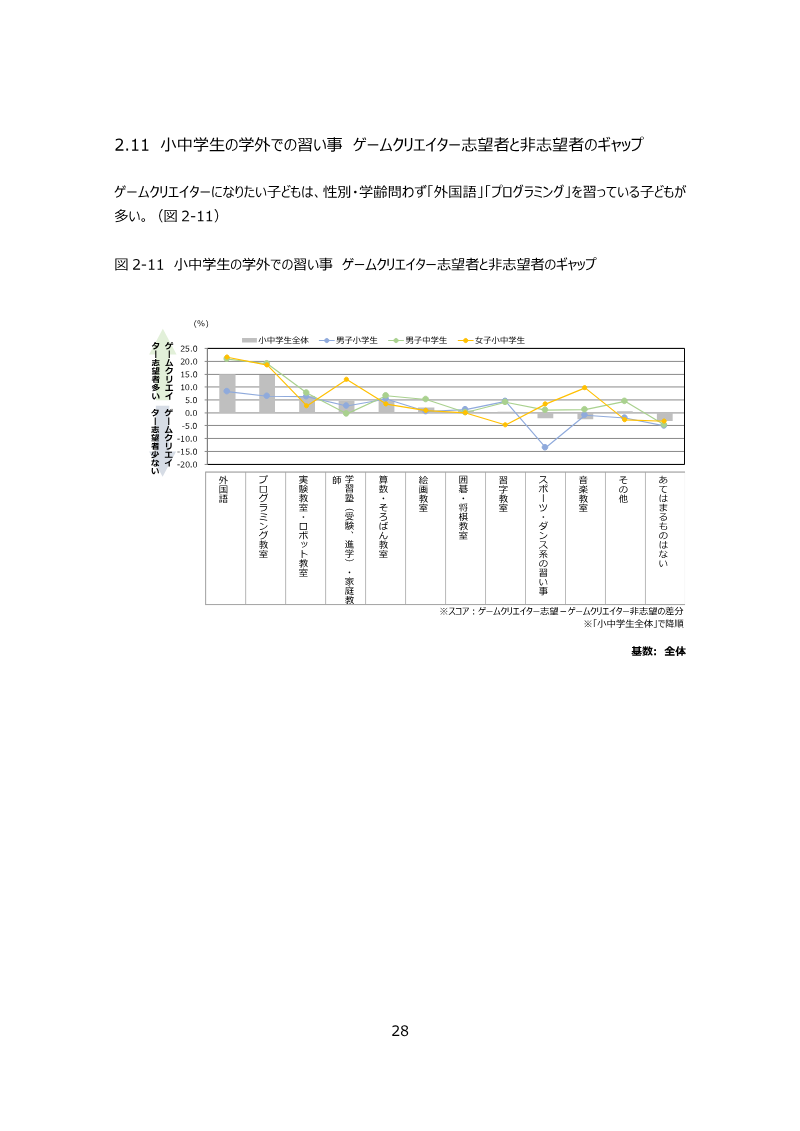
- A persistent gender gap exists in the industry pipeline, with female students showing lower interest in technical programming roles and a preference for creative fields like music and character design.
- Awareness of game development as a profession is high, exceeding 90 percent among older students, yet this does not translate into high career conversion rates.

If You're A Student Wanting To Make Games, Watch This
The decision to pursue formal education versus immediate professional entry in the game development industry hinges on individual career goals, entrepreneurial drive, and the specific sector of the market being targeted.
- A professional portfolio demonstrating tangible capability in coding, art, or modeling is the primary metric for hiring, often outweighing the value of formal academic credentials.
- The necessity of a degree is role-dependent; while AAA studios may require formal qualifications for marketing or specialized technical positions, creative roles remain largely meritocratic.
- Self-starting ventures can bypass formal education when a business model demonstrates immediate, scalable success, as evidenced by early independent developers earning over $100,000 in the 1990s using the shareware distribution model.

Sharing in Success: How to Compensate Your Team Through Revenue Sharing
Revenue sharing serves as a strategic mechanism for independent game studios to attract top-tier talent in a highly competitive labor market while simultaneously mitigating the constraints of limited upfront cash budgets.
- Revenue sharing serves two primary purposes: incentivizing talent in competitive job markets and supplementing base salaries for independent studios.
- Revenue sharing agreements are contractual royalties paid to individuals, whereas equity-based revenue sharing distributes funds as dividends to shareholders.
- Dividends must be equal for all shareholders within the same class, making it legally difficult to create separate revenue-sharing calculations for different projects or team members using equity structures.



Il valore economico e sociale dei videogiochi in Italia
The Italian video game industry has emerged as a vital strategic asset, functioning as both a catalyst for economic growth and a significant driver of social well-being.
- The Italian video game industry generated approximately 2.2 billion euros in market turnover in 2020.
- Strategic state support and targeted fiscal policies could create over 1,000 new high-quality jobs by 2026.
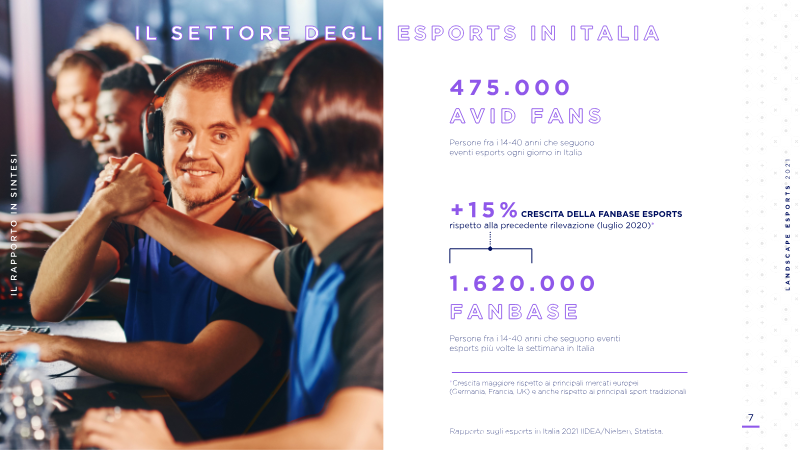
- The domestic ecosystem currently consists of 160 companies and a dedicated esports fan base of 1.6 million people.

Italian Game Developers Census 2014
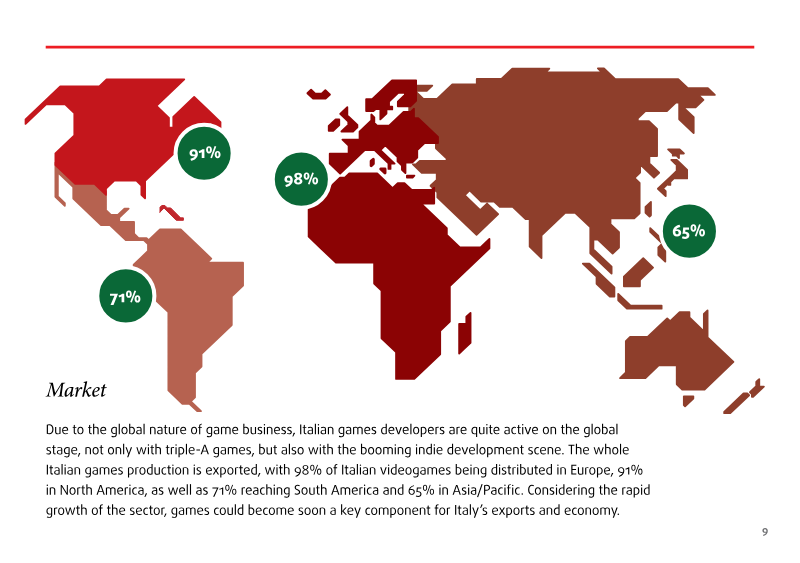
The Italian video game industry in 2014 represents a burgeoning, export-oriented sector defined by a high concentration of startups and a strong emphasis on mobile development.
- In 2014, the Italian video game industry comprised over 100 studios and approximately 700 professionals, generating an annual turnover of roughly €20 million.
- The sector is characterized by a high concentration of startups and a strong strategic focus on mobile platform development.
- The industry is undergoing a transition toward professionalization, moving from informal operations to more structured business models.
Censimento Game Developer Italiani 2018
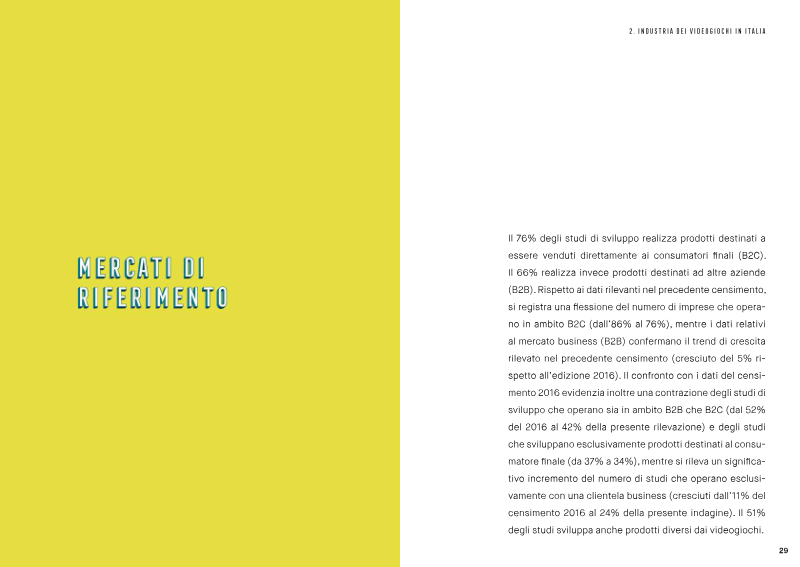
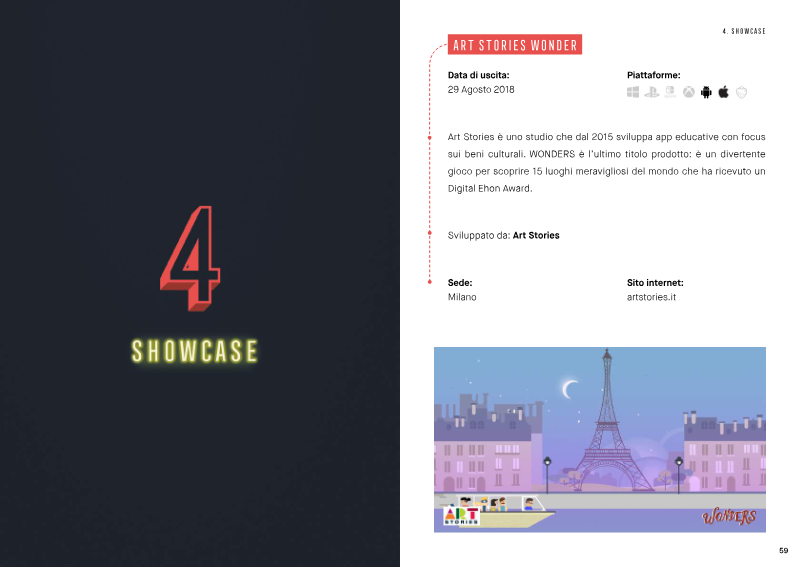
The Italian video game industry in 2018 is characterized by a vibrant but fragmented landscape dominated by micro-enterprises.
- The Italian game industry is highly fragmented, with 63% of studios employing fewer than five people and two-thirds generating annual revenues under €100,000.
- Financial growth is severely constrained by a lack of external capital, as 88% of studios rely entirely on self-financing.
- The market is primarily driven by PC development, which is the focus for 52% of studios, and self-publishing, which is the business model for 65% of the sector.

Censimento Game Developer Italiani 2021
The Italian video game industry has entered a phase of significant maturation, characterized by a robust ecosystem of approximately 160 companies and over 1,600 professionals.
- The Italian game industry is highly export-oriented, with 94% of business-to-consumer revenue generated outside of Italy.
- The domestic market reached €2.179 billion in revenue in 2020, marking a 21.9% increase driven by digital sales and a player base of 16.7 million people.
- The sector comprises approximately 160 companies and over 1,600 professionals, with nearly 75% of studios having operated for more than four years.

Landscape del Settore Esports in Italia 2021
The 2021 landscape report on the Italian esports sector provides a comprehensive economic analysis of the industry’s impact, growth trajectory, and operational structure.
- The Italian esports sector generated a total economic impact of 45 to 47 million euros in 2021.
- Direct economic impact reached 30 to 31 million euros, with esports teams accounting for 65% of this total.
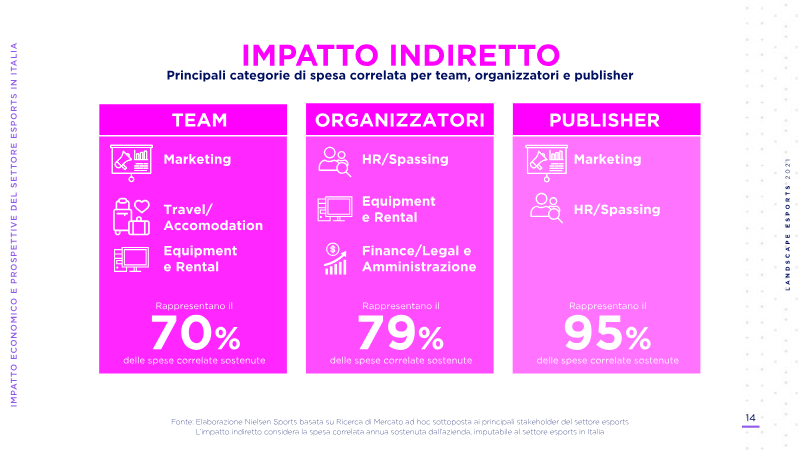
- Indirect economic impact exceeded 15 million euros, with publishers driving 80% of secondary expenditures.