Employment reports and market data
Documents
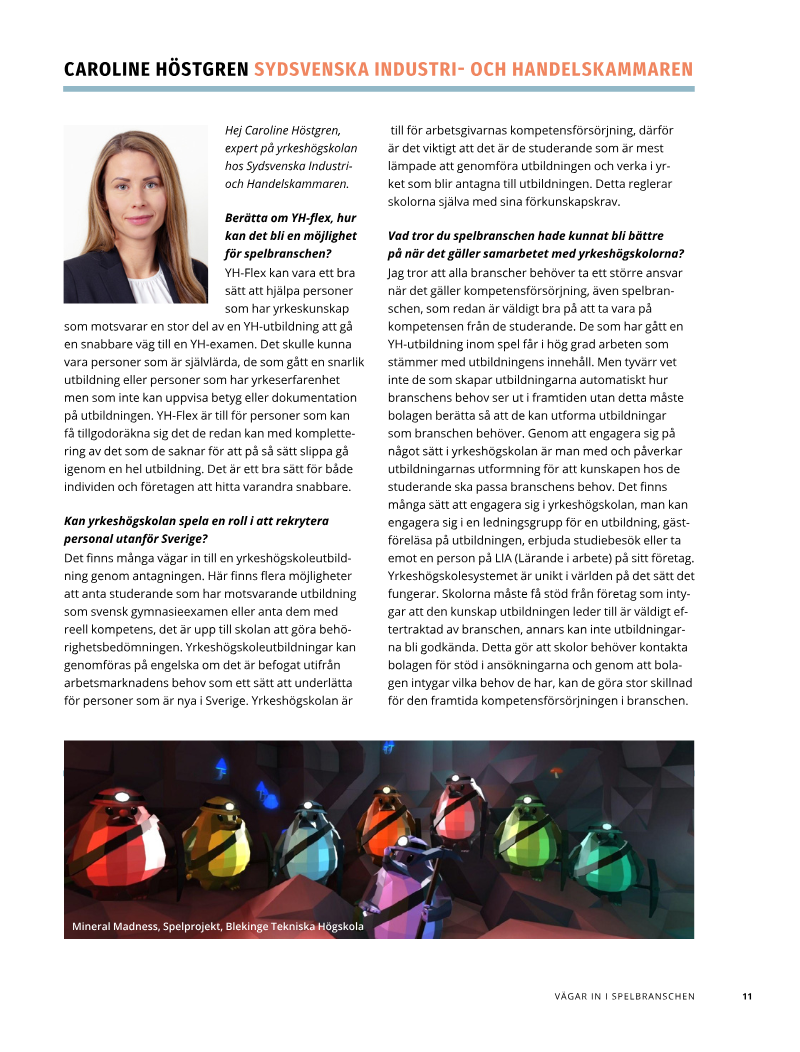
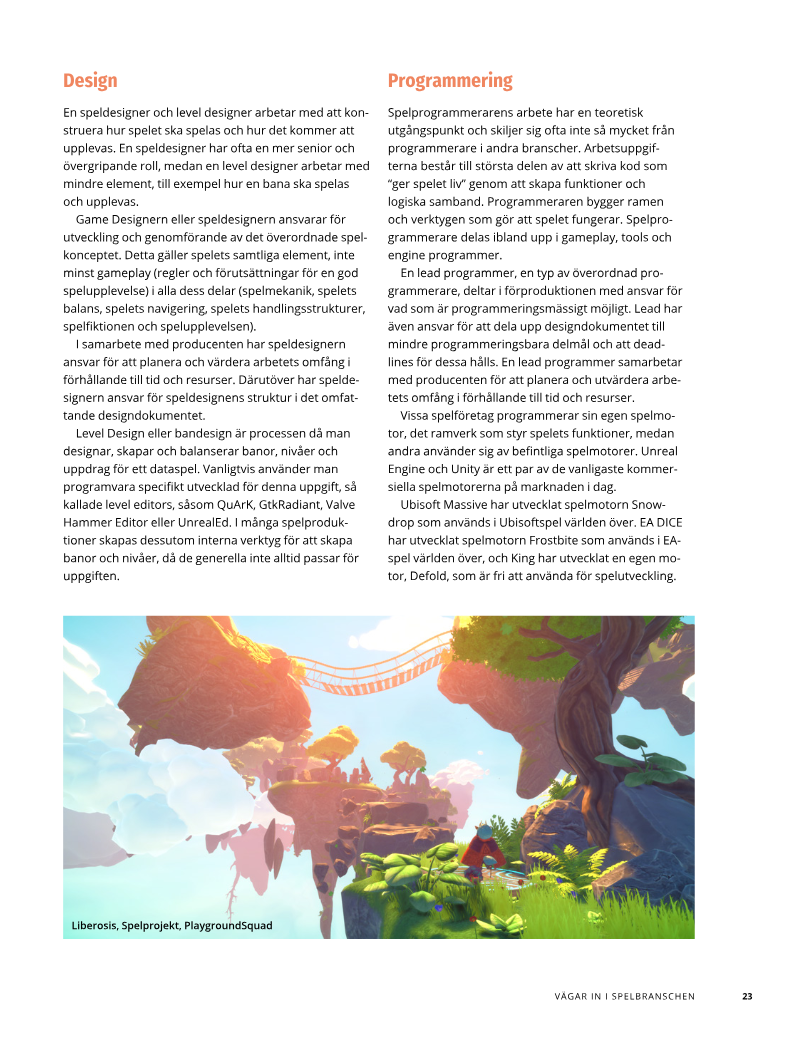

Vägar in i spelbranschen: Kompetens, utbildning och konsten att skapa spel (2023)
The Swedish game industry is currently experiencing a critical talent shortage that threatens its long-term competitiveness and growth.
- The Swedish game industry faces a critical talent shortage, with domestic educational institutions producing fewer than half of the professionals required to meet the demand of 1,348 new hires recorded in 2021.
- Between one-third and one-half of the current Swedish game industry workforce consists of international talent, highlighting a heavy reliance on global recruitment to sustain growth.
- Restrictive work permit policies for non-EU vocational students and complex regulations regarding international remote work act as significant bureaucratic barriers to maintaining the necessary talent pipeline.

Students Getting into the Game Industry with Ian McDonell | 314
Securing a position in the modern game industry requires a strategic shift from general artistic ambition to a disciplined, professional approach that emphasizes technical proficiency and collaborative maturity.
- Professional success in the game industry is driven more by technical proficiency, collaborative maturity, and reliability than by raw creative talent.
- Candidates gain a competitive advantage by pairing artistic skills with backgrounds in complementary fields like IT.
- Portfolios must be refined through iterative feedback and professional branding to effectively resonate with recruiters.
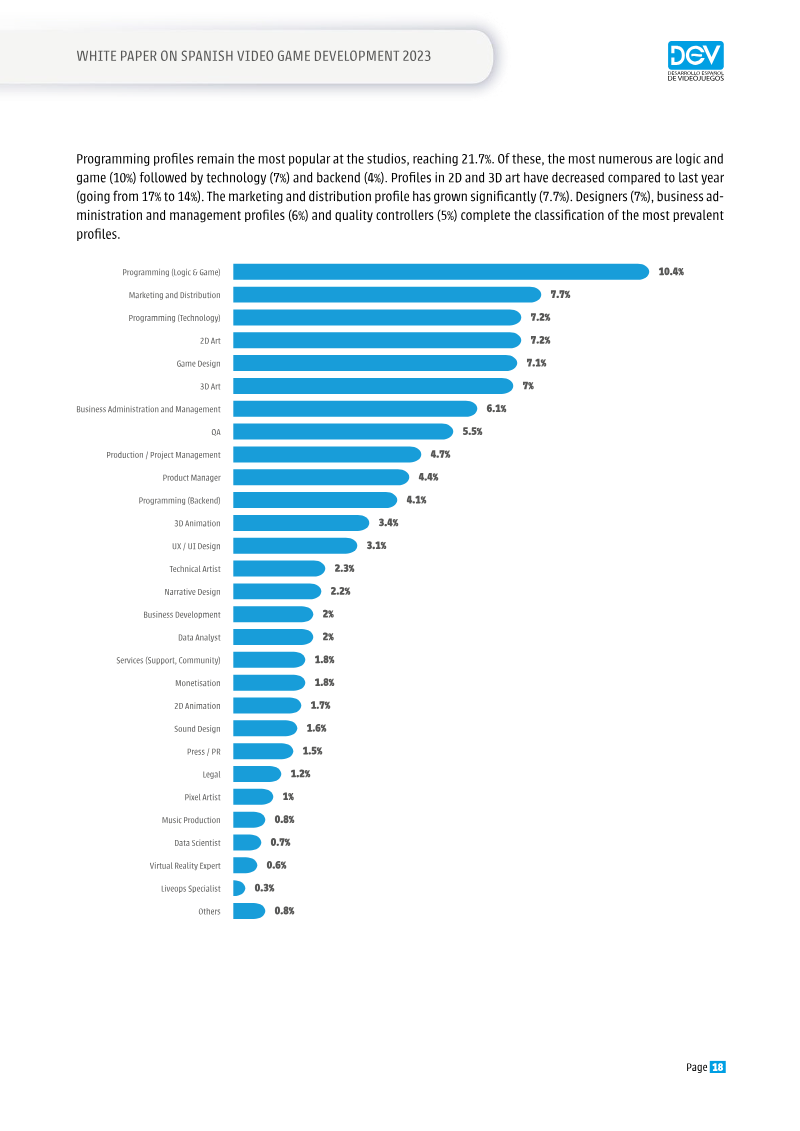

White Paper on Spanish Videogame Development 2023: Executive Summary
The Spanish video game industry has evolved into a significant economic force, characterized by a decade of rapid expansion and increasing institutional recognition.
- The Spanish video game industry generated 1.383 billion euros in revenue in 2022, marking a 440% increase over the previous decade.
- With targeted fiscal and institutional support, the sector is projected to reach 5.5 billion euros in annual turnover and over 23,000 jobs by 2030.
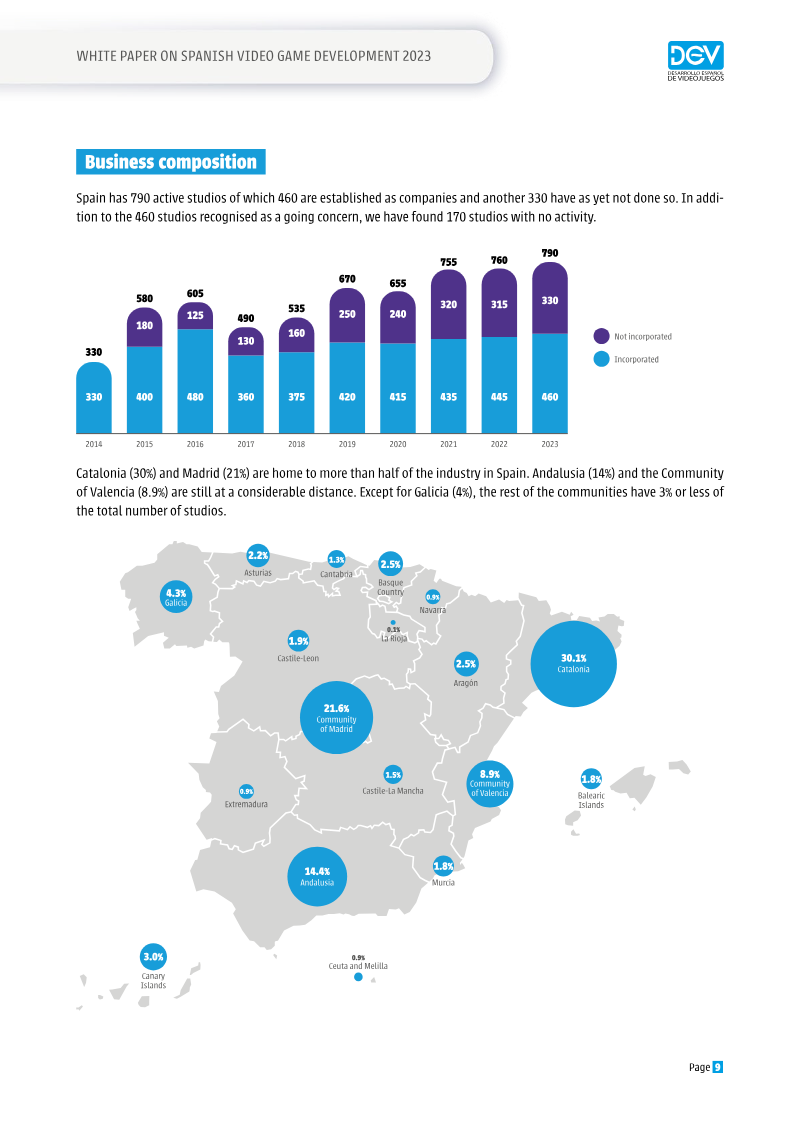
- The industry currently consists of 790 active studios employing 9,261 professionals, with operations concentrated primarily in Catalonia and Madrid.


2023 Games & Interactive Salary & Satisfaction Survey
The ninth-year Games & Interactive Salary & Satisfaction Survey demonstrates that financial remuneration has become the predominant catalyst for career moves, eclipsing flexible or remote work as a primary motivator.
- Salary has overtaken flexible work as the primary driver for career moves, with 31% of UK and Western European respondents citing higher pay as their main reason for leaving a position.
- Artist compensation has seen a sharp 35% increase between 2021 and 2023, with mid-level artists now earning approximately £75k.
- Project close-out periods are a critical retention risk, as 22% of UK respondents decline new offers to finish current projects and 46% of global staff are actively job hunting.


2023 European Video Games Industry Insight Report
The European video games industry demonstrated remarkable resilience throughout 2023, maintaining a robust ecosystem despite a broader global market downturn.
- In 2023, the EU was home to 5,900 game developer studios.
- Public funding plays a crucial role in financing new game studios and supporting research and development across Europe.
- Each European country exhibits unique platform preferences for game development.
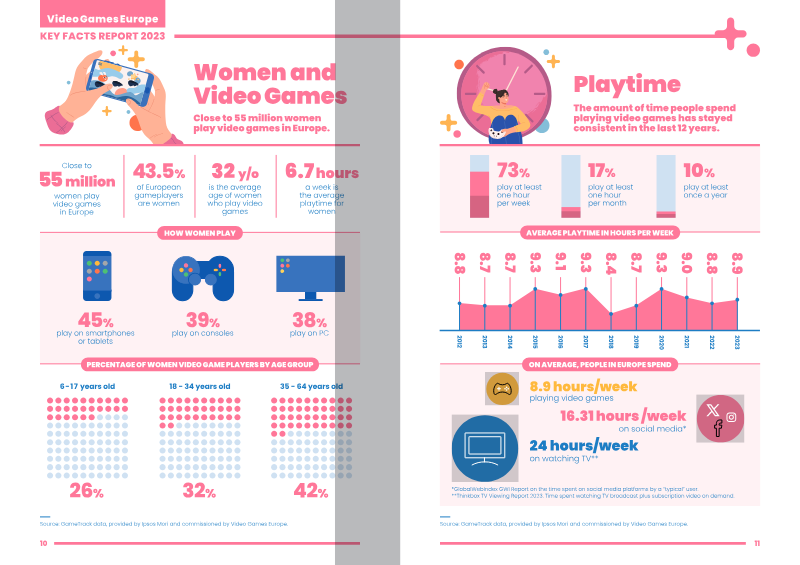


European Key Facts 2023
This analysis provides a comprehensive overview of the European video game sector in 2023, detailing market health, player demographics, and regulatory priorities.
- The European video game sector generated €25.7 billion in 2023, marking a 5% year-on-year revenue increase.
- Industry employment grew by nearly 7% in 2023, reaching a total workforce of approximately 115,000 people across Europe.
- Video games are a mainstream fixture with 53% of the population aged 6–64 identifying as players, maintaining a stable average of 8.9 hours of gameplay per week.
Video Games in Romania 2023
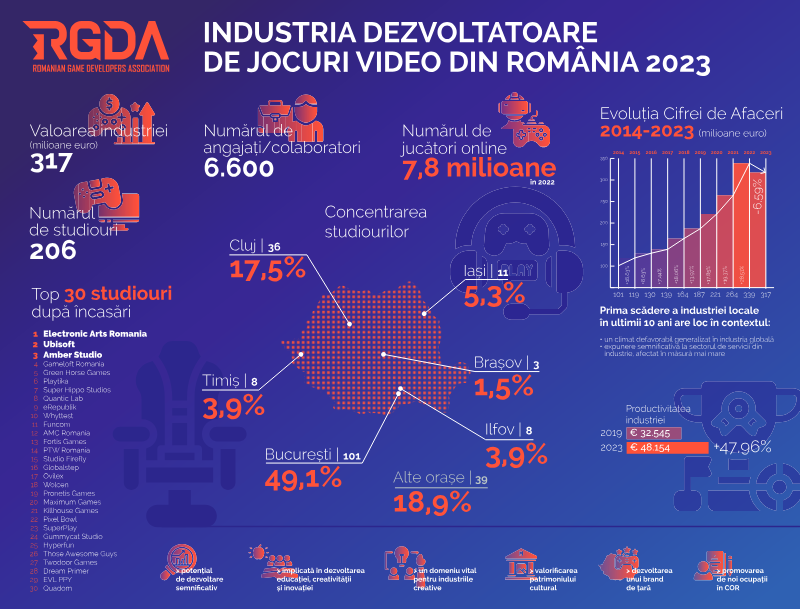
The 2023 analysis of Romania’s video-game sector presents a comprehensive overview of its economic evolution, workforce expansion, and market concentration over the past decade.
- The Romanian video game industry reached a turnover of approximately €6.6 billion in 2023, supported by 350 active studios and a workforce of 6,600 employees.
- The sector experienced a 6.6% contraction in 2022, marking the first decline in a decade due to an unfavorable global economic climate and service-sector volatility.
- Industry activity is highly concentrated in key urban hubs, led by Cluj with 36 studios and Iași, which accounts for 17.5% of the total studio count.

White Paper Catalan Video Game Industry 2023
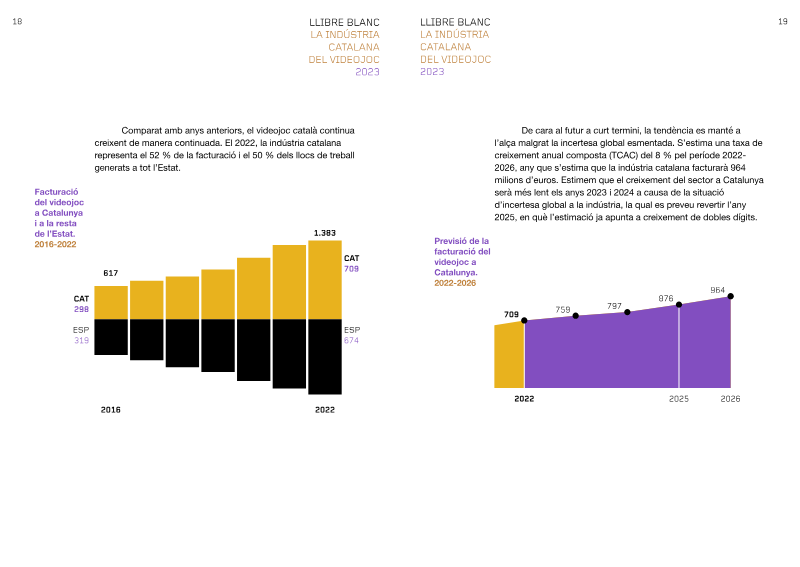
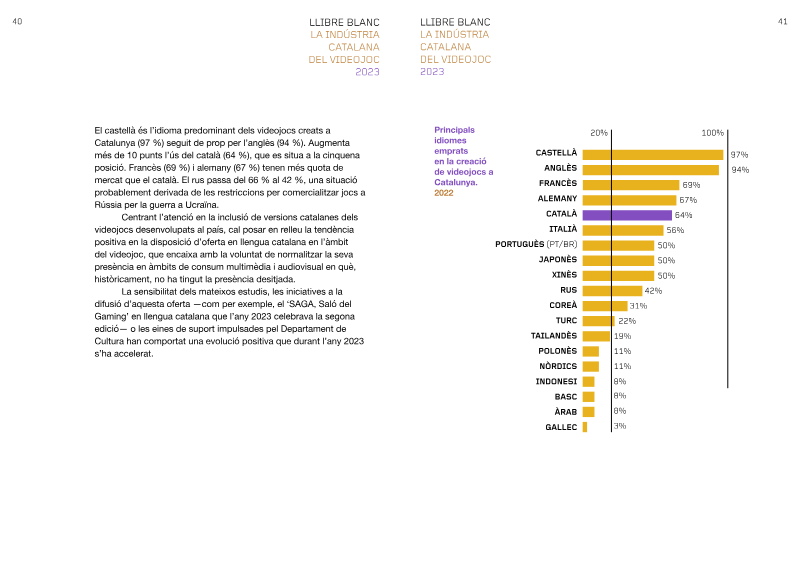
The 2023 white paper on Catalonia’s video-game industry presents a detailed assessment of the sector’s economic performance and labour dynamics for the year 2022.
- Catalonia’s video game industry generated €709 million in revenue during 2022, representing a 7.5 percent decline from the previous year.
- Total employment in the sector grew by 8.7 percent in 2022, reaching a workforce of 4,619 people.
- The simultaneous decrease in revenue and increase in headcount indicates a strategic shift toward more labor-intensive development and ancillary service activities.

Pesquisa Nacional da Indústria de Games 2023
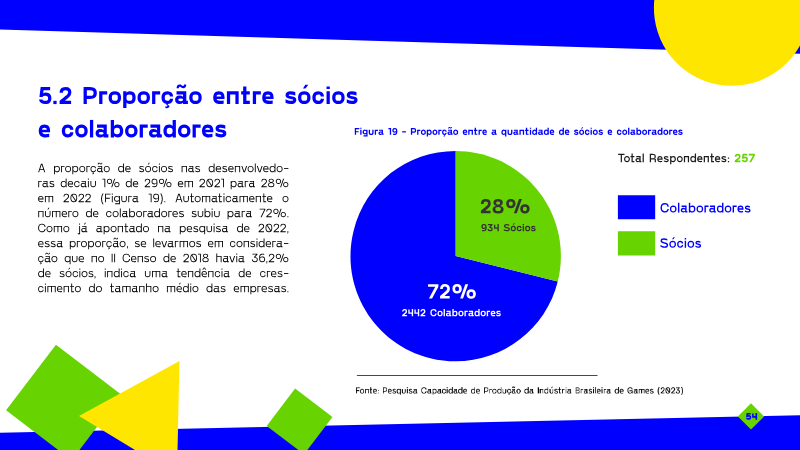
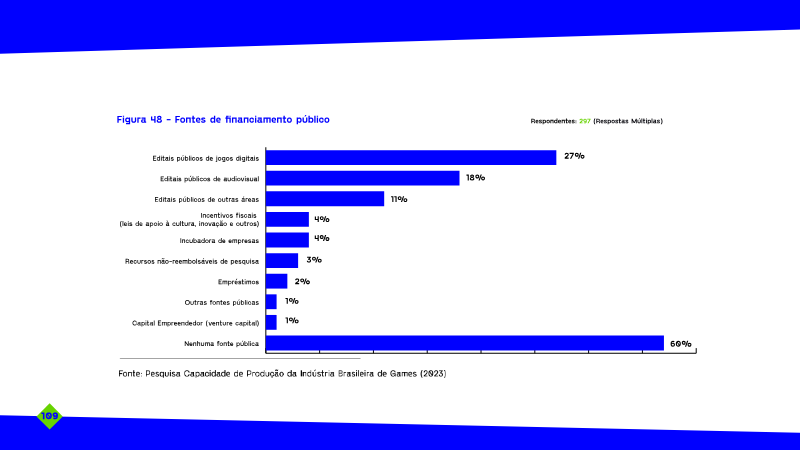
The 2023 national survey of Brazil’s game-development ecosystem maps the sector as it stood in 2022, revealing a vibrant but highly fragmented industry dominated by micro- and small studios.
- Brazil’s game industry grew 3% in 2022 despite a 5.1% global market contraction, reaching a valuation of US$182.9 billion with projections to hit US$206.4 billion by 2025.
- The Brazilian market is highly fragmented, consisting of 1,042 active studios that are primarily micro or small in size.
- Mobile gaming leads revenue generation at 49%, followed by PC at 26% and consoles at 25%, supported by a massive domestic player base of approximately 103 million people.

Annual Report 2023: Canada
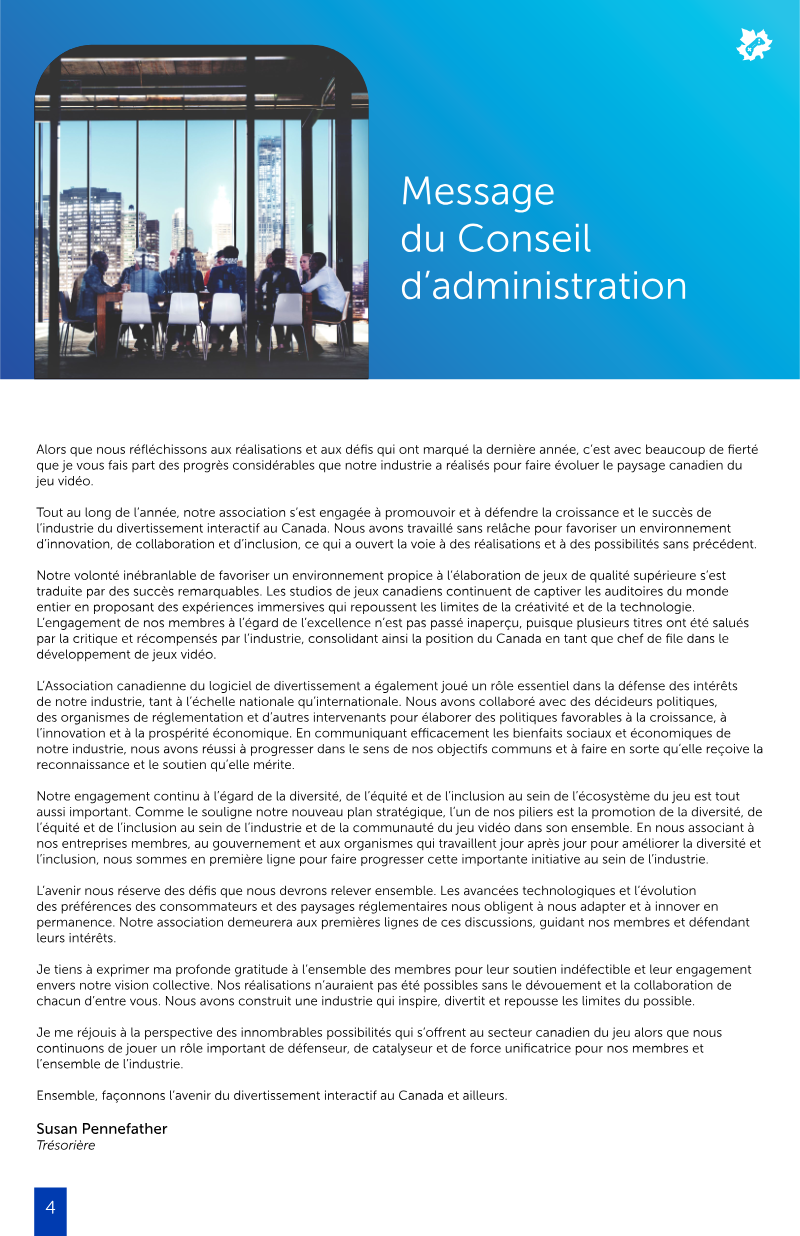
The 2023 annual review underscores a year of extraordinary expansion for Canada’s video-game industry, positioning the nation as a pre-eminent global hub for development talent and creative output.
- Canada’s video game industry experienced extraordinary expansion in 2023, solidifying its status as a global hub for development talent and creative output.
- Canadian studios achieved record-breaking international award recognition and critical acclaim throughout the 2023 calendar year.
- The sector deepened its export revenues in 2023, significantly increasing its contribution to the national digital economy.

State of the Game Development Industry 2023: Workplace Health & HR Culture, Mental Trends
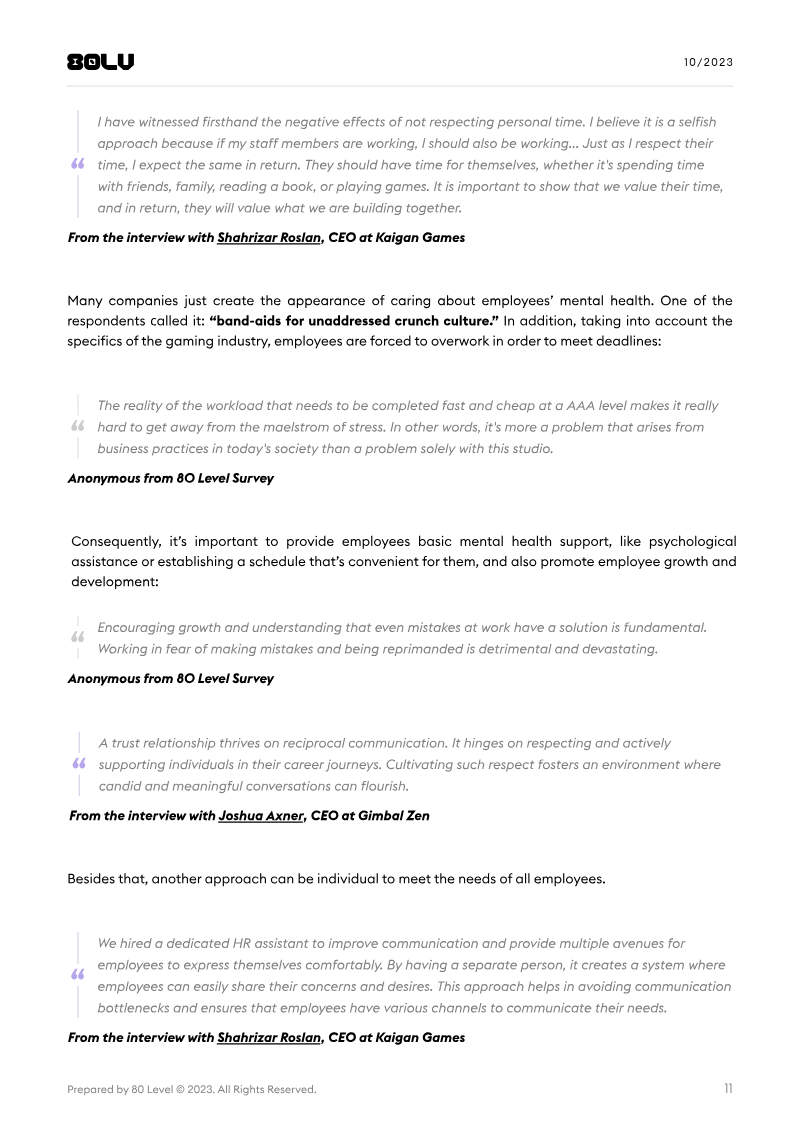
The global game development industry entered a period of profound instability throughout 2023, characterized by widespread layoffs affecting 28% of the workforce and a pervasive crisis of employee loyalty.
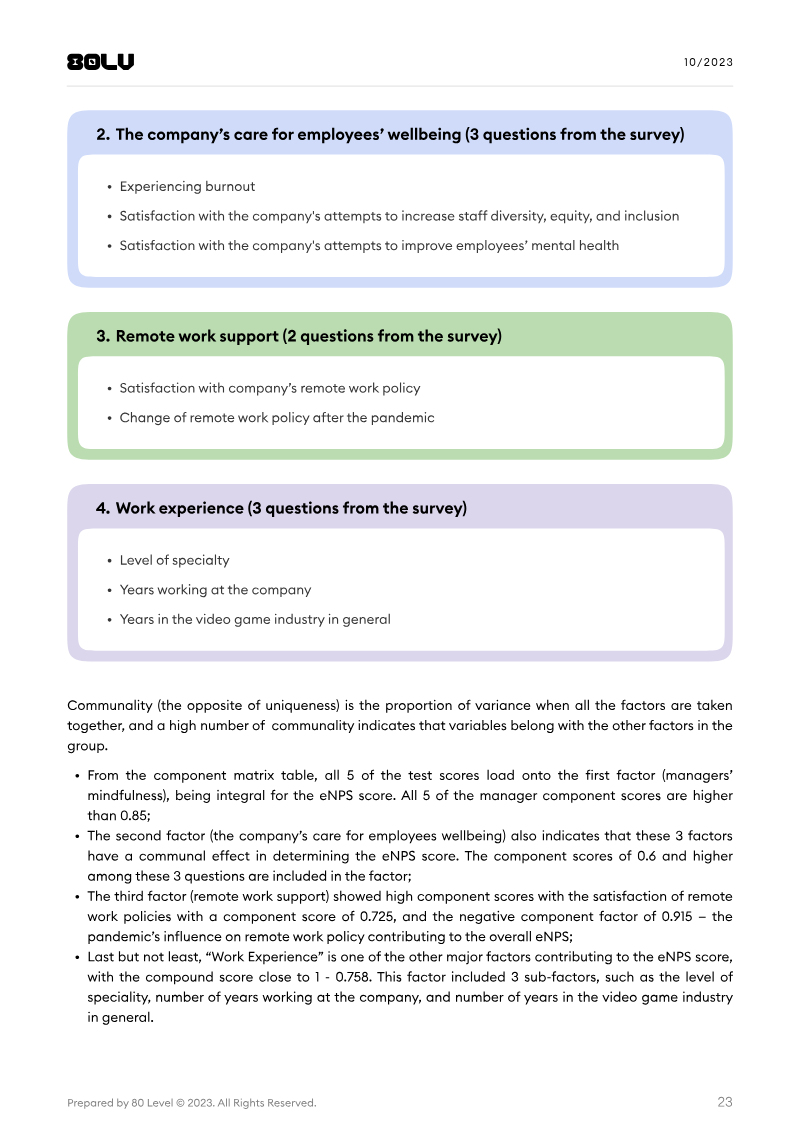
- The game industry experienced significant instability in 2023, with 28% of the workforce affected by layoffs and an Employee Net Promoter Score of -19% indicating widespread dissatisfaction.
- Economic recalibration and management failures are the primary drivers of industry distress, while AI automation currently accounts for only 3% of total job losses.
- Workplace culture is suffering from 'quiet hiring' practices, where 37% of employees are absorbing expanded responsibilities without corresponding increases in compensation.
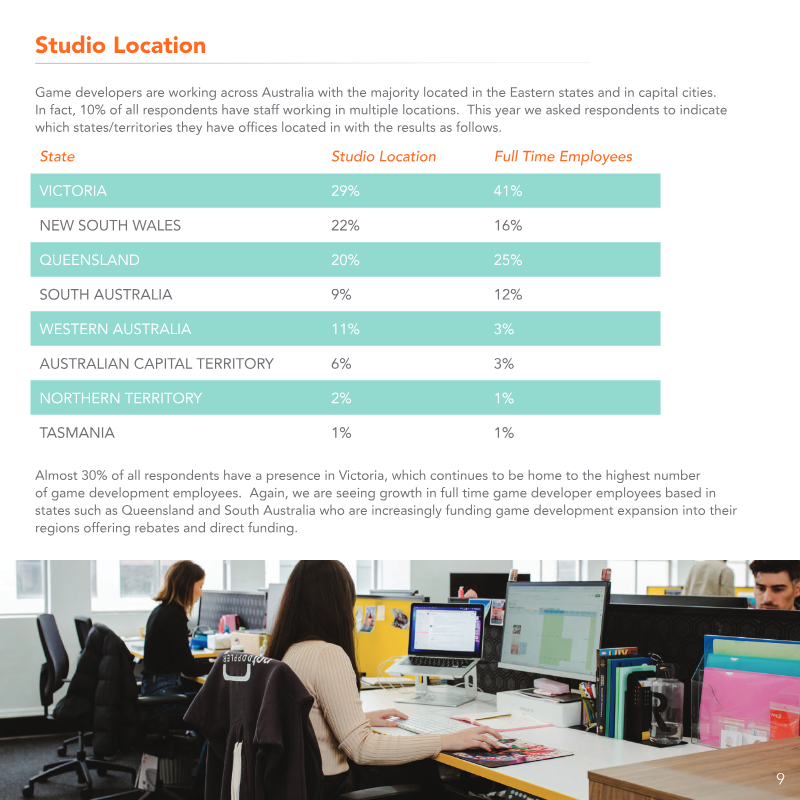

Australian Game Development Survey FY2023 Industry Snapshot
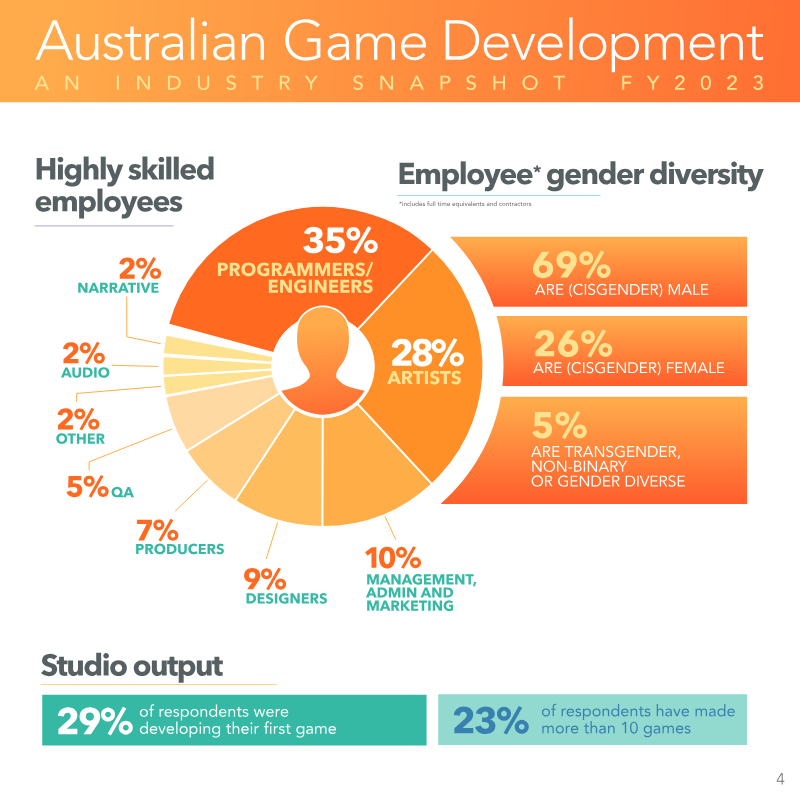
The Australian Game Development Survey: FY2023 Industry Snapshot reveals a sector experiencing significant maturation and financial expansion.
- The Australian game development industry generated $345.5 million in revenue during FY2023, representing a 21% year-over-year increase.
- The workforce grew by 17% to 2,458 full-time equivalent employees, with 63% of studios planning further hiring in the coming year.
- The sector is highly export-dependent, with 87% of total revenue derived from international markets.