Key insights
6 slides
Market Structure
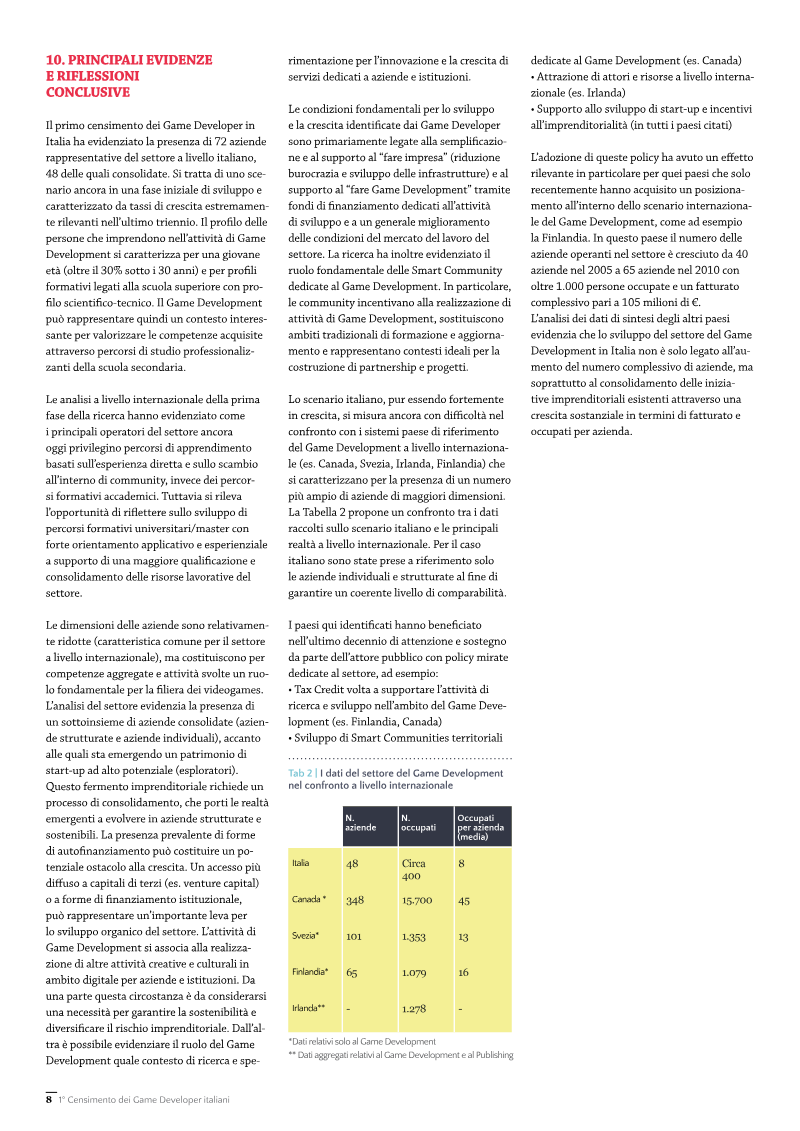
The Italian game industry is highly fragmented.
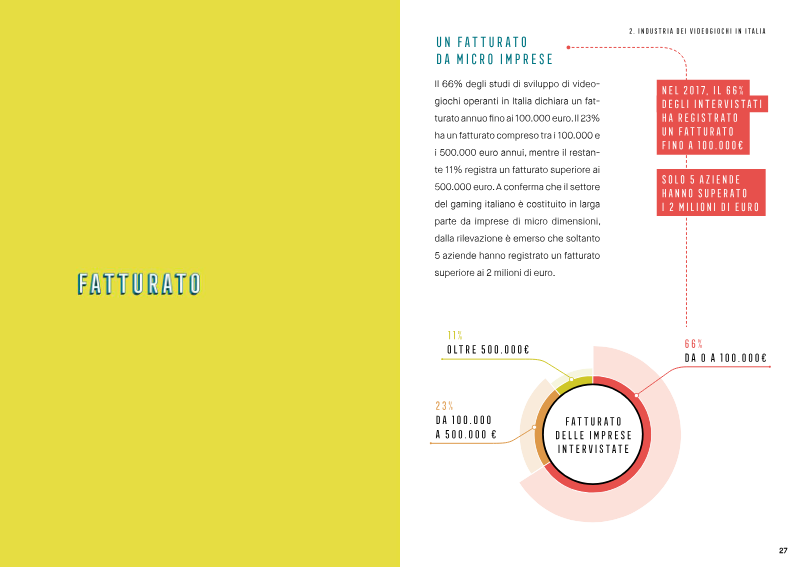
63% of studios employ fewer than five people. Two-thirds of these studios generate annual revenues under €100,000.
Fragmentation. The Italian game industry is highly fragmented, with most studios being small and generating low revenues.
1 / 6
- 01The Italian game industry is highly fragmented, with 63% of studios employing fewer than five people and two-thirds generating annual revenues under €100,000.See it on page 13
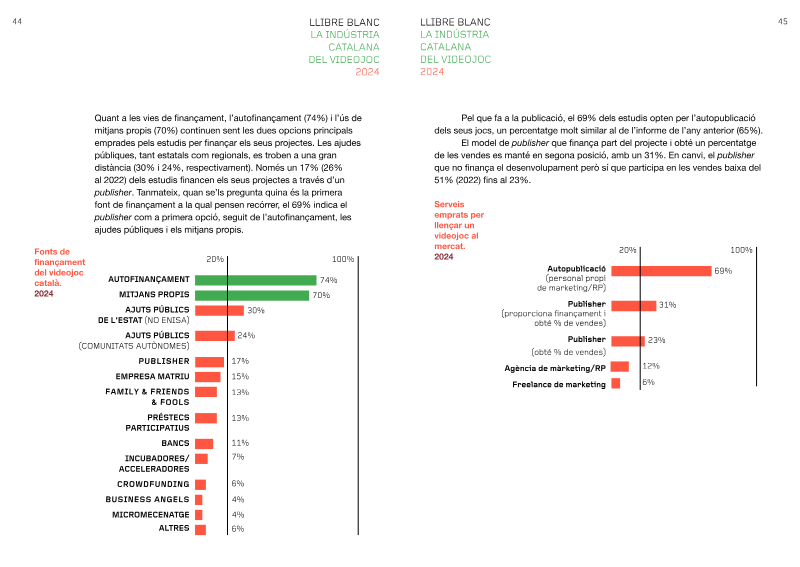
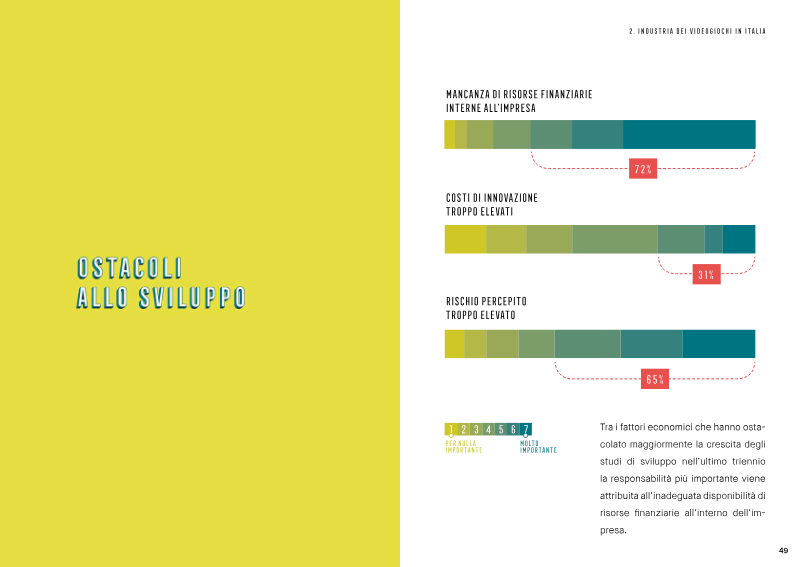
- 02Financial growth is severely constrained by a lack of external capital, as 88% of studios rely entirely on self-financing.See it on page 24
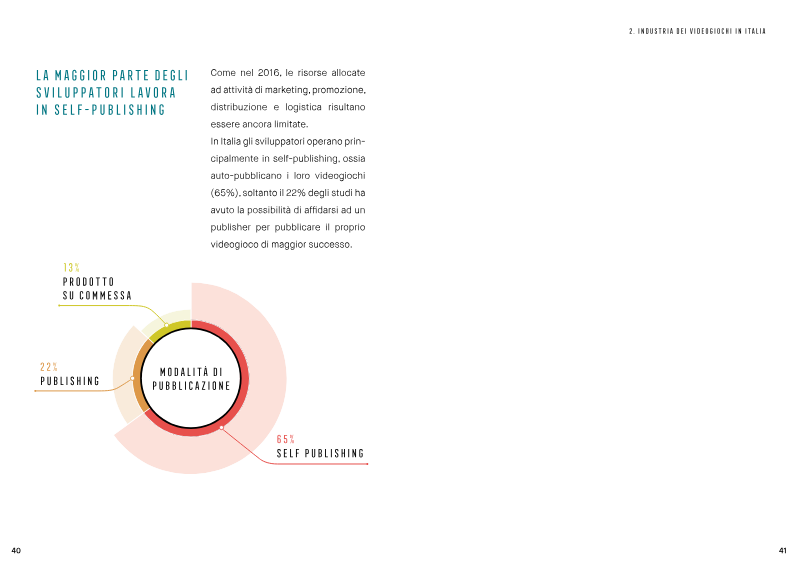
- 03The market is primarily driven by PC development, which is the focus for 52% of studios, and self-publishing, which is the business model for 65% of the sector.See it on page 20
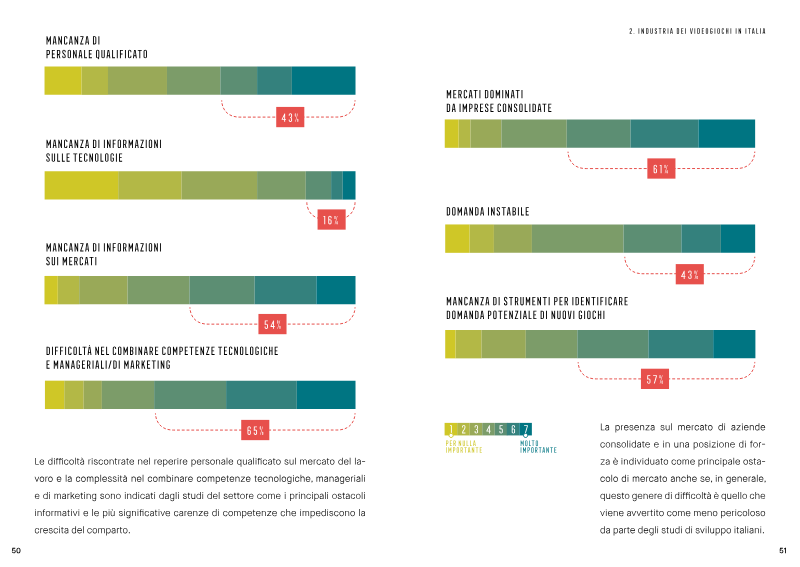
- 04The industry faces a critical deficit in professional business-management and marketing expertise, hindering the transition from creative production to commercial viability.See it on page 25
- 05Public support and fiscal incentives remain underdeveloped, creating a structural barrier to the long-term scaling of the industry.See it on page 24
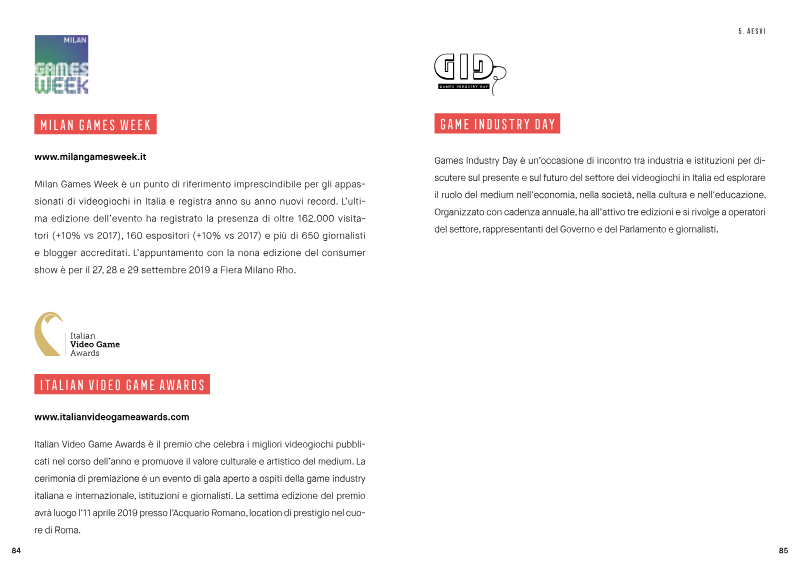
- 06Public-facing initiatives like Milan Games Week and the Italian Video Game Awards are essential for industry visibility, attracting 162,000 visitors in 2018.See it on page 42
Ask AI about this report
Summary
The Italian video game industry in 2018 is characterized by a vibrant but fragmented landscape dominated by micro-enterprises. Approximately 63 percent of studios employ fewer than five people, and two-thirds of these companies generate annual revenues below €100,000. Despite this small scale, the sector benefits from a highly educated, youthful workforce that maintains a strong international orientation. PC development remains the primary focus for 52 percent of studios, while self-publishing serves as the dominant business model for 65 percent of the market.
Structural challenges significantly hinder the industry’s ability to scale and compete on a global stage. The sector relies heavily on self-financing, with 88 percent of studios lacking external capital, and suffers from a notable deficit in professional business-management and marketing expertise. Furthermore, the slow implementation of public support measures and fiscal incentives limits the potential for long-term growth. To overcome these barriers, the industry requires the establishment of specialized development hubs, improved access to financial incentives, and targeted training programs to bridge the gap between creative output and commercial viability.
The broader ecosystem is supported by institutional advocacy and cultural promotion, led by organizations such as AESVI. Events like Milan Games Week and the Italian Video Game Awards play a critical role in elevating the industry’s profile, attracting 162,000 visitors and fostering public recognition of the sector’s economic value. Collaborative efforts between academia and industry, facilitated by research centers like CRIET, further strengthen the foundation for future development. Ultimately, the industry’s trajectory depends on its ability to attract international investment and transition from a collection of small, independent studios into a more robust, professionally managed economic sector.