ReportDataspelsbranschen
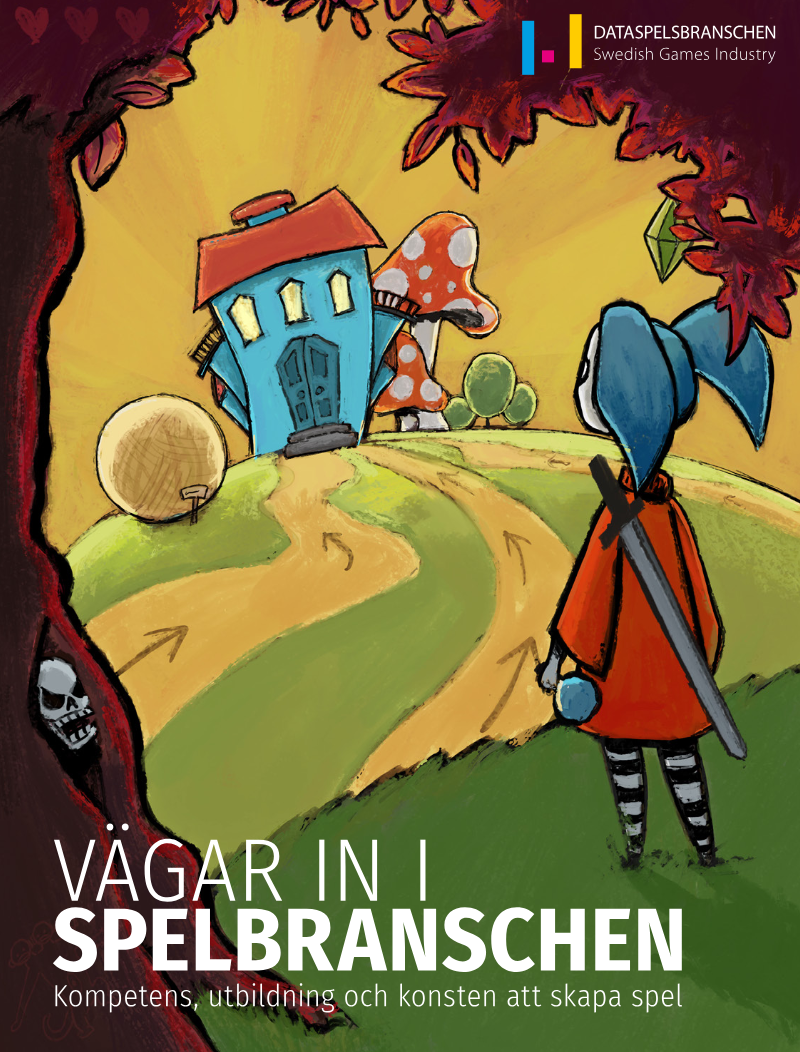
Vägar in i spelbranschen: Kompetens, utbildning och konsten att skapa spel (2023)
24 Jan 202336 pages~56 min full read
Key insights
8 slides
The rising bill
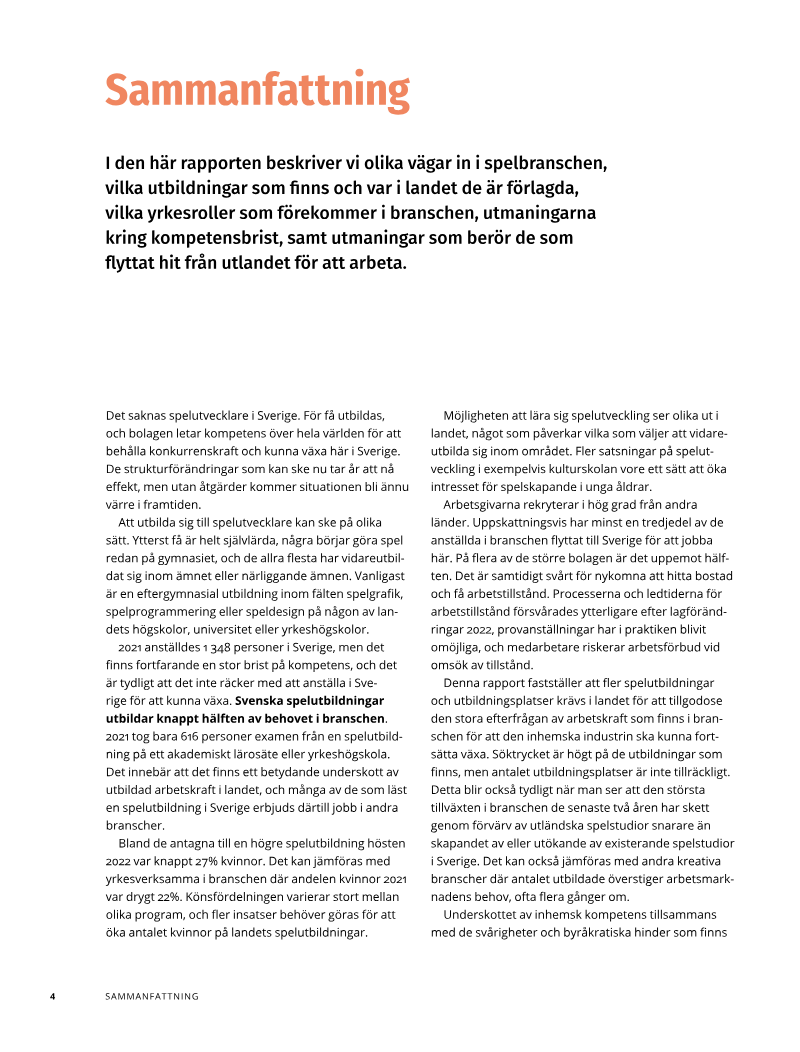
Domestic education produces fewer than half of required professionals.
The Swedish game industry recorded 1,348 new hires in 2021. Domestic educational institutions are failing to meet this demand.
Global reliance
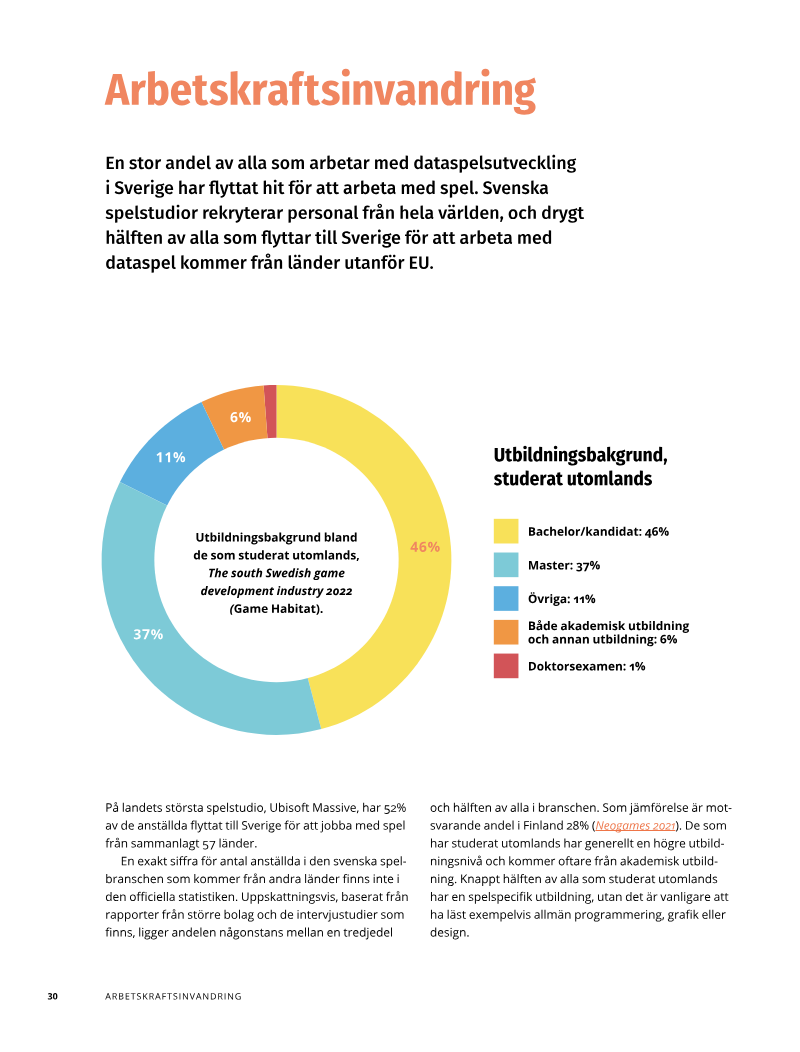
Between one-third and one-half of the workforce is international.
The current Swedish game industry workforce consists of international talent between one-third and one-half.
Page 30 of the reportone-third to one-half
Share of current Swedish game industry workforce from abroad
Bureaucratic friction
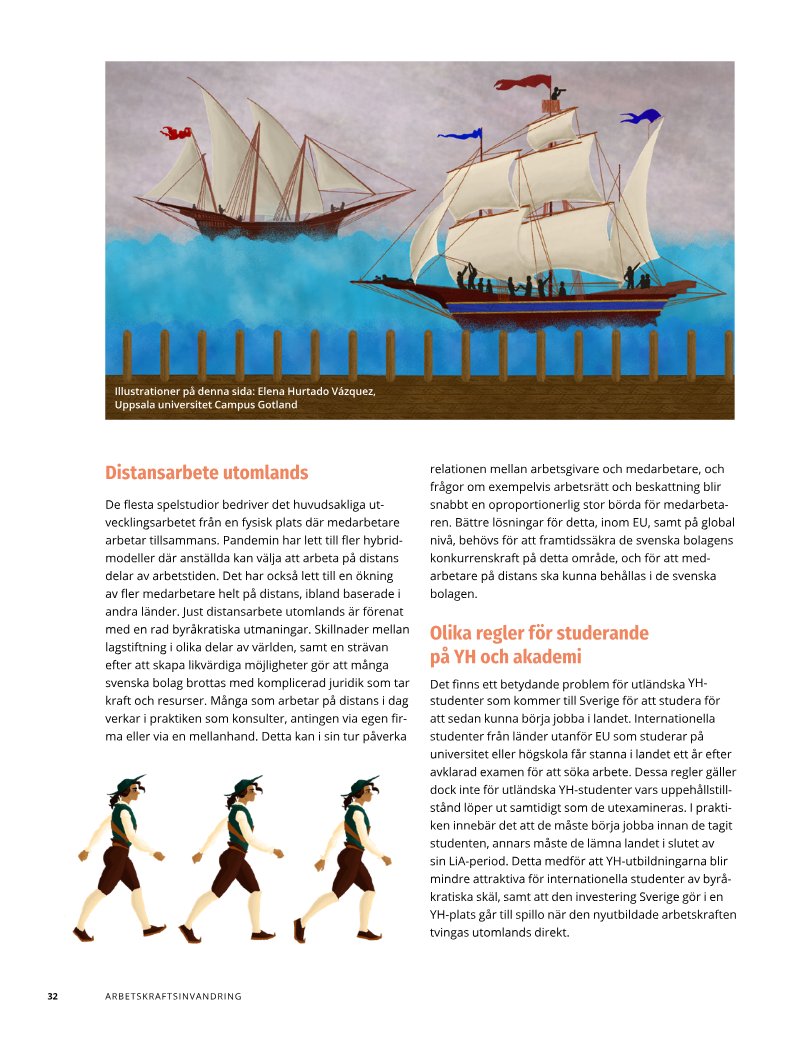
Work permit policies and remote work regulations impede talent retention.
Restrictive work permit policies for non-EU vocational students act as significant bureaucratic barriers. Complex regulations regarding international remote work also impede the talent pipeline.
Academic recognition
Game development lacks official recognition as a formal academic discipline.
The lack of official recognition for game development as a formal academic discipline complicates data tracking. It also hinders strategic planning for the sector.
Infrastructure challenges
Housing shortages and gender diversity needs constrain industry growth.
The industry faces persistent challenges related to housing shortages. It also needs to improve gender diversity within the workforce.
Infrastructure. Industry growth is further constrained by domestic infrastructure challenges, specifically persistent housing shortages and a need to improve gender diversity within the workforce.
Research alignment
Academic research funding must align with practical studio requirements.
To ensure long-term competitiveness, the industry must align academic research funding with practical, project-based requirements.
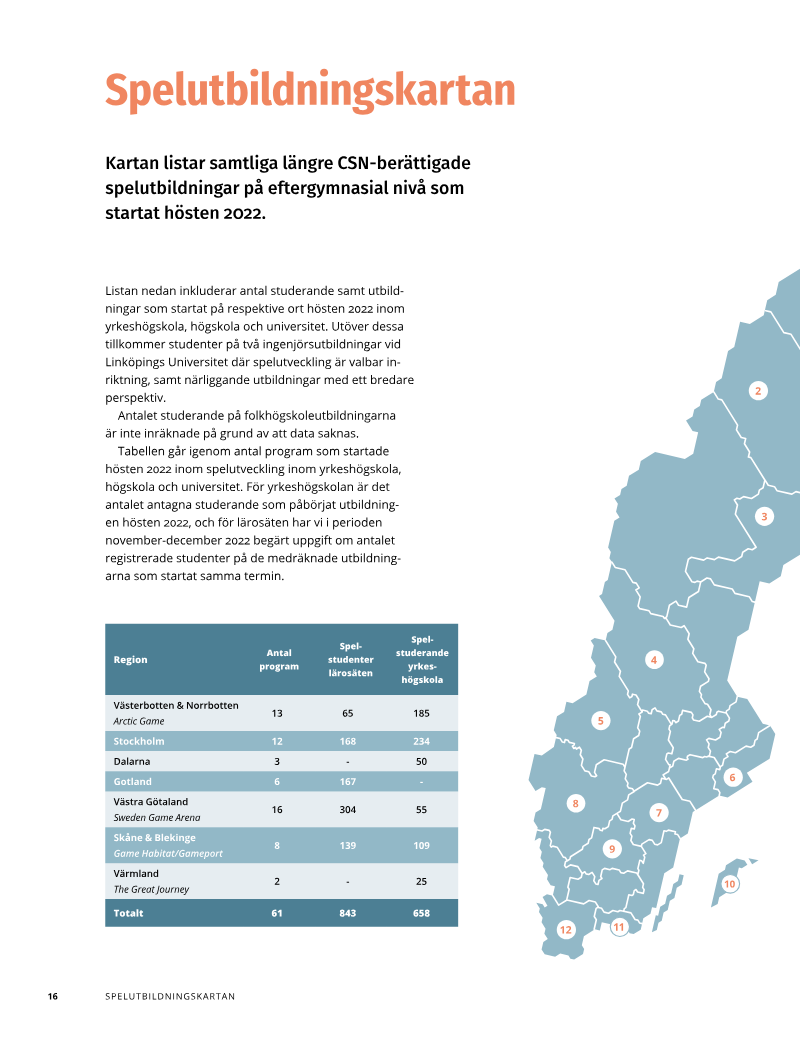
Educational map
Sweden's game education spans multiple regional hubs.
These institutions prioritize project-based, team-oriented learning.
Educational hubs. The Swedish educational landscape is characterized by a robust ecosystem of vocational programs and academic institutions that prioritize project-based, team-oriented learning.
Sustainable model
Formalizing game development and streamlining pathways can sustain innovation.
By formalizing game development within the academic framework, Sweden can maintain its position as a leading hub. Addressing administrative barriers is necessary to transform the recruitment bottleneck into a sustainable model.
Systemic adjustments. By formalizing game development within the academic framework and addressing the administrative barriers that currently impede the retention of global talent, Sweden can maintain its position as a leading hub…
1 / 8
Ask AI about this report