China reports and market data
Documents

Real-Time Data Processing for Multiplayer Online Games
The primary objective of real-time data processing in multiplayer online games is to provide immediate insights into player behavior, revenue streams, and system integrity.
- A robust real-time data pipeline for MMORPGs relies on a three-tier architecture: Logstash for collection, Kafka as a high-throughput distributed transfer station, and Flink for real-time computation.
- Kafka serves as the central message broker capable of processing millions of messages simultaneously, offering fault tolerance and easy horizontal scaling without server downtime.
- Apache Flink is preferred for streaming analytics due to its 'exactly-once' processing guarantee, which prevents data loss or duplicate calculations, and its checkpointing mechanism for recovery to specific time points.

How to Reduce In-Game Inflation by Monitoring Your Economic Systems
Managing economic stability in complex MMORPGs requires a proactive approach to monitoring and regulating in-game inflation, which mirrors the challenges faced by central banks in real-world economies.
- Developers must treat in-game economies as dynamic systems by balancing time, labor, and currency to prevent price volatility and maintain player confidence.
- The five primary drivers of inflation are excessive currency issuance, insufficient essential item production, declining player populations, market manipulation by bots, and the sudden influx of 'sleeping money' from returning players.
- Teams should implement robust visualization tools to track currency flow, exchange rates, and transaction networks to identify imbalances between currency issued and collected.

Riz Virk on US vs. China App Wars, Simulation Hypothesis (Life is a Game!), & Startup Myths
Mobile applications have evolved from simple content delivery tools into critical geopolitical infrastructure, marking a shift from regulating content to controlling the platforms themselves.
- Mobile applications have transitioned from simple content delivery tools into critical geopolitical infrastructure, leading the US, China, and India to treat platforms as matters of national security and data sovereignty.
- The global tech industry must adapt to an era of economic protectionism where foreign-controlled platforms face persistent regulatory scrutiny and complex cross-border ownership requirements.
- The simulation hypothesis suggests that reality functions like a sophisticated video game engine, drawing parallels between quantum physics' observer effect and the information-based structure of the universe.

Publishing in China | PocketGamer.biz RoundTable
The Chinese mobile gaming market is currently defined by a rigorous regulatory environment that prioritizes state-mandated anti-addiction measures and strict ISBN licensing compliance.
- Navigating the Chinese mobile market requires a 12-to-18-month regulatory approval process, making established local partnerships essential for successful entry.
- Since 2020, Apple has enforced strict ISBN licensing requirements for all games with in-app purchases, creating significant barriers for Western developers.
- The Chinese Android market remains highly fragmented, with ByteDance emerging as a critical competitive channel for user acquisition.

Building An Intelligent Game Testing System in Netease MMORPG Games
The rapid evolution of large-scale MMORPGs like Justice has rendered traditional manual and script-based regression testing increasingly unsustainable.
- Netease transitioned from manual and script-based testing to an autonomous AI architecture to manage the complexity of over 15,000 quest steps in the MMORPG 'Justice'.
- The system utilizes Markov decision processes, Monte Carlo Tree Search, and Upper Confidence Bound algorithms to autonomously navigate game environments and generate optimal testing paths.
- Integrating Natural Language Processing to extract intent from quest descriptions allows the AI to prioritize player actions, resulting in a threefold increase in search speeds.

A Brief View of Chinese & Global Mobile Game Markets | PGC Digital #1
The global mobile gaming market experienced significant growth in 2019, with combined revenue from the App Store and Google Play reaching approximately $61.7 billion, a 14.8% increase over the previous year.
- The global mobile gaming market grew by 14.8% in 2019 to reach $61.7 billion, with projections estimating a rise to $100 billion in 2020.
- Hyper-casual games are a dominant market force, representing over 70% of top trending releases and offering strong return on investment.
- The Chinese mobile market generated $23 billion in 2019, but requires navigating a fragmented ecosystem of third-party Android stores due to the absence of Google Play.
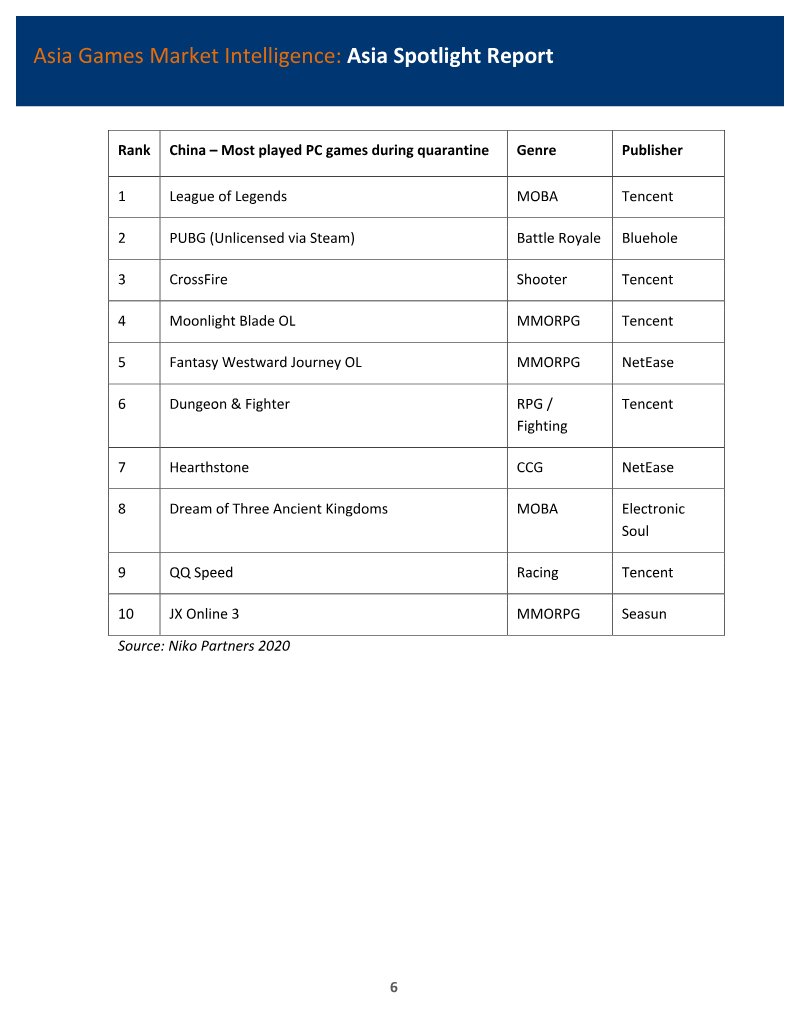
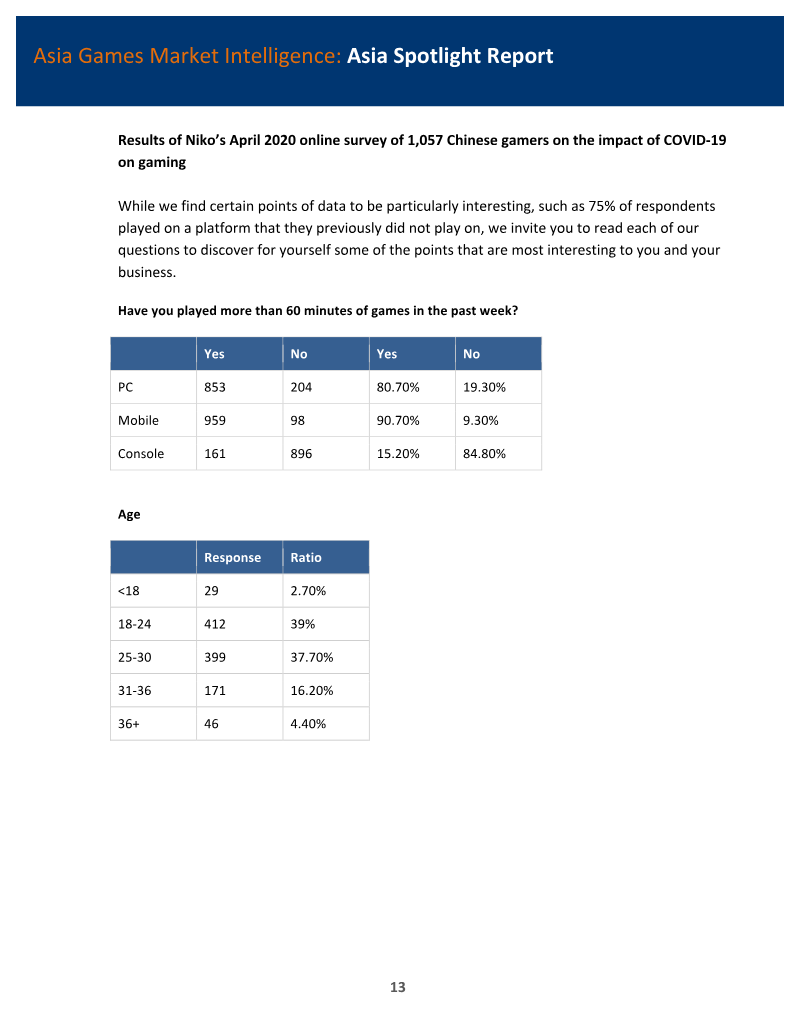
Asia Spotlight Report: The Impact of COVID-19 on China’s Video Game Market in Q1 2020
The video game market in China experienced a significant surge in engagement and revenue during the first quarter of 2020, driven by widespread stay-at-home mandates during the COVID-19 pandemic.
- China’s video game market revenue in Q1 2020 was approximately 30% higher than in Q1 2019, driven by increased engagement during the COVID-19 quarantine period.
- Mobile gaming saw significant growth, with iOS weekly game downloads during the Lunar New Year 153% higher than in December 2019 and 81.6% of surveyed gamers reporting increased spending.
- PC gaming engagement surged, with 94.6% of surveyed players spending more time on PC titles and Steam reaching a global record of 18.8 million concurrent users on February 2, 2020.
How to Enter the World's Largest Mobile Marketplace
The Chinese mobile gaming market represents the world’s largest sector, generating approximately $37.9 billion in annual revenue with over 691 million active mobile gamers.
- The Chinese mobile gaming market is the world's largest, generating $37.9 billion in annual revenue from a base of 691 million active players.
- Entering the market requires securing an ISBN license and an IP protection certificate for any game featuring in-app purchases, a process that takes six to nine months and requires significant capital.
- The absence of the Google Play Store has resulted in a highly fragmented ecosystem of hundreds of disparate Android app stores, necessitating the use of specialized publishing services for consolidated distribution.
East vs. West: Mobile Game Art Styles and Genres Across Markets
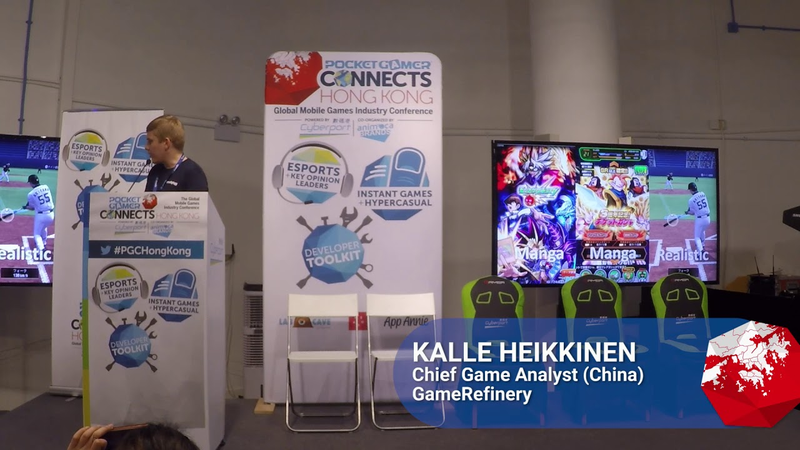
This analysis examines the divergence in mobile game art styles and visual genres across the United States, Japan, and China, utilizing feature-level data from the top 200 grossing iOS titles during the first quarter of 2019.
- In the US mobile market, realistic and cartoon art styles dominate, with realistic visuals prevailing in mid-core games and cartoon styles capturing the majority of the casual segment.
- The Japanese market is heavily dominated by manga-style art across almost all game categories, with the notable exception of sports and racing titles.
- China's mobile market shows a strong preference for fantasy settings, frequently leveraging local folklore, historical literature like 'Journey to the West', and the 'Romance of the Three Kingdoms' era.
HK Market – The Challenges and Opportunities
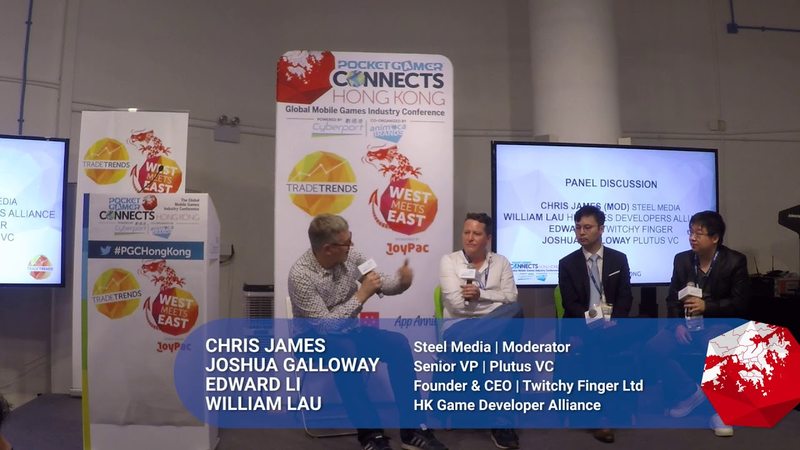
The Hong Kong game development sector has evolved from a nascent field into a robust cluster of 40 to 50 active studios, with mobile gaming currently commanding approximately 90 percent of the market.
- The Hong Kong gaming sector consists of 40 to 50 active studios, with mobile gaming accounting for approximately 90 percent of the market.
- Developers are increasingly targeting global audiences and the Hong Kong/Taiwan markets to avoid the regulatory complexities of mainland China.
- High operational costs and competition for technical talent from the fintech sector remain the primary barriers to industry growth.
A Glimpse into the Indie Game Market in China
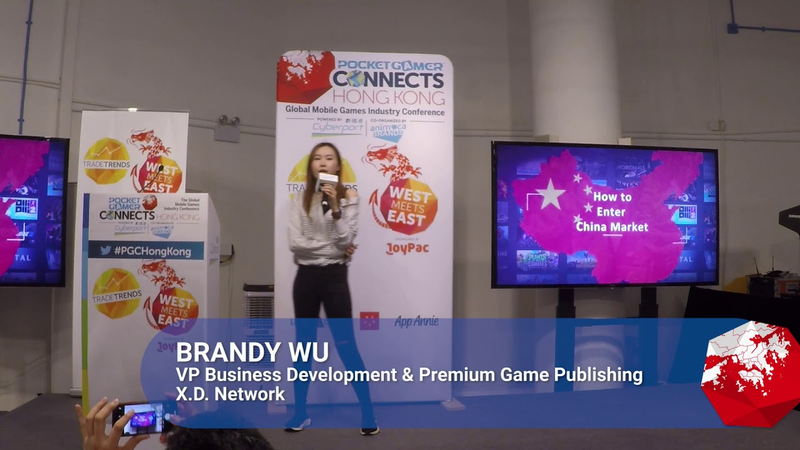
The Chinese indie game market represents a significant, high-growth opportunity for international developers, characterized by a massive user base and a distinct preference for mobile platforms.
- Mobile gaming dominates the Chinese market, accounting for over 76% of the total user base.
- TapTap is the primary gateway for premium, pay-to-download indie titles, charging a 5% platform fee and serving 16.2 million monthly active users.
- Official distribution on domestic storefronts requires an ISBN (GAPP) license, a process that typically spans multiple months.
The Chinese Mobile Market in 2019
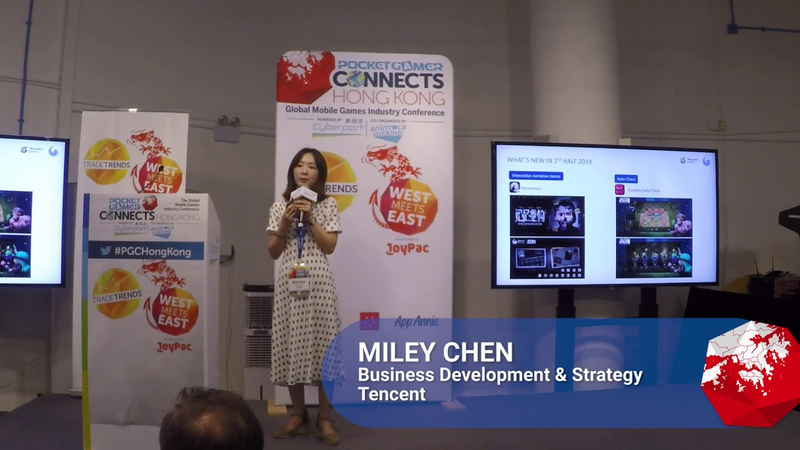
The Chinese mobile gaming market in 2019 is characterized by extreme consolidation, high barriers to entry, and a shift toward sophisticated, hardcore gameplay experiences.
- Tencent dominates the Chinese mobile market with a 52.25% share, followed by NetEase at 14.96% and 37Games at 6.48%.
- The Chinese mobile market has become highly consolidated and growth has stabilized due to government regulation, the end of the 'geographic dividend' of new users, and the dominance of top-grossing titles.
- Android devices account for 55% of mobile game revenue in China, and the top 10 Android app stores control over 87% of the market, making them essential for successful distribution.