1 free read left. Create a free account for unlimited reading + AI research.
Create free account
HK Market – The Challenges and Opportunities
Key insights
7 takeaways- 01The Hong Kong gaming sector consists of 40 to 50 active studios, with mobile gaming accounting for approximately 90 percent of the market.
- 02The region offers strategic advantages for international investment, including a transparent legal framework and favorable corporate tax structures.
- 03High operational costs and competition for technical talent from the fintech sector remain the primary barriers to industry growth.
- 04Developers are increasingly targeting global audiences and the Hong Kong/Taiwan markets to avoid the regulatory complexities of mainland China.
- 05Hong Kong’s high population density provides a strong environment for location-based gaming, positioning the region as a high-revenue testbed for the broader Asian market.
- 06Government-backed initiatives like Cyberport are essential for industry sustainability, though official policy currently prioritizes the eSports sector over general game development.
- 07Future market growth is expected to be driven by 5G and cloud gaming, which will reduce hardware constraints and allow for more complex game design beyond mobile-first titles.
Ask AI about this video
Transcript
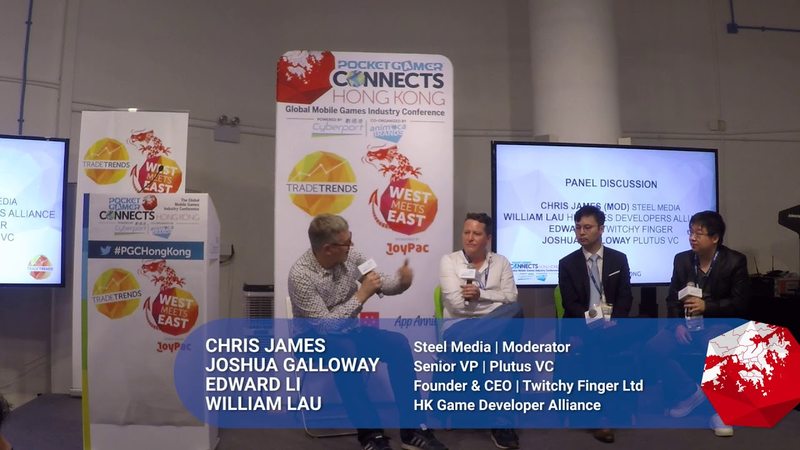
[Music] we're interactive now so um so in the final straight before lunch now I'm delighted to be able to turn the kind of magnifying glass a little closer to home we've talked about a lot of different markets this morning a lot of opportunities and so we're going to chat a bit about the Hong Kong market from both sides but a little bit about the market as for third parties addressing it and also about how how the games industry is evolving here so um I'm not from here you know I'm really struggling with the heat I must admit how are you wearing to synched how did you manage to wear a suit I came in an uber so ok fine that's a secret so um I'm gonna let you guys very quickly introduce yourself and just say a little bit about your history in the Hong Kong gaming business and then we'll launch do some questions so you want to start hi everyone I'm
William Lau I'm the founder of the Hong Kong game developers Alliance cool I'm also a founder of games game developer studio called antigravity games cool fantastic hello everyone i'm edward i am the co-founder and CEO of twitchy finger limited a Hong kong-based mobile games developer and publisher I'm also the product of overseas development for Kingsoft I'm Josh Galloway for the last couple of years I've been working in venture capital but my background is actually 20 plus years in video games I moved to Hong Kong in 2001 you don't look old enough to be in an industry 20 years that's good oh man every young soul okay Casey Marin me in case you've missed me I'm not in Hong Kong guys mark and Chris James are in Steel media who does this solve event so I'm gonna start by talking about I guess the general character of the Hong Kong kind of games industry as it is I mean Hong Kong what little I know about Hong
Kong it's not my third visit some by name he's an expert but I love it it's beautiful place it seems very dynamic there's a lot of investment a lot of entrepreneurial ISM but maybe the reputation has not always been for video games as it caused a lot of financial stuff going on and things like blockchain actually can maybe be bigger so he tell me a little bit about the nature of the games industry here how many Studios there are Hamlet how much it's kind of worth roughly actually um before we start I actually want to know like who's yours not from Hong Kong like okay get a raise of hands who's not from Hong Kong he's not from Hong Kong okay we've got a lot of locals as about there's about 10% the audience so interested in learning the rest the rest of you can interject and tell us what we got wrong that's good cool so if you asked me this question ten years ago you know I would answer there's barely any developers or any kind of
development studio in Hong Kong ten ten years back okay so but if you ask me the question again today I am tell you there's at least around you know 40 to 50 active Studios and teams working around in Hong Kong for as a developer of course there's also other publishers as well in the industry so most of these comprises of indie teams okay so most of the skills of the team's active in Hong Kong right now are probably under 10 people there's some bigger ones that are around 10 to 20 people as well but probably not not too much of those yeah so you're saying so it's about 50 40 50 studios a lot of Indies as small under 10 and then so what's the who are the biggest players here I guess Animoto seems to be very sizeable and and well certainly there's there's a few really successful studios here in Hong Kong like notable ones like mad head you know one of the most successful mobile developer and yeah these guys are much
bigger than the usual crowd you see in Hong Kong there's a few industry leaders in Hong Kong so probably probably you can count them with one hand okay fair enough um we're at the moment where do we see the focus like obviously you know we're covering mobile blockchain piscina as a business we're interesting lots of different parts this is primarily a mobile thing but not exclusively what is it is it mainly mobile industry or is it I would say at least 90% it's in Mobile yeah so there's a few teams in Hong Kong that would do PC and console myself included in that in that crowd so but most of all 90% at least I can like confidently say are in in mobile games okay and Edward so you've found it a studio what how long has that been going now what's what are you focusing on Chris we started in 2014 yeah we start very small I like the four people and currently we have around 22 23 in Hong Kong and then we have another additional 10 people in Vancouver ours
our new studio okay it's interesting so we're around 30 ish ok fair enough and what are you focusing on we do peer mobile so one reason why a lot of Hong Kong developers focus on mobile is the barrier of entry it's a it's a bit easier to you know to list it and also the markets very big so and also Hong Kong is actually one of it might be a small city but it's very very dense so Hong Kong is a very good market to test as a test bed and also the return you know the ROI of starting a mobile based company is a lot more higher than versus saying steam or I'm doing the console and you say been 20 years and say you look very good the weather obviously kept you thought but GG you have you seen Josh have you seen the kind of the industry changing in that time because we said we've gone from not very much
ten years ago to 40 or 50 studios now does that occur your experience because you've been in the game space quite a while yeah actually um I mean I came out with Wii but we brought a game from Texas yeah and then we had the license for all of Asia 2001 was a big challenge there you couldn't find you could find it there were a few companies like Game one was here there were a few other studios there are a couple studios that were like incubated inside like a family office or trading company a couple did quite well but in the end you know even though they performed well it's like three percent of the family's business and those guys end up it's for the family it's a hobby and some of those studios go away because the family's business is actually it else we're making more money right so we had a big challenge scaling up even an online game publisher to 30 our first QA tester was Jeff Linden and I met him I met him when he was 19 years old in a cyber cafe yeah very well I
think he had good Mentors yeah we found him when we were playing cyber cat counter-strike in a cyber cafe in Kowloon after work one day and we're like who's this kid that speaks English really well do you want a job as a QA tester and then we trained him up as a QA tester and mentored him for a few years after that and then we had a technologist who had a master's degree from Carnegie Mellon his mom came to the office within the first month after hiring him because she wanted to know why her why she put her son through through University in America to come and work for a video game company and then she realized we were doing software development not sitting around playing games all day and it was and it was okay yeah but so yeah it was very challenging back then you know we spent a large amount of time and money building a billing system to manage prepaid card distribution in payment gateways you can now license something better for for less than 10% of the cost of what it cost us to develop you can license from Korea and and be switched on if you're
starting something up very quickly and and you know we had to we the capital requirements for that company we're five six million dollars right mobile game studio of four or five people's far less right yeah so the barrier of entry has gone down a lot and with $0.10 being $0.10 and that ease being what they are I think it's a lot more acceptable these days I know why it's great it's fantastic that there's no explosion so what what's what do you see that continuing do you think there's gonna be if we're here next year is there gonna be like 70 studios 100 you see where'd you see the future the next step for this industry is and more people getting into it or I think so I think the general thing about the Hong Kong game industry right now is that it's actually lagging behind a little bit so if you look at the states or or or your Europe for example if they've been doing the games business for at least a bit earlier than Hong Kong so
Hong Kong has only been starting you know to delve into the mobile development in the last couple of years so so that's actually a bit slow and and there's more and more coming in now so so I think we're trying to catch up a little bit so that's what we're seeing happening right now so there's a lot of smaller studios popping up there's university courses popping up so more talent into the market I think that's an important asset later on so that I think it when you see these kind of clusters often the education is a big part of that so you're seeing education support now taking it seriously this state yeah in fact a couple a couple of years ago there's only one university course in the City University of Hong Kong that that supports the gaming industry however there's a couple more now so several other universities are having courses on game design and game development so I think that alone you know a lot of new students going into this field when they graduate they're definitely gonna you know enhance the industry and some of them are even gonna start up their own own teams you know so that's what we're
gonna see in the next couple of years I think another thing I was gonna ask you about so obviously I was here well the other cells here at Delft yesterday and we're here with cyberport which is kind of backed by the government here m'as reading that they've made like a hundred million dollar investment into eSports activities and other it is a government quite supportive now than a video games as a whole was is it my eSports is the new thing yeah we worked very closely with the government so I can add a little bit here it's a rehab thing it's really interesting because game development and eSports are actually two separate fields when yeah exactly so the government categorizes them into different systems as well so in fact game development and game publishing is in is more into their design sector whereas eSports is more in in their innovation and tech sector so they're actually putting a lot more resources in eSports versus you know game development and publishing this is like a blockchain
they say there's a technology that they can escalate rapidly okay okay but if you are you know if I'm a foreign developer or someone looking to move you've obviously move your expat what what's the advantage what is this a good place to come and set up a studio I mean you've done it is it what's the advantage of coming here over over other other cities or other towns or other places but it's a very dynamic city yeah right you know it's a little bit china at this very Western as a having spent 18 years in Asia and basically done business in every major market I lived in Malaysia for four years for another startup Hong Kong is by far the easiest place to live in Asia but it's also very expensive right so the I think the expense is is hard for some people to tamp it's harder it's difficult to raise money yeah and but I've seen a lot of Studios spring up
recently you've got guys that have been with living and working in China for you know ten plus years that want to actually raise their families here you know so they're coming back from other big companies you know and and the in some cases I guess kind of like twitchy finger I've known them since been visiting their studio since they were four people I think and now you're 20 and probably moved locations same location we expanded it wasn't wearing to see then it's going well okay so it's a good place to live right so in this part of the world it feels to me like I'm obviously not Chinese okay but I come here it feels like it's it's an accessible entry enter into Asia I think I can because I did stone studio from scratch in Hong Kong so um there are very key points that I think makes Hong Kong very attractive for a development studio first off is that just the law in
general the regulations are very transparent it's very easy to open and like a business registration here the banking system is top-notch world-class and also the amount of external money coming in through Hong Kong is enormous so if you want to raise funds whether it be overseas Europe North America or other parts of Asia or from China they all flood in through Hong Kong so besides that there are a lot of there's a lot of the taxes extremely low is one of the lowest business taxes in the world so that makes some emo I think is like eight percent or something that yeah it's very low so like you know anybody profit and you can also there's a lot of things you get right off the only the tough part you know that's the good part the tough part is if you're opening a studio it's better now I think it's a lot better now as as Willem said there are a lot more youth the younger generation are coming into the industry and there's lot more
expertise coming from overseas as well but finding the right people especially programmers is still very tough so it's easy to find a program in general like if you're in fin tech are you doing some type of app it's quite easy but game is a whole different animal you know you've got game logic you've got game design all these things are very suspicious specialists type of program and I guess you're also competing with in even in software programmers but with the FinTech guys may be throwing a lot of money at these people yes but you know another thing is people who come into the game industry like I don't want to make games they aren't necessarily coming in for the money you're not doing money I'm going in FinTech right most people who come in as a programmer want to make games they do have passion for it so that's not a big issue you know but it is expensive to scale in Hong Kong you know it's one of the most expensive real estate you know cities in the world and once you get to 20 30 people the office space the overhead
becomes a huge issue you go somewhere cheap like Vancouver for instance where Vancouver is a very cheap actually is actually I think is the second most expensive city I think word said is very true I think talent is a huge problem in the game industry in Hong Kong because we're actually competing with other industries and whereas you know they're paying a lot better versus you know the game game def sector in Hong Kong so competing for talent is a huge problem I want to talk a little bit about about the markets just the interview talk a little bit later about the the actual Hong Kong market but obviously you know even though there was a wealthy people here there's the limited size so you're on the doorstep of China obviously I mean on China and the Chinese games industry is you know exploded as ten cent was showing the data earlier like it's ten fold in five years or whatever is so believe me that's massively beneficial I mean that's must be if people making games
here is it is it mainly a mainland Chinese audience so looking to sell into or is it so I think Edward could probably answer that well as a developer I helped twenty-two plus clients or studios technology get in to navigate China and Asia I've never once actually done business with a Hong kong-based company in in terms of Licensing a game right like the closest is probably I dreams guy which is just cross border in Shenzhen they picked up several titles from studios I represented as did others right so Hong Kong is a great place as a jumping point into China it's it's very central to the rest of Asia if you're like me running around selling games to create Taiwan Southeast Asia in the past it's a great place to be for that as well but but yeah I don't I don't know what the challenges would be trying to I
mean I've worked a little bit with Edward trying to n Howard to some of their previous games in front of some Chinese publishers that I knew and I don't know what success you've had since then so in general usually Hong Kong is a great test bed for both markets the advantages are because Hong Kong is a former colonial city so yeah the English proficiency level is is quite high so whenever we make games actually we do English first as always and then we localize it into Chinese and and we often test it in Hong Kong because in terms of them like the revenue Hong call is actually within the top ten I think in terms of like spending in games okay so of money we're talking about there was a round to Jamil annually for two thousand and I think 2018 so it should reach over 200
significant yes so it's a great place to test your game because another thing is hung up we were quite picky you know they're high spending group and the credit card penetration rate is very high the mobile like smartphone penetrations over eighty percent broadband is like eighty five so like we all have like crazy fast internet here so like everyone has access to mobile games they're willing to spend and it's a great place to test both the Chinese version and the English version because there's not people that do both languages it's a great place to build up metrics once you have the right metrics then you can bring it into China you can bring the Taiwan Japan other places but if you are a Hong Kong studio and you just wanted to do games for Hong Kong it'd be very tough because it gets saturated quite quickly and plus Hong Kong people are used to playing games from a global global you know types different types of developers building
I'm sorry for my comments but Chinese mainland Chinese studios use Hong Kong as a testbed market their international games then is that is often they will have offices here branches here and then they would do publishing in they do some testing in Hong Kong or Singapore yeah early testing maybe for Australia but yeah market before they jump into something like like North America so it's always a good launching point in Hong Kong I think we do allow their testing in Hong Kong as well because if it makes money in Hong Kong you can make them money elsewhere too yeah okay that's really is really interesting so comments skipping three things so talking about the Hong Kong players and you've said they're very picky but they've got kind of money is it in that there's a mix of cultures and you've got kind of Western and Asian influences other particular genres that are succeeding here I mean other particular things that work here that don't work
anywhere else or is there what what are those players looking to play so if you take like a vertical slice of all the Asian markets in China you had very it's usually you know Chinese based games MMORPGs s oh geez that type of game and for Taiwan it's also very Japanese type of games they play a lot of Japanese games but in Hong Kong you see it's like a mix where you see games like from supercell you know like Western games and you see casual games as well I think one of the and then you think you have all these hardcore RPGs as well so it's a very just like Hong Kong it's a melting pot of different cultures and the whole app store reflects that as well so that's that's the I guess you know advantage of launching in Hong Kong you can get a mix of everything but in terms of specific city say if I want to aim my
game target for China it's a whole different animal because you know not just there are some cultural differences because Hong Kong grew up a lot of gamers grew up playing PC console so they do have that background versus in China where they jumped into the basically that you know the later stages of internet gaming and jump straight to mobile gaming so there's a little bit difference in terms of the players spending player behavior I think just looking at this was the actual situation if we look at all the active teams in Hong Kong right now I don't think any one of them are actually designing a game specifically for China in fact I don't think they're even considering China at all because it's actually really hard to enter at the Chinese market they've got enough games in China already so most of the teams are separated into two I would say two tracks ok so there's a lot of teams like Edward for example they do global ok so immediately from the onset they're
designing a game for the global market so like really western-style games as well there's a large track which is they focus on what we call the traditional Chinese market so that includes Taiwan and Hong Kong so it's it's still a sizable market so there's a lot of more Chinese flavor or Japanese now anime style games you know that that's specifically for an Asian audience and specifically traditional Chinese Day successful Hong Kong game company I mentioned mad head you know they only work the traditional Chinese market so just phone call in Taiwan and they're super successful so there's what you see right now from the Hong Kong developers is that there's they're separated in these two categories either targeting a global crowd or targeting the traditional Chinese but I don't see any of them specifically targeting China I've got a couple questions but you know we're here with people we're a panel it's interactive it's before lunch I can see the energy levels of super high so there's anybody here there's me have any
questions for our kind of panel to interject at this point anybody have any questions they want to ask about the Hong Kong market or statements they want to make about longer market or insight good hand up could happen in the air mine can you do me a favor I'm terribly sorry sir hi so the question is actually just going back to the the issue with finding developers here in Hong Kong and what sort of approaches have you taken to try do you bring developers over from other regions you speak a little louder sorry all right put it closer to your boundary this because facing this way all right so what I was saying is how do you go about you know finding developers in Hong Kong it's one of the biggest issues across all different industries those trying to find good developers so what do you do to try and solve that so currently we do
two two types of recruiting one is through referrals so we've build up our studio long enough that you know we do have a strong network of other industry people that we know and often when we hire the first thing we do is ask fellow developers do you guys know any programmers are available who's good so someone we invent you know because again it's it's tough to find talents and often it's much easier for someone to refer us I say oh I've worked with this guy he's solid he does this he's very good at that so at least there's some type of guarantee of his skill set another bit newer for us now is we're starting to recruit from the universities so the last two years or so you see a significant amount of students that graduated with a game design or programming degree that was previously not available maybe like five to six years ago so usually we do two types though of referrals we usually put
them in a more senior role and then we train up the university graduates as trainees or a junior programmers any other questions out there thank you very much that question is a good question there's a side question there look this is not it's not a question audience it's fine it's okay each thrown um I've got a couple of vocalists so what one thing I wants to ask about actually was obviously we're here in cyberport so I'm not plugging them but they've set up a number of incubation kind of hubs is that is I'm sure it's not just here is that quite a common thing across Hong Kong so quite laugh support because I think they get subsidized office space and things like that actually a lot of government programs for supporting the game industry it has only been starting up the last couple of years so the cyberport right now if you look at cyberport incubation program a couple years back maybe there's only one or two in game
studios that are able to enter the program per year so maybe you will see one or two that are able to compete with the other tech industry and enter support but if you look at 2019 they have started a whole new stream just for the game sector and like each intake we're seeing like you know more than 10 studios enter cyberport now every year so so that's a huge step up from from from before so you can see that the government are definitely pushing forward with this industry so that's something that's that's really good for us right now so partly that's due to the government's support for eSports so you know although there are very different sectors but there is a trickle-down effect because after all eSports you do need the content you do need the game for all the external stuff to happen and there is more back then maybe when I started my studio when I told people people ask me what do you do I'm like oh
I do mobile gaming and they'll be like there's mobile gaming in Hong Kong you know they have no idea what I'm doing now I say oh I'm doing games it's like oh do to eSports so you know you can say it's a buzz word you can say it's it's it's something that you know eSports been there long you know been around for a long time you know when I was playing Street Fighter with friends and a large crowd gathers and everyone watches each other play now you know with just internet and it's tree is streaming that it's become a whole new new thing but you do see more people taking more interest in this sector and you know we do live in Asia and Hong Kong although it is quite for thinking but you know as Asians there's still quite conservative especially in terms of parenting so when their kids tell you oh I'm gonna grow up I'm gonna make games if I said that when I was young my mom would probably beat the crap out of me so but right now parents are students
starting to understand that okay you know I played some games I know there's such a international it's the gamers now that see that and you know and gaming won't go away you know like my grandparent my grandparents did not watch any movies you know back then is war it's like after post World War two they don't watch movies they don't know what it is they don't watch movies now my parents would go to cinema they watch movies they grew up with it they watch movie now they watch movie in their old I played games when I was a little kid I'll play now and I'll play it when I'm old so the industry will always be there and then we're just seeing the transformation from gaming games for kids to now game for adults and in the future will be games for seniors you know so the market is there and it's growing and it's great Hong Kong along with the government and cyber port is is pushing forward with this initiative to make this industry sustainable industry
question is product over the last 18 years of I'm gonna have so many stories but so the first year I was here I actually worked at Hong Kong police working with students who were interested in games there was no game to programs you know it was just on the side and it was while we were fundraising to launch our company in 2002 in 2003 I shop around us chaperoned a 17 year olds Counter Strike player to Korea for the World Cyber Games yeah because his parents refused to take him yeah so we came up with we fundraised for him for him paid for his ticket one of my investors was running the World Cyber Games here in Hong Kong and it was so small right two or three years ago I got a I so I have 9 and 13 year old boys
they're mixed Chinese and American so I kind of also have that bolts into the the next generation of gamers and whatever and I I took 15 kids some of which I work with because their fathers have died and it's a group of kids up at where I live that I work with regularly and I took him to the LMS championship finals out of Asia Expo at the airport and was amazed at how big the eSports scene had had come and how popular it was for these for these kids they wanted to go and spend the day watching people play league legends right and they're like cheering and you know and they had their fan club and they we took a 16 year old Filipino kid who lives up that's a like a diamond to player right but isn't old enough to actually compete you know so it's really fun to see how it's progressed over the last 18 years that I've been here especially now that I get to see it through the eyes of kids as well you know it's really interesting segue is nicely it's my kind of closing
questioning as for your questions I mean firstly to predict the future so in what you see how do you see the the Hong Kong games industry or games market evolving in the next five years ten years say what where are we gonna be when we're back here we've got 10,000 people come in to our event we've got you know they've had to custom build a whole new part of the Sai report for us what's Hong Kong industry can we like them easy actually that's a pretty tough question it's far too tall you know like no one really knows how far eSports that's gonna go we're in we're still you know at a very early face of eSports right now so you know like there's a lot of official stuff you know saying they're gonna you know adopt eSports and whatnot so that's it's hard to say I don't dare you know predict you know even but the game the game putting aside eSports even for just the Hong Kong games industry how did you see it develop is it going to double in size in
five years is it because you're seeing a trajectory I mean it can change obviously but you see accelerating definitely so if we're talking about solely about game development in general I definitely think there's gonna be a lot more teams that's what we're seeing already in the past couple of years and there's more and more talents pouring in right now because of the new educational courses and stuff so we're definitely gonna see a lot more talent entering this crowd and you know they're they're gonna be more and more successful titles coming out so it's it's definitely gonna be a vibrant you know scene in the future would you have any any predictions of the future so we've been doing mobile games for almost six years now five and a half honestly it's it's been a rollercoaster ride like every six months something comes along that blows your mind and changes the whole game the cyclist is so quickly you know yeah everyone's talked about MRA RvR for me personally I think I see cloud gaming as
as a possible end game game changer because we are you know I when I make mobile games I do have to aim for the lowest common denominator you know because we do global games so it's not just about the tier one market so I'm gonna make sure like a poco phone or some you know maybe a budget phone can still run our games the hardware the battery all matters but with the advent our you know upcoming 5g mobile game gaming like glucose stadia it opens the door for basically unlimited possibilities for us because we do not have to be limited by the hardware anymore we can make sure the game has run as fast as possible as nice as possible without worrying about oh well this mark could be able to do it of course 5 G's a big thing you know not every control will have it but you know even the phones itself you know even the low-end phones now are capable of doing like amazing things you know the processor speed and everything so and with all these accessories that's there out for games you know five six years
ago when you told people oh I'm a gamer and they're like well what games do you play I'm like oh I play mobile then they're like you're not gamer but now it's a legitimate gaming device you know we can plug into other peripherals you have filled out phones coming up so the horizon is definitely it's a blue ocean you know industry so for us you know I'm very looking forward to your closing you can pull you the closing sentiment are you are you upbeat is it gonna be industry gonna be in a flourish well the Hong Kong industry is is doing great honestly like um you know we were some of the first expats to really come in and set up here and I've stayed here for 18 years and raising my kids here and they're gamers in 2011 I I had a hot hot desk seat at the first co-working space in Hong Kong called boot HK and there were only ten people there and within a year the hive opened and now they have
several locations and now there's we works all over the place and game studios are like a subset of the startups scene so if you if you look at how startups in general have evolved like rise last week over the last two or three years consistently twenty thousand people at least come into town for rise and now you've got we've got Pocket Gamer right twenty thousand week or so so I think it's growing at a healthy stay healthy pace in a lot you know from from small man studios to larger outfits like an e mocha brands who are doing amazing things and I think I've been here long enough to see the shift from from pay to play pay to play and then the shift the platform shift from PC console which was my background to mobile and now I think that the next shift is I don't know probably value-based or you know play to earn I don't know maybe that's where blockchain came you know good wages I find it interesting yeah okay okay brilliant well as I did we got a final question oh
you do I was close okay you get the final question where's my where's my beautiful assistant he's gone I'm gonna do it myself look at this thank you hi my name is attila i'm with treasure hunt calm we're a location-based augmented reality treasure hunt my question is based off of your experience this is an opportunities and challenges panel what has been the most impactful game launch here and what strategies have they used to become successful all right so are you the most impactful game launch I think you kind of set yourself up there is location based gaming so yeah that's when Pokemon co came out that was simply amazing because because Hong Kong is the the population density is so high like for a while the first two months and when Pokemon go came out every single Poco Pokemon point
you know you'll see 30 50 people just gathering around and it's just crazy like like what's were they doing and then there's all playing Pokemon so I think that was quite a phenomenon and you still see it now like I see like it's been from young people - now just old people like seniors just standing around and you see them just flipping the pokeball so like in terms of sheer launch all I was amazed at Pokemon go so I think that's you know they've since launched Harry Potter but I don't think it matches the same amount of craziness that that Pokemon go was I I I agree I remember my kids just saying deep wins Pokemon go coming out and I'm like just because I work in the game industry doesn't mean I know when Pokemon goes launching in Hong Kong but it was later than other markets and I was walking out of the house with my 9 year old he was probably seven at the time and I was looking around and everybody in cycling
which is an hour from here in remote and less populated but everybody was on their phone and I'm like looking around and everybody was playing Pokemon going on their phone that day what day just walking around inside kong town down on the waterfront and it's died down a little bit but when i was traveling to the Plutus office I've walked through Kelvin Park every day and there's down by the mosque and there was sometimes you could see a hundred people gathered there playing it today and I'm not gonna say who but there's a massive Pokemon go player in the audience who's collected almost all of them amazing launch as we remember we've got we've got one Pokemon okay well anything that helps you Pachelbel's quite hard you have to have like one of the biggest brands in the world and then but thank you for question we that's time up for us I'm afraid [Music]
Summary
The Hong Kong game development sector has evolved from a nascent field into a robust cluster of 40 to 50 active studios, with mobile gaming currently commanding approximately 90 percent of the market. This growth is underpinned by the region’s strategic advantages, including a transparent legal framework, favorable corporate tax structures, and a unique position as a gateway for international investment into Asia. While the industry is currently in a maturation phase, it is increasingly supported by a pipeline of talent emerging from university-level game design programs and professionalized development environments.
Despite this progress, the industry faces persistent hurdles, most notably high operational costs and intense competition for specialized technical talent from the dominant fintech sector. To mitigate these challenges, developers are increasingly focusing their efforts on global audiences or the traditional Chinese markets of Hong Kong and Taiwan, largely bypassing the regulatory complexities associated with mainland China. Government-backed initiatives such as Cyberport continue to play a vital role in fostering sustainability, even as official policy priorities remain heavily weighted toward the eSports sector.
Looking forward, the market is poised for further transformation through the integration of 5G and cloud gaming technologies. These advancements are expected to alleviate existing hardware constraints, allowing developers to move beyond the limitations of mobile-first design. Furthermore, the region’s high population density continues to provide a fertile environment for location-based gaming, as evidenced by the significant cultural impact of titles like Pokémon GO. By leveraging these technological shifts and its inherent cultural diversity, Hong Kong remains a high-revenue testbed and an accessible hub for developers seeking a foothold in the broader Asian gaming landscape.





















Comments