Australia reports and market data
15 game industry reports, presentations and talks about australia from writers such as Interactive Games and Entertainment Association, PocketGamer.biz and Naavik, newest from 2026. Every document has a summary and key insights with the page they come from, and 64 charts and tables are extracted as data.
Key figures
The Australian video games industry aims to reach a $1 billion valuation by 2030, building on its 2024 fiscal year performance of $339.1 million in revenue.
Interactive Games and Entertainment Association, 2025 · Australian Video Games Industry Policy Platform: February 2025, p. 4
THQ Nordic acquired Australian publisher 18POINT2 in February 2019 for a total consideration of 2.4 million EUR, split equally between cash and shares, plus a potential earn-out of 0.4 million EUR.
Embracer Group, 2019 · THQ Nordic AB (publ) Acquires 18POINT2: Investor Presentation, p. 2
Documents
Inclusion, Diversity, Equality, Accessibility Statement: Australia & New Zealand
The statement articulates a commitment by the Interactive Games and Entertainment Association (IGEA) to foster inclusion, diversity, equality, and accessibility across the video-game sector in Australia and New Zealand.
- The Interactive Games and Entertainment Association (IGEA) has established a formal policy framework to mandate inclusion, diversity, equality, and accessibility standards across the Australian and New Zealand video game industry.
- IGEA is restructuring its internal governance by appointing a dedicated Diversity Lead and committing to audit and dismantle existing inequities within its own policies.
- The association is expanding diverse representation across its board and committees to ensure broader demographic inclusion in industry leadership.

🚨 Under 16 Social Media Ban: What It Means for Gaming
The global trend of implementing social media bans for individuals under the age of 16 is gaining momentum, with several countries, including Australia, Denmark, and Malaysia, adopting or considering such legislation.
- A growing global trend, currently adopted by seven or eight countries including Australia, Denmark, and Malaysia, is moving toward banning social media access for children under 16.
- From a gaming industry perspective, the removal of social media platforms like TikTok and Instagram as primary entertainment competitors is expected to drive a 'halo effect,' increasing daily active users (DAU), session lengths, and engagement for gaming studios.
- The shift in the attention economy suggests that children restricted from social media will reallocate their time—often spent 'doom scrolling'—toward alternative digital entertainment, including video games and streaming services like YouTube, Netflix, and Prime.
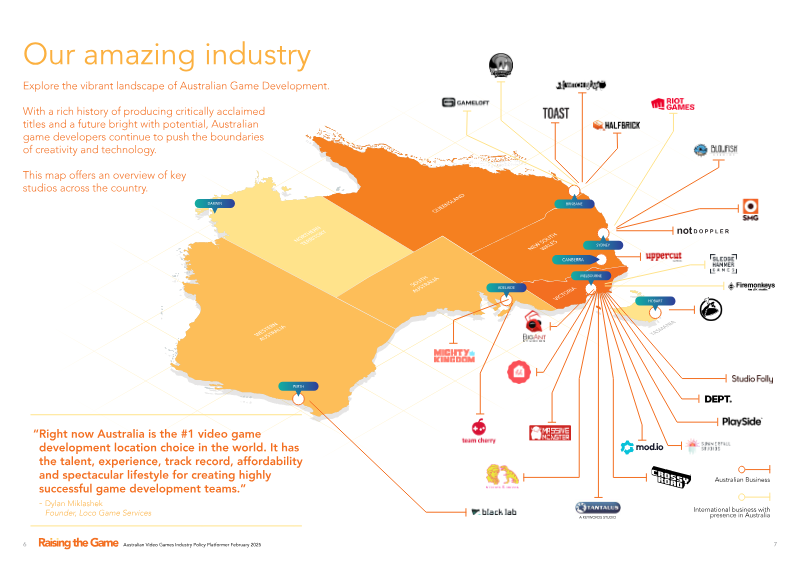
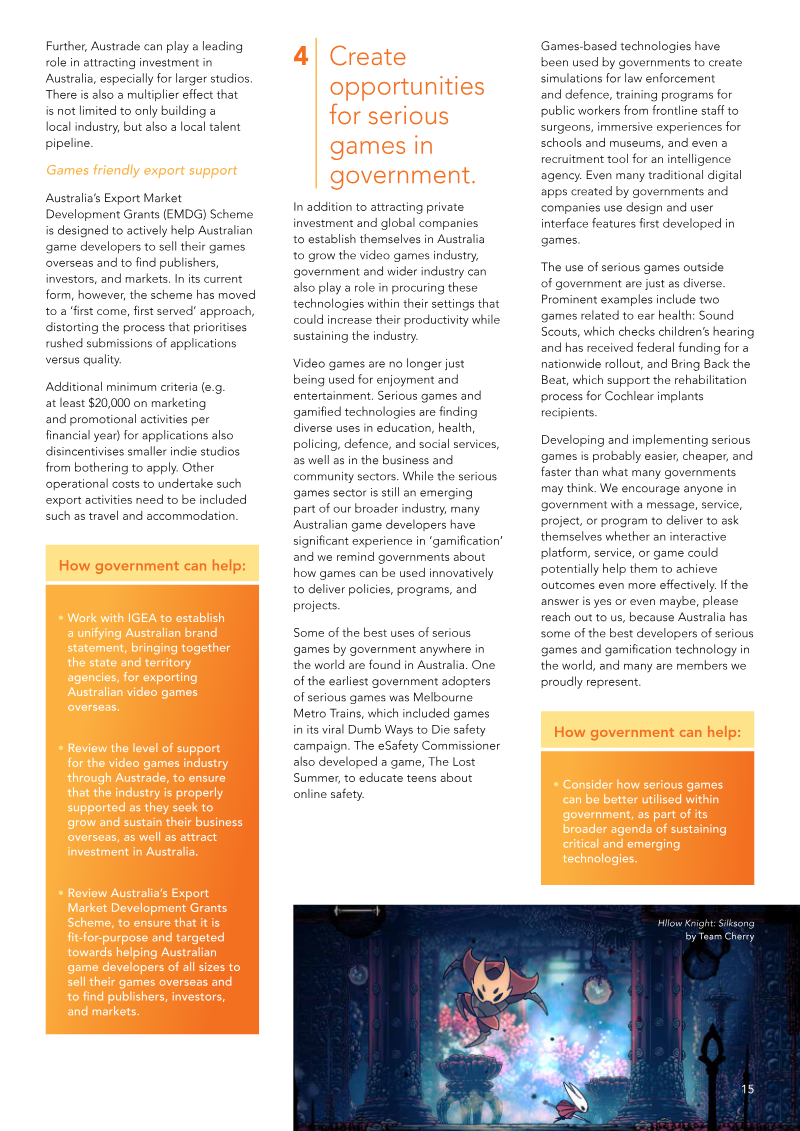
Australian Video Games Industry Policy Platform: February 2025
The Australian video games industry represents a vital economic sector, generating $339.1 million in revenue and supporting 2,465 full-time positions during the 2024 fiscal year.
- The Australian video games industry aims to reach a $1 billion valuation by 2030, building on its 2024 fiscal year performance of $339.1 million in revenue.
- The sector currently supports 2,465 full-time positions, with 93 percent of its revenue generated from international markets.
- Over 50 percent of Australian game studios anticipate continued income growth, signaling strong potential for expansion into a global powerhouse.

2024 Global Game Policy and Legislation Research Report
The 2024 Global Game Policy and Legislation Research Report provides a comprehensive analysis of the legal and regulatory environments for the game industry across five key export markets: Singapore, Taiwan, Brazil, Australia, and India.
- Data breach notification timelines are increasingly aggressive, with India requiring reporting within six hours for specific incidents and Brazil mandating notification within three days.
- Taiwan and Australia require foreign game entities to maintain a local business presence or appoint a local representative to operate legally.
- Regulatory oversight on loot boxes and simulated gambling is tightening, with Taiwan and Australia currently enforcing the most stringent restrictions on probability-based items.

Immutable’s Web3 Roadmap for 2024
Immutable has established itself as a dominant force in the Web3 gaming sector, currently commanding a 70 to 75 percent market share by providing specialized infrastructure designed to solve long-standing industry hurdles.
- Immutable currently holds a 70% to 75% market share in the Web3 gaming sector and is valued at approximately 2.5 billion dollars.
- The platform is supporting a pipeline of over 110 committed games, with more than 100 high-quality titles expected to launch throughout 2024.
- Immutable is shifting the industry from infrastructure development to a content-driven era by utilizing tools like the Immutable zkEVM, a global order book, and the Immutable Passport wallet to abstract technical complexities.
The Power of Play: España
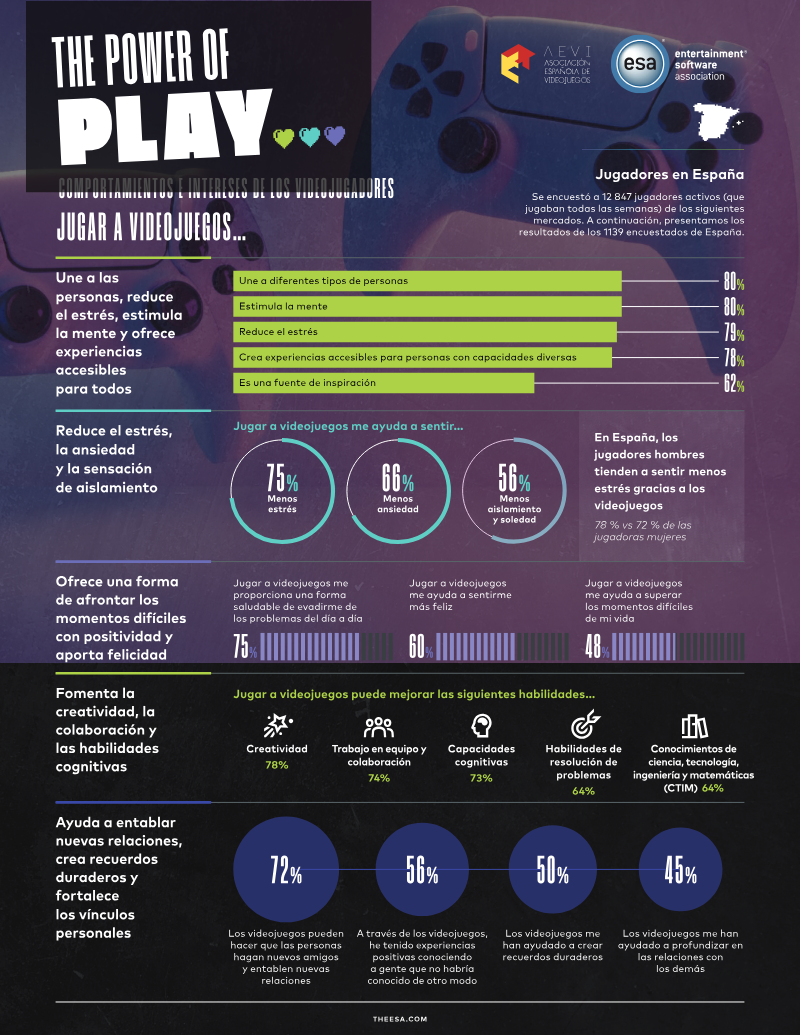
Gaming serves as a vital tool for emotional regulation and social connection among Spanish players, functioning as a primary mechanism for stress reduction, cognitive stimulation, and the development of interpersonal relationships.
- Gaming is primarily used for emotional regulation in Spain, with 78% of men and 75% of women reporting that it effectively reduces stress and anxiety.
- Social connection is a major driver for the Spanish gaming population, with 62% of men and 55% of women citing it as a primary motivation for play.
- Online multiplayer engagement is significantly higher among men, with approximately 80% reporting they play with others online, whereas women show a stronger preference for solo play.
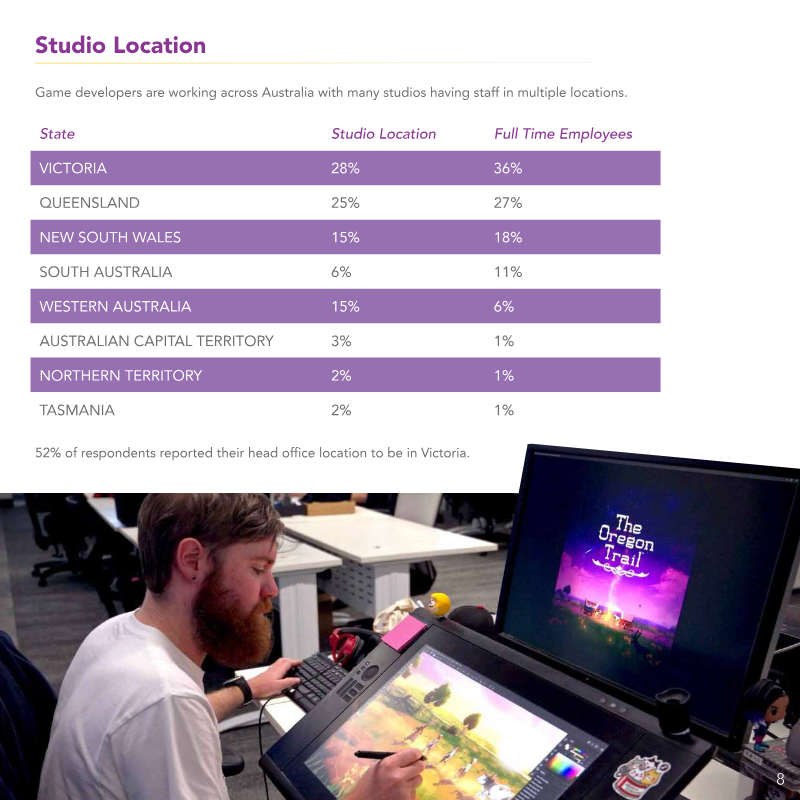
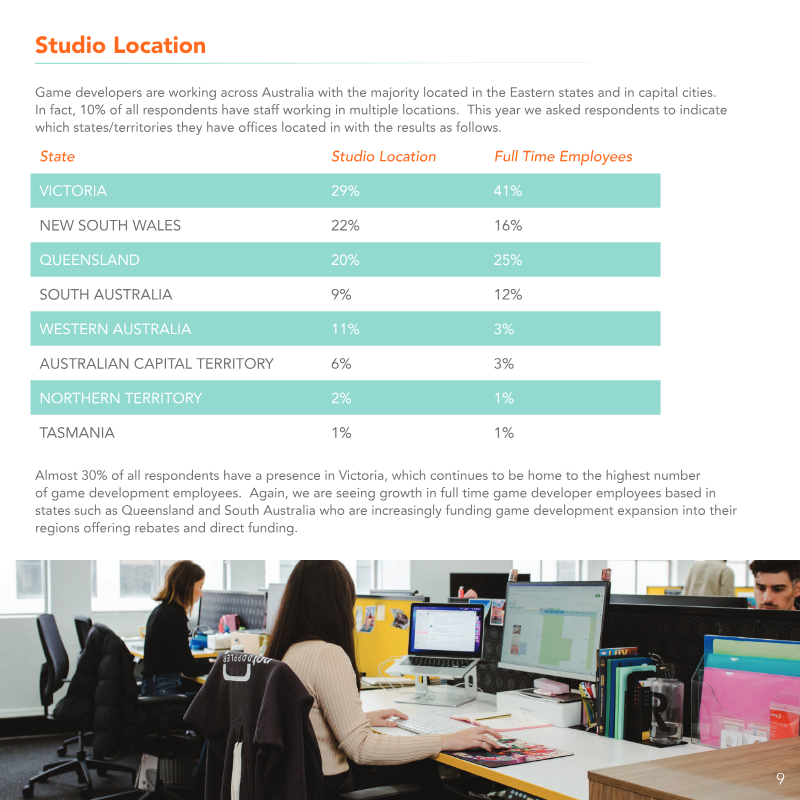
FY2024 Report: Australian Game Development Survey
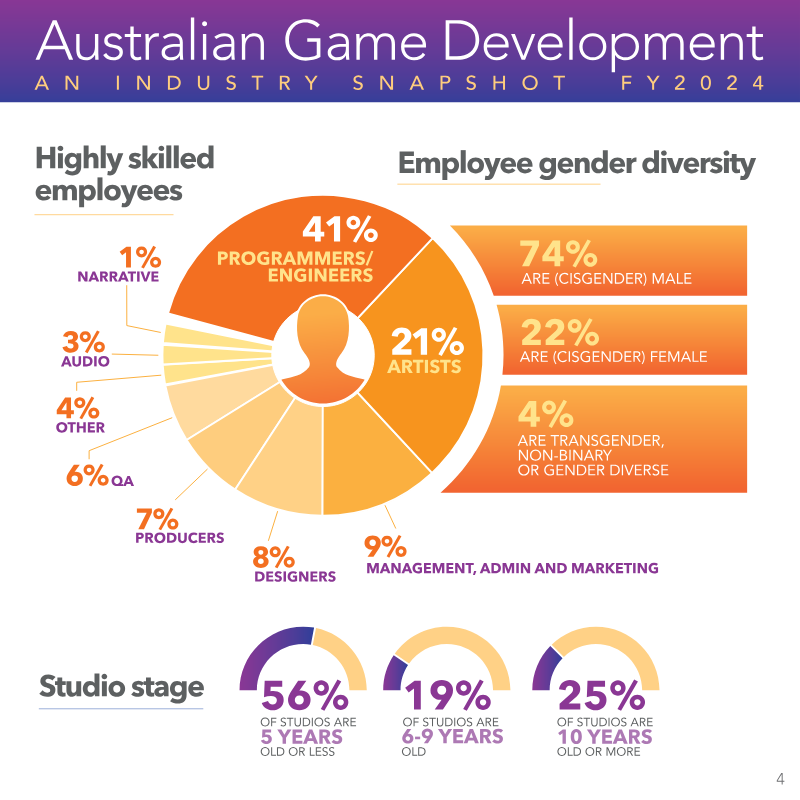
The Australian game development industry demonstrated resilience and stability during the 2024 financial year despite significant global economic headwinds.
- The Australian game development industry generated $339.1 million in revenue during FY2024, reflecting a minor 1.9% year-over-year decline despite global economic headwinds.
- The sector is highly export-focused, with 93% of total revenue derived from international markets and 85% of studios prioritizing the development of original intellectual property.
- Employment remains stable at 2,465 full-time equivalent workers, with 61% of studios planning to increase their headcount in the coming year.
Defiant in Life and Death: What Happens After You Fail?
Defiant Development was established in Australia with the primary objective of fostering a stable, high-quality work environment for local talent.
- Defiant Development, the studio behind the Hand of Fate series, closed operations after an ambitious project exceeded the company's financial and operational capabilities.
- Leadership prioritized staff well-being during the shutdown by providing generous severance packages and transparent communication, viewing the closure as a way to redistribute talent back into the industry.
- Scaling a studio from 15 to 30 employees requires a transition from informal, organic growth to defined horizontal and vertical management structures to ensure effective knowledge sharing.
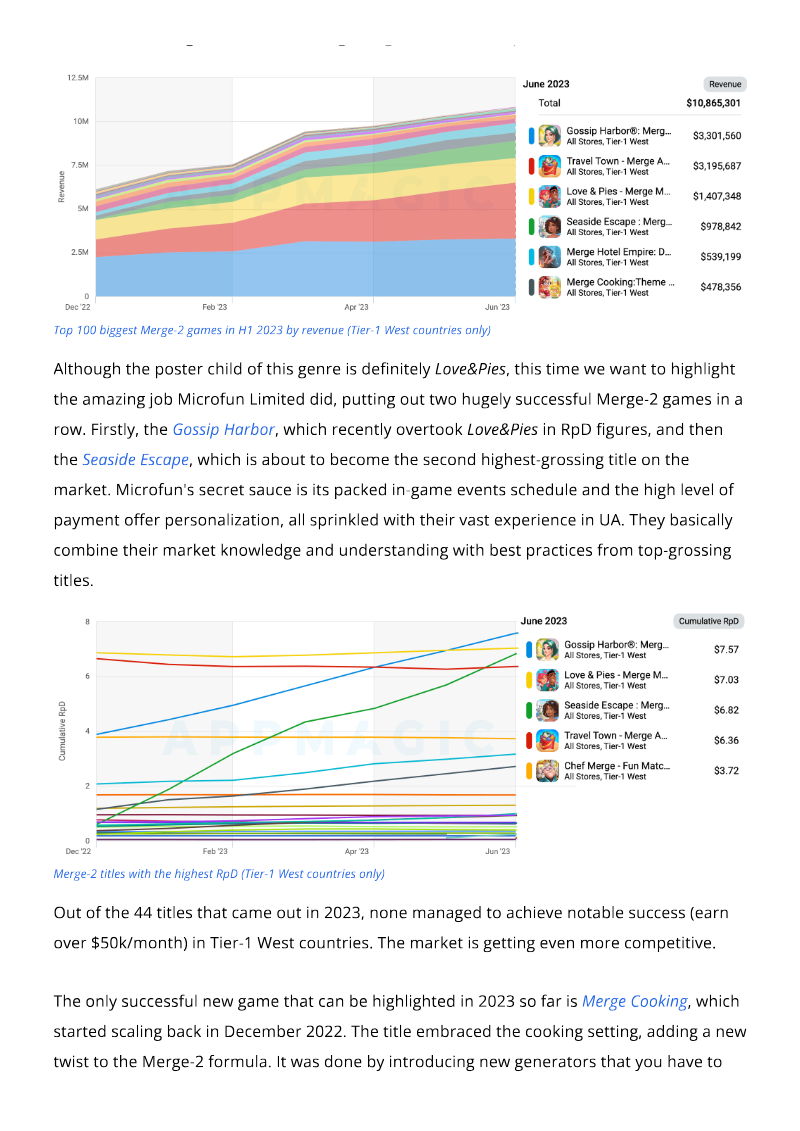
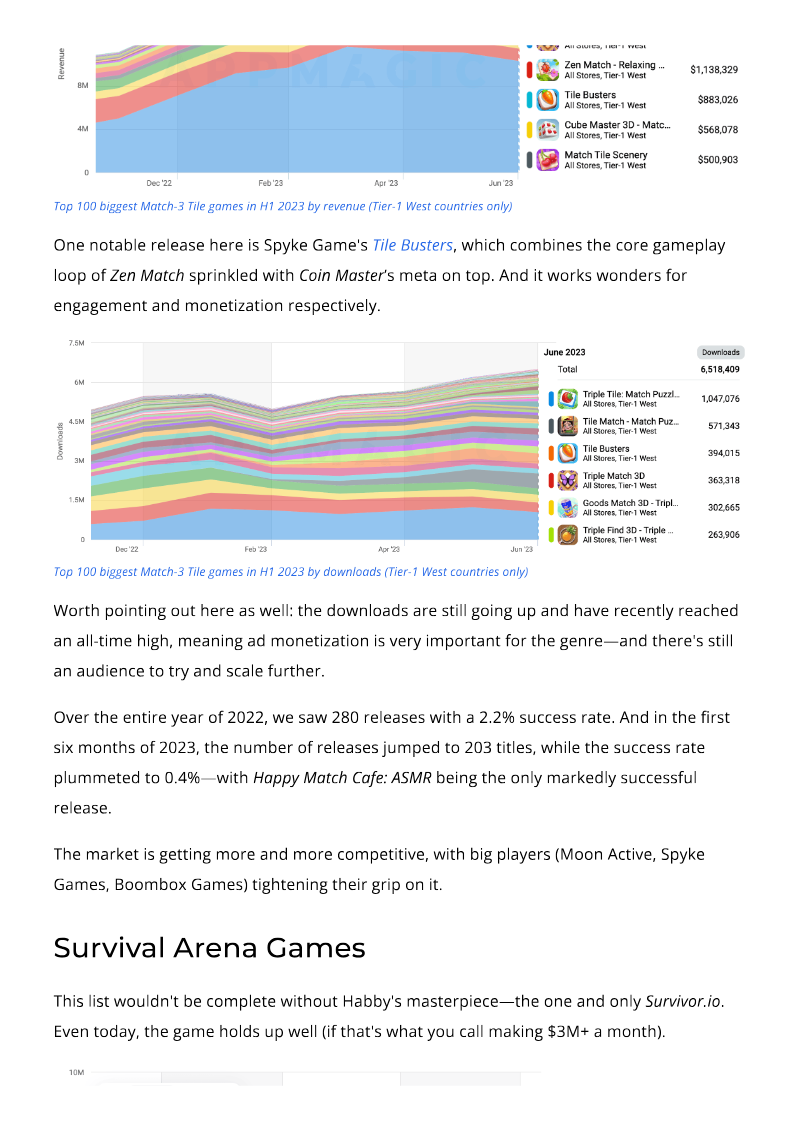
Casual Mobile Gaming in H1 2023
The mobile gaming market in Tier-1 Western countries—comprising Australia, Canada, France, Germany, the UK, and the US—experienced significant shifts during the first half of 2023.
- The casual mobile gaming market in Tier-1 Western countries is experiencing increased saturation, leading to a notable decline in success rates for new releases across most categories.
- The Merge-2 subgenre saw a 60% increase in monthly revenue during H1 2023, though the market has become inaccessible to new entrants with no new titles achieving significant success.
- The Idle RPG sector grew by approximately 20% in monthly revenue in H1 2023, bolstered primarily by successful new releases from South Korean developers.
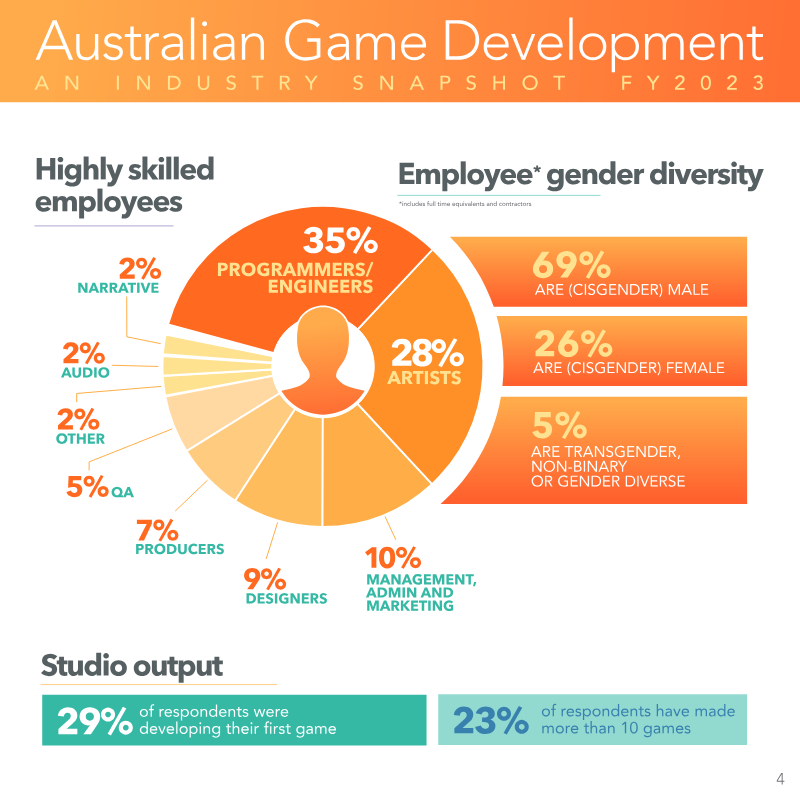
Australian Game Development Survey FY2023 Industry Snapshot
The Australian Game Development Survey: FY2023 Industry Snapshot reveals a sector experiencing significant maturation and financial expansion.
- The Australian game development industry generated $345.5 million in revenue during FY2023, representing a 21% year-over-year increase.
- The workforce grew by 17% to 2,458 full-time equivalent employees, with 63% of studios planning further hiring in the coming year.
- The sector is highly export-dependent, with 87% of total revenue derived from international markets.

Apex Legends Mobile footage from mobilegamer.biz. Captured from the Australian soft launch build.
Apex Legends Mobile successfully translates the core mechanics and high-intensity gameplay of the original battle royale title to mobile platforms.
- Apex Legends Mobile successfully replicates the core battle royale mechanics of the original franchise, including squad-based dynamics, the tactical ping system, and high-intensity combat.
- The mobile build maintains consistency with console and PC versions by utilizing identical loot rarity systems, such as level four sniper magazines and level three body shields.
- Gameplay remains centered on familiar resource management loops, requiring players to navigate shrinking zones while utilizing shield batteries and armor upgrades.

Supercell's Rush Wars | Soft Launch Review
Supercell’s Rush Wars represents a strategic attempt to bridge the gap between mid-core mobile titles and hyper-casual accessibility.
- Rush Wars struggles with long-term retention due to a lack of strategic depth, leading industry analysts to assign the title a modest score of 5 to 7 out of 10.
- The game’s monetization model is underperforming, characterized by an ineffective pre-roll gacha system and a notable lack of robust gold sinks.
- Soft launch performance metrics show lower install volumes and weaker revenue per download for Rush Wars compared to previous Supercell titles like Brawl Stars.