Germany reports and market data
48 game industry reports, presentations and talks about germany from writers such as PocketGamer.biz, game – Verband der deutschen Games-Branche e. V. and Jonas Tyroller, newest from 2026. Every document has a summary and key insights with the page they come from, and 596 charts and tables are extracted as data.
Key figures
The German games market contracted by 6% in 2024, resulting in total revenue of €9.4 billion and the first recorded decline in industry employment and active companies.
game – Verband der deutschen Games-Branche e. V., 2025 · German Games Industry: 2025, p. 8
Germany is the largest gaming market in the EU and the fifth largest globally, with 71% of the online population aged 10 to 65 identifying as game enthusiasts as of 2022.
Newzoo, 2022 · Key Insights Into German Gamers, p. 9
The German mobile market reached $4.0 billion in consumer spending in 2021, marking a 72% increase over two years.
data.ai, 2022 · State of Mobile: Germany 2022, p. 7
The German games market reached record revenues of 4.4 billion euros in 2019, driven by a domestic player base of 34 million people.
game, 2020 · The German Games Industry 2019, p. 9
The German eSports market is projected to reach approximately 130 million Euros by 2020, representing an average annual growth of around 27 percent.
Sport1, 2019 · Game Fokus: Esports 2019, p. 20
Documents

Gamescom 2026 & GTA VI: Everything You Need to Know
Gamescom 2026 demonstrated a robust recovery for the global gaming convention circuit, with attendance figures rising 3% to near pre-pandemic levels.
- Grand Theft Auto VI has generated an estimated $500 million in pre-order revenue, with its marketing campaign causing major studios to adjust release schedules to avoid direct competition.
- A Netflix-hosted trailer for GTA VI achieved 31 million views in four days, driving a 125% surge in web traffic and demonstrating the game's significant cross-platform cultural influence.
- Rising RAM costs driven by the AI sector are expected to delay next-generation hardware like the PlayStation 6, forcing manufacturers to extend the current console cycle for the existing 100-million-unit install base.
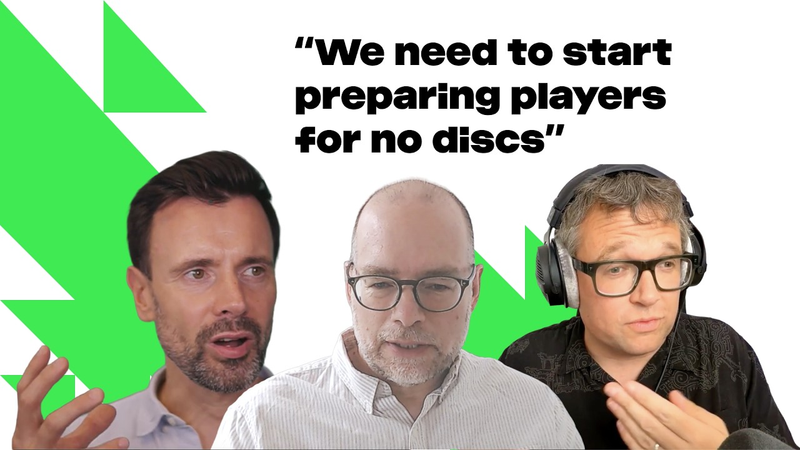
The video games most at risk from PlayStation’s physical switch-off
The global video game industry faces a critical inflection point as hardware manufacturers and publishers navigate a transition toward a fully digital ecosystem.
- PlayStation plans to phase out physical discs by January 2028, requiring a strategy to convert consumers who rely on physical media resale value to justify day-one purchases.
- Projections suggest a $1,000 price point for next-generation consoles could lead to a 38% decline in sales volume over a five-year period as consumers retain existing hardware.
- To combat market stagnation, the industry must shift focus from incremental graphical upgrades toward software innovation and the development of new intellectual property.

Make An Online Game That Lasts 30 Years
The longevity of online gaming services depends on a disciplined transition from hobbyist development to professional business operations, prioritizing long-term sustainability over short-term gains.
- Online service games offer superior long-term revenue stability compared to single-player titles, which typically experience a sharp decline in sales after the initial launch week.
- The free-to-play model allows developers to capture a wider range of player value by enabling high-engagement users to spend more than a fixed purchase price while still allowing lower-budget players to participate.
- Rigorous stage-gate processes, which require ideas to be evaluated and validated against defined criteria before proceeding, are essential to avoid wasting resources on features that lack player appeal.

Major media outlets will not have Nintendo Switch 2 reviews at launch
Nintendo is adopting a conservative strategy for the upcoming Switch 2 launch, targeting 15 million units in the first fiscal year.
- Nintendo is targeting 15 million units for the Switch 2 in its first fiscal year while withholding review units from major media outlets at launch to accommodate day-one software patches.
- The delay of major titles like Grand Theft Auto 6 is projected to cause a $2.7 billion loss in console-related revenue, negatively impacting PlayStation 5 and Xbox Series sales.
- Hardware spending in the gaming market dropped 32% in the first quarter, reflecting a broader industry downturn and a shift toward margin improvement over expansion.
German Games Industry: 2025
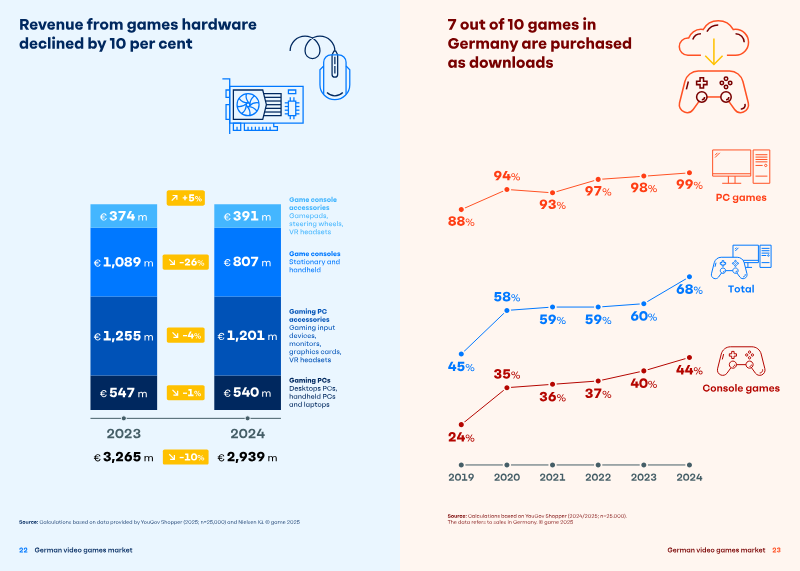
The German games industry currently occupies a pivotal position as the largest market in Europe and the fifth largest globally, despite navigating a challenging fiscal landscape in 2024.
- The German games market contracted by 6% in 2024, resulting in total revenue of €9.4 billion and the first recorded decline in industry employment and active companies.
- Federal funding is set to increase to €125 million annually by 2026, supported by new competitive tax incentives designed to improve Germany's international market standing.
- Germany remains Europe's largest games market and the fifth largest globally, supported by a robust player base of 37.5 million people with an average age of 39.5.

Annual Report of the German Games Industry 2024
The German games industry reached a total revenue of 9.97 billion euros in 2023, marking a 6 percent increase driven largely by hardware sales, mobile gaming, and in-game purchases.
- The German games industry generated 9.97 billion euros in revenue in 2023, representing a 6 percent year-over-year increase driven by hardware, mobile gaming, and in-game purchases.
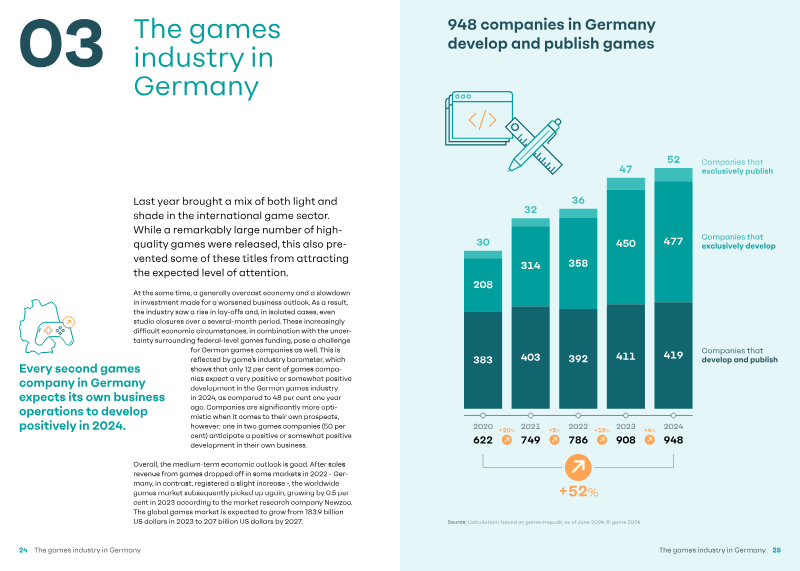
- While the number of development and publishing companies has grown by 52 percent since 2020, the sector is experiencing a slowdown in new company formations and employment growth due to economic instability and unpredictable federal funding.
- Industry stakeholders are advocating for a shift from fixed-budget funding to a hybrid, tax-based model to remain competitive against international rivals who benefit from more stable tax credit systems.
gamescom qa 2024
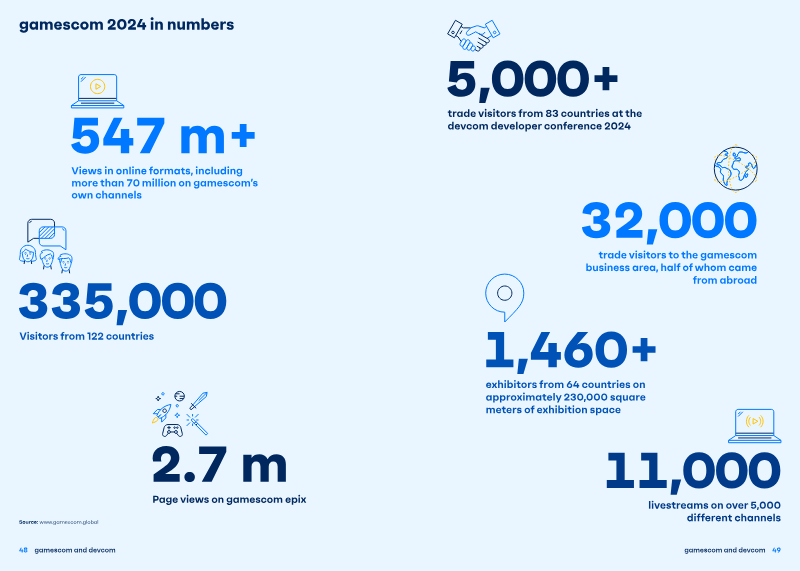
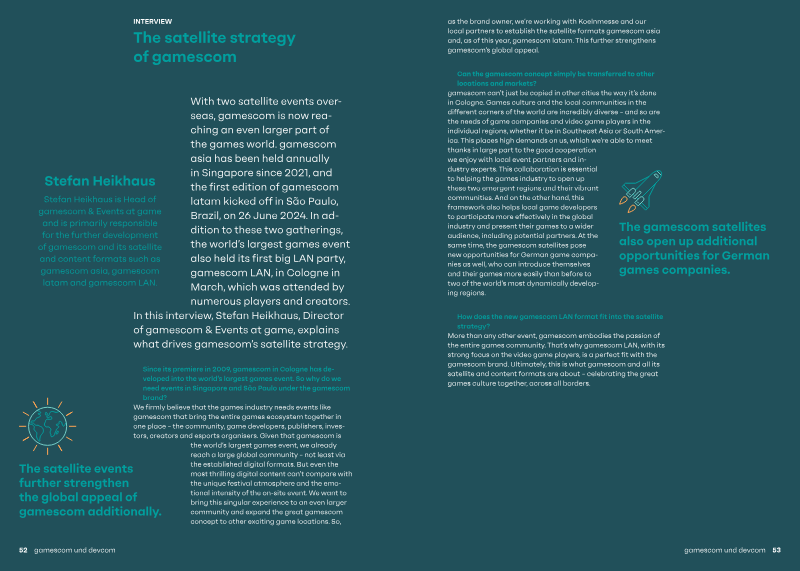
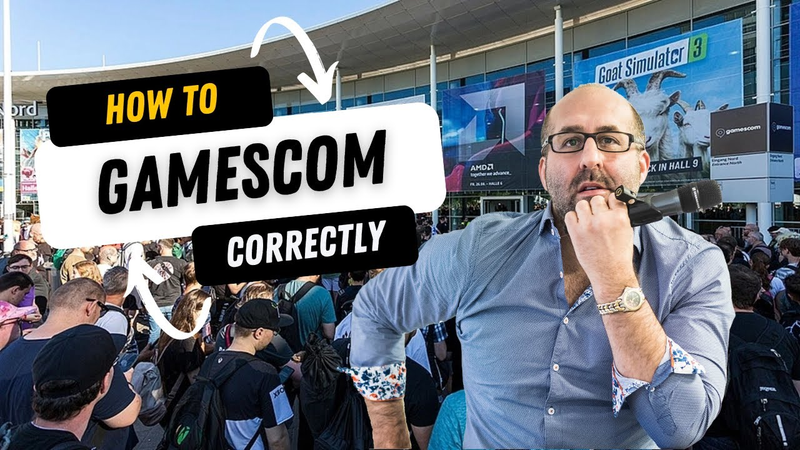
Gamescom serves as a vital nexus for the global video game industry, functioning as a primary hub for developers to secure funding and partnerships through strategic networking.
- Securing partnerships at trade shows requires a polished, functional vertical slice and a 30-second gameplay video to provide immediate proof of concept for publishers.
- Developers must present singular, confident budget proposals rather than ambiguous ranges to demonstrate commercial viability and professional discipline.
- Projects in saturated genres, such as roguelike city builders, must articulate a unique hook to differentiate themselves from the high volume of daily submissions.
FOMO Capital: Klang Games & The Power of Storytelling in Fundraising
Klang Games demonstrates that securing substantial venture capital in the gaming industry often relies more on the power of a compelling, long-term vision than on immediate, scalable key performance indicators.
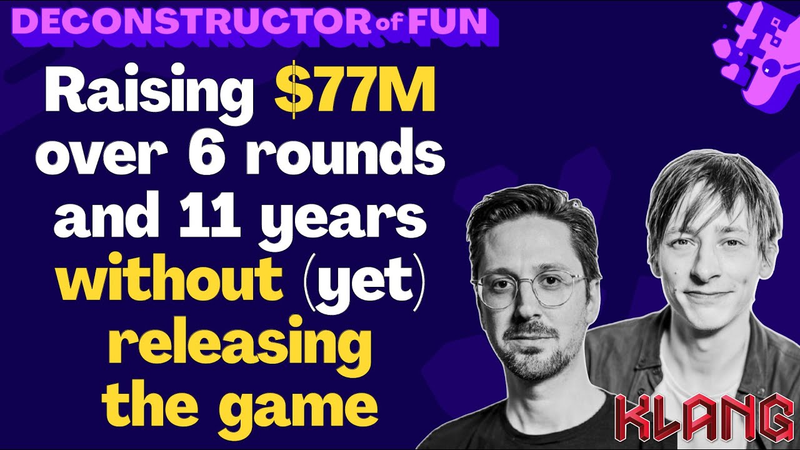
- Klang Games secured $77 million in venture capital over 11 years without a flagship title, demonstrating that a compelling, long-term vision can outweigh immediate, scalable KPIs in early-stage fundraising.
- The studio’s fundraising strategy centered on articulating a 'moonshot' project—a complex, AI-driven social simulation—to attract high-profile investors despite the absence of a released product.
- Klang Games de-risked their ambitious technical goals by focusing on core technology capable of simulating 50,000 AI characters, aligning their development with broader industry trends.

Annual Report of the German Games Industry 2023
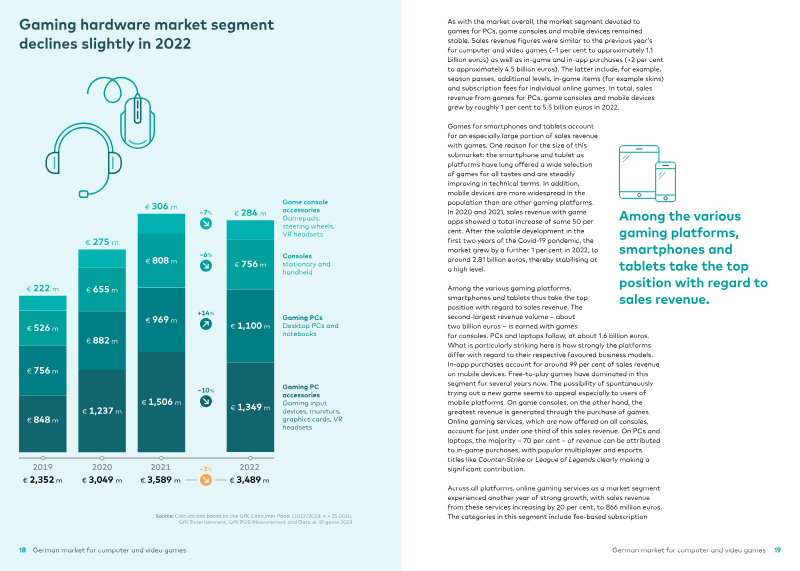
The German games industry demonstrated remarkable resilience throughout 2022, maintaining a stable market valuation of 9.87 billion euros despite global economic headwinds, inflationary pressures, and hardware supply constraints.
- The German games market remained resilient in 2022 with a valuation of 9.87 billion euros, achieving 1% growth despite global economic pressures.
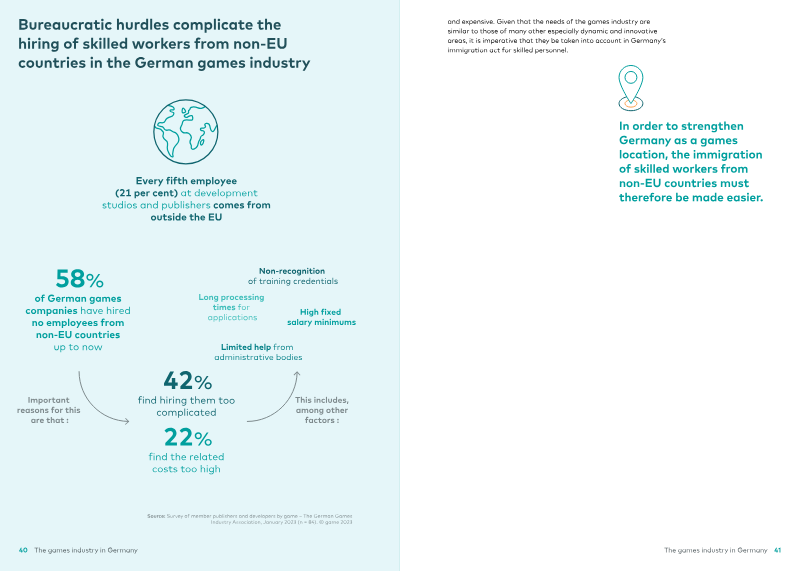
- The industry saw significant structural expansion, marked by a 15.5% increase in the number of companies and a 7% rise in the total workforce.
- Mobile gaming remains the primary revenue driver, while digital distribution has become the standard purchasing method for PC users and younger demographics.
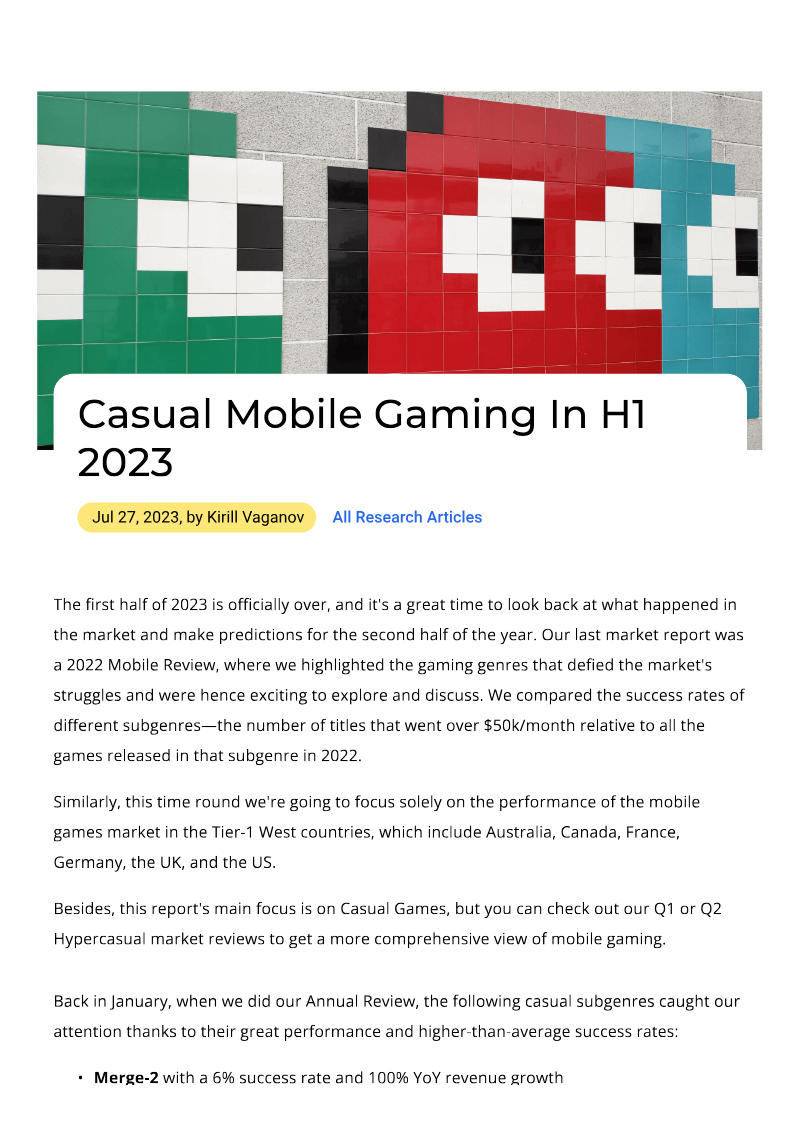
Casual Mobile Gaming in H1 2023
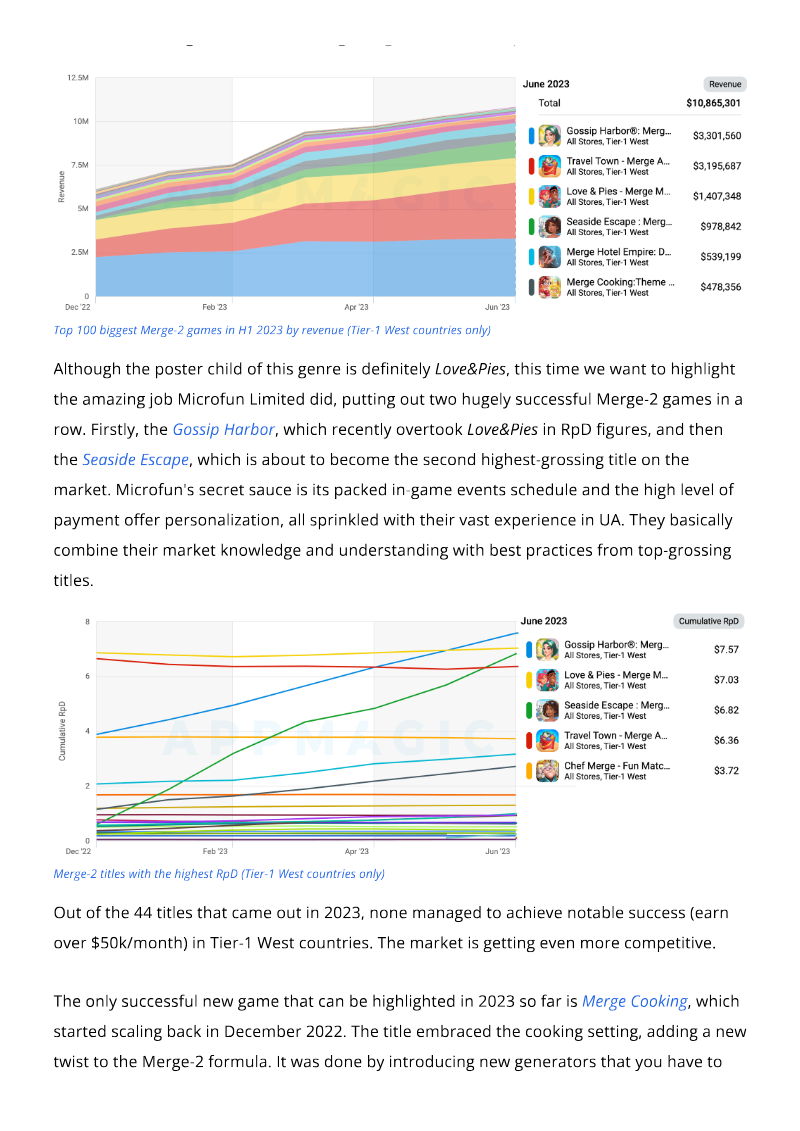
The mobile gaming market in Tier-1 Western countries—comprising Australia, Canada, France, Germany, the UK, and the US—experienced significant shifts during the first half of 2023.
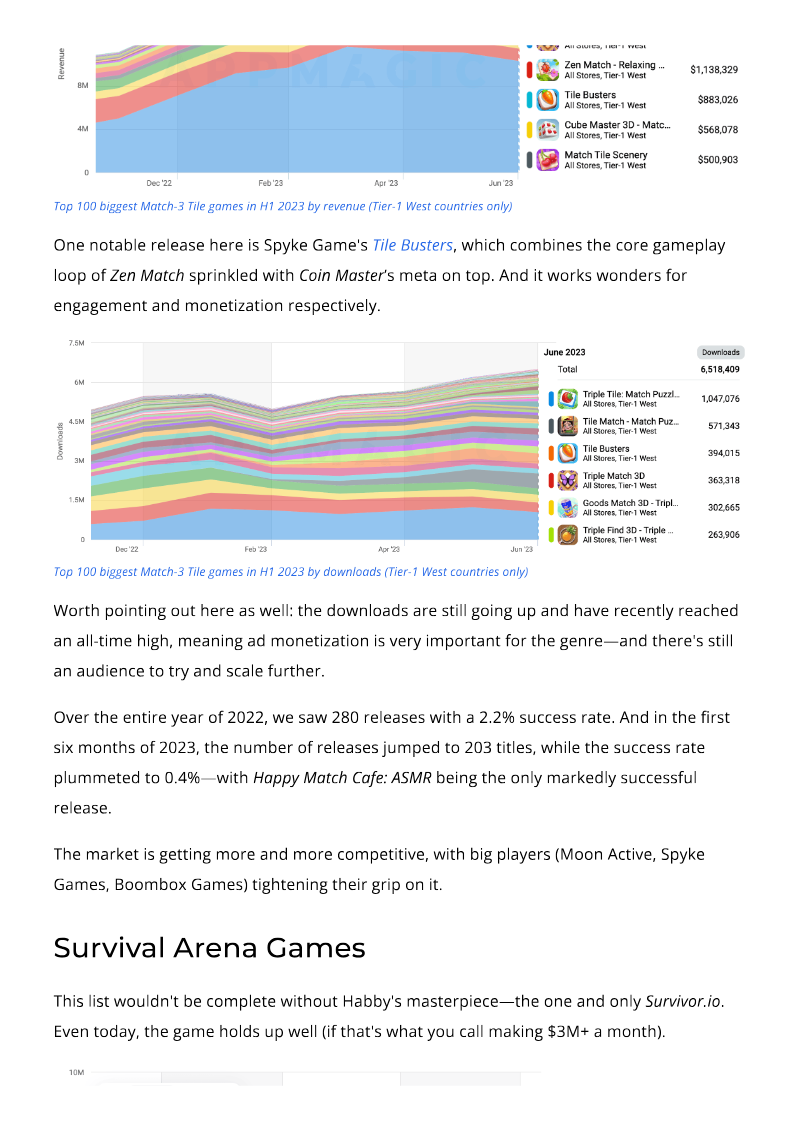
- The casual mobile gaming market in Tier-1 Western countries is experiencing increased saturation, leading to a notable decline in success rates for new releases across most categories.
- The Merge-2 subgenre saw a 60% increase in monthly revenue during H1 2023, though the market has become inaccessible to new entrants with no new titles achieving significant success.
- The Idle RPG sector grew by approximately 20% in monthly revenue in H1 2023, bolstered primarily by successful new releases from South Korean developers.
Mobile Games: State of the Market & Playtime Q3 2023
The global mobile gaming market faced a contraction in total installs during the third quarter of 2023, reflecting a broader cooling trend in user acquisition.
- iOS remains the dominant platform for mobile gaming revenue, accounting for 56.01% of the total global share compared to 43.99% for Android.
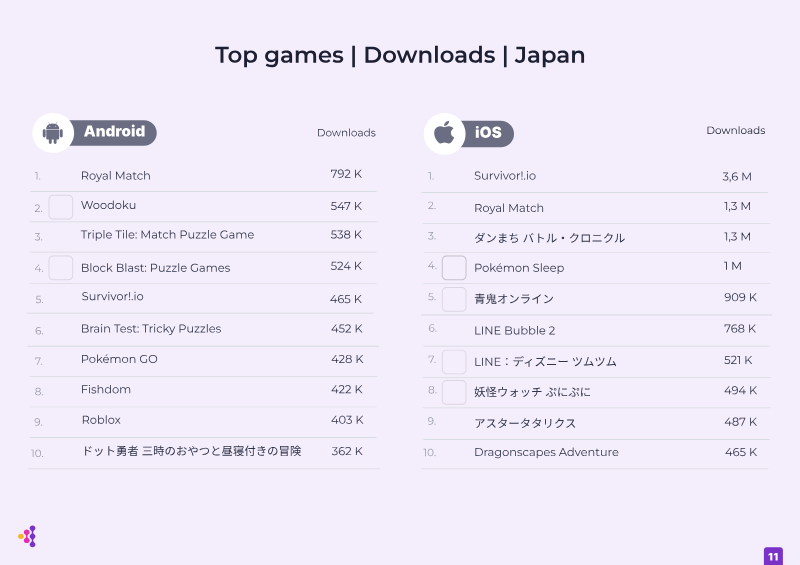
- The United States and Japan are the leading revenue generators among major markets, contributing $2.92 billion and $2.03 billion respectively, with the six analyzed countries accounting for 59% of global gaming revenue.
- South Korea experienced the highest growth in game installs at 32% compared to Q3 2022, while the United States and France saw declines of 5% and 0.7%, respectively.

Fast Iteration on Epic Scenes with Boy Sichterman | Art Boost
Achieving high-fidelity hard-surface design in the modern game industry requires a strategic blend of technical precision and creative efficiency.
- Utilize parametric, NURBS-based modeling tools like Fusion 360 for hard-surface design to enable non-destructive, rapid iteration on complex geometry.
- Optimize production efficiency by prioritizing high-fidelity detail only within the camera’s immediate frame and using tessellation to simulate complexity.
- Avoid overscoping by focusing on dressing a single, compelling corner of an environment rather than attempting to build entire rooms.