Key insights
6 slides
Market Reality
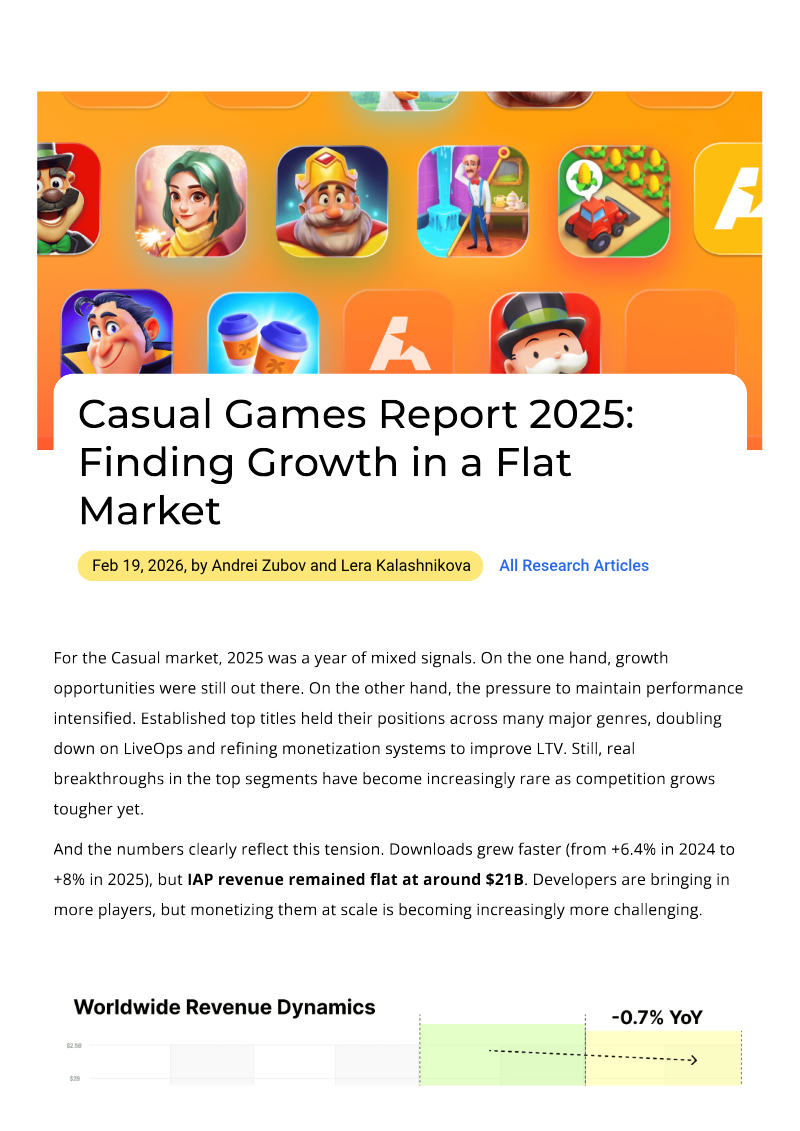
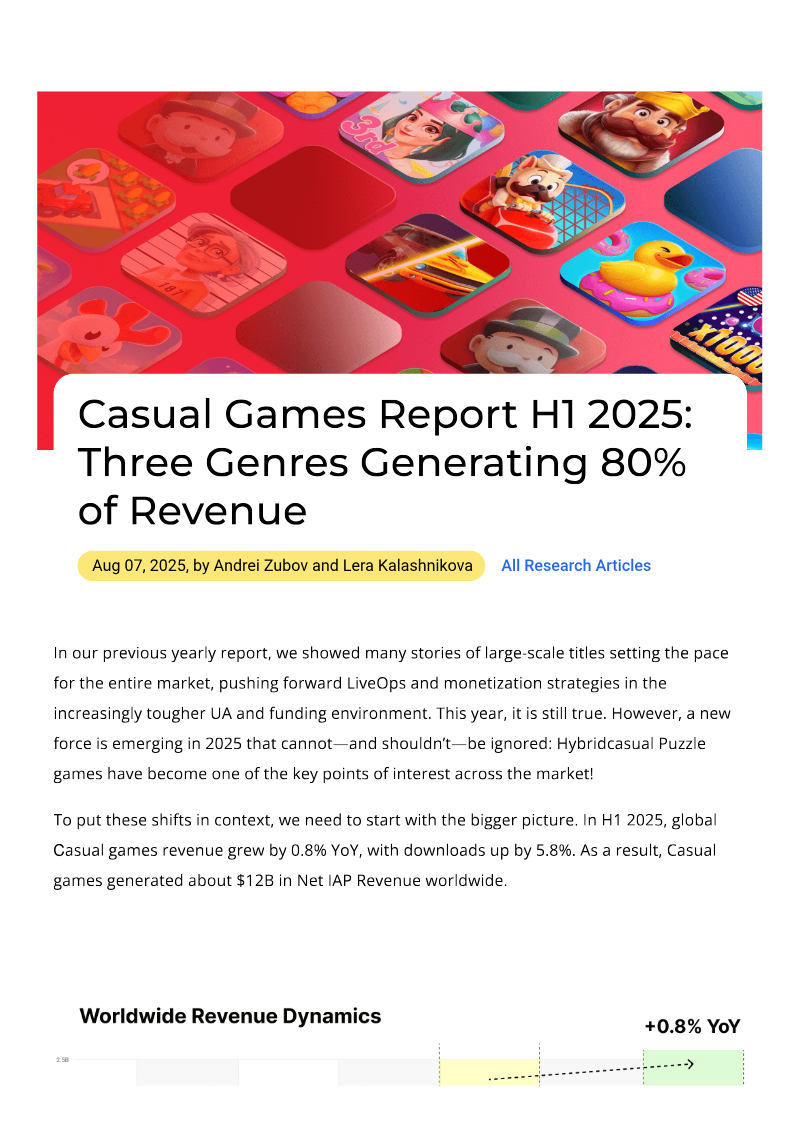
The casual mobile gaming market in Tier-1 Western countries is increasingly saturated.
This saturation has led to a notable decline in success rates for new releases across most categories. The market is characterized by heightened competition.
Revenue Growth
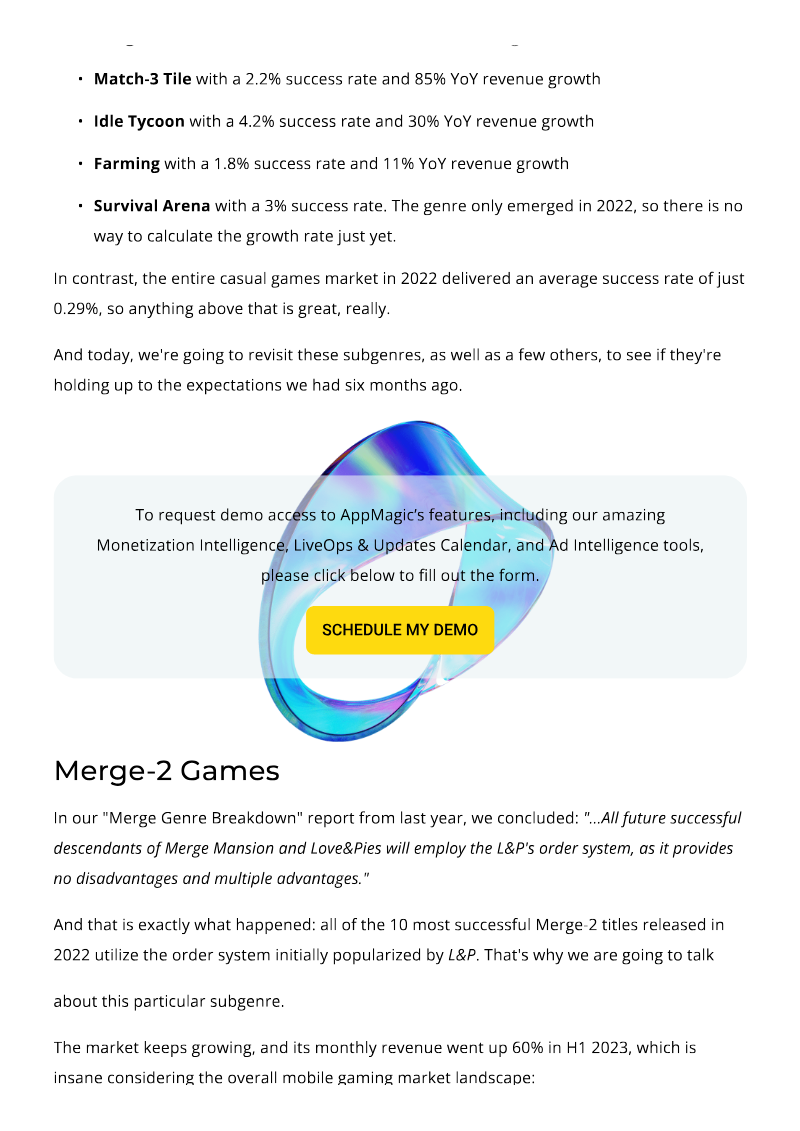
The Merge-2 subgenre increased monthly revenue by 60% in H1 2023.
Despite this growth, the market has become inaccessible to new entrants. No new titles in this subgenre achieved significant success.
Resilient Growth
The Idle RPG sector grew by approximately 20% in monthly revenue in H1 2023.
This growth was primarily bolstered by successful new releases. These successful releases came from South Korean developers.
Declining Success
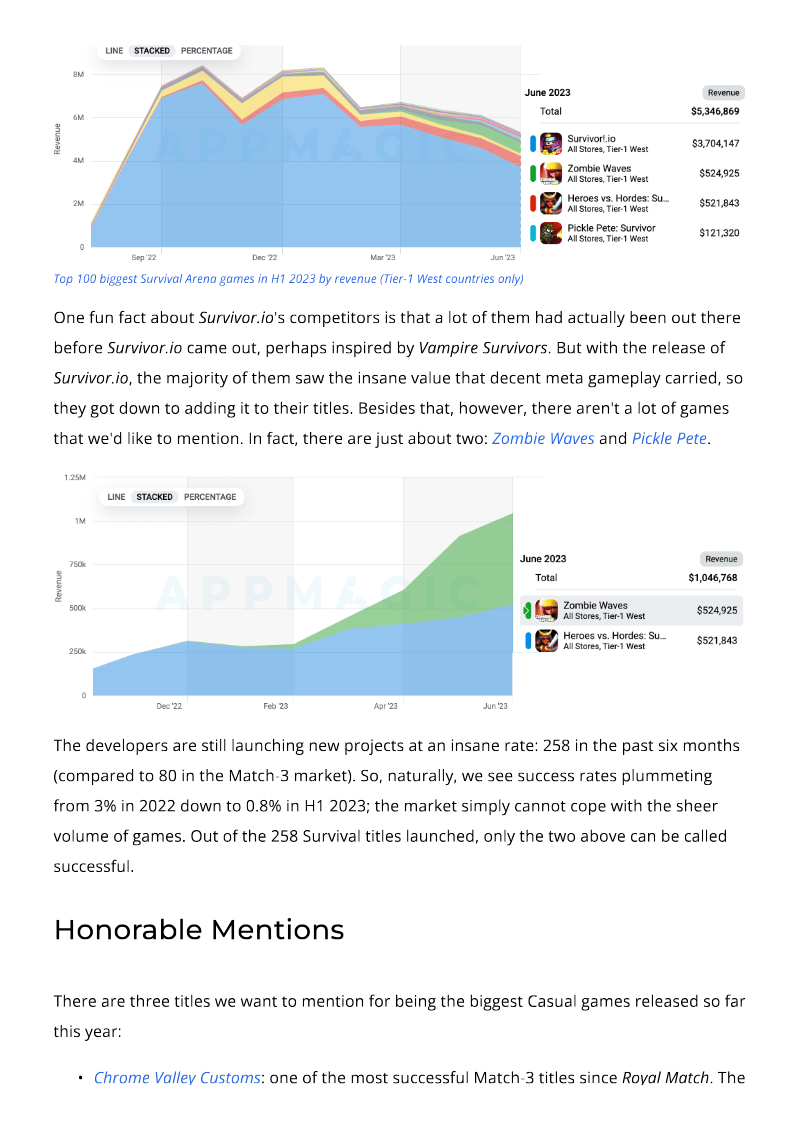
Survival Arena games saw a sharp decline in success rates in H1 2023.
The success rate dropped from 3% in 2022 to 0.8% in the first half of 2023.
Stagnant Segments
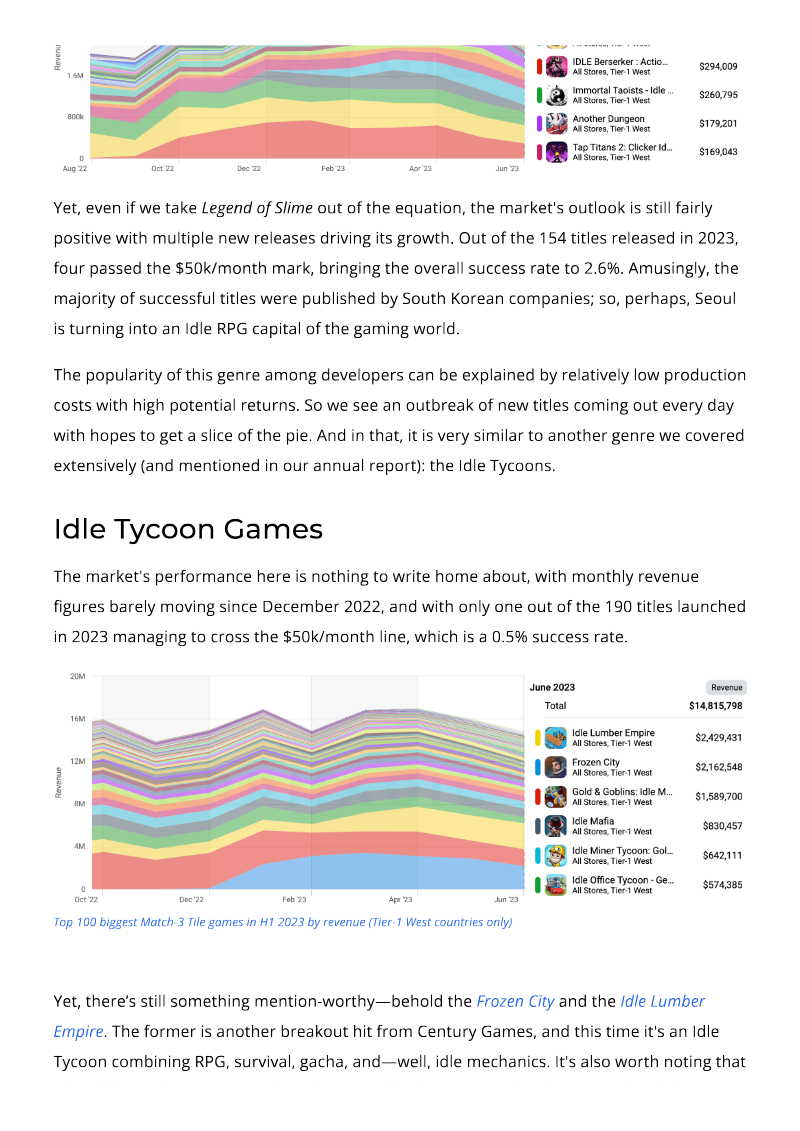
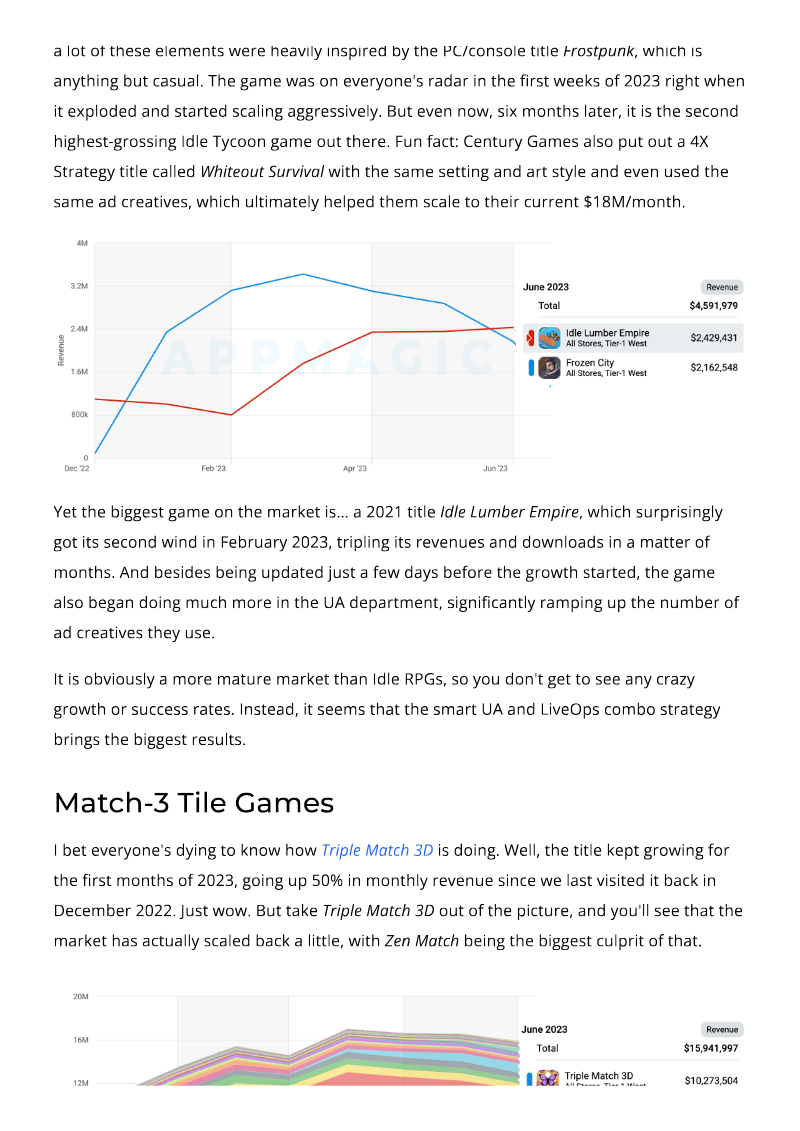
Idle Tycoon and Survival Arena segments faced stagnation or declining success.
The market struggled to absorb the high volume of new titles.
Success Factors
Success in the current landscape is driven by sophisticated LiveOps and personalized monetization.
Pure innovation is less of a driver for success.
It's like a well-oiled machine, where every part works together seamlessly, rather than just having a shiny new engine.
Key Drivers. Success in the current landscape is driven by sophisticated LiveOps, personalized monetization, and aggressive user acquisition rather than pure innovation.
1 / 6
Ask AI about this report