
Report36 pages
Winning with Creative: Building, Testing, and Scaling High-Performance Ads
The purpose of the analysis is to demonstrate that creative content remains the decisive lever for growth in an advertising environment increasingly fragmented by privacy constraints and platform diversity. By measuring “Return on Creative” through volume, variety, and versioning, marketers can isolate incremental value per asset and scale profitable campaigns across platforms.
High‑performance ads are defined by rapid, data‑driven testing and creative diversification. In e‑commerce and lifestyle categories, first‑person point‑of‑view walkthroughs that showcase everyday use outperform generic user‑generated content, with a 350 % lift in ad spend when winning templates are paired with top assets. TikTok’s “TikTok‑first” structure—hook, body, close—shows that 30‑second videos with sound on can raise purchase intent by up to 77 %. AI tools such as TikTok Symphony deliver a 57 % efficiency gain in content creation, underscoring the necessity of automated, localized creative testing for scaling.
The three‑stage CRAFTSMAN+ framework provides a systematic approach to creative optimization. Stage 2 refines concepts by testing talent, video duration, and demographic fit to identify the most engaging format. Stage 3 fine‑tunes assets—including intro hooks, audio, CTA copy, and visual elements—to lock in the winning creative, benchmark performance, and scale campaigns. Narrative structure (education‑focused versus social proof) and localized storytelling drive higher conversion rates and return on ad spend, while structured fatigue monitoring (CTR decay, spend decline) enables proactive creative refreshes.
Geographically the findings apply to major digital markets worldwide, with a focus on platforms such as TikTok and broader social media ecosystems. The time period covers the most recent advertising cycles, reflecting current privacy regulations and platform algorithm changes. Overall, the analysis concludes that dynamic, interactive creative—tested rapidly and scaled strategically—offers the highest growth potential for brands navigating today’s complex advertising landscape.
- High-performance ads achieve a 350% lift in ad spend when winning templates are paired with top-performing assets.
- TikTok-first video structures—comprising a hook, body, and close—can increase purchase intent by up to 77% when using 30-second, sound-on formats.
- AI-driven content creation tools, such as TikTok Symphony, provide a 57% efficiency gain in the production process.
- First-person point-of-view walkthroughs demonstrating everyday product use consistently outperform generic user-generated content.
- The CRAFTSMAN+ framework optimizes performance by systematically testing variables like talent, video duration, and demographic fit before fine-tuning specific elements like hooks and CTAs.
+3
MolocoJan 2026
Report21 pages
2026 US Venture Capital Outlook
The 2026 US venture capital outlook projects a cautiously optimistic landscape, driven largely by an explosive surge in early‑stage activity and the continued dominance of artificial intelligence (AI) startups. AI firms now command 65 % of venture capital, fueling near‑record first‑financing counts and setting a high bar for late‑stage valuations. While liquidity remains the primary constraint—exit values are projected below $300 billion and limited LP enthusiasm persists—the emergence of improved secondary markets and a potential rebound in initial public offerings are expected to alleviate pressure. Multistage firms that focus on seed rounds are poised to sustain growth across both early and later stages, yet emerging managers may face fundraising challenges that could curtail diversification.
A widening gap between AI‑focused, high‑growth startups and their slower‑moving peers is evident. In Q3 2025 the United States hosted 830 active unicorns with a record $3.9 trillion post‑money valuation, yet many of these firms are liquidity‑constrained and struggle to secure follow‑on funding. AI companies dominate late‑stage deals, with median Series C and D+ valuations reaching $838 million; AI rounds exceed non‑AI deals by roughly 26 % at Series D+, underscoring investor confidence in the AI boom while highlighting potential risks if public AI valuations contract.
Fundraising is projected to rebound to $100‑$130 billion in 2026, largely driven by recycled distributions that are expected to account for roughly 70 % of new commitments. Strong exit activity through 2025 and renewed interest in AI‑focused funds—such as a $10 billion Andreessen Horowitz vehicle—underpin this outlook. However, risks remain: a potential liquidity reversal or recession‑induced sentiment decline could keep commitments below $100 billion, tempering the projected recovery.
- AI startups currently command 65% of all venture capital, driving record-high median valuations of $838 million for Series C and D+ rounds.
- The US venture capital market is projected to see a fundraising rebound to $100–$130 billion in 2026, with approximately 70% of new commitments expected to come from recycled distributions.
- As of Q3 2025, the US hosted 830 active unicorns with a combined post-money valuation of $3.9 trillion, though many face significant liquidity constraints and difficulties securing follow-on funding.
- AI-focused late-stage deals currently command a 26% valuation premium over non-AI counterparts, creating a widening performance gap between high-growth AI firms and slower-moving peers.
- Liquidity remains a primary market constraint, with total exit values for 2026 projected to remain below $300 billion despite anticipated improvements in secondary markets and IPO activity.
+2
PitchBookJan 2026

Report45 pages
Why Chance-Based Mechanics Keep Us Hooked
Chance-based mechanics drive player engagement by prioritizing the psychological thrill of anticipation over the actual value of rewards. This engagement is rooted in the release of dopamine during the period of uncertainty, where the wait for a result creates more neurological stimulation than the prize itself. By utilizing unpredictable reward schedules and the "near-miss" effect, developers foster a persistent belief that a significant win is imminent. This strategy is exemplified by the commercial success of Monopoly GO!, which generates between $100 million and $125 million in monthly revenue through a "saw-tooth" gameplay loop that oscillates between resource depletion and sudden, event-driven recovery.
The effectiveness of these systems relies on a "pressure and release" cycle designed to maintain emotional tension without causing player burnout. High-volatility mechanics, such as digital wheels and randomized heists, are tuned to prioritize emotional impact over mathematical fairness. For instance, probabilities are often manipulated to limit low-tier prizes—sometimes to as little as 13%—while visually emphasizing jackpots to maximize excitement. Even traditionally negative outcomes are reframed as positive opportunities; in certain high-performing titles, escape rates from penalty mechanics like "Jail" are set as high as 80% to ensure the player remains within the rewarding flow of the game.
Ultimately, long-term retention is achieved through the careful management of sensory-rich animations and gacha-style collection systems that create frequent "emotional spikes." By blending live events with boosters that temporarily alter the odds, developers create a dynamic environment where the player feels a constant sense of progression. This sophisticated orchestration of risk, hope, and visual feedback ensures that the psychological journey toward a potential reward remains compelling enough to sustain high levels of monetization and daily active usage across the mobile gaming landscape.
- Monopoly GO! generates $100 million to $125 million in monthly revenue by utilizing a 'saw-tooth' gameplay loop that alternates between resource depletion and sudden, event-driven recovery.
- Player engagement is driven by the dopamine release associated with the anticipation of rewards rather than the intrinsic value of the prizes themselves.
- Developers manipulate game probabilities to prioritize emotional impact over mathematical fairness, such as limiting low-tier prize outcomes to as little as 13%.
- Penalty mechanics are often tuned to ensure player retention, with some titles setting escape rates from negative states like 'Jail' as high as 80%.
- High-volatility mechanics, including digital wheels and randomized heists, are paired with sensory-rich animations to create frequent 'emotional spikes' that sustain daily active usage.
+1
Sensor TowerJan 2026
Report10 pages
Reconnecting with Gen Z Mobile Gamers: UK
Mobile gamers aged 18 to 24 represent a critical demographic for the UK gaming industry, characterized by high engagement levels but increasing volatility. While 79% of this cohort plays mobile games at least several times a week, their overall time investment is declining, dropping to an average of 4.4 hours per week. This shift is driven by intense competition from other digital entertainment channels, with 57% of Gen Z players reporting that social media, streaming, and short-form video content are actively displacing their mobile gaming time.
The research, based on an online survey of 1,605 UK residents, reveals that Gen Z exhibits significantly lower title loyalty than the general population. Approximately 57% of these players frequently rotate between games, constantly seeking new experiences. This churn is exacerbated by dissatisfaction with current industry practices; 71% of Gen Z players cite intrusive monetization and advertising as primary deterrents, while 62% feel there is a lack of fresh, appealing content in the current market.
To recapture this audience, developers must pivot toward discovery strategies rooted in social proof and authentic gameplay. Gen Z discovery is increasingly spontaneous, relying on creator content and peer recommendations rather than traditional marketing assets. Successful engagement strategies require front-loading immediate rewards, designing for shareable social moments, and implementing fair, non-intrusive monetization models. By prioritizing short-form satisfaction and consistent content updates, developers can better align with the fragmented attention spans and high expectations of this demographic, ultimately fostering more sustainable long-term retention.
- 71% of UK Gen Z mobile gamers cite intrusive monetization and advertising as the primary reason for abandoning games.
- Gen Z mobile gaming time is declining to an average of 4.4 hours per week as 57% of players shift their attention to social media, streaming, and short-form video.
- Title loyalty is low among this demographic, with 57% of players frequently rotating between games in search of new experiences.
- 62% of Gen Z players report a lack of fresh, appealing content in the current mobile gaming market.
- While 79% of 18- to 24-year-olds play mobile games at least several times a week, engagement is increasingly volatile and reliant on spontaneous discovery through creator content and peer recommendations.
+2
BryterJan 2026

Whitepaper16 pages
Beyond the App Store: A Guide to Direct Linkouts and Out-of-App Monetization
The mobile gaming industry is undergoing a structural shift as regulatory changes and legal precedents in the United States, Europe, Asia, and Latin America dismantle long-standing app store monopolies. This transition allows publishers to bypass traditional platform commissions of 15% to 30% by steering users toward direct, out-of-app payment channels. The primary thesis is that recovered margins should not be viewed merely as profit, but as a strategic reinvestment budget to enhance player value, improve live operations, and drive long-term audience growth.
Successful implementation requires a disciplined approach to user segmentation, value proposition, and interface design. Rather than inviting all players to use external payment methods, publishers should target high-propensity users—such as frequent spenders or those at higher game levels—to minimize friction for casual players. Because out-of-app flows inherently introduce more steps than native in-app purchases, publishers must provide a tangible incentive, such as bonus currency, exclusive items, or lower effective pricing, to ensure the external path remains attractive.
Operationalizing this strategy requires robust infrastructure to manage global payment routing, tax compliance, fraud protection, and reconciliation. Attempting to build these capabilities in-house often results in excessive overhead that negates the margin benefits. Data from large-scale deployments indicates that well-executed linkout programs can drive significant incremental growth, with some publishers seeing a 17% increase in webstore revenue and a 78% rise in first-time purchase rates. Ultimately, the transition to out-of-app monetization represents a move toward a more sustainable, publisher-controlled economic model that prioritizes lifetime value over single-transaction margins.
- Global regulatory shifts are dismantling app store monopolies, enabling publishers to bypass 15% to 30% platform commissions by utilizing direct, out-of-app payment channels.
- Well-executed webstore programs have demonstrated a 17% increase in total revenue and a 78% rise in first-time purchase rates for mobile game publishers.
- Publishers should treat recovered margins as strategic reinvestment capital for live operations and audience growth rather than immediate profit.
- To maintain conversion rates, publishers must offer tangible incentives such as bonus currency, exclusive items, or lower pricing to offset the increased friction of external payment flows.
- Targeting high-propensity users, such as frequent spenders or high-level players, is more effective than broad-based rollouts that risk alienating casual users.
+2
CodaJan 2026

Report39 pages
Gaming Deep Dive: Ad Monetization 2026
Mobile gaming has structurally reorganized to treat advertising as a foundational revenue model, generating $12 billion annually across 19 global markets. As of 2026, ad-supported titles account for 84% of all game downloads, underscoring the ubiquity of this monetization strategy. The landscape is characterized by significant market consolidation, with AppLovin and AdMob controlling 65% of total ad revenue. Within this ecosystem, the puzzle genre remains the primary driver of financial performance, capturing over half of all ad earnings.
The competitive environment has evolved to include a substantial presence from non-gaming sectors, as social platforms and e-commerce entities now account for 31% to 49% of ad impressions across major genres. While advertising provides a reliable revenue floor, data confirms that pure ad-only models are increasingly insufficient for maximizing profitability. Instead, top-tier publishers are shifting toward hybrid strategies that integrate in-app purchases with ad monetization. This approach allows developers to capture value from non-spending users while simultaneously protecting the experience of high-value segments.
Success in the current market requires navigating stark geographic disparities and the rise of emerging platforms like Roblox. Hybridcasual titles have emerged as a critical growth segment, leveraging deep engagement and precise audience segmentation to outperform traditional models. Ultimately, the industry is moving toward a sophisticated equilibrium where advertising serves as a strategic tool for user retention and monetization, rather than a standalone revenue stream. Publishers that fail to adopt these nuanced, hybrid monetization frameworks risk losing ground in an increasingly consolidated and competitive global landscape.
- Ad-supported titles now represent 84% of all mobile game downloads, establishing advertising as a foundational revenue model generating $12 billion annually across 19 global markets.
- The ad monetization market is highly consolidated, with AppLovin and AdMob controlling 65% of total industry ad revenue.
- Pure ad-only monetization models are increasingly insufficient, forcing top-tier publishers to shift toward hybrid strategies that integrate in-app purchases to maximize profitability.
- The puzzle genre is the primary financial driver of the sector, accounting for more than 50% of all ad earnings.
- Non-gaming sectors, specifically social platforms and e-commerce entities, now account for 31% to 49% of ad impressions across major game genres.
+2
Sensor TowerJan 2026

Report24 pages
China WeChat Mini Games Industry Report 2026
The WeChat Mini Games industry in China has emerged as a dominant, high-growth sector within the broader digital ecosystem. As of 2026, the market is characterized by a rapid shift from simple casual titles toward mid-to-hardcore genres, including strategy, RPG, and tower defense games. This evolution is underscored by a significant increase in paid user acquisition, with over 51,000 games actively running advertisements in 2025, a figure that substantially outpaces traditional mobile game growth.
Market data indicates that the Mini Games sector generated RMB 53.535 billion (approximately $7.65 billion) in 2025, representing a 34.39% year-over-year increase, with projections exceeding RMB 70 billion for 2026. Revenue is primarily driven by in-app purchases, which account for 68.11% of total earnings, while advertising monetization contributes the remaining 31.89%. WeChat maintains a leadership position among competing platforms, boasting a 51.5% penetration rate and an industry-wide monthly active user base of 571 million as of August 2025.
User engagement remains high, with the average daily playtime exceeding 60 minutes and a daily session frequency of approximately 5.1 times. The core demographic is aged 24–40, with a majority residing in tier-3 cities or below. Successful titles increasingly utilize hybrid gameplay mechanics, such as combining MMORPG elements with idle or strategy features, to maintain player retention.
For international developers, the market presents significant opportunities but requires navigating complex regulatory and technical barriers. Successful entry necessitates partnering with local Chinese publishers to manage ISBN licensing, payment integration, and platform-specific performance optimizations. Technical requirements are stringent, as games must typically load in under 10 seconds and adhere to strict package size limits, often requiring the use of specialized engines like Cocos or Laya to ensure compatibility within the WeChat environment.
- The WeChat Mini Games market reached RMB 53.535 billion in 2025, a 34.39% year-over-year increase, with projections exceeding RMB 70 billion for 2026.
- WeChat dominates the sector with a 51.5% platform penetration rate and 571 million monthly active users as of August 2025.
- Revenue is primarily driven by in-app purchases (68.11%), supplemented by advertising monetization (31.89%).
- The industry is shifting toward mid-to-hardcore genres like RPG and strategy, supported by over 51,000 games actively running paid advertisements in 2025.
- Core user engagement is high, averaging over 60 minutes of daily playtime across 5.1 daily sessions, primarily among users aged 24–40 in tier-3 cities or below.
+2
Meridian PlayJan 2026
Report23 pages
The State of Web Gaming Report 2026: A Data-Driven Guide to the Untold Reality of Contemporary Web Gaming
Web gaming is currently undergoing a significant renaissance, driven by a growing consumer preference for frictionless, instant-access experiences that bypass the cumbersome download and update requirements characteristic of traditional PC and console platforms. This shift reflects a broader evolution in gaming habits, where time-poor users increasingly favor rapid, cross-platform engagement. As of 2026, the sector has transitioned from a legacy medium into a high-value discovery layer, serving as a vital top-of-funnel acquisition tool for the wider gaming ecosystem.
Data indicates that web gaming audiences are remarkably engaged, with 37 percent of users playing multiple times daily. This high level of interaction is complemented by a strong conversion pipeline, as 62 percent of players eventually purchase or download titles they initially encountered through a browser. Despite these compelling metrics, a persistent perception gap remains among some developers who view the web as a low-quality channel. However, the industry is actively correcting this bias, with 53 percent of developers planning to port mobile titles to the web within the coming year to mitigate widespread discoverability challenges.
The global market for web gaming is characterized by low barriers to entry and high competition, yet HTML5 development provides a cost-effective strategy for reaching deeply engaged audiences. By leveraging the web as a primary discovery channel, developers can effectively bridge the gap between casual browser play and long-term ecosystem investment. Ultimately, the integration of web-based gaming into broader distribution strategies is no longer optional but a critical growth imperative for developers seeking to maintain relevance in an increasingly fragmented digital landscape.
- Web gaming has evolved into a primary top-of-funnel acquisition tool, with 62 percent of browser-based players eventually purchasing or downloading the titles they first encountered on the web.
- The web gaming audience demonstrates high retention, with 37 percent of users engaging with content multiple times per day.
- To combat mobile discoverability challenges, 53 percent of developers plan to port their mobile titles to the web within the next year.
- The shift toward web gaming is driven by a consumer preference for frictionless, instant-access experiences that eliminate the need for traditional platform downloads and updates.
- HTML5 development serves as a cost-effective strategy for developers to reach highly engaged audiences while navigating a market defined by low barriers to entry and high competition.
+1
PokiJan 2026
Report231 pages
The State of Video Gaming: 2025
The global video game industry is currently undergoing a structural correction following a decade of rapid expansion that concluded in 2021. The primary thesis of this transition is that the industry’s previous growth engines—mobile expansion, live-service models, and pandemic-era engagement—have plateaued, leading to a 12% decline in real-term content spending. This downturn is characterized by widespread commercial underperformance, record-high layoffs, and a significant contraction in venture capital funding. As production budgets for AAA titles balloon toward $500 million, the market has become increasingly polarized, with player engagement and revenue heavily concentrated within a small cohort of long-standing, established franchises that effectively crowd out new releases.
Geographically and sectorally, the landscape is shifting as Chinese developers gain significant global market share, rising from 0.5% to 12.5% of non-domestic content spending over the last 13 years. While the mobile sector faces a 23% revenue drop due to privacy-related user acquisition costs and competition from social media, the industry is pivoting toward cross-platform accessibility and hardware-agnostic distribution. Platforms like Roblox and Steam continue to dominate engagement, though developers face increasing pressure from high platform commission fees and the necessity of navigating a saturated market where discovery is increasingly difficult.
Looking forward, the industry is attempting to mitigate these challenges through technological and business model innovation. Strategies include the integration of generative AI to enhance NPC behavior, the adoption of cloud-native simulations, and a strategic pivot toward programmatic advertising to supplement stagnant game pricing. Furthermore, regulatory pressures on app stores are expected to improve developer margins, while a resurgence in handheld hardware and cross-platform connectivity aims to unify fragmented ecosystems. Ultimately, the industry is moving toward a risk-averse, multiplatform approach, prioritizing long-term engagement and operational efficiency to survive an increasingly competitive and capital-intensive environment.
- The video game industry is undergoing a structural correction characterized by a 12% decline in real-term content spending following the post-2021 plateau of previous growth engines.
- Market polarization has intensified as AAA production budgets reach $500 million, causing revenue and engagement to concentrate within established franchises while crowding out new releases.
- Chinese developers have significantly expanded their global footprint, increasing their share of non-domestic content spending from 0.5% to 12.5% over the last 13 years.
- The mobile gaming sector has experienced a 23% revenue drop, driven by rising user acquisition costs linked to privacy regulations and increased competition from social media platforms.
- Industry players are shifting toward risk-averse, multiplatform strategies that leverage generative AI, cloud-native simulations, and programmatic advertising to counter stagnant game pricing and high production costs.
+4
EpyllionJan 2026

Whitepaper90 pages
2026 Global Mobile Apps Marketing Trends
The 2026 mobile marketing landscape is defined by a fundamental transition from media-centric targeting to creative-driven acquisition, necessitated by tightening privacy constraints and the saturation of traditional advertising channels. Competitive advantage now hinges on the speed of creative iteration and the ability to unify product development, monetization, and distribution. By leveraging early behavioral signals to predict long-term value, industry leaders are successfully aligning short-term performance metrics with sustainable user lifecycle growth. This evolution is supported by a strategic shift toward AI-powered personalization and behavior-driven gamification, as non-gaming applications increasingly adopt the engagement tactics traditionally reserved for the mobile gaming sector.
Data from 2025 reveals a period of significant market consolidation, marked by a 16.7% decline in active advertisers alongside a 73.3% surge in creative output per advertiser. Playable ads have emerged as the premier format, consistently yielding the highest attention duration, scroll-stop rates, and conversion metrics. While the AI app sector experienced a sharp 48% contraction in the number of advertisers, top-tier players have responded by aggressively scaling localized marketing efforts. Simultaneously, the finance and health sectors have maintained greater stability, focusing on service-centric, medical-grade solutions and persuasive, value-based messaging to capture mature markets in North America and Europe.
Global strategies for 2026 prioritize a balanced media mix, typically favoring video content, while emphasizing hyper-local operations in emerging regions like Southeast Asia and the Middle East. Success in these diverse markets requires intensive user education and culturally nuanced, scenario-based ad updates. As the industry moves toward subscription-based models and on-device AI integration, the focus has shifted from mere technological development to the large-scale monetization of AI-enhanced user experiences. Ultimately, the market is moving toward a future of highly segmented, interactive, and performance-driven advertising that prioritizes technical precision and regulatory compliance to foster long-term user trust.
- The mobile marketing landscape has shifted from media-centric targeting to creative-driven acquisition, evidenced by a 73.3% surge in creative output per advertiser alongside a 16.7% decline in the total number of active advertisers.
- Playable ads are currently the top-performing format, consistently delivering the highest conversion metrics, scroll-stop rates, and attention duration.
- The AI application sector underwent a significant contraction in 2025, with the number of active advertisers dropping by 48%.
- Industry leaders are prioritizing the use of early behavioral signals to predict long-term user value, effectively bridging the gap between short-term performance metrics and sustainable lifecycle growth.
- Non-gaming applications are increasingly adopting engagement tactics from the mobile gaming sector, specifically utilizing AI-powered personalization and behavior-driven gamification.
+4
SocialPetaJan 2026
Report231 pages
The State of Video Gaming in 2025
The analysis demonstrates that global video‑gaming spend has surged to roughly $200 B in 2025, a 150 % rise since 2011, yet real‑term growth has stalled and margins have slipped to single digits. Mobile remains the only rapidly expanding segment, yet its revenue fell 23 % in Q1 2024 and download volumes dropped sharply after privacy deprecations, concentrating spend among a handful of high‑margin titles. Console sales have plateaued for a decade; Nintendo’s Switch drives modest growth while PlayStation and Xbox see flat or declining sales outside Japan, and AR/VR shipments underperform forecasts. PC and cloud‑based platforms such as Steam continue to dominate full‑game purchases, yet user engagement per capita remains low despite a 250 % rise in users and a 300 % increase in releases.
Geographic analysis shows China as the largest single market ($50–65 B) and India emerging as a significant contributor, together accounting for roughly 30 % of projected $300 B spend. Western developers capture about two‑thirds of growth, but Chinese and emerging‑market titles increasingly dominate the AAA landscape. Venture capital funding has contracted sharply—only 1,500 deals worldwide with a steep decline in late‑stage investments—and studios face record layoffs and shrinking publisher share prices, underscoring heightened risk.
The sector’s future hinges on non‑core, social‑centric platforms such as Roblox and UGC ecosystems that generate billions of engagement hours and pay developers substantial sums, albeit with limited autonomy. Cloud gaming, AI‑driven content, and ad‑supported SVOD models are emerging growth levers, yet rising development costs (AAA titles now exceeding $600 M) and thin operating margins continue to pressure publishers. Overall, the industry is in a state of consolidation, with blockbuster titles and platform‑centric ecosystems capturing most revenue while new entrants struggle to sustain momentum.
- Global gaming spend has reached $200 billion in 2025, representing a 150% increase since 2011, yet real-term growth has stalled and profit margins have compressed to single digits.
- Development costs for AAA titles now exceed $600 million, contributing to a landscape of record layoffs, shrinking publisher share prices, and a sharp contraction in venture capital funding to only 1,500 global deals.
- Mobile gaming revenue fell 23% in Q1 2024 following privacy deprecations, leading to a market where spend is increasingly concentrated among a small number of high-margin titles.
- China and India are becoming central to the industry's future, collectively accounting for approximately 30% of the projected $300 billion total market spend.
- While PC and platforms like Steam dominate full-game purchases, user engagement per capita remains low despite a 250% increase in the user base and a 300% rise in total game releases.
+1
EpyllionJan 2026

Report41 pages
Mobile App Trends: 2026 Edition
The mobile app industry entered 2026 with significant momentum, characterized by a 10% year-over-year increase in global installs and a 7% rise in sessions throughout 2025. Consumer spending reached a record $167 billion, signaling a robust digital economy. This growth coincides with a fundamental technological shift where artificial intelligence has transitioned from an experimental feature to essential infrastructure for predictive segmentation and data analysis. Furthermore, the industry is moving away from a strictly mobile-first approach toward multi-platform strategies designed to capture fragmented consumer journeys across various devices. User privacy sentiment is also stabilizing, with App Tracking Transparency opt-in rates climbing to 38% by early 2026.
Sector-specific performance reveals a complex landscape of engagement and acquisition costs. While the global gaming population reached 3 billion in 2025, overall gaming installs remained flat as the cost per install rose 30% to $0.56. However, casual games outperformed the broader market with a 19% increase in installs and a 37% surge in sessions. In contrast, the e-commerce sector faced challenges as global installs fell by 10%, though Latin America emerged as a significant growth outlier with a 30% increase in user engagement. These trends suggest that while user acquisition is becoming more expensive in mature categories, specific genres and emerging markets continue to offer high-velocity growth opportunities.
The finance sector demonstrated unique resilience, with sessions increasing by 21% despite a slight decline in installs, reflecting the deep integration of digital wallets into daily consumer habits. Finance apps also led the shift toward paid acquisition, achieving a paid-to-organic ratio of 1.13 as costs per install decreased in most regions. As the industry moves through 2026, success is increasingly defined by retention-led growth and sophisticated cross-channel attribution. Future scalability will depend on the ability of developers to leverage AI-driven personalization and cross-device measurement to maintain engagement in an increasingly competitive and fragmented global market.
- The mobile app economy reached $167 billion in consumer spending in 2025, supported by a 10% year-over-year increase in global installs and a 7% rise in sessions.
- Gaming installs remained flat while costs per install surged 30% to $0.56, though casual games bucked the trend with a 19% increase in installs and a 37% rise in sessions.
- The industry is shifting from mobile-first to multi-platform strategies to address fragmented consumer journeys, supported by AI-driven predictive segmentation and cross-device measurement.
- Finance apps demonstrated high retention, with sessions increasing 21% and a paid-to-organic acquisition ratio of 1.13, even as overall installs for the sector declined.
- User privacy sentiment is stabilizing, with App Tracking Transparency opt-in rates rising to 38% by early 2026.
+2
AdjustJan 2026
Report4 pages
Nordic Game 2026: Participant Profiles and Platforms
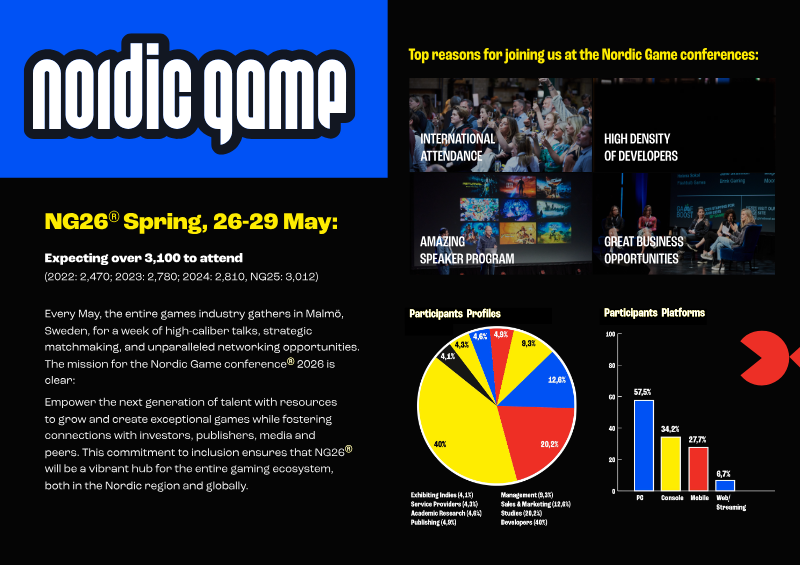
Nordic Game 2026 serves as a primary hub for the Northern European video game industry, emphasizing a high density of developers and international attendance. The event facilitates business development and networking through a comprehensive speaker program, an expansive expo floor, and the annual Nordic Game Awards, which honors excellence among regional studios. The gathering targets a diverse range of industry professionals, including game startups, established studios, and service providers, with a specific focus on fostering connections between growing companies and global partners.
The participant base is heavily weighted toward production and leadership, with developers and artists making up the largest segment at 40% of all attendees. This is followed by professionals in sales and marketing at 12.6%, management at 9.3%, and service providers at 4.3%. Smaller contingents include exhibiting indies and various support roles. In terms of platform focus, PC remains the dominant sector for participants at 57.5%, followed by console development at 34.2% and mobile gaming at 27.7%. Web and other emerging platforms represent a smaller portion of the ecosystem at 6.7%.
The event infrastructure is designed to maximize return on investment through scalable exhibition options, ranging from small four-square-meter booths to large custom pavilions. Private meeting facilities are a core component of the offering, providing flexible spaces for four to fifty people to accommodate different business needs, from formal lectures to casual networking. By integrating sponsored content opportunities and specialized events like the Discovery Contest, the conference aims to support the entire lifecycle of game development within the Nordic region and beyond.
- PC development is the primary focus for 57.5% of Nordic Game 2026 participants, significantly outpacing console development at 34.2% and mobile gaming at 27.7%.
- Developers and artists constitute the largest attendee segment at 40%, followed by sales and marketing professionals at 12.6% and management at 9.3%.
- The event prioritizes business development by providing private meeting facilities that accommodate groups ranging from 4 to 50 people.
- Service providers represent 4.3% of the total participant base, which also includes a mix of startups, established studios, and exhibiting indies.
- Emerging platforms, including web-based gaming, account for 6.7% of the total development focus among conference attendees.
+1
Nordic GameJan 2026

Report57 pages
How to Build an Effective Offer System in Your Game
A well‑designed in‑game offer system is presented as the most potent driver of lifetime value and average revenue per paying user. By integrating a limited set of synergistic offer types—login bonuses, triggered prompts, endless streams, “1 + X” bundles, battle‑passes, stamp‑cards, and curated bundles—and optimizing their frequency, timing, pricing, segmentation, and economic balance, developers can achieve conversion rates as high as ninety‑six percent on login offers and lift repeat‑purchase value by roughly twenty percent through endless offers.
Conversion is shown to be a function of repeated exposure rather than a single impression; players typically require about seven viewings before taking action. The most effective moments to surface offers are at login, during “out‑of‑currency” events, after level failures, or in high‑momentum gameplay phases. A dynamic, tiered pricing ladder that escalates after each purchase and regresses after periods of inactivity—exemplified by a seven‑tier structure ranging from under one dollar to ninety‑nine dollars—enables precise alignment with player spend propensity while avoiding both under‑monetization of high‑potential users and alienation of low‑spenders.
Segmentation must extend beyond basic recency and frequency metrics to incorporate geographic tier, acquisition source quality, and player progression. Lower‑tier regions demand adjusted price ladders and reduced offer frequency, whereas high‑quality acquisition channels justify more complex bundles. Early‑game players respond best to inexpensive, simple offers, while mid‑ and late‑game users can be presented with higher‑value packages. Anchoring the entire shop around a stable, low‑priced entry pack establishes a reference point that shapes perceived value across all offers.
Collectively, these principles apply to mobile and casual games operating globally, reflecting current industry practices and data from recent case studies. Implementing the outlined framework promises measurable improvements in monetization efficiency, player satisfaction, and overall revenue performance.
- A tiered pricing ladder ranging from under $1 to $99, which escalates after purchases and regresses during inactivity, allows for precise alignment with individual player spend propensity.
- Conversion is driven by repeated exposure, with players typically requiring seven viewings of an offer before completing a purchase.
- Strategic implementation of a limited set of offer types can drive conversion rates as high as 96% on login offers and increase repeat-purchase value by approximately 20% through endless offers.
- Effective offer surfacing relies on high-intent moments, specifically at login, during out-of-currency events, after level failures, or during high-momentum gameplay.
- Player segmentation must incorporate geographic tier, acquisition source quality, and progression stage to adjust price ladders and offer frequency for different user profiles.
+2
Sensor TowerJan 2026
Report66 pages
State of India Mobile App Market 2026 Report
India has solidified its position as the world’s largest mobile app market by volume, with annual downloads stabilizing at approximately 25 billion. The market is currently undergoing a structural transition from aggressive user acquisition toward habit-driven engagement and monetization. In-app purchase revenue surpassed $1 billion in 2025 and is projected to reach $1.25 billion by 2026. This financial growth is increasingly fueled by non-gaming sectors, specifically Utilities, Media, and Generative AI, alongside a notable rise in subscription-based models for premium digital services.
Geographically, the center of growth has shifted toward Tier-2 and Tier-3 cities, where localized services in beauty, apparel, and quick commerce are seeing outsized success. Quick commerce and food delivery have become dominant engines of daily habit, with engagement growing 55% year-over-year as platforms pivot toward retention-led strategies. In the mobility sector, the rise of affordable, localized options like bike taxis and autos reflects a broader consumer demand for cost-efficient digital solutions tailored to the Indian infrastructure.
The financial and entertainment landscapes are also evolving into mobile-first ecosystems. Fintech platforms now lead in engagement over traditional banks, with a strategic shift toward credit, lending, and investment services for younger demographics. In media, short-form video and "short drama" apps are outpacing traditional streaming platforms in both download growth and monetization efficiency. Ultimately, the Indian mobile economy is maturing into a value-led market where success is defined by high-frequency utility, social discovery, and the integration of AI tools into daily routines.
- India remains the world’s largest mobile app market by volume with 25 billion annual downloads, shifting focus from user acquisition to habit-driven engagement and monetization.
- In-app purchase revenue is projected to reach $1.25 billion by 2026, driven increasingly by non-gaming sectors like Utilities, Media, and Generative AI.
- Quick commerce and food delivery platforms have seen a 55% year-over-year increase in engagement as they transition toward retention-led strategies.
- Growth is shifting toward Tier-2 and Tier-3 cities, where localized services in beauty, apparel, and quick commerce are achieving outsized success.
- Fintech platforms are outpacing traditional banks in engagement by targeting younger demographics with credit, lending, and investment services.
+1
Sensor TowerJan 2026
Report31 pages
State of Digital Advertising India 2026
The analysis presents a comprehensive overview of India’s digital‑advertising landscape, emphasizing its rapid expansion and the shifting strategic focus of advertisers. In 2025 the market surpassed the $4 billion threshold and is projected to exceed $5 billion in 2026, reflecting robust demand across multiple verticals. Shopping emerged as the dominant category, accounting for 28 % of total spend and delivering an 18 % year‑on‑year increase, while software recorded the strongest growth rate at 84 % YoY. Food‑and‑dining services and automotive sectors also posted notable gains of 38 % and 4 % respectively, underscoring a diversified expansion beyond traditional e‑commerce.
The competitive environment is concentrated among a handful of large advertisers, with Flipkart, Amazon and Reliance leading in impression share. A clear strategic shift is evident toward performance‑driven, audience‑specific creative, as brands increasingly deploy tailored messaging to capture high‑yield, short‑duration placements. This trend intensifies during the festive half‑year, when domestic players in generative‑AI services, food‑delivery, and film promotion amplify spend on segment‑focused creatives to maximize visibility.
Overall, the findings illustrate that India’s digital‑advertising ecosystem is entering a phase of accelerated growth, driven by both expanding spend in core categories and a pronounced move toward data‑centric, personalized creative execution. The outlook suggests continued market deepening, with advertisers likely to prioritize precision targeting and seasonal intensity to sustain momentum through 2026.
- India’s digital advertising market surpassed $4 billion in 2025 and is projected to exceed $5 billion in 2026.
- Shopping remains the dominant advertising category, representing 28% of total spend with an 18% year-on-year increase.
- Software recorded the highest growth rate among all sectors, surging 84% year-on-year.
- Flipkart, Amazon, and Reliance currently hold the largest share of advertising impressions in the market.
- Food-and-dining services and the automotive sector posted notable growth of 38% and 4% respectively.
+1
Sensor TowerJan 2026
Report25 pages
State of African Games 2026
The analysis delivers a data‑driven overview of African‑developed video games, concentrating on performance across global platforms—primarily Steam, with supplemental PlayStation and Xbox data—from 2015 through 2025. Its central thesis is that the continent’s game‑development ecosystem is emerging rapidly yet remains highly concentrated, especially in South Africa, and is transitioning from volume‑driven growth to a focus on higher‑quality, strategically positioned titles.
South Africa accounts for the overwhelming share of both developers and commercial success, supplying all titles in the top‑ten sales list and driving the continent’s 2 % share of Steam unit sales—higher than the Middle East and comparable to Oceania. Releases peaked in 2023 with 23 Steam titles before falling to 11 in 2025, suggesting a shift toward longer development cycles. Genre analysis reveals a mismatch: simulation games achieve the highest median sales (≈372 k units), followed by adventure and RPGs, while action titles dominate the release count. Pricing follows global indie norms, with most games priced between $5.99 and $19.99; premium pricing above $21.99 appears in only a small fraction of titles. Unity is the leading engine (≈18 % of releases), Unreal accounts for about 7 %, and the remaining 73 % use a diverse set of smaller tools, reflecting a decentralized technical landscape.
Methodologically, the study relies on Video Game Insights estimations for games launched after 1 January 2015, employing internal sales‑estimation algorithms that convert review counts and apply the Boxleiter method to infer unit sales and revenue. The scope encompasses all major platforms, covers the entire African continent, and isolates trends in genre, pricing, engine choice, and geographic distribution.
Conclusions point to a transitional phase where success will depend less on release volume and more on distinctive cultural content, genre diversification, and broader support structures beyond South Africa. If these dynamics persist, the African game‑development sector is poised to evolve from an emerging participant to a recognized creative force within the global industry.
- South Africa dominates the African game development sector, accounting for all top-ten selling titles and contributing to a 2% share of global Steam unit sales.
- The industry is shifting from volume-driven growth to longer development cycles, evidenced by a decline in annual Steam releases from a peak of 23 in 2023 to 11 in 2025.
- There is a significant genre mismatch in the market, as action titles dominate release volume while simulation games achieve the highest median sales at approximately 372,000 units.
- The technical landscape is highly decentralized, with Unity powering 18% of releases and Unreal Engine 7%, while 73% of titles rely on a diverse range of smaller development tools.
- Pricing for African-developed titles remains aligned with global indie norms, with the vast majority of games priced between $5.99 and $19.99 and very few exceeding $21.99.
Sensor TowerJan 2026
Report26 pages
2026 Predictions: Trends in Gen AI, Gaming & Digital Ad Spend
The forecast outlines how generative‑AI, short‑form video and evolving ad formats will reshape the digital economy by 2026. It argues that AI‑driven applications will move from a niche category to a core revenue engine, rivaling traditional paid‑media traffic and reshaping user‑acquisition dynamics across mobile, web and gaming. The analysis draws on Sensor Tower’s app‑store, advertising and web‑traffic datasets, applying its App IQ and Game IQ taxonomies to the top publishers, the 1,000 most‑visited U.S. sites and the leading Steam releases, with historical data through December 2025 and forward projections to 2026.
Generative‑AI apps are projected to generate more than $10 billion in worldwide in‑app‑purchase revenue, achieve 7.2 billion downloads and capture 43 billion hours of usage in 2026—an 82 % year‑over‑year increase that will place the genre among the top five for downloads, revenue and engagement. Short‑drama vertical video is forecast to overtake traditional OTT streaming in download volume, securing roughly 80 % of downloads and closing the IAP gap to 20 % of OTT’s share, driven by rapid adoption in markets such as India, Indonesia and Brazil. Meanwhile, U.S. digital ad spend will total $20 billion, with image‑based creatives outpacing video growth (35 % versus 15 % YoY) as social platforms, especially Meta’s Reels, shift budgets toward static formats.
On the web, generative‑AI traffic will surpass paid sources on more than half of the top 1,000 U.S. sites by the end of 2026, up from 37 % in late 2025,
- Generative AI apps will become a top-five category by 2026, generating over $10 billion in IAP revenue, 7.2 billion downloads, and 43 billion hours of usage, representing an 82% year-over-year growth.
- By the end of 2026, generative AI traffic will surpass paid sources on more than 50% of the top 1,000 U.S. websites, up from 37% in late 2025.
- Short-drama vertical video is projected to overtake traditional OTT streaming in download volume, capturing roughly 80% of total downloads with rapid adoption in India, Indonesia, and Brazil.
- U.S. digital ad spend will reach $20 billion in 2026, with image-based creatives growing at 35% year-over-year, significantly outpacing the 15% growth rate of video formats.
- Social platforms, specifically Meta’s Reels, are shifting advertising budgets away from video toward static, image-based formats.
+1
Sensor TowerJan 2026
Report45 pages
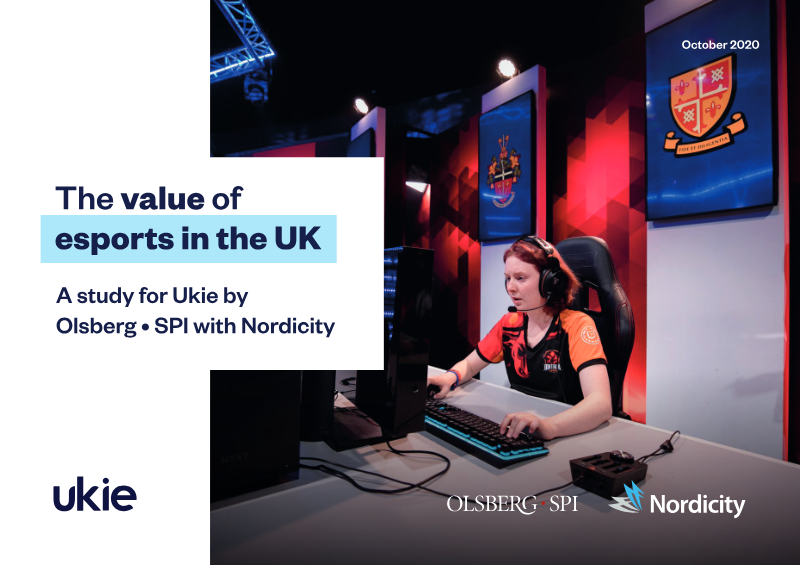
The Value of Esports in the UK
The study demonstrates that the United Kingdom’s esports industry has experienced robust growth, expanding at an average annual rate of 8.5 % between 2016 and 2019. In 2019 alone, the sector generated approximately £60 million in revenue—about eight per cent of global esports earnings—and contributed £111.5 million to the national Gross Value Added, supporting more than 1,200 full‑time equivalent jobs. These figures underscore the sector’s role as a significant driver of the UK digital creative economy.
Key drivers identified include the proliferation of professional teams, high‑profile tournaments hosted by organisations such as ESL, Gfinity and Epic.LAN, and the rise of streaming platforms that have broadened audience reach. Dedicated venues like Belong Gaming Arenas further stimulate grassroots participation and local economic activity. Modelling of direct, indirect and induced effects reveals a total impact of roughly 216 FTEs and £19.5 million in GVA, while spill‑over benefits from event tourism—estimated at £234 k per 1,000 visitors and nearly five FTEs—highlight additional value for host communities.
The analysis projects that hosting a major global esports event could add 238 full‑time equivalents and £12 million in GVA to the UK economy, signalling substantial upside potential. The findings point to opportunities for further investment, clearer regulatory frameworks and strategic positioning to attract international events, thereby consolidating esports as a pivotal growth sector within the United Kingdom’s broader digital economy.
- In 2019, the UK esports industry generated £60 million in revenue and contributed £111.5 million to the national Gross Value Added (GVA), supporting over 1,200 full-time equivalent (FTE) jobs.
- The sector experienced robust growth between 2016 and 2019, expanding at an average annual rate of 8.5%.
- Hosting a single major global esports event is projected to add £12 million in GVA and 238 FTE jobs to the UK economy.
- Event tourism provides significant spill-over benefits, estimated at £234,000 in economic value and nearly five FTEs per 1,000 visitors.
- Key industry drivers include professional tournament organizers such as ESL, Gfinity, and Epic.LAN, alongside the expansion of streaming platforms and physical infrastructure like Belong Gaming Arenas.
UkieDec 2025

Report46 pages
Esports 2023: Challenges and Opportunities in the UK
The report argues that the United Kingdom’s esports sector has evolved from a fragmented niche into a rapidly professionalised ecosystem, yet it still requires coordinated investment and policy to sustain growth. Key findings show an audience of roughly 55 million adults, with 82.7 % aged 18‑34 and a male dominance of 83 %. While shooters such as Call of Duty, CS:GO and Fortnite command the largest viewership, only 3.8 % of gamers follow competitive play, revealing a small “iceberg” of engaged fans. This gap highlights opportunities for talent development and global brand expansion, especially as the UK lags behind U.S. and Asian markets in producing top‑tier professionals.
Economic data underscore the sector’s momentum: gross value added reaches £111 million and sponsorship revenue exceeds $1.38 billion, with UK events and teams capturing a $1.5 billion share of the global market. Major brands—Intel, Red Bull, Saudi PIF—and tournament operators such as ESL, FACEIT and Gfinity are driving investment, while infrastructure projects by XLHQ, Royal Ravens and Cloud9 create dedicated studios and community hubs. Educational initiatives, including a BTEC programme with Pearson and university leagues like NUEL, demonstrate that esports can boost computing engagement and skill development among 10 000 pupils.
Despite these gains, challenges persist. Mainstream media coverage remains limited, and government support is uneven, constraining broader recognition of esports as a legitimate sport. Diversity and inclusion remain under‑addressed, with female participation at 17 % and a need for stronger links between education, industry and policy to create sustainable career pathways. Emerging monetisation models—Web3, NFTs, metaverse experiences—offer new revenue streams but require regulatory clarity and infrastructure investment. Coordinated action across stakeholders is essential to unlock the UK’s full economic and cultural potential in esports.
- The UK esports sector generates £111 million in gross value added, with UK-based teams and events capturing a $1.5 billion share of the global market.
- While the UK has a potential audience of 55 million adults, only 3.8% of gamers follow competitive play, indicating a significant opportunity for fan base expansion.
- The demographic profile of the UK esports audience is highly concentrated, with 82.7% aged 18–34 and 83% male, highlighting a need for improved diversity and inclusion efforts.
- Major investment is being driven by global brands like Intel, Red Bull, and the Saudi PIF, alongside infrastructure developments from organizations such as XLHQ, Royal Ravens, and Cloud9.
- Educational initiatives, including a Pearson BTEC programme and the NUEL university league, are currently engaging 10,000 pupils in computing and skill development.
+1
British EsportsDec 2025