Updated Jun 1, 2026 by Aream & Co
Report · February 3, 2026
Published by Aream & Co
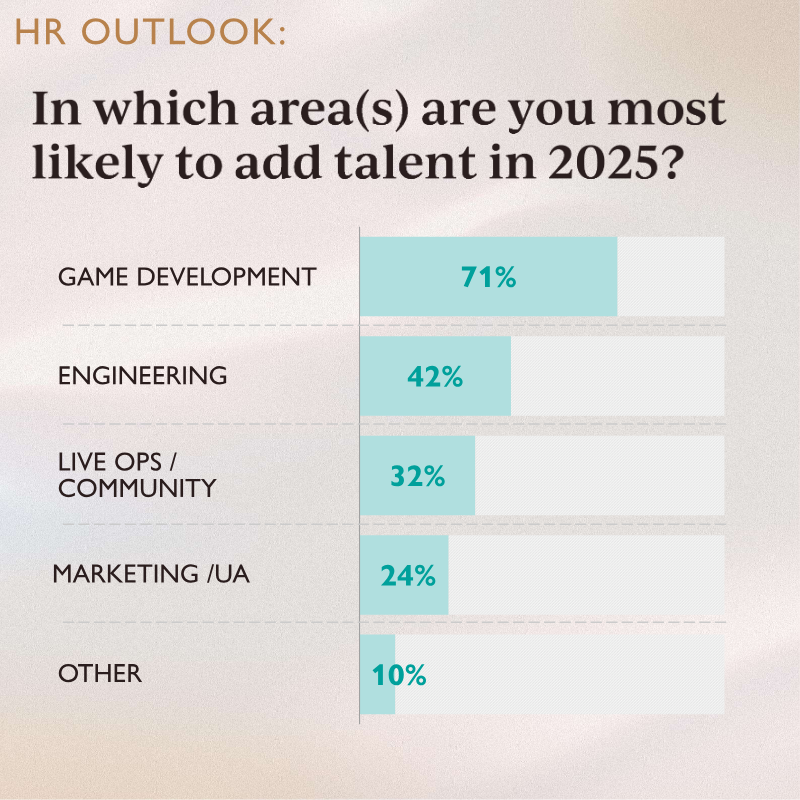
LESS OPTIMISTIC 221% 15% DECLINE 0.0% 10% 5% CHALLENGING UA / 49%31% LESS OPTIMISTIC 2 2% LIMITED IMPLEMENTATION 63% INVESTMENT BANKING TEAM GLOBALLY 10+ YEARS SUPPORTING THE GAMING ECOSYSTEM 100+ TRANSACTIONS , $ 37BN VALUE 17GAMINGTRANSACTIONS <u>$5.8</u> bn TRANSACTIONVALUE GAMING TRANSACTIONS TRANSACTION VALUE Easybrain MTO SuperPlay ∑/ JAGEX RR SABER Sale to ...
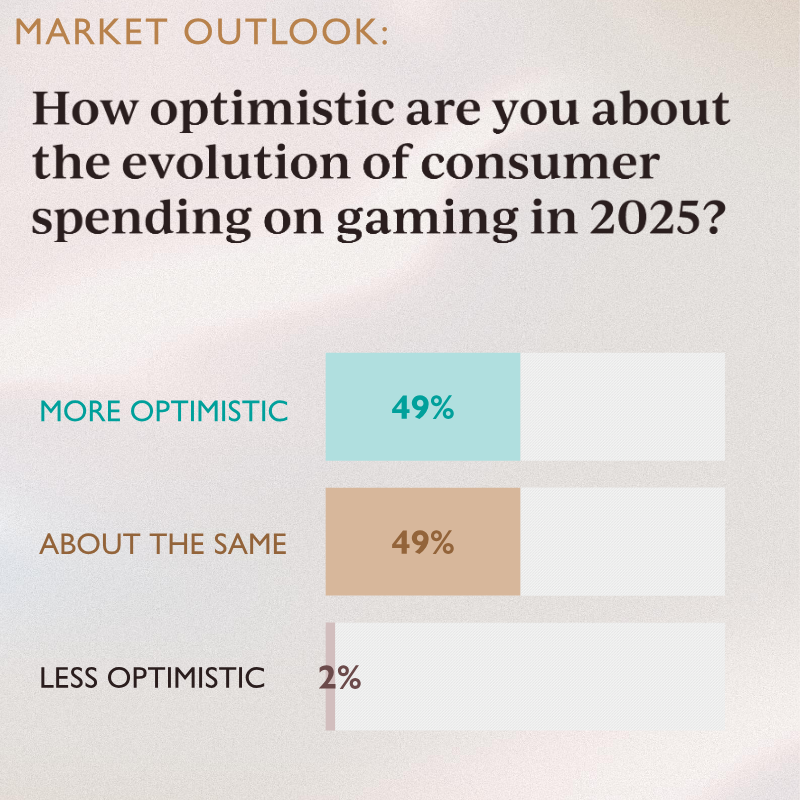
How optimistic are you about the evolution of consumer spending on gaming in 2025? MORE OPTIMISTIC 49% ABOUT THE SAME 49% LESS OPTIMISTIC 2% LESS OPTIMISTIC 2
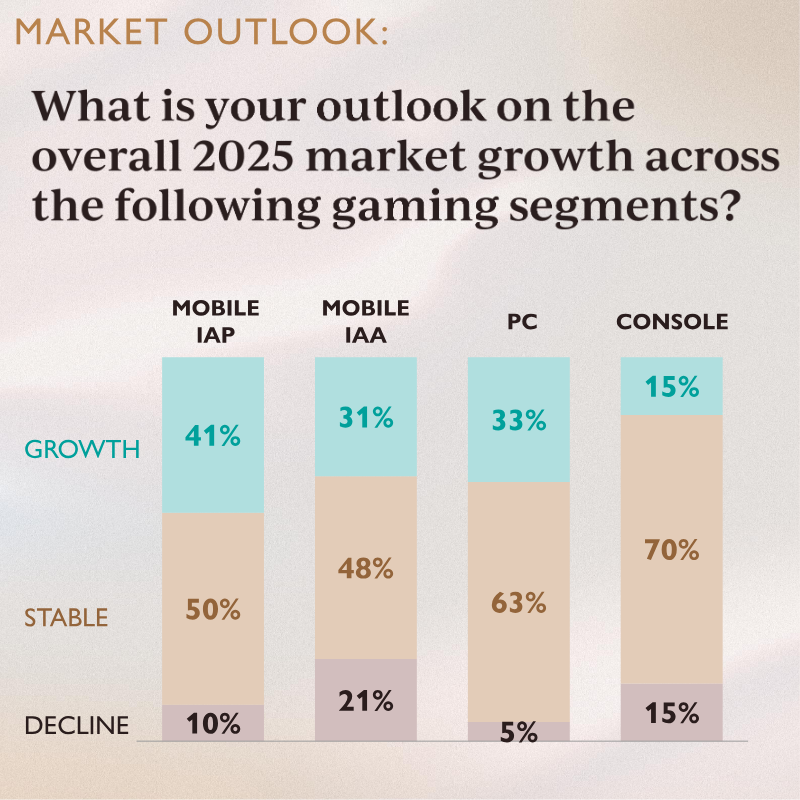
How optimistic are you about the evolution of consumer spending on gaming in 2025? MOBILE MOBILE PC CONSOLE IAP IAA 49% 15% MORE OPTIMISTIC 31% 33% GROWTH80.0% 41% ABOUT THE SAME 49% 70% STABLE 40.0% 50% 48% 63% LESS OPTIMISTIC 221% 15% DECLINE 0.0% 10% 5%
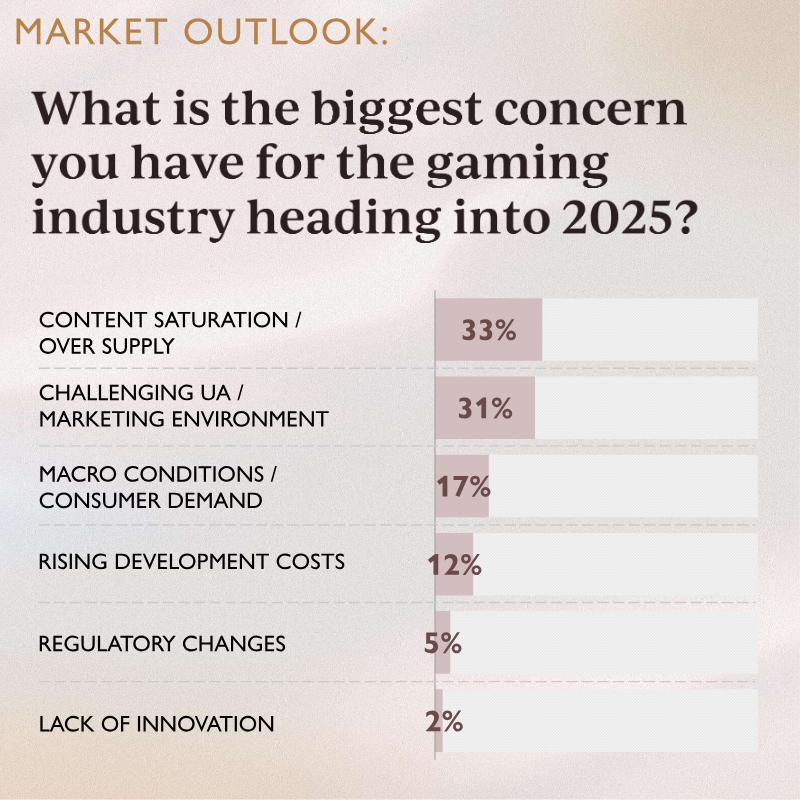
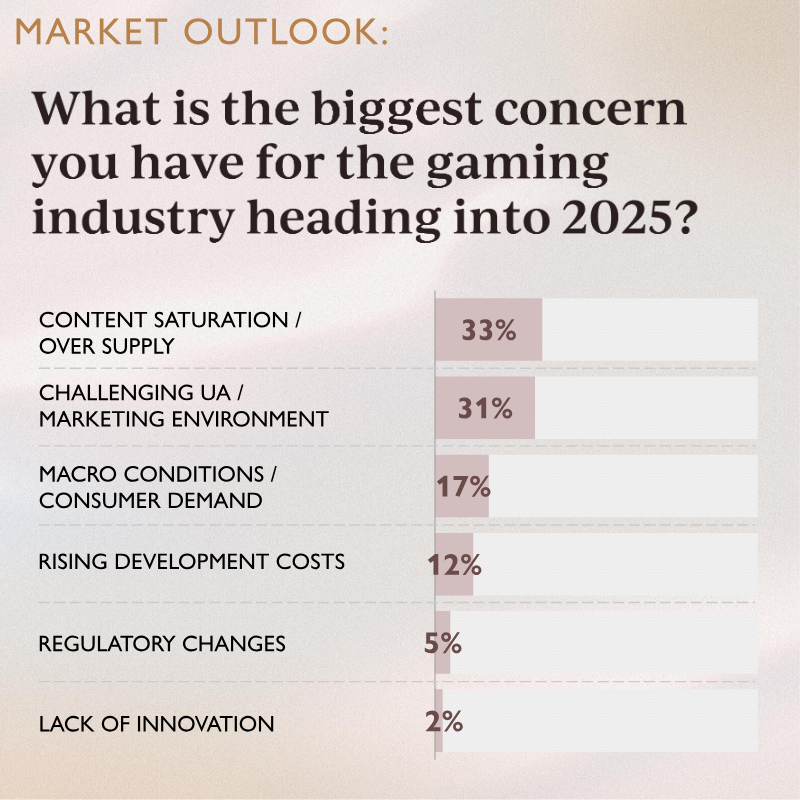
How optimistic are you about the evolution of consumer spending on gaming in 2025? CONTENT SATURATION / 33% OVER SUPPLY CHALLENGING UA / 49%31% MARKETING ENVIRONMENT MACRO CONDITIONS / 17% CONSUMER DEMAND 49% RISING DEVELOPMENT COSTS 12% REGULATORY CHANGES 5% LESS OPTIMISTIC 2 2% LACK OF INNOVATION
How optimistic are you about the evolution of consumer spending on gaming in 2025? MORE NEW GAMES 54% ABOUT THE SAME 35% 49% FEWER / 12% NO NEW GAMES 2
How optimistic are you about the evolution of consumer spending on gaming in 2025? HIGHER AVERAGE 37% BUDGET ABOUT THE SAME 49% LOWER AVERAGE 14% BUDGET 2
How optimistic are you about the evolution of consumer spending on gaming in 2025? HIGHER MARKETING 48% ABOUT THE SAME 41% LOWER MARKETING 12% LESS OPTIMISTIC 2
The global video game industry is currently undergoing a structural correction following a decade of rapid expansion that concluded in 2021. The primary thesis of this transition is that the industry’s previous growth engines—mobile expansion, live-service models, and pandemic-era engagement—have plateaued, leading to a 12% decline in real-term content spending. This downturn is characterized by widespread commercial underperformance, record-high layoffs, and a significant contraction in venture capital funding. As production budgets for AAA titles balloon toward $500 million, the market has become increasingly polarized, with player engagement and revenue heavily concentrated within a small cohort of long-standing, established franchises that effectively crowd out new releases. Geographically and sectorally, the landscape is shifting as Chinese developers gain significant global market share, rising from 0.5% to 12.5% of non-domestic content spending over the last 13 years. While the mobile sector faces a 23% revenue drop due to privacy-related user acquisition costs and competition from social media, the industry is pivoting toward cross-platform accessibility and hardware-agnostic distribution. Platforms like Roblox and Steam continue to dominate engagement, though developers face increasing pressure from high platform commission fees and the necessity of navigating a saturated market where discovery is increasingly difficult. Looking forward, the industry is attempting to mitigate these challenges through technological and business model innovation. Strategies include the integration of generative AI to enhance NPC behavior, the adoption of cloud-native simulations, and a strategic pivot toward programmatic advertising to supplement stagnant game pricing. Furthermore, regulatory pressures on app stores are expected to improve developer margins, while a resurgence in handheld hardware and cross-platform connectivity aims to unify fragmented ecosystems. Ultimately, the industry is moving toward a risk-averse, multiplatform approach, prioritizing long-term engagement and operational efficiency to survive an increasingly competitive and capital-intensive environment.
The global games market is entering a period of moderate maturation, with total revenue projected to reach $188.8 billion in 2025, a 3.4% increase over the previous year. The industry now serves 3.6 billion players, reflecting a 4.4% year-over-year expansion. While mobile gaming maintains its dominance, accounting for $103.0 billion or 55% of total revenue, console gaming is poised for the strongest growth at 5.5%, reaching $45.9 billion. PC gaming remains a stable pillar with $39.9 billion in revenue. Despite the growth in player counts, average spend per payer is experiencing a slight decline, signaling a strategic pivot toward maximizing engagement and retention within saturated markets rather than relying solely on aggressive monetization. Strategic success in this environment increasingly depends on long-tail engagement and the effective management of post-launch content. Data indicates that releasing single-player titles during the second quarter yields 34% higher engagement compared to the saturated holiday season. Furthermore, simultaneous multi-platform launches significantly outperform staggered releases, and titles exiting Early Access after a six-month window demonstrate superior acquisition results. Developers are also increasingly leveraging remakes and remasters to mitigate rising development costs, while user-generated content platforms like Roblox continue to expand as foundational ecosystems for daily active users. Geographically, the market continues to diversify, with Latin America emerging as a notable growth region projected to reach $8.3 billion, driven primarily by mobile adoption. The industry’s analytical framework, which focuses on consumer spending on software and services, highlights that player attrition typically stabilizes after 12 weeks. Consequently, long-term commercial viability is now inextricably linked to aligning content updates and discounting strategies with this post-launch retention curve, ensuring that community support remains as critical as initial sales performance.
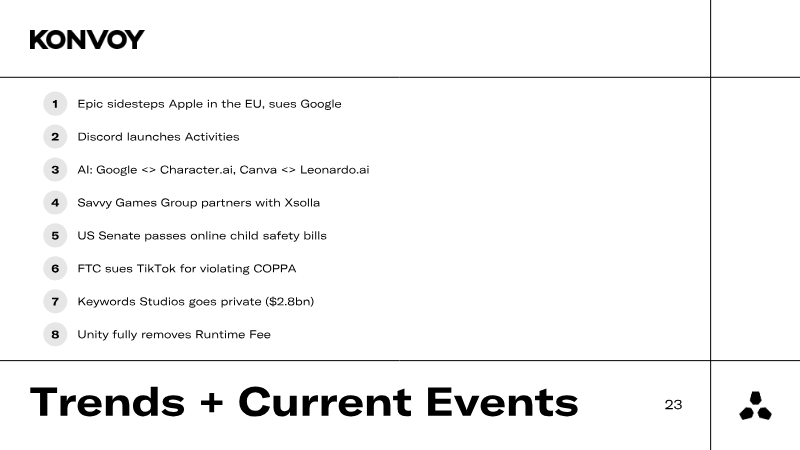
• 2024 market size: $188bn (+2.1% YoY) Total gamers in 2024 by region (millions): • Public markets: leading public gaming ETFs up 22- • 36% YTD (vs S&P 500 = 21%) Middle East & Africa Venture funding in Q3‘ 24: $517m across 92 deals 559 (funding +1% QoQ, number of deals -14% QoQ) (16%) • Epic sidesteps Apple in the EU, sues Google Europe (454 3,422m • Discord launches Activities ...
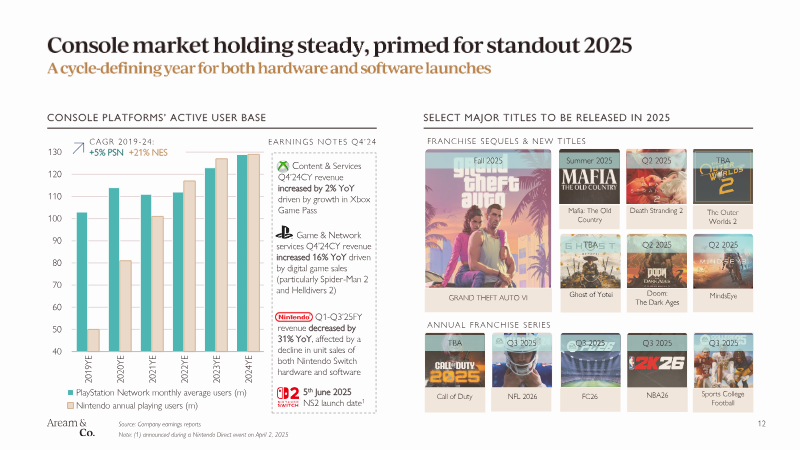
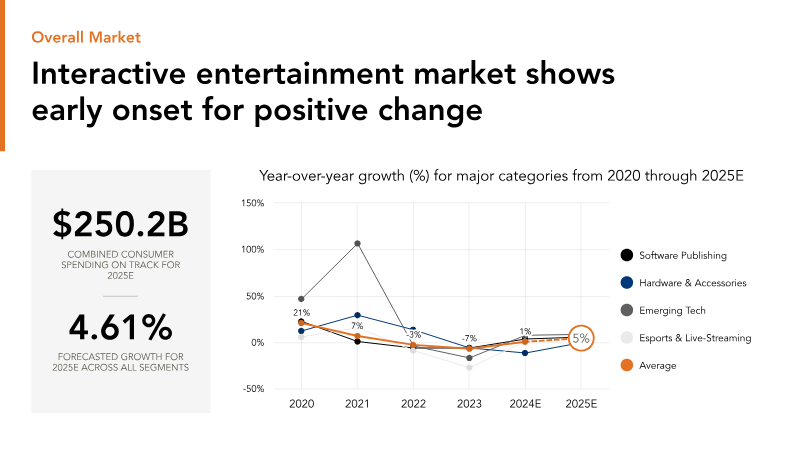
The interactive entertainment market is projected to reach $250.2 billion in consumer spending by 2025, representing a 4.6% year-over-year growth. This recovery follows a period of transition characterized by a significant cyclical downturn in console hardware, which is expected to decline by 31% in 2024 as the industry prepares for next-generation devices. The analysis covers global consumer spending across software publishing, hardware, emerging technology, and live-streaming segments for the period spanning 2023 through 2025. Software publishing remains the primary market driver, with mobile gaming leading as the largest category, forecasted to reach $115.7 billion in 2025. While PC gaming shows the strongest growth rate at 8.1% for 2025, console software spending is also expected to rise in anticipation of new hardware cycles. In contrast, the esports and live-streaming sectors face ongoing profitability challenges; esports revenue is projected to decline by 8.3% in 2025, while streaming platforms struggle with high operational costs despite modest growth in user engagement. Emerging technologies, including virtual reality and blockchain gaming, are identified as latent disruptors fueled by venture capital and platform investments. Virtual reality is expected to grow by 11% in 2025, supported by new hardware like the Apple Vision Pro. Additionally, the market is seeing a strategic shift as major entertainment firms like Sony and Disney evolve into all-round media conglomerates, leveraging established intellectual property across games, film, and virtual storefronts in platforms like Roblox to reach new audiences. Data for these findings is derived from company financials and a proprietary partner network tracking over 200 consumer brands.