Unreal
Game
Documents about Unreal
Epic Games Primer: Epic Games Store and Epic Games Publishing
The digital distribution landscape for PC gaming has long been defined by a 30 percent commission model, a standard solidified by Steam’s early integration of social and matchmaking services.
- The Epic Games Store (EGS) disrupts the industry standard 30% commission fee by charging developers only 12%, while waiving the 5% Unreal Engine licensing fee for games built on that engine.
- Epic Games utilizes exclusive distribution deals and revenue-share incentives to challenge the market hegemony of Valve’s Steam, which has historically locked in users through social graphs, matchmaking services, and extensive feature sets.
- Epic estimates the actual cost of digital distribution to be 5–7% of revenue, covering payment processing (2.5–3.5%), customer service (1.5%), and bandwidth/hosting (1%).
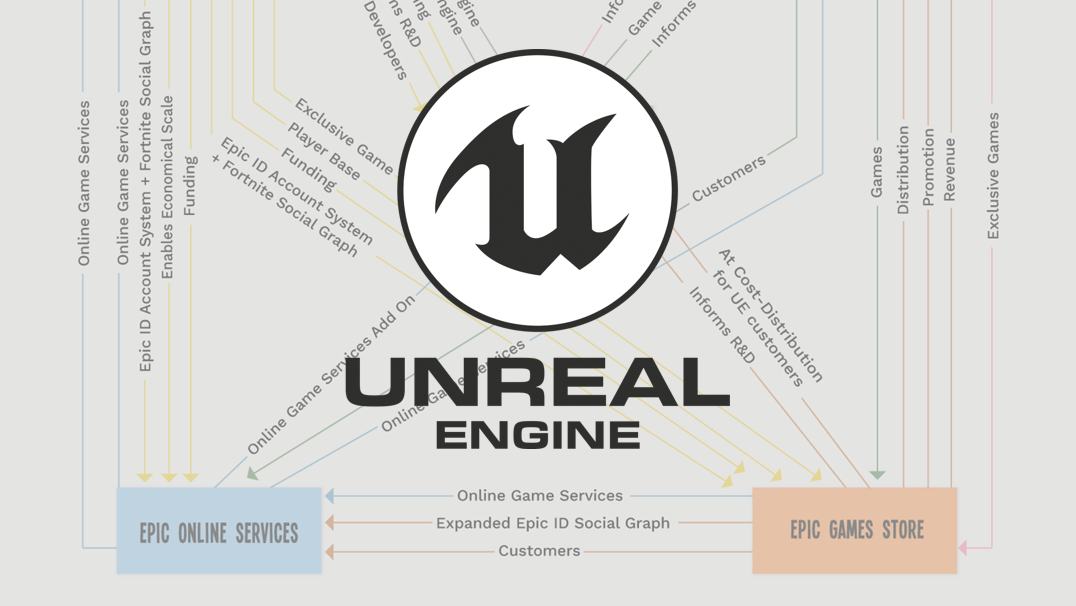
Epic Games Primer (Pt I): Epic's Flywheel & Unreal Engine
The Unreal Engine serves as the foundational core of Epic Games’ business model, acting as a critical technology suite that enables developers to produce high-fidelity virtual experiences across gaming, film, and enterprise sectors.
- Unreal Engine functions as a foundational suite of tools that allows developers to build virtual experiences without engineering core code, typically charging a 5% revenue share fee.
- The modern gaming landscape is dominated by two primary engines: Unreal, which is preferred for high-fidelity, multiplayer console and PC games, and Unity, which leads the mobile market with a subscription-based model.
- Unity operates a massive mobile advertising network that delivers 23 billion ads across 2.2 billion devices monthly, providing developers with an integrated monetization solution.

PocketGamer.biz Podcast Episode #4: Nintendo's mobile growth, Summer Game Fest, Skate 3 rumours
The gaming industry is undergoing a fundamental structural transformation, characterized by a move away from centralized trade shows like E3 toward decentralized, digital-first publisher showcases.
- Playrix has reached a market inflection point with its portfolio, led by Gardenscapes and Homescapes, which have collectively surpassed 1.1 billion downloads to challenge the dominance of Candy Crush Saga.
- Nintendo maintains a conservative mobile strategy where mobile revenue accounts for only 4% of its total earnings, relying on established titles like Mario Kart Tour and Animal Crossing: Pocket Camp rather than aggressive expansion.
- The gaming industry is shifting from centralized trade shows like E3 toward decentralized, digital-first publisher showcases to maintain direct control over marketing narratives.
Unity Readies up for IPO Roadshow: Can It Get Out of Epic's Shadow?
This industry analysis examines the strategic positioning of major gaming entities during a period of significant transition in early 2020.
- Unity Technologies is preparing for an IPO with $500 million in revenue while attempting to differentiate itself from Epic Games through acquisitions like Bolt and Finger Food and expansion into non-gaming verticals.
- Tencent’s online game revenue grew 31% year-over-year to $5.3 billion, highlighting strong performance in the Asian market during early 2020.
- Sony’s annual gaming revenue declined 14% to $18 billion as the PlayStation 4 lifecycle ended, though its PlayStation Plus service reached 41.5 million subscribers.
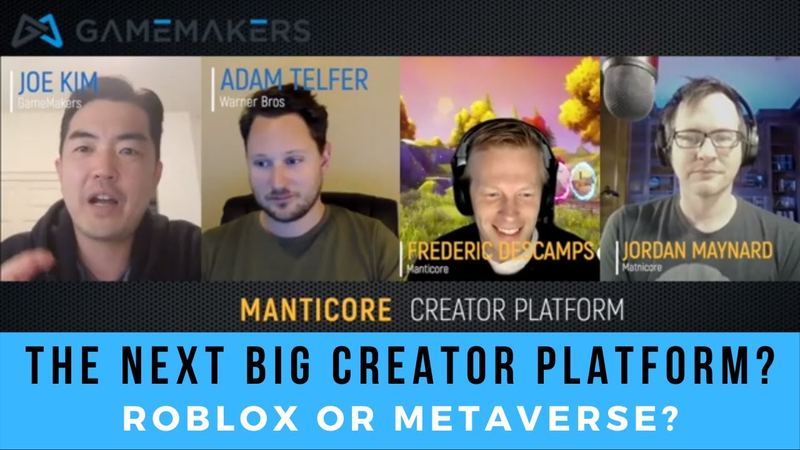
Manticore: The Next Big Game Creator Platform?
Core functions as a comprehensive, two-sided marketplace designed to democratize game development by abstracting the technical complexities of multiplayer infrastructure, live operations, and server management.
- Manticore functions as a two-sided marketplace built on the Unreal Engine 4 runtime that abstracts multiplayer infrastructure, live operations, and server management to democratize game development.
- The platform utilizes a drag-and-drop interface, pre-built assets, and Lua scripting to allow creators to build and publish real-time multiplayer games without traditional, labor-intensive development pipelines.
- A proprietary, cloud-agnostic infrastructure facilitates automatic server deployment and enables seamless, web-like navigation between different game experiences within the ecosystem.
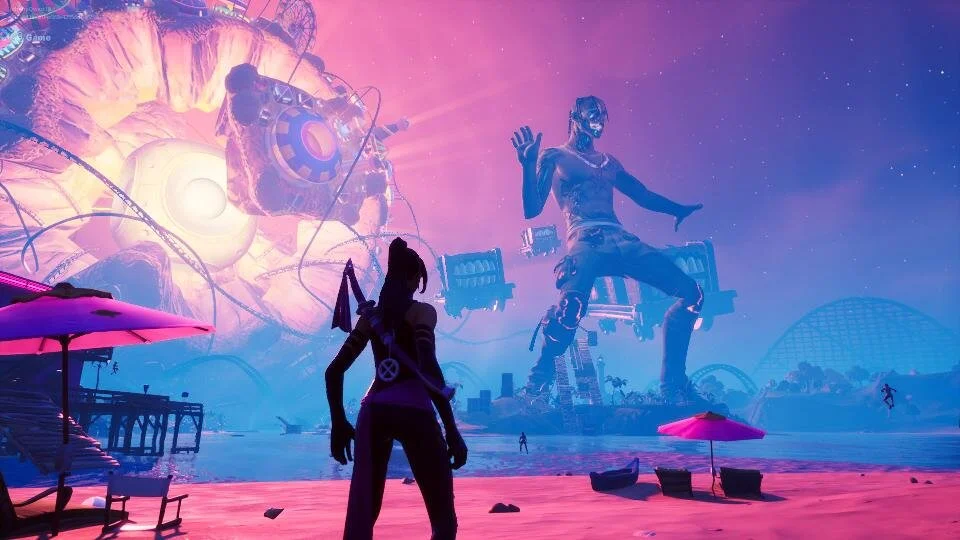
On Fortnite's Travis Scott Concert
The Travis Scott concert within Fortnite serves as a critical case study for understanding the evolution of digital experiences and the strategic trajectory of Epic Games.
- Fortnite’s Travis Scott concert functioned as an interactive, art-centric experience rather than a traditional game, demonstrating Epic Games' strategy of using in-engine events to test new creative and technical capabilities.
- These events serve as R&D for Epic Games to showcase the potential of the Unreal Engine and Fortnite Creative to external businesses and creators, rather than establishing Epic as a permanent event production company.
- The Travis Scott event featured complex, pre-made animations and immersive environmental effects, though it was technically less ambitious than the Star Wars event, which involved live motion capture and voice performances.
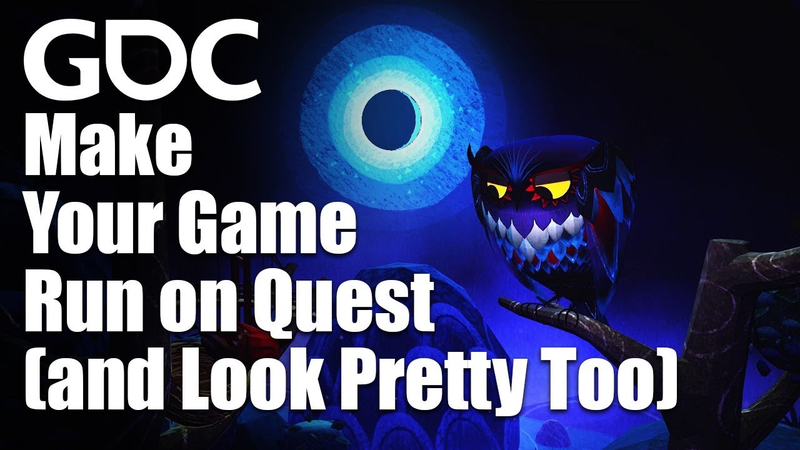
Game VR/AR: Make Your Game Run on Quest (and Look Pretty Too)
Achieving high-quality virtual reality experiences on the Oculus Quest requires a rigorous commitment to performance optimization, as maintaining a consistent frame rate of 60 to 72 frames per second is essential to prevent user discomfort.
- Maintain a consistent frame rate of 60 to 72 frames per second to ensure user comfort and prevent motion sickness on the Oculus Quest.
- Limit draw calls to fewer than 120 per frame to stay within the hardware's strict mobile performance budget.
- Prioritize efficient rendering pipelines by utilizing forward rendering, single-pass stereo, and fixed foveated rendering.
Epic Games Worth $15 Billion, Plans to Increase That
Epic Games maintains a strong market position as a major player in the global video game industry, anchored by the success of its flagship title, Fortnite, and the widespread adoption of the Unreal Engine.
- As of April 2020, Epic Games is in talks to raise between $500 million and $1 billion in a new funding round.
- The company is seeking a valuation significantly higher than its previous $15 billion valuation established in 2018.
- In 2018, a group of investors acquired $1.25 billion worth of Epic Games shares, setting the company's valuation at $15 billion at that time.

Career Options Beyond “Traditional” Game Development with John Podlasek | GduX.me
Game development expertise is increasingly transcending the boundaries of traditional consumer entertainment, finding critical applications in sectors such as architectural visualization, military modeling, medical simulation, and corporate training.
- Game development skills in programming, UI/UX design, and 3D modeling are increasingly being applied to high-stakes sectors including architectural visualization, military modeling, medical simulation, and corporate training.
- The maturation of engines like Unity and Unreal has enabled developers to solve complex, real-world problems that require high-fidelity technical sophistication outside of traditional consumer entertainment.
- Developers are transitioning to simulation fields to escape the high-risk, hit-driven nature of the AAA gaming industry, which is often characterized by market saturation and restrictive intellectual property policies.

Scumbag Randy Pitchford Keeps Borderlands 3 Bonuses | Games ReCAP
Gearbox Software, a Texas-based game developer, has faced significant internal backlash following a decision to drastically reduce royalty bonuses for employees who worked on the commercially successful title Borderlands 3.
- Gearbox Software significantly reduced royalty bonuses for Borderlands 3 employees, despite the game achieving billion-dollar status as a global brand.
- The studio historically utilizes a compensation model featuring below-average base salaries supplemented by quarterly revenue-sharing bonuses.
- Leadership attributed the reduced payouts to increased development costs and an expanded headcount, specifically citing a mid-development transition from Unreal Engine 3 to Unreal Engine 4 that necessitated restarting production work.
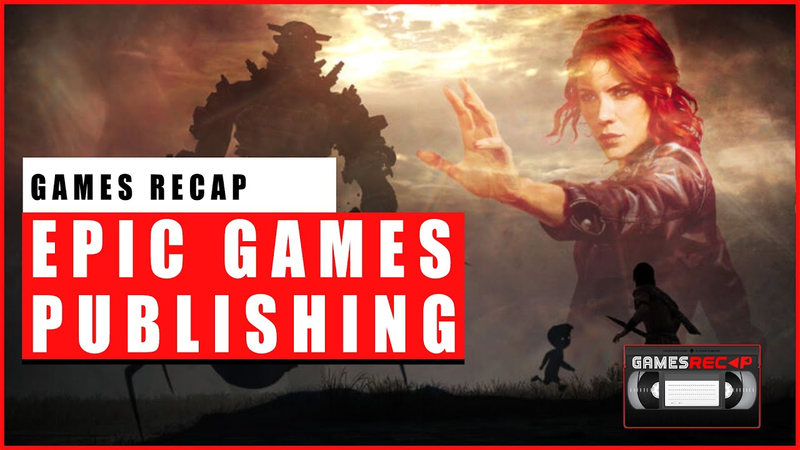
Epic Games Publishing Deal | Games ReCAP
Epic Games has introduced a transformative publishing model that fundamentally alters the traditional power dynamic between developers and publishers.
- Epic Games fully funds development, including salaries, QA, localization, and marketing, while allowing developers to retain 100% ownership of their intellectual property.
- The revenue-sharing model dictates that after Epic recoups its initial investment, net profits are split 50/50 between the publisher and the developer.
- Developers face no financial liability if a project fails to recoup its budget, shifting the risk entirely to Epic Games.
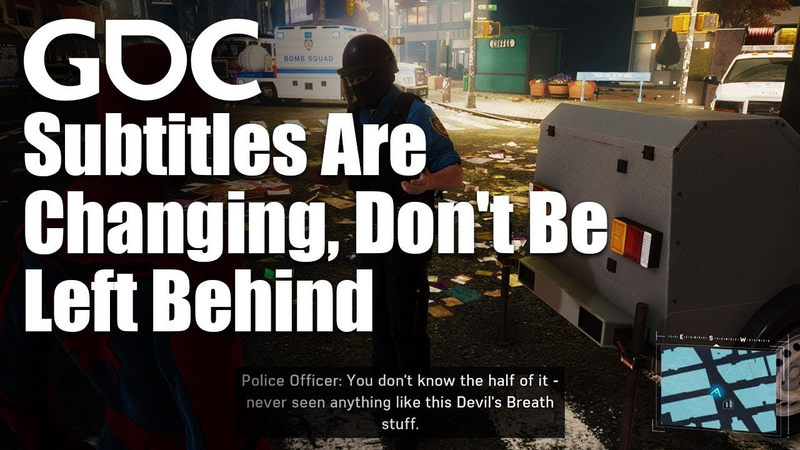
Subtitles Are Changing, Don't Be Left Behind
Subtitles are a critical accessibility feature in modern gaming, serving a diverse user base that extends far beyond the deaf and hard-of-hearing community.
- Over 60% of players utilize subtitles, as evidenced by usage metrics from Assassin’s Creed Origins, indicating that demand extends well beyond the deaf and hard-of-hearing community.
- Effective readability requires a minimum font size of 46 pixels at 1080p, with text limited to two or three lines per screen and a maximum of 38 characters per line.
- Developers must prioritize high contrast by using drop shadows, outlines, or adjustable background boxes to ensure text remains legible against varying game environments.