Unreal
Game
Documents about Unreal
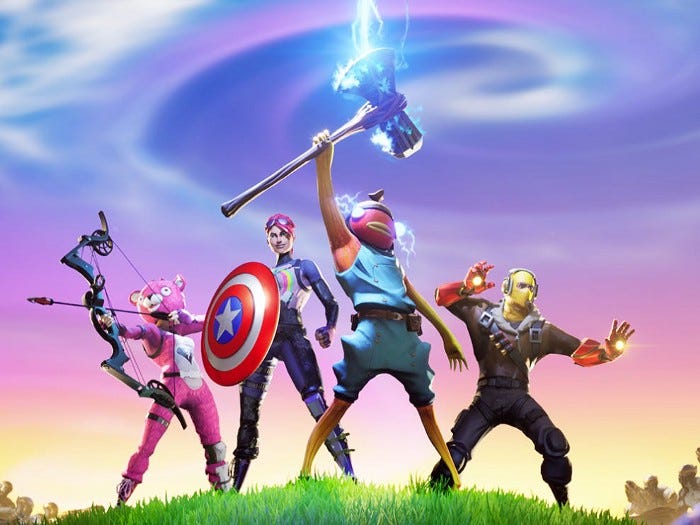
Epic Games $18B Valuation: Too High or Too Low?
The July 2020 analysis evaluates whether Epic Games’ $18 billion valuation, prompted by a $250 million investment from Sony, is justified or inflated.
- Following a $250 million investment from Sony for a 1.4% stake in July 2020, Epic Games reached a valuation of approximately $17.86 billion, with potential to exceed $18 billion pending further funding rounds.
- A sum-of-the-parts valuation analysis suggests Epic Games is worth roughly $25 billion plus additional 'option value' from emerging business lines, indicating the company may be undervalued compared to public gaming peers.
- The majority of Epic's current valuation remains heavily dependent on the performance of Fortnite, which generated $1.8 billion in reported revenue according to 2019 SuperData figures.
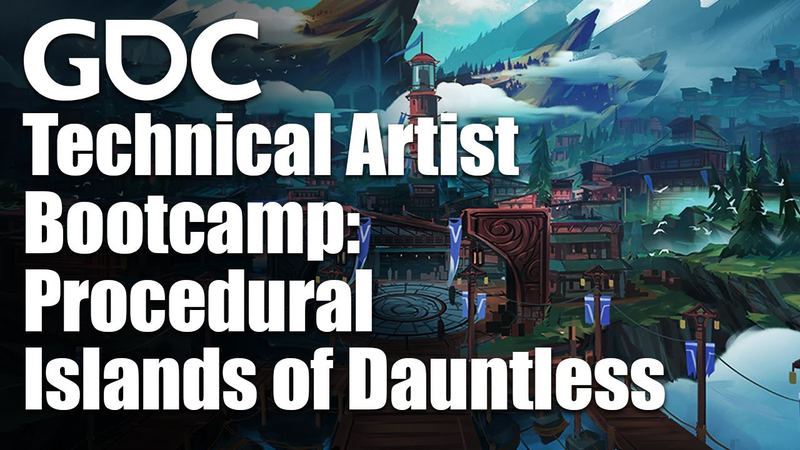
Procedural Islands of 'Dauntless'
The procedural island pipeline developed for the action RPG Dauntless addresses the challenge of creating diverse, high-quality game environments with a small development team.
- The Dauntless island pipeline integrates Houdini Engine with Unreal Engine to automate environment generation while maintaining manual artistic control over topology and foliage.
- The system utilizes a modular 'recipe' architecture that defines biomes by aggregating specific parameters, meshes, and foliage types.
- The generation process follows a multi-stage workflow, beginning with 2D Voronoi-based layout constraints and concluding with 3D landmass and asset instantiation.

New Game Engines: To Live in Promise
The introduction of Unreal Engine 5 represents a significant leap in graphical fidelity and rendering technology, yet it highlights a persistent tension in the gaming industry between technical capability and economic viability.
- Epic Games' Unreal Engine 5 introduces a new royalty structure that waives fees on the first $1 million of revenue, significantly lowering the barrier to entry for medium-sized studios.
- High-fidelity, single-player experiences like Red Dead Redemption 2 and GTA V require massive budgets and teams, limiting their production to only a few major publishers per year.
- Despite the industry's focus on photorealism, market data shows that simple, stylized games like Minecraft and Fortnite often outperform high-fidelity titles in popularity and revenue.
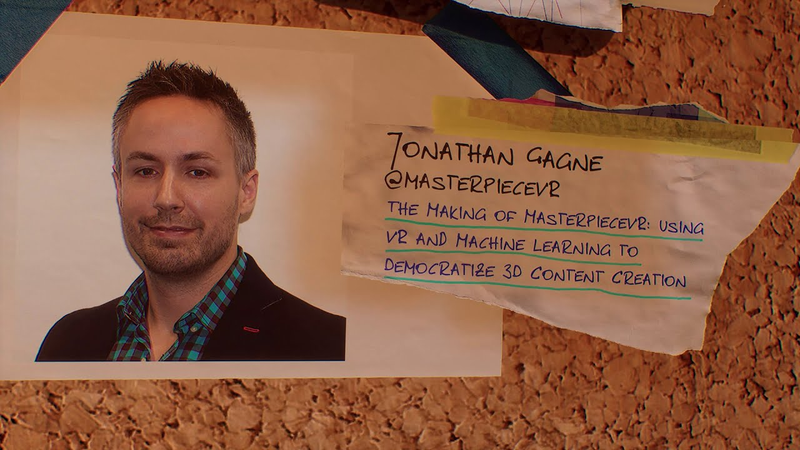
The Making of Masterpiece VR with Jonathan Gagne | GduX.me 2020
The democratization of 3D content creation relies on shifting from traditional 2D interfaces to native virtual reality environments.
- VR-based 3D modeling, supported by machine learning, can increase production speeds by up to 10x and reduce the learning curve by a factor of 200 compared to traditional 2D interfaces.
- Masterpiece VR currently supports a user base of over 30,000 individuals and maintains seamless integration with industry-standard pipelines including Unity, Unreal Engine, and Substance Painter.
- The VR industry is maturing through the combination of high-fidelity software and lightweight, cloud-enabled hardware, with a long-term shift expected toward augmented reality as motion-tracking constraints are resolved.

Unreal Engine 5 Reactions, And Last of Us 2 Ending a Generation | Game Dev Unchained Roundtable News
The introduction of Unreal Engine 5 marks a pivotal shift in game development, primarily driven by the integration of Nanite geometry and Lumen real-time global illumination.
- Unreal Engine 5 introduces Nanite geometry and Lumen real-time global illumination to automate light-baking and eliminate traditional optimization bottlenecks for high-fidelity assets.
- Despite technological advancements, Unreal Engine 5 does not remove the need for rigorous character animation, physics simulation, and efficient asset management in full-scale production.
- Industry experts view high-end tech demonstrations as aspirational marketing tools rather than immediate standards, as most studios continue to prioritize cohesive art styles over raw photorealism.

GduX.me 2020 | Day 3
The Game Dev Unchained Expo (GduX.me) 2020 serves as a comprehensive forum for navigating the complexities of the modern gaming industry, emphasizing the necessity of balancing artistic ambition with pragmatic business strategy.
- Long-term success in game development requires shifting focus from 'external quality' (visual polish) to 'internal quality,' which prioritizes business strategy, asset reuse, and process replicability.
- The 2020 pandemic accelerated a permanent shift toward remote work, enabling studios to access global talent pools while necessitating more resilient and flexible operational infrastructures.
- Lighting has evolved from a secondary task into a foundational storytelling discipline that requires balancing artistic composition with GPU performance constraints.

GduX.me 2020 | Day 2
The GduX.me 2020 conference served as a comprehensive forum for independent game developers to navigate the intersection of creative integrity, business acumen, and evolving technical standards.
- Sustainable studio growth requires balancing creative passion with a professionalized business framework, including rigorous time-investment tracking and clear milestone scheduling.
- Unreal Engine 5’s Lumen and Nanite systems enable smaller teams to achieve AAA-quality visual fidelity, though they remain secondary to fundamental artistic discipline and optimization.
- Protecting intellectual property is a critical operational necessity, requiring proactive legal management of user-generated content, robust terms of service, and consistent DMCA compliance.

Enabling Creators: The Unreal Ecosystem | PGC Digital #1
The Unreal ecosystem functions as a comprehensive support framework designed to democratize high-end game development by providing creators with professional-grade technology, financial backing, and distribution infrastructure.
- The Unreal ecosystem provides independent developers with the same professional-grade tools and technology used in large-scale internal projects like Fortnite.
- The Epic Games Store supports developer profitability by offering a competitive 12 percent revenue share model.
- The Unreal MegaGrants program provides direct financial capital to support game development, educational initiatives, and open-source projects that demonstrate technical viability.

The Epic Games Primer
The Epic Games Primer provides a comprehensive analysis of Epic Games, arguing that the company is positioned to become a central pillar of the global digital economy and the primary architect of the future Metaverse.
- Epic Games is positioning itself to be a central architect of the 'Metaverse' by building an integrated ecosystem that spans game development, distribution, publishing, and social networking.
- The Unreal Engine serves as the company's core business foundation, providing the technical infrastructure used to produce leading video games, films, and virtual experiences across the industry.
- Fortnite has become a massive social platform with over 350 million users and 2.3 billion social connections, generating more revenue in three years than the rest of the company produced in its previous decades.

Epic Games Primer: Epic's Philosophy and Unprecedented Aspirations
Epic Games pursues a strategy of aggressive market disruption by offering high-value infrastructure, engine technology, and distribution services for free or at significantly reduced costs.
- Epic Games pursues a strategy of providing high-value infrastructure, such as Unreal Engine 5 and Epic Online Services, for free or at low cost to reduce industry reliance on closed platforms like Steam, Sony, and Microsoft.
- Tim Sweeney’s goal is to expand the total addressable market (TAM) of the gaming industry—currently valued at approximately $120 billion—rather than maximizing Epic's direct revenue capture, which is estimated to be capped at roughly $15 billion even under ideal market dominance.
- Epic is deliberately eschewing traditional 'walled garden' business models by refusing to share or sell user data and by offering tools that do not require developers to use the Epic Games Store or Unreal Engine.

Epic Games Primer (Pt V): Fortnite & How It Built the Epic Flywheel
Fortnite serves as the central engine of the Epic Games ecosystem, functioning not merely as a video game but as a foundational social platform and a critical research and development vehicle.
- Fortnite functions as a social network rather than a traditional game, with users spending significant time 'loitering' in virtual spaces to socialize, fish, or dance rather than engaging in competitive gameplay.
- The platform has three primary modes: Battle Royale (competitive), Party Island (non-violent social space), and Creative Mode (a user-generated content engine similar to Roblox).
- Fortnite generates approximately $2 billion in annual revenue through a free-to-play model that relies exclusively on non-competitive cosmetic purchases, proving the viability of this monetization strategy at scale.

Epic Games Primer: Epic Online Services
Epic Online Services (EOS) represents a strategic effort by Epic Games to dismantle the siloed, platform-specific infrastructure that has historically defined the gaming industry.
- Epic Online Services (EOS) provides developers with a free, cross-platform suite of multiplayer tools—including matchmaking, social graphs, and account management—that are engine-agnostic and store-independent.
- Unlike Steamworks, which historically locked developers and players into the Steam ecosystem to maintain network effects, EOS is designed to function across any store or device without requiring the Epic Games Store.
- The shift toward cross-platform play was accelerated by the success of Fortnite, which forced platform holders like Sony to abandon restrictive, siloed multiplayer policies to avoid losing players to competitors.