Pac-Man
Game
Documents about Pac-Man
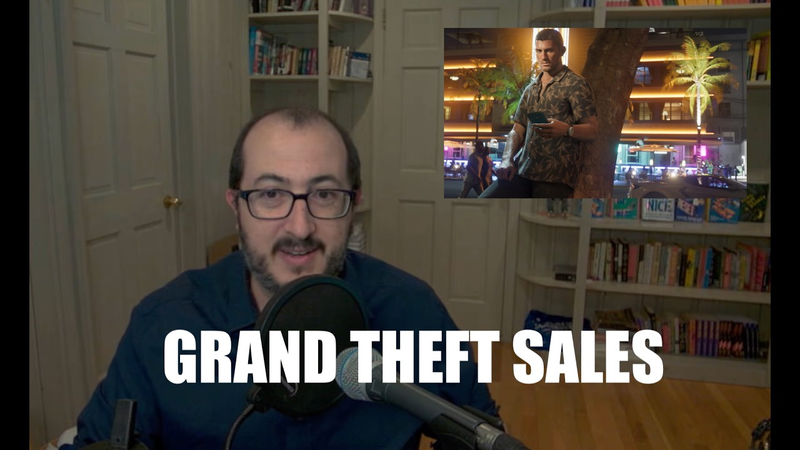
Grand Theft Auto VI Pre-Orders 'Vastly' Beat Expectations, Take-Two CEO Tells Me
Take-Two Interactive’s recent earnings call confirms that Grand Theft Auto VI remains on schedule for a November 19, 2026, release.
- Grand Theft Auto VI is confirmed for release on November 19, 2026, with Take-Two Interactive maintaining this date despite industry-wide risks of delays.
- Take-Two CEO Strauss Zelnick cautioned that high pre-order numbers may reflect 'demand pulled forward' rather than an increase in total lifetime sales, noting that the company lacks historical data to accurately forecast the demand curve for a launch of this magnitude.
- Take-Two's fiscal year 2026 revenue reached $6.7 billion, with 78% ($5.2 billion) derived from recurrent consumer spending in live-service titles like GTA Online and NBA 2K, while only 22% ($1.4 billion) came from full game sales.
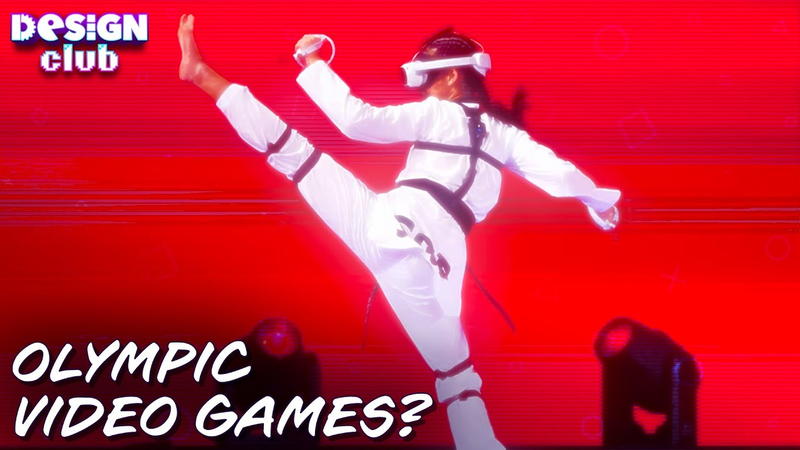
Which Games Should Be Olympic Esports? | Design Club
The integration of esports into the Olympic framework requires a strategic shift away from digital simulations of traditional physical sports toward titles that offer unique, high-skill competitive structures.
- Olympic esports should prioritize games with automated, objective scoring systems to eliminate the need for subjective human judging.
- Future selection criteria must favor titles that balance high technical skill ceilings with spectator accessibility, avoiding games that rely on excessive complexity or rote memorization.
- Rocket League, League of Legends, Counter-Strike, and Tekken are identified as ideal candidates due to their clear rulesets and established professional ecosystems.

Life beyond Elden Ring: A rare interview with Bandai Namco Entertainment CEO Nao Udagawa
Bandai Namco Entertainment CEO Nao Udagawa outlines a strategic vision centered on balancing third-party partnerships with an increased focus on internal development capabilities.
- Bandai Namco is shifting its strategic focus toward balancing third-party partnerships with a greater emphasis on internal development capabilities.
- The company is using the success of its partnership with FromSoftware on Elden Ring as a primary benchmark for future development standards and global marketing strategies.
- To mitigate rising development costs, the firm is maintaining a diversified portfolio that spans from large-scale AAA blockbusters to smaller projects.
Can Atari make its retro games strategy profitable?
Atari is currently navigating a strategic pivot toward becoming a leader in the retro gaming sector, focusing on high-quality remasters, remakes, and sequels to classic intellectual properties.
- Atari is executing a strategic pivot to focus on high-quality remasters and remakes of classic intellectual properties, supported by the acquisitions of specialized studios Digital Eclipse and Night Dive Studios.
- To compete with unauthorized emulation, Atari’s business model centers on providing a 'better than free' user experience that justifies premium pricing through technical excellence and authenticity.
- The company maintains a release cadence of approximately four titles per year, balancing high-profile commercial projects with niche, passion-driven releases to mitigate financial risk.
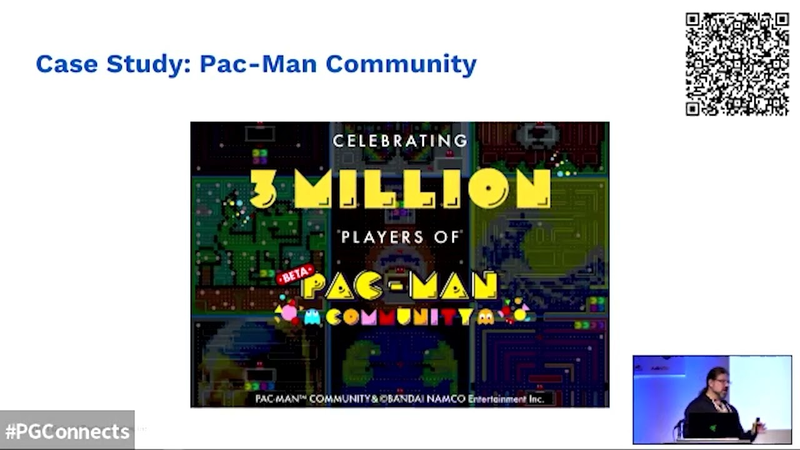
MILEs as a Bridge to the Metaverse
Massively Interactive Live Events (MILEs) represent a new category of entertainment that bridges the gap between passive television viewing and active gaming.
- Massively Interactive Live Events (MILEs) bridge the gap between passive television and active gaming by using cloud-native streaming to allow real-time audience influence over narrative outcomes.
- The technology is platform-agnostic and eliminates the need for high-end hardware, making it highly effective for market penetration in regions like Brazil, India, and Mexico.
- The 'Rival Peak' experiment demonstrated the format's engagement potential by generating over 100 million minutes of watch time across a 13-week period.

Networking Etiquette for the Modern Games Industry Professional
Professional networking in the games industry is a fundamental, long-term career component that relies on the authentic exchange of information and services between individuals.
- View networking as a long-term, authentic exchange of value rather than a transactional process, prioritizing empathy and active listening in every interaction.
- Prioritize building 'weak ties' with acquaintances and occasional contacts, as these connections are more effective for career advancement than relying solely on close professional circles.
- Implement the 'Pac-Man rule' by leaving an opening in conversation circles to allow others to join or exit, which facilitates more inclusive and fluid networking.
The Importance of Not Playing Games - A Balanced Game Design Education - Extra Credits
The primary thesis of this analysis is that an over-reliance on existing video games as a sole source of inspiration stifles innovation and leads to derivative design.
- Over-reliance on existing video games as a primary source of inspiration leads to derivative design and stagnant, formulaic mechanics.
- Designers who exclusively consume games often subconsciously replicate established genre conventions rather than innovating on original concepts.
- Influential titles like The Legend of Zelda, Pac-Man, and Papers, Please succeeded by drawing from real-world experiences such as childhood exploration and international travel rather than existing game templates.
GDC Microtalks 2017: Playing with Our Hearts
Modern game development requires a fundamental shift from profit-driven optimization toward a design philosophy rooted in empathy, human connection, and ethical responsibility.
- Developers should shift from profit-driven, grind-heavy mechanics that commoditize player frustration toward design systems that prioritize empathy, alliance-building, and meaningful social engagement.
- Designers can optimize narrative and mechanical pacing by using 'heartbeat' visualizations to map player excitement, a technique historically utilized in titles like Pac-Man and Resident Evil 4.
- To ensure accessibility and remove developer bias, teams should prioritize low-fidelity prototyping and user flow diagrams during the early stages of production.
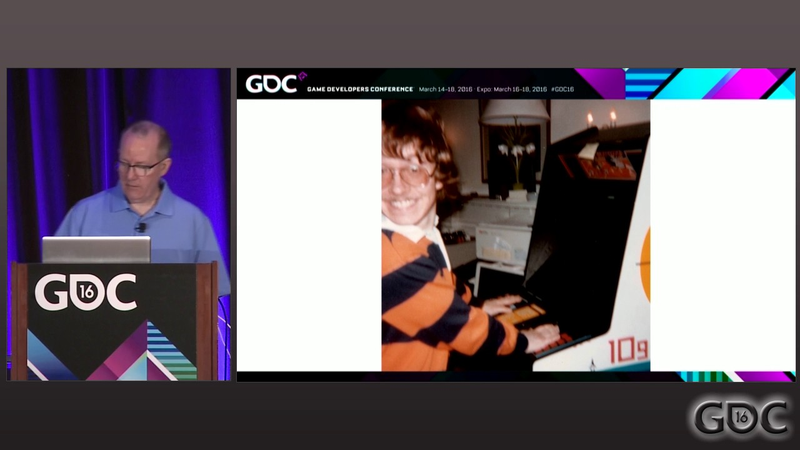
Classic Game Postmortem: Ms. Pac-Man
General Computer Corporation (GCC) emerged in 1981 as a pioneering force in the arcade industry, initially focusing on enhancement kits designed to extend the commercial lifespan of popular titles.
- Ms. Pac-Man was developed by General Computer Corporation (GCC) as a modification kit for the original Pac-Man, utilizing a custom auxiliary circuit board with 10K of ROM to patch the original game code.
- To reverse engineer Pac-Man, the GCC team used a Tektronix 85/50 Z80 emulator to disassemble the original code, allowing them to isolate and modify monster AI behaviors and maze layouts.
- The team implemented anti-copying hardware and a 'bit-swizzle' encryption method on their auxiliary board, which successfully prevented the cloning of Ms. Pac-Man for approximately six months.
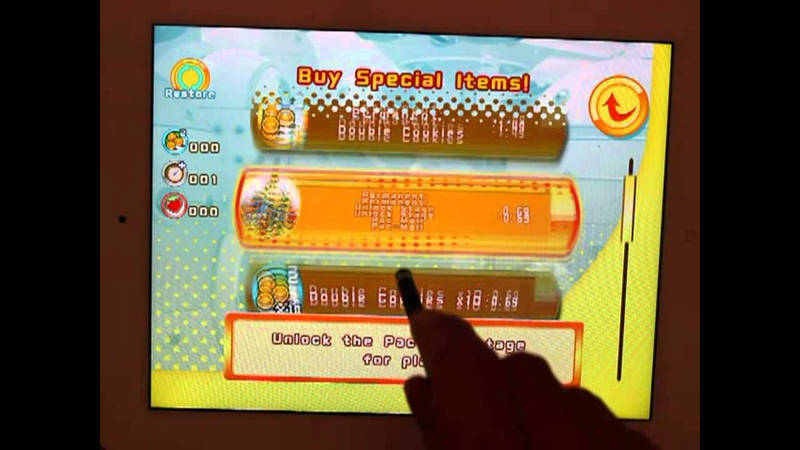
Monetizer: Namco Bandai's Pac-Man Dash
Pac-Man Dash utilizes a high-speed, runner-style gameplay loop on the iPad to engage players through a combination of mission-based objectives and resource management.
- Pac-Man Dash employs a stamina-based fuel mechanism that gates gameplay, forcing players to remain online for recovery and encouraging frequent, short daily sessions.
- The game utilizes a dual-currency approach where cookies serve as soft currency for purchasing consumable power-ups, performance-enhancing items, and permanent progression upgrades like cookie multipliers.
- Monetization is driven by microtransactions for stamina refills, temporary speed boosts, and mission-specific advantages designed to extend run times and maximize resource collection.
Companies behind it

As the documents state it.