Transcript
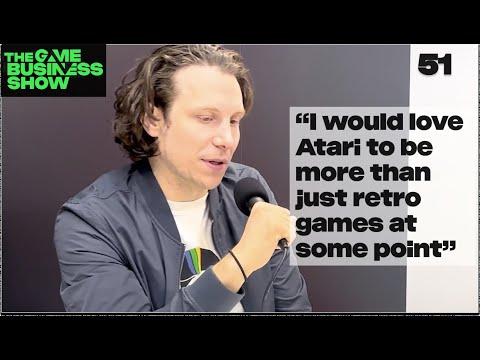
I would love for Atari to be more than just retro games at some point in time in the future, but but yeah, I think we found our our place for now. Retro has to confront something that a lot of modern gaming used to confront, but really doesn't anymore, and that's how to be better than free. [Music] And now for a sponsored message from Greenman Gaming. Greenman Gaming is creating new revenue streams and discoverability options that will help businesses extend the life cycle of their video games and grow their audience. Greenman Gaming recently revealed its charity bundles platform, a curated way for publishers to reach new audiences, generate incremental revenue, and support causes that matter. The platform offers transparent stock levels, instant key fulfillment, and regional pricing, all while raising funds for charities such as special effects one special day. You can get involved at ww.gmananggaming. greenmananggaming.com/comp/charity-bundles. Elsewhere, Greenman Gaming Distribution is a new service that helps studios boost discoverability by activating
titles across 180 plus vetted retailers, reaching over 100 million gamers and delivering up to 20 to 30% more revenue compared to Steamon sales. Now, back to the show. Hello and welcome to the Game Business Show. This week, we have an interview with Atari CEO Wade Rosen. For decades, Atari has tried to work out where it fits into the modern video game industry, and it seems to have finally found the answer. By embracing its position as one of the icons of old school gaming, it's invested in high-quality remasters, remakes, ports, and even sequels to long-forgotten IP. It's acquired numerous classic brands in recent years, plus leaders in the retro space, including the excellent classic game developers Digital Eclipse and Night Dive Studios. This strategy has ended Atari's days of being the industry punchline, a by word for directionlessness management. But even so, profit remains elusive in what is an increasingly competitive field. I discussed this with Rosen at Gamescom just two weeks ago, and here is that conversation. Enjoy. Well, thank you.
Welcome to the show, Wade.
Thank you. Great to be here.
I know that often I've been I did a lot of research before doing this interview, and there's so many conversations about, oh, Atari's gone through these ups and downs and now it's a mostly downs and then they come making the comeback.
Yeah, I've never heard that one really.
So, I'm not going to ask about that. But what I am going to talk about is obviously your retro focus. It looks like it's going well at least in terms of quality and reception and fans and that kind of stuff. How do you think if you finally cracked Atari's role in the modern games industry, do you think?
Okay, that I I thought I knew where that question was going. You kind of switched it up at the end. I like it. Um I don't know if I would say we've cracked where Atari will be in the modern games industry. What I'd say is I think I think we found our place for now and and and you know, we're trying to do this really well and be the best that we can be at this, but but I would love for Atari to be more than just retro games at some point in time in the future. But but yeah, I think we found our our place for now and we're going to continue to
build that and develop that and what it means to be the best at retro games might evolve over time, you know, as as retro itself evolves and and that definition changes. How big is this? I don't I've always wanted to know and obviously you'll have your own view on it, but how big is this segment of the market?
I I mean I guess it kind of depends on where we draw the line, right? Like is it,
you know, Xbox 360 and PS3 and Angry Birds? Are these retro? Right. Like
I hope not.
I don't know. Like it's I I think the interesting thing about it is as time goes on like does the definition does it stay the same and it's always something or is it always kind of ever expanding? But but I still think it's it's a small part of the market for what it is, right? But but what I love about the retro market is that the people who are in it are deeply passionate. you know, they it doesn't mean they only play retro games, but uh gamers like myself will we might have a PS5 next to a Poly
Mega or some sort of modified
Genesis to like have a SCAR output, but like we're really passionate about it and we're constantly engaged in it. And so I think even if it's not the largest market, it's a dedicated market and it's one that you can be successful in if you approach it with authenticity.
The reason why I ask is I am I'm I'm obset. I mean, I love the market. I spoke to Gogg the earlier today. I checked out Outlaws from Night Dive. I'm big fan of Night Dives games. We talked about that before before I pressed record.
Yeah,
I've got an analog 3D coming at some point in the next 25 years. Um, there's a there's there's a bunch of I'm into the sector and I'm watching new things pop up all the time. I'm watching the quality getting higher and higher and higher. So, I'm I'm sitting and and I'm interested. I know it's not not rivaling Fortnite, right? But I'm trying to get a sense, is this is this a growing sector in a significant way? Is this is this because I know that Yeah. My question
I think I think retro has to confront something that a lot of modern game gaming used to confront but really
doesn't anymore and that's how to be better than free. You know I don't mean free to play. I mean like there is many people play retro games through you know ROMs and emulators and ISOs and things like that and and so
the the challenge when you're working in retro is like how do you make something so appealing that you will pay for it rather than
do something for free and that that's kind of the you know that's the classic like Spotify versus you know downloading music illegally uh you know conundrum there and so and Again, this is not free to play, but like a lot of premium gaming has moved past
that point. Like it's it's not that's not a huge issue for most of the market in retro.
That ultimately is like the thing that we we are constantly asking ourselves. So, it's not enough to just put the games in a box like that
been there, done that. We all know what that looks like. That's not that compelling. So, what kind of context can
you give around it? what additional information can you give around how can you make the games not easier like in difficulty but like more intuitive uh you know people will certainly pay for things that are a better experience and a smoother experience and a richer experience and so that is really what we what we aspire to is like how how do you just make this so good that
somebody will want to pay for something that didn't if they had wanted to they probably could have you know illegally obtained but But essentially gone and done that pretty easily.
Yeah. And obviously I can see that you're as a business you're a growing business revenue-wise but obviously profitability is a is a is is a challenge right? You know how was how's that journey going for you?
Sure. Sure. Yeah. I I mean it depends on man I almost said what would have been the most cliche
uh business line ever. Depends on how you how you measure profitability. But
uh what I will say is you know every year we've been growing considerably. Yeah. the if you were to look at the
cash flow of the company and and technically our net income this past year decreased from where it was the prior year but if you were to take out you know one time non-cash effects things like that
that that delta and that operational cash flow keeps improving every year and that ultimately is the goal is just to keep growing in a really smart uh sustainable meaningful way and just shrink drink that until it's no longer red and it's flipped black.
Yeah. Well, I I guess if
and we give a little bit of guidance in our uh recent uh annual results and press release around that too for uh this current uh fiscal year.
Yeah. Let's say there is this positive momentum around what you're doing. But you do a lot of things, right? You do licensing, you've got your merchandise, which you know also is part of licensing.
I don't know if the audience can see the Pac-Man console in front of us.
You've got your hardware. You've got your your remasters, your remakes. um your documentaries and all that sort of
stuff, you know, digital clips and stuff. I've been doing third party publishing.
Out of all of that,
original games.
Yeah. Quite a lot of out of all of those things that you're doing,
what's really working and what what's stuff that's actually, you know, is proving more challenging?
Yeah. Yeah. I mean, we don't at least atari, we don't do a ton of third party publishing. And I think you know like we Thunder does that but as far as Atari the main focuses are licensing hardware games which is like you said really retro focus remasters remakes uh collections but then also doing original works and across the board I would say everything has has been improving going well. you know, the originals, the originals are probably the biggest swings that we take because you're taking what are fundamentally very simple games and having to adapt them to a modern audience. So, Yars Rising, Missile Command Delta, we have an a new game coming out called Adventures of Sansara and and I mean all of these are
taking like like Yars taking a relatively simple game, adding a lot of context story, working with a great developer like Way Forward on that
and you know I mean some of those work, some of those don't. Some of those review critically well but maybe don't perform as well commercially. It's it's all over the board, but it's definitely something we still want to try to do because
ultimately like we do have to breathe new life into the IP, into the series, and that. So,
I think the important thing for us is we just we know where the risk is. We're willing to take risks, but if it's all risk, then you don't have a company at the end of the day. So, so we try to be smart about it. And then there's some like Bubsy, which we just announced this week, which has,
you know, the reception to that has far exceeded RX. I shouldn't say that. We I don't want to make it sound like we didn't have high expectations. We we did, but I mean, we didn't think we were going to be the number three most trending thing in America for like half a day and, you know, be the most second most talked about game at Gamescom behind like Lego Batman like that was
that or outpace like Black Ops in in like Twitter like discussion. remains to be seen whether that that that kind of virality is can translate into game sales and how much of that is
uh due to infamy in prior games. But like we would love to be the team that makes the first great Bubsy game. That would also be a nice thing to do.
One of the things I love that you do um or some of your teams do is is you do these big mainstream rem whatever of classic titles and then you do something I I talk about I saw Night Dive as an example. One minute they're doing Star Wars. Yep. And the next minute they're doing Pod, right? And I know this because they want to do that, right? Is there a logic uh to investing in these more obscure curiosity, shall we say?
Yeah. I think a really good example with Night Dive 2 is uh you've got Star Wars Dark Forces and then we just announced Outlaws both, you know, both from Lucas, both like beloved, but obviously one has a brand behind it that's pretty wellnown. the other is much more
obscure, also a great game.
But I think I think for us, you know, when we when we come up with what we're going to work on, it's a collaborative process, but we do like leave a lot of that up to the dev teams. And then,
you know, then once we decide, we all work on it together and we work with them to secure the rights and and you know, we have long lists of things that we want to do and things that are coming. So it's it's a little bit of that classic like hey you do you know you do the Hollywood one you know you do like the actors who do the like the big one for Hollywood and then you do the indie film and then they do the one for Hollywood and
but where the real magic happens I feel like is when it's not like you're having to to choose. I think like Mortal Kombat is a good example of that. Like that was probably the number one game Digital Eclipse wanted to do. And we think it's, you know, I mean, that's something that the community really wants and and we're very excited about that. We think it's going to do really well.
Uh, so you try to marry that as much as you can, but then there's always going to be a few that like, you know, mean a little bit more to you than maybe our
the commercial viability of that and that's okay as well and we we give a lot of latitude for those in the in the blueprint.
You do a lot though, showing my colors of the night dive fan. They put out four or five games a year, which is absolutely
Yeah, we target about four a year. Yeah. Yeah, that's a
I can't keep up, right? This isn't really a question, but do you find that cadence that that that regular cadence is is part of it? Is it is it a community thing or is
Yeah. Yeah, it is a community thing, right? It's it's it's you know, making sure that you're staying you're staying engaged with your community, staying relevant. It's also that there's just a lot of great games that we want to work on. And you know, if you're only doing one a year or two a year, then you can't really do the POS or the Outlaws or some of these that are, you know, you're only going to be able to take the really big the really big swings and the things that are down the middle. I The reason why we do four years, it allows us to take more risks. You know, you make sure that you've got a thing remaster coming
out at the end of the year like we did last year that we feel really strongly about and that we we you know, we really like. But because we do that, we can also do a PO and they're not all the same size and they're not all the same like
uh effort, you know. So, so you you know, you've got a couple that are maybe going to take a, you know, twice as much effort as some of the others, but that allows you to take those risks and be a little bit more creative and do things for the sheer like I almost called like POD art. I mean, it is art, but you know, like the sheer art of it, but like a game called Poed where you like run around and smack things with a frying pan. But, uh, no, but for the love of it and and yeah, that's that's why we do that. Yeah.
I mean, this area of the industry is becoming increasingly competitive, like remasters and remakes are becoming more of a thing. More companies are investing in it. Nintendo has its, you know, service as well. Um, is there is is is the market capable of m handling all of this sort of interest and um and
competition?
No, it's a fair question. Um, honest answer there is I don't know. I don't know. I mean, we've been doing this for a long time. You know, this was something that we set about to do three, four, four years ago. Really, over four years ago now, and Night Dive was doing it well before that. Digital Eclipse has been doing this for almost two decades.
This industry is interesting. And I, you know, I haven't been in it that long, but I do see these tendencies where like people will be like, "Oh, this is what we're going to do now." And then everyone's just kind of piles into that and then they sort of switch and like
and then then it then it starts to decline and then everyone decides it's dead now.
Yeah. Yeah. And then they and then they move to something else, right? And like it does worry me that that's one of you know several things that people are people have shown a lot of interest in because it'll probably I think it'll probably pull down the average quality of those and maybe like create you know the remasters like who knows what that will look like or what that'll be like and does that eventually
destroy the the interest in those in general. It's certainly something we need to think about and keep in mind and and it it might be an issue. That said, I think the advantage we have is like these are companies that they they're not doing this for an opportunistic reason. They're doing this because they absolutely love it and you know, this is what they want to be doing. And I think even in a crowded market, they can stand out. Like you, we talked about Night Dive. Like people pick up Night Dive games even though they've never even heard of the game itself for the sheer fact that Night Dive is making it. if you're not a remaster company or you like it just has to stand on the quality of the IP itself and that's those are limited you know there's only so many Silent Hills out there and like Blubber team did a great Silent Hill too so it kind of like taps into both but you
night Dive has the advantage of being known for this and that that might be more than the individual games it might be the team itself that has kind of risen above that
I'm a big fan of I'm a rare fan of video game it's the studioise and so when They
didn't get Golden Eye and someone and there's nothing and the Golden Eye game is playableish, right? But like but I really wanted it to be Night Die because their tour remasters and all that stuff are so so on. Yeah.
Hey, we would I can't comment on that too much, but we would love to do
if there's ever another rip at Golden Eye. We would love to do the uh remaster Golden Eye for sure.
You have plenty of expertise in this. Atari does. You've got Night Dive. They're experts what they do. Digital Eclipse is are experts at what they do. Are you do you need any more expertise? Is there any need for any more whether it's organic and or inorganic additions to the company?
You need is there anything you're missing?
Yeah, you know, I mean, well, I mean, short answer like organic growth is critical and I don't think I think a company that only lives with organic grow inorganic growth, uh, that's a pretty risky strategy. We've seen that play out, you know, several times and usually not great consequences, but yeah, it's a part of the strategy. It's not the strategy. And I think especially
as we look to expand outside of the US, having more boots on the ground in in certain territories is important. Um, Thunderfall is a good example of that. Um, that gives us more boots on the ground in Europe. It gives us some more development capacity, gives us some more great IP to work with. All of those things are definitely considerations in in growing. But what I will say there is we try to do it strategically or with a lot of thoughtfulness, not not just to bolt a bunch of stuff together because it'll affect the stock price in a certain way. I think that is that type of of expansion is very very transient and almost always unwind. So there needs to be an underlying business motivation behind it. You mentioned Europe there uh as a I know Atari is a global brand but in Europe it isn't quite as recognized as it is in the US and now you've I love your t-shirt. You are you are you're resurrecting
infog shirt today. Yeah.
Resurrecting infogs which is a far more
recognizable brand I think for people in Europe. Well certainly for me. Is that part of the thinking?
So infogs is a I like how you said recognizable. I might steal that term because like sometimes I'll hear it's, you know, the word infamous gets thrown around with infog sometimes as well, but it is recognizable. Um, and I think a part the thinking there was, hey, we're really we really want to keep Atari laser focused,
right?
And you know, we we feel strongly about that strategy. We're we're building on it and we really wanted to double down on being the best in the world at retro. Yeah. That said, there the there these opportunities have come up in the these things that we were really passionate about as well with games that are a little bit more modern. Totally reliable delivery service, Surgeon Simulator, Bread and Fred, uh, and and how did those fit into the equation? The answer was either to say they don't at all or like we want to work with those. We want to keep building these series that we love and they're not retro in a, you know, 30 years old sense, but but like
have some history to them and and and like deserve to we feel like exists in the world and and be expanded upon. Well, what could we do that under? And we we looked around. We're like, well, Infogs Infogs is a is like a brand with a lot of legs, a lot of history. The other advantage of Infogs is it had a really eclectic we'll call it an eclectic portfolio. You know, it was like you could you'd had a tennis game and a Terminator game and like it was a varied portfolio and we I think the the latitude
that Infogs approached things with lended itself well to a to like this the some of these more modern games that we wanted to work on. and and so that was a big part of the reasoning was like well-known uh definitely strong ties to Europe and then also you know Ocean was another brand that you know there's a long history with here at Atari and it's it's inside that Atari history but like an Ocean game if you think about it
looks a certain way you know it's usually licensed and it had a very certain visual appeal to it and so we looked we gave serious thought to that but it was hey would that be strange if an ocean game if It was ocean, but a game looked like this or was like this. And it it
we just we felt like that maybe would people would be less accepting of games that weren't in that specific style and that and Infogs didn't have those.
So, it's part of that authenticity you're talking about here, like it needed to fit. You can't you can't just slap a logo on it that people would recognize. It needed to fit with what they're doing.
It's really a thoughtful decision. Yeah. And then like people love the ocean brand and you know we'd love to find a way to make that a meaningful brand in the market at some point in time but but you also want it to like make sense with what you're doing and if you're just like
using it because it's recognizable but now all of a sudden you're
you're putting out uh you know a game that
really has no tie to the original
to the original uh label. I don't think
that does you any favors and I actually think it can be a little bit uh can undermine the intentionality that you're trying to bring to
to that project.
I'll change the conversation a little bit. I'm interested your view on AI because Xbox seems to believe its new AI investments could help revive classic games. What's your take on that? I'd appreciate that's a that's a tricky question.
That's a uh yeah, that's an understatement, right? Um, I mean, AI, I don't have much to say about AI, and I I know that sounds like a little bit of a dodge, but it's not. Like, I I try not to comment on it too much because it really I feel like it's not there's no mandate from, you know, we we're all very thoughtful about AI. I mean we of course like watch what's happening in that in that field and and where things are going but there is absolutely no mandate from you know anyone it's hard to be like you have to use AI in your games and you have to be making things with this. I think the the challenge there is just approaching AI from like a
a love and not a fear perspective, right? I mean, it's it's here, it's coming. The legality, you know, how things are going to shape out around copyright is still being written. That'll have a huge impact on the downstream effects and the way AI is used. So, we watch that really closely. We watch
all of the like
those things sound minor, but they have massive cascading effects. Yeah. Yeah. And so we just we've taken a like a cautious very practical approach to it. I think, you know, in the immediate there's things like debugging, QA, you know, code review that that it does and and is really augmented like it augments a lot of what we're already doing. And those are those feel like in the community and just at large like less of a hot button topic because people are you know and we have a lot you know even beyond game development we have a lot of like web services with moi and things like that
where
you know having being able to like identify oh here's issues that people are having with your sites like oh thank
you for that like that actually allows us to go in and fix these faster and like
and like be more responsive. So, so those are the immediate things we're doing, but it's not it's not been incorporated in development in a meaningful way and and that's like intentionally, but I I wouldn't say we're also, you know, intrinsically opposed to it. So, yeah,
I guess there's a concern that if it does it is make it easier for people to create classic games, do remasters. I guess that puts pressure on your teams to
make sure they go beyond things, right? Whether it's like the documentary style things that you do and
Fair. No, I I I mean that I think that's probably a I think that that could be an issue for games at large, right? Like certainly retro and classic like that. In a weird way, I feel like restaurant Classic is maybe more uh attuned to ride through that because like I said, we've already had to confront an industry where there is like readily available now the you know, not necessarily always
legally, but like readily available uh borderline free alternatives for a lot of like retro gaming.
And yet we've still, you know, we're still in this space and doing things because we have to make it better than that. So that's already kind of raised the bar for us. So, you know, will it allow for things to kind of be done quickly and poorly? I just don't know if the market will tolerate like really poor
versions of things. I think there is a quality bar with a lot of like rem I mean we know what there's been a lot of remasters that have been amazing or remount [Music] or probably more that have been very underwhelming and like
you can you can kind of think about those collectively and you know the ones that
that like prove out the business case and the ones that don't and I don't know I so AI remains to be seen I think the larger question for me there is you know the the low code environments allowed a lot of games to be made quickly
which has created a pretty big
discoverability issue in inside of games.
Uh when you go to a no code environment that will just amplify that further like that that discoverability and like uh you know con you know the amount of demand versus the amount of content that's in the market that is not changing. If anything that will most likely continue to accelerate that to me feels like a much more existential problem in the industry that I don't even know. I mean, I shouldn't say existential problem, but like
because there might be some really great like for a consumer, it's probably
pretty cool and you get a lot more choices, but but it is going to be hard to break through
probably in the future with that much more out in the market than it is now. I don't think that's a
a specifically retro issue, but it is a a games issue. So when I look at AI, if I was to say like, hey, what's probably the one thing that's coming down the pike, it's like we think there's a lot of games being posted on Steam right now. Like what happens when you don't
need any coding? Like the the deluge of games will be massive. And then
and I don't really know what that what happens there. Maybe that's a good thing, maybe it's not, but uh it's a change that's coming and this these problems that we see today don't seem to be going in reverse.
I'll ask one more question. I'm really conscious of the time.
Cut as much of this as you want to. I I kind of got a little longwinded.
No, I love the answers. Um, uh, what does success look like to you? Like where where do you want to be in I don't know, pick up a number five years time, whatever.
I mean, yeah, you know, success changes over time, right? But but I think like right now what success looks like for us is getting to do something that we're passionate about but doing it
at a very like high level and with excellence and getting to do it with people that I like I genuinely am grateful that I get to have this role but doing this with people that I like and I like feel so lucky that I get to spend my time around. I can't begin to
articulate like how much I enjoy this this role and I enjoy the people that I get to work with. And so I think success for the company and for many of us is just bringing Atari back to a place where, you know, it it it's always kind of been loved in pop culture, but in games I don't feel like that was the case 5 or 10 years ago and probably not respected all that much. to bring it back to a place where it is a respected company in the industry view that it is, you know, additive to this industry. It is bringing a positive effect into the industry and and that it's considered one of those it's never going to be what it was in the 70s cuz the industry is not what it was in the 70s, right? Like that's a weird
It's not what it was 5 years ago.
Yeah. Exactly. Right. Like the idea of one company controlling 80% of the industry will never happen again. That's, you know, and so to there's no reason to aspire to that. But I we aspire to like have for Atari to be a meaningful part of the industry, to be thought of as a meaningful company in the industry and to be thought of as a positive force in the industry. That ultimately is is the goal and and to get
to do it and for I think all of us here personally to get to do that with people that we really like and enjoy and working on projects that we like and enjoy.
Wade, it's a pleasure to have you on. Thank you for joining us.
This has been great. Anytime. I'm happy to come back. This is wonderful. Thank you.
That's it for today's episode of the Game Business Show. You can check out all of our analysis and interviews via the game.com or via YouTube channel or via your podcasting platform of choice. As you've made it this far, you are clearly a dedicated follower. Thank you. Uh so we want to hear from you. We have a reader survey going on right now where we would love to hear your thoughts on the show, the newsletter, and indeed where we go next. Head to the gamebus.com to fill that in. You'll find a link to that in all the stories we've posted over the last two weeks. We'll be back with more opinion, analysis, and interviews in the days and weeks to come. Until then, thank you for tuning in.
Auto-generated captions from YouTube — names and numbers may be misheard.






















Comments