Arcade reports and market data
27 game industry reports, presentations and talks about arcade from writers such as Game Developers Conference, PocketGamer.biz and Extra Credits, newest from 2025. Every document has a summary and key insights with the page they come from, and 1 chart or table is extracted as data.
Documents

Can Atari make its retro games strategy profitable?
Atari is currently navigating a strategic pivot toward becoming a leader in the retro gaming sector, focusing on high-quality remasters, remakes, and sequels to classic intellectual properties.
- Atari is executing a strategic pivot to focus on high-quality remasters and remakes of classic intellectual properties, supported by the acquisitions of specialized studios Digital Eclipse and Night Dive Studios.
- To compete with unauthorized emulation, Atari’s business model centers on providing a 'better than free' user experience that justifies premium pricing through technical excellence and authenticity.
- The company maintains a release cadence of approximately four titles per year, balancing high-profile commercial projects with niche, passion-driven releases to mitigate financial risk.

Games That Made Us
The recent induction of four titles into the World Video Game Hall of Fame—Williams Electronics’ Defender, Rare’s GoldenEye 007, id Software’s Quake, and Bandai’s Tamagotchi—highlights the industry’s ongoing effort to codify historical significance through metrics of icon status, longevity, geographical reach, and influence.
- Triple Dot has acquired AppLovin’s mobile gaming portfolio for $800 million, a deal encompassing 10 global studios and 2,500 employees across 23 cities.
- The acquisition is valued at a low multiple of 0.6 times revenue and 3.5 times EBITDA, reflecting a high-risk strategy for the buyer.
- AppLovin is divesting these assets to prioritize its high-growth advertising business, while Triple Dot faces the operational challenge of managing live-service games and in-app purchases without prior experience in those areas.



FY2025.3 4Q Financial Results Presentation: Round One Corporation
Round One Corporation achieved robust financial growth in fiscal year 2025, recording total sales of ¥177.05 billion and an operating profit of ¥27.00 billion, representing double-digit percentage increases in both metrics.
- ROUND ONE Corporation exceeded its FY2025.3 financial plan, achieving ¥27.22 billion in Ordinary Profit (8.6% above plan) and ¥27.00 billion in Operating Profit (5.0% above plan) on total sales of ¥177.05 billion (3.3% above plan).
- The company plans to adopt IFRS from FY2026.3, projecting a consolidated operating profit of ¥31.22 billion (IFRS), up from ¥27.00 billion (JGAAP) in FY2025.3, with the USA segment contributing ¥14.68 billion (IFRS) and Japan ¥18.18 billion (IFRS).
- ROUND ONE is considering price revisions of approximately 3% for Japan (excluding Amusement) and 4-5% for the USA, both starting from Q2 FY2026.3, to mitigate rising costs, including potential impacts from Trump tariffs on amusement prizes.
How NOT to Build a VR Arcade Game
Developing successful virtual reality arcade experiences requires a rigorous focus on physical comfort, sensory integration, and operational efficiency.
- Five-minute experience durations are the most effective length for maximizing arcade throughput and operator profitability.
- Motion sickness in VR arcades is best mitigated by avoiding yaw rotation and implementing physical guard rails for player movement.
- High-quality haptic feedback requires a 240 frames per second update rate to ensure smooth, organic physical sensations.
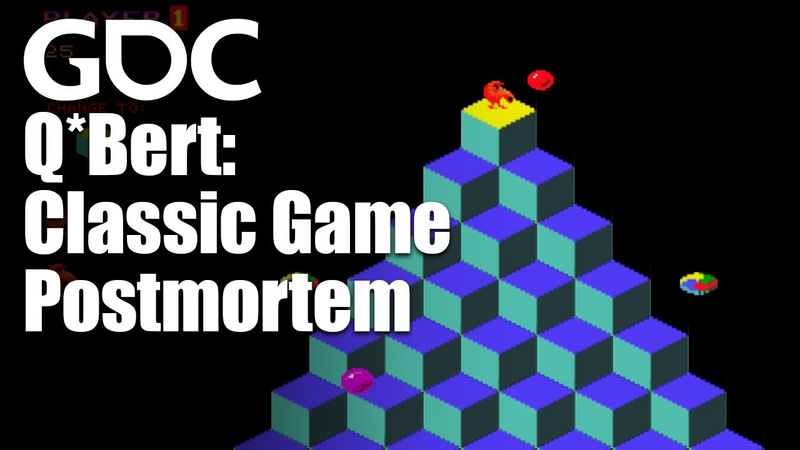
Classic Game Postmortem: 'Q*bert'
The development of the arcade classic Qbert in 1982 serves as a quintessential case study in the ingenuity required to overcome the severe technical constraints of early 1980s gaming.
- The development of Qbert began at Gottlieb in the early 1980s using an MDS-80 development system, with the game's core mechanic—changing cube colors upon landing—emerging from a suggestion by a colleague during the prototyping phase.
- The game's unique control scheme, which required players to navigate the pyramid at a 45-degree diagonal angle, caused significant user friction, leading to frequent player requests to change the joystick orientation to standard up-down-left-right inputs.
- Technical constraints necessitated creative workarounds, such as using a pinball machine's 'knocker' solenoid inside the cabinet to provide physical tactile feedback when the character fell off the pyramid.

How Killer Queen Built an Esports Scene on an Indie Budget
The development of a national esports scene for the indie arcade game Killer Queen demonstrates how small studios can foster competitive communities through grassroots engagement rather than high-budget marketing.
- Killer Queen Arcade built a national esports scene by leveraging a five-on-five team design that mandates physical proximity, forcing players to interact and form local communities at arcade venues.
- Developers can foster community ownership by releasing source assets like logos and sprites, allowing fans to create their own merchandise, event posters, and marketing materials.
- Consistency in event scheduling, such as the '5v5 Fridays' at NYU, is more effective for community retention than sporadic, high-effort events because it lowers the barrier to entry for regular participation.

Game Dev Archeology: Unearthing and Preserving Japanese Game History
Preserving the history of Japanese video games requires a rigorous, archaeological approach that transcends simple emulation.
- Preserving Japanese game history requires an archaeological approach that combines developer interviews, archival scans, and the recovery of lost source code rather than relying solely on emulation.
- Success in this field depends on persistent, on-site relationship-building within the Japanese industry to navigate corporate sensitivities and gain access to internal archives.
- Field research has yielded concrete results, such as the recovery of the unreleased title 'Samurai Shodown 5 Perfect' from a forgotten hard drive and the clarification of technical specifications for early SNK hardware.

Playing YOUR Indie Games (Bug's N Boo Hags RETRO ARCADE GAME!)
The game Bugs N Boo Hags is an indie title currently seeking funding through a Kickstarter campaign.
- Bugs N Boo Hags is an 8-bit arcade-style indie game currently seeking development funding via a Kickstarter campaign.
- The game’s core mechanics are rooted in Gullah Geechee folklore, requiring players to defend homes from supernatural 'boo hags' using traditional items like salt, brooms, and haint blue paint.
- The title is designed as a high-stakes, punishing experience that mimics the difficulty and aesthetic of classic Nintendo-era console games.
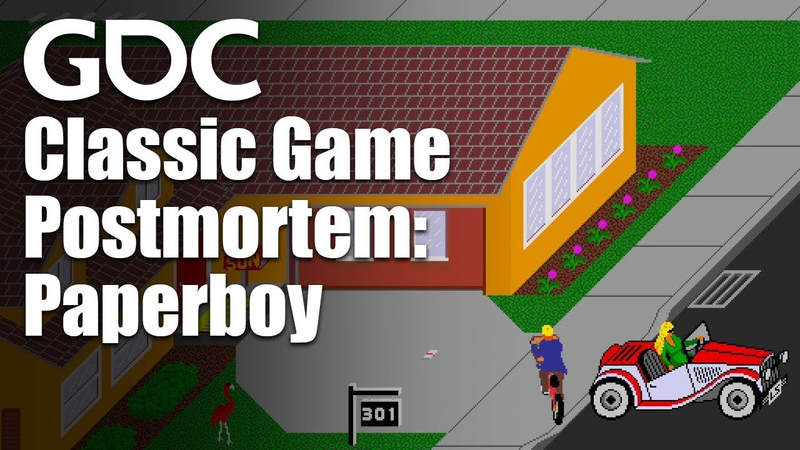
Classic Game Postmortem: Paperboy
The development of the 1985 arcade title Paperboy represents a pivotal shift in Atari’s design philosophy, moving away from traditional vector-based graphics toward a sophisticated, isometric raster-based experience.
- The NES home console port of Paperboy achieved significant commercial success with 2 million copies sold, far outpacing the 3,500 units sold for the original 1985 arcade version.
- Development of the arcade title utilized Atari’s System 2 hardware, featuring a 16-bit processor programmed in BLISS and a custom medium-resolution monitor to surpass the fidelity of 8-bit competitors.
- Gameplay was engineered around tight 30-to-90-second loops to maximize arcade player turnover, a strategy refined after initial focus group failures led to a shift toward a parallel horizontal layout.
Iterating Design and Fighting Fires: Updating Fruit Ninja and Jetpack Joyride
The mobile gaming landscape demands a delicate balance between rapid iteration and the preservation of a title’s core identity.
- Maintain a design-first philosophy to filter community feedback, ensuring that new features do not compromise the integrity of the core gameplay loop.
- Implement a 'chaser update' model that pairs major content drops with rapid, community-focused patches to stabilize player retention and improve store ratings.
- Transition from simple currency-based shops to achievement-based progression systems to increase long-term player engagement and sense of accomplishment.
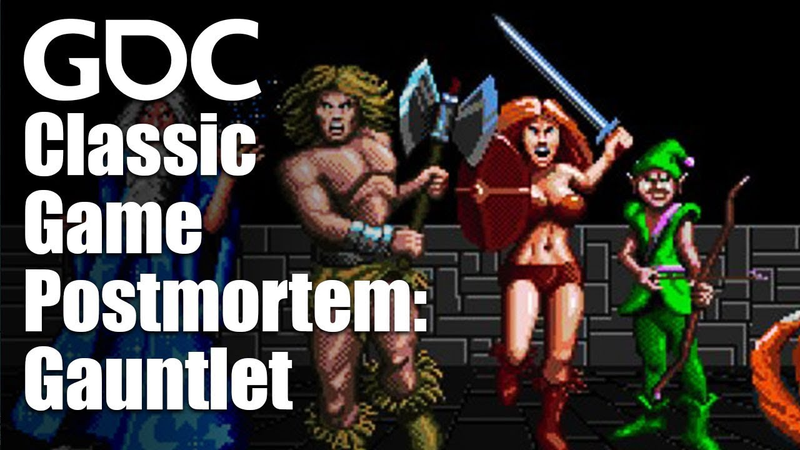
Classic Game Postmortem: Gauntlet
The arcade industry of the mid-1980s faced significant pressure to increase revenue per session as hardware costs rose and the market became increasingly volatile.
- Gauntlet was a large-scale project for its time, featuring a development team of two programmers, four to five artists, one engineer, and three part-time audio staff members, beginning in February 1985.
- The game's hardware limitations included a display constraint of only 56 motion objects per scanline, which necessitated complex grid-based movement and re-assignment algorithms for sprites.
- To manage memory constraints, the team utilized a three-layer graphics system consisting of alpha-numerics on top, a playfield on the bottom, and sprites in between, all rendered using color palettes rather than a high-bit color space.

Primal Rage II from Heartbreak to Resurrection: The Journey After Cancellation
Primal Rage II represents a significant, albeit ill-fated, attempt by Atari Games to evolve the fighting game genre during the mid-1990s.
- Primal Rage II was a $2.3 million arcade project initiated on March 1, 1995, featuring a team of 20 developers and specialized stop-motion animation that ultimately led to its cancellation on December 5, 1996.
- The game's development was hindered by the high cost and time-intensive nature of stop-motion animation, which made character pre-visualization impossible and prevented the creation of a polished vertical slice.
- The project was effectively lost for nearly two decades due to the use of custom hardware and unorthodox graphics delivery methods that made standard emulation impossible until the game was discovered and leaked by fans.