Pac-Man
Game
Documents about Pac-Man
Avatar Categorization
This paper by Daniel Kromand proposes a categorization system for video game avatars, aiming to establish an operational model for describing how avatars are designed.
Temporal Frames: A Unifying Framework for the Analysis of Game Temporality
"Temporal Frames" proposes a formal analytical tool for studying how time operates in games, grounded in a relationist view in which temporal properties arise from relationships among events rather than from time as an independent container.
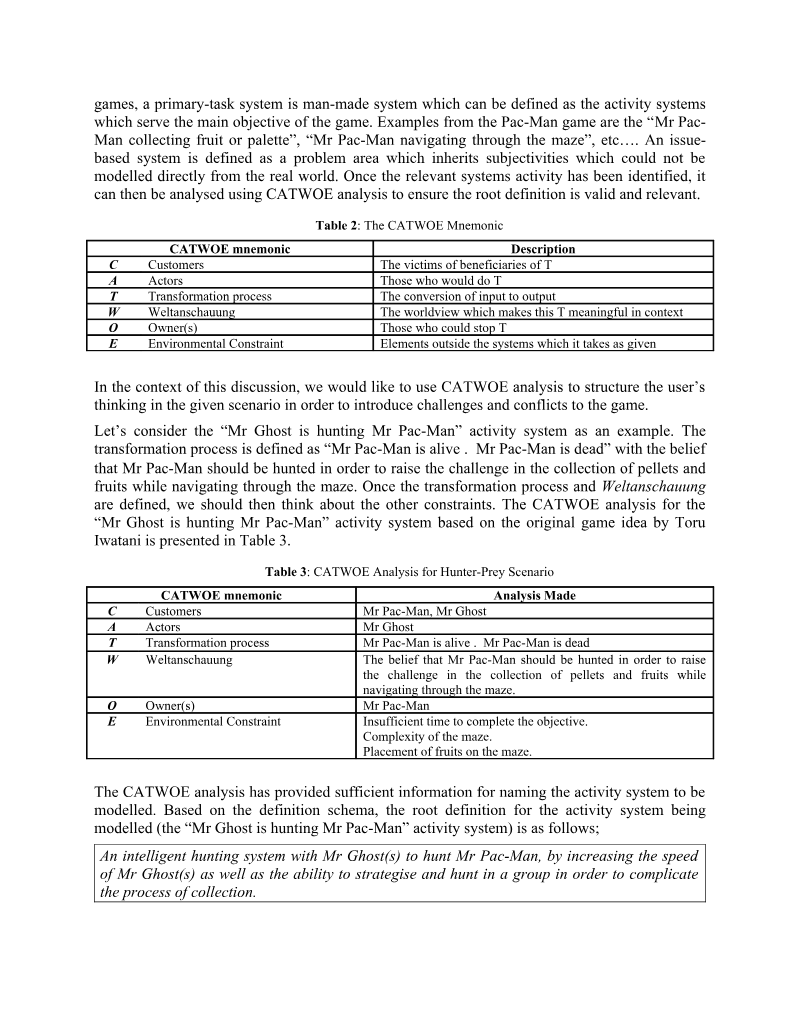
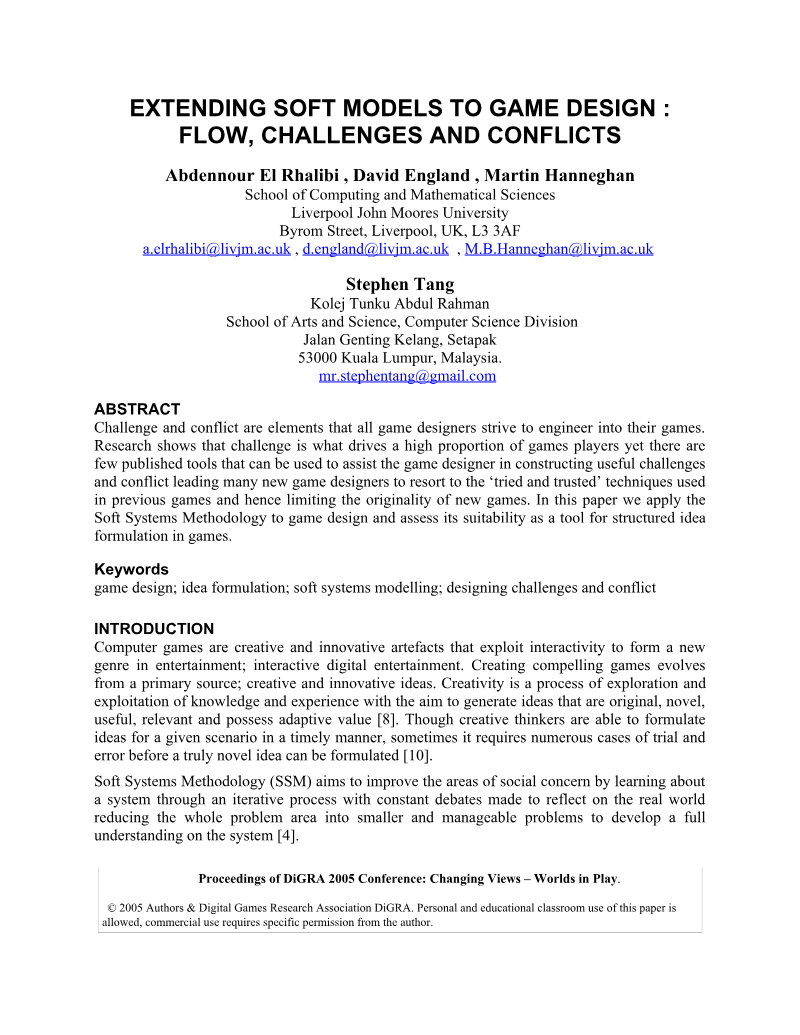
Extending Soft Models to Game Design: Flow, Challenges and Conflicts
This paper proposes applying Checkland's Soft Systems Methodology (SSM) to computer game design as a structured tool for formulating challenges and conflicts.
Expressive AI: Games and Artificial Intelligence
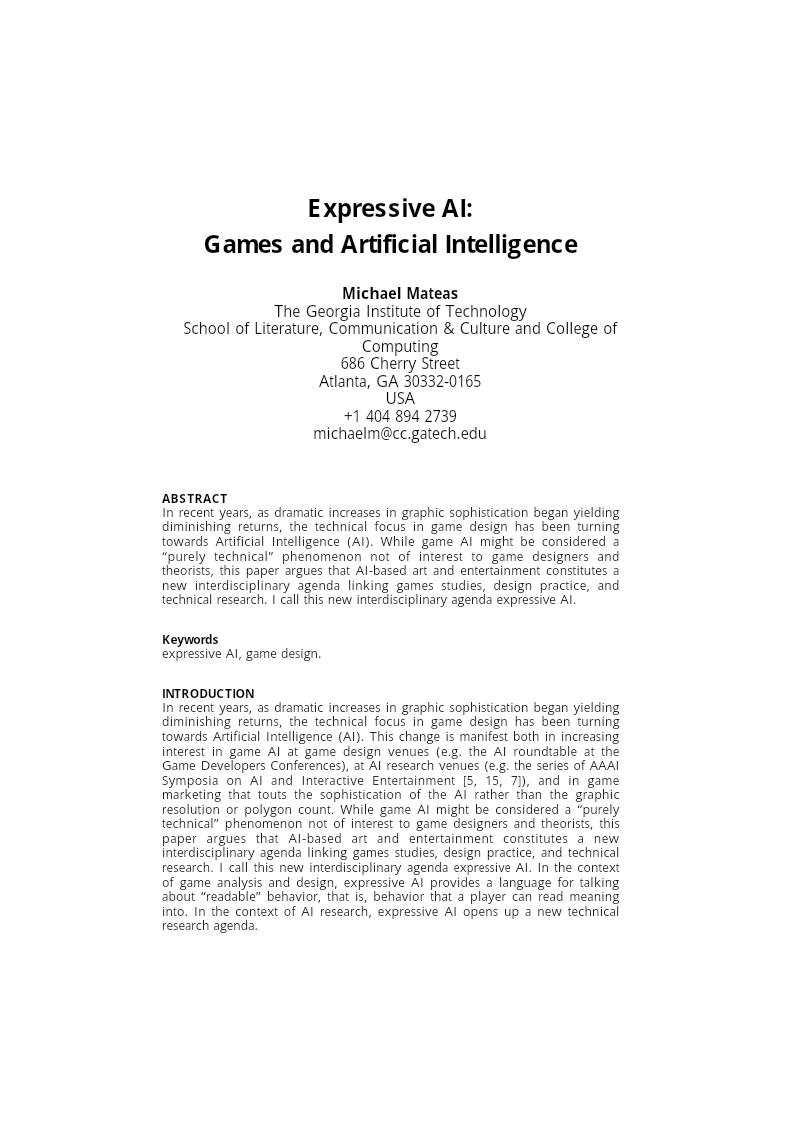
Michael Mateas's paper argues that as graphical gains yield diminishing returns, game development is shifting its attention toward artificial intelligence, and that AI-driven art and entertainment forms a new interdisciplinary agenda linking games studies, design practice, and technical research, which he names "expressive AI."
- Mateas argues that as graphical gains yield diminishing returns, game development is shifting attention toward artificial intelligence, and proposes "expressive AI" as an interdisciplinary agenda linking games studies, design practice, and technical research.
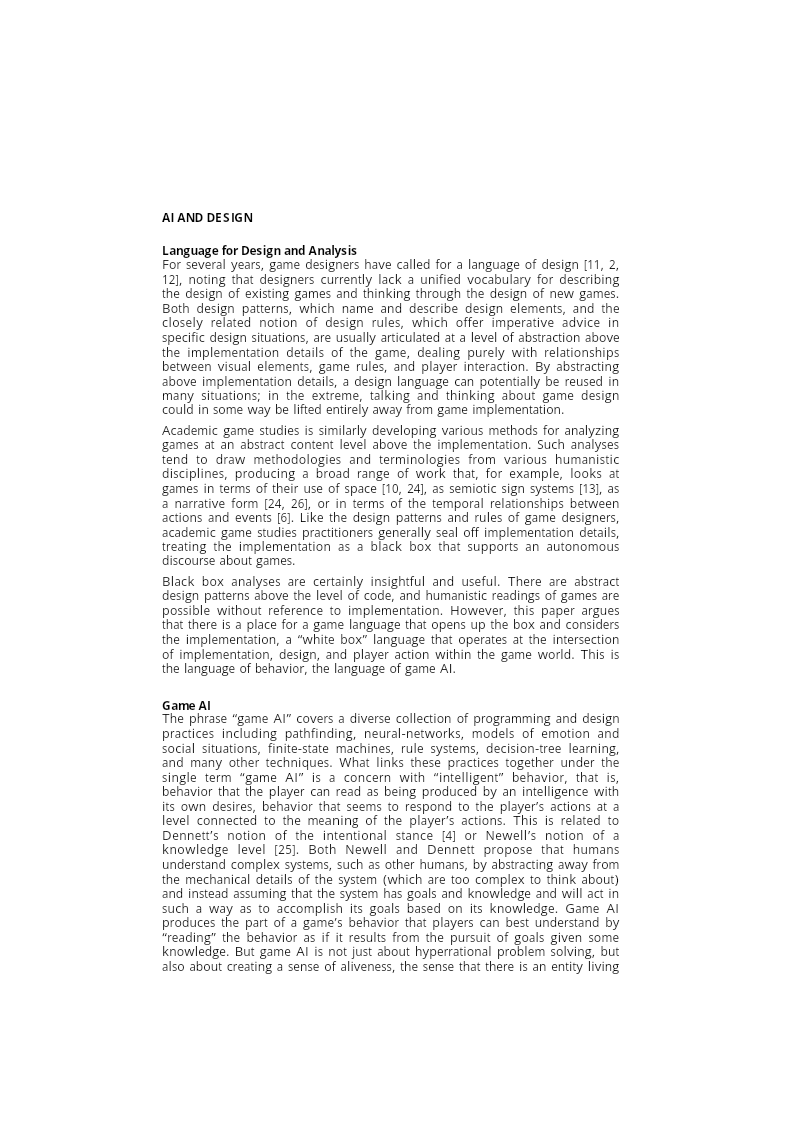
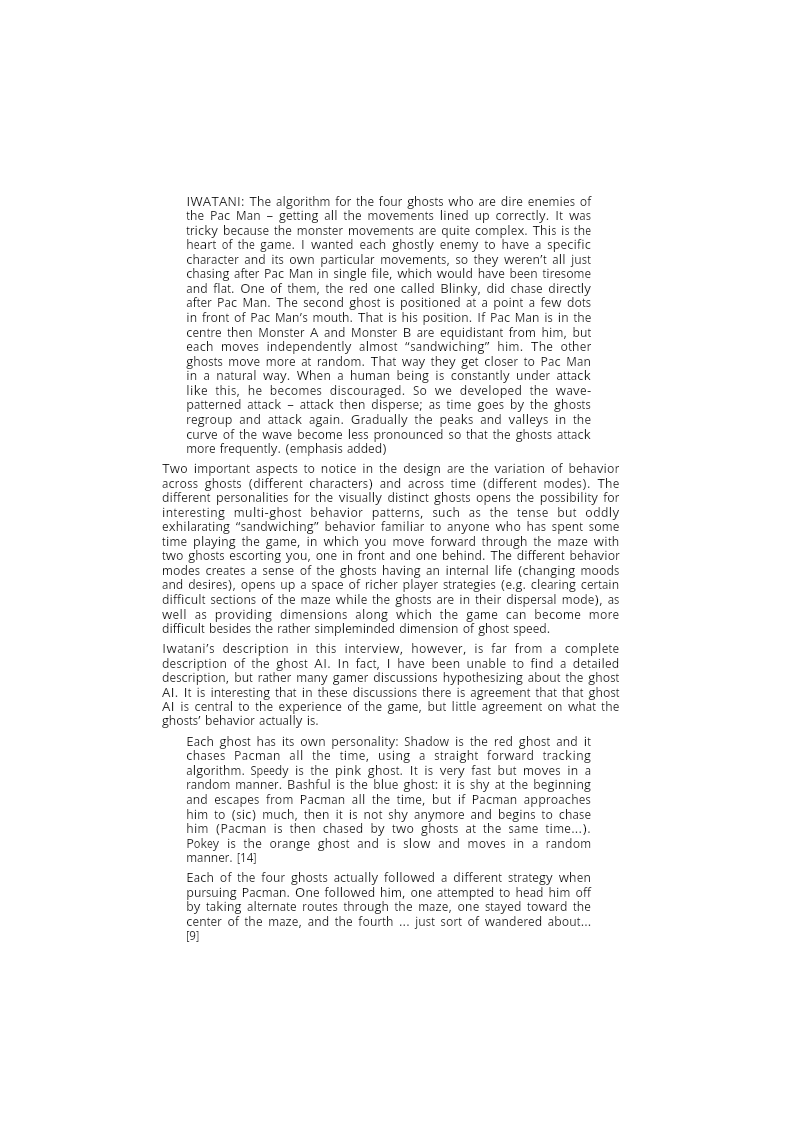
- Game AI is defined as the production of behavior that players read as intentional, distinguishing it from game physics: Asteroids' asteroids and water simulations generate behavior without inviting psychological interpretation, whereas enemies like Pac-Man's ghosts invite readings of goals, desires, and moods.
- The paper positions game AI as a "white box" vocabulary for analyzing and designing games, complementing the "black box" vocabularies of design patterns and humanistic game studies that deliberately ignore implementation.
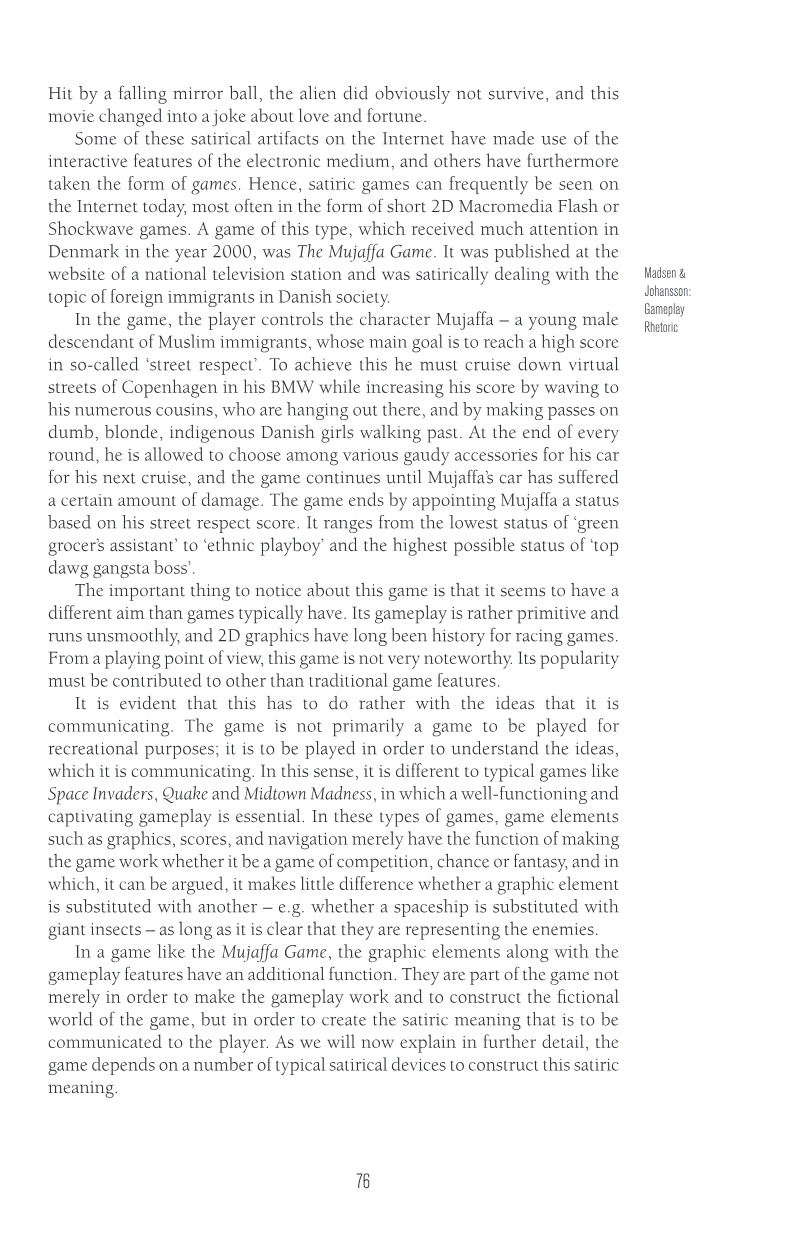
Gameplay Rhetoric: A Study of the Construction of Satirical and Associational Meaning in Short Computer Games for the WWW
This study examines how short web-based computer games construct rhetorical meaning that extends beyond their interactive mechanics, focusing on satire and allegory.
- The study argues that short web-based games communicate satirical and allegorical meaning through rhetorical devices rather than through story or simulation, so meaning persists even when gameplay is rudimentary.
- Satirical effect in these games is produced mainly by incongruity, pretense via parody and low burlesque, surprise, superiority, exaggeration, and violence, drawing on Feinberg's taxonomy of satirical technique.
- Allegorical meaning relies on conceptual mappings such as "life is a journey" and on metonymic relations, which the author's pilot game Vanitas Game uses to express mortality.
Companies behind it

As the documents state it.