Adventure reports and market data
122 game industry reports, presentations and talks about adventure from writers such as Game Developers Conference, Thomas Brush and Extra Credits, newest from 2026. Every document has a summary and key insights with the page they come from.
Documents

How COVID Led To Big Walk, One of This Year’s Best Video Games
The development of the cooperative game Big Walk serves as a case study in how the social isolation of the 2020 COVID-19 pandemic catalyzed creative innovation within the Australian studio House House.
- Big Walk, developed by the five-person Australian studio House House, has sold over 2 million copies since its August 2026 release.
- The game's core mechanic is proximity-based voice chat, which forces players to communicate in unorthodox ways to solve puzzles and discourages the use of external voice platforms like Discord.
- Development of Big Walk spanned six years, driven by a commitment to a consistent original vision rather than scaling the studio's headcount beyond its five core members.

My Five Year Indie Game Launched. My Mind Is Blown
The launch of the indie title Twisted Tower, a five-year development project, has achieved significant commercial and critical success upon its release.
- After five years of development, the indie game 'Twisted Tower' achieved significant commercial success, reaching the Steam front page and the top of the platform's charts.
- The game currently maintains a 95% positive review rating on Steam.
- Community-driven beta testing was instrumental in the final 23-day launch sprint, with testers actively identifying and reporting bugs to stabilize the build.
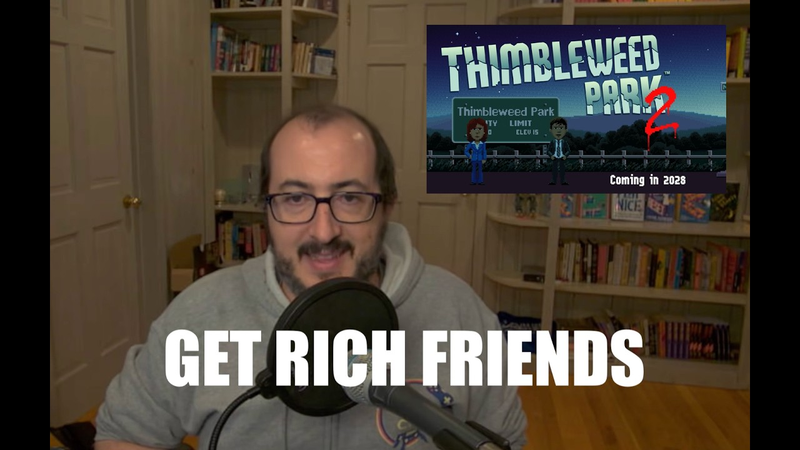
One Way To Fund Your Game? Find A Rich Guy
The video game industry faces significant challenges regarding project financing, particularly for developers seeking to avoid the restrictive terms often imposed by traditional publishers.
- Ron Gilbert’s studio, Terrible Toybox, secured funding for 'Thimbleweed Park 2' from a private wealthy investor after rejecting traditional publisher terms that required unfavorable revenue splits and performance-based payouts.
- The new project is budgeted for a two-year development cycle with a target release in early 2028, aiming to pay staff competitive market rates rather than the discounted wages used during the development of the first game.
- The original 'Thimbleweed Park' (2017) was financed via a 2014 Kickstarter campaign that raised over $620,000 and eventually sold more than 300,000 copies.
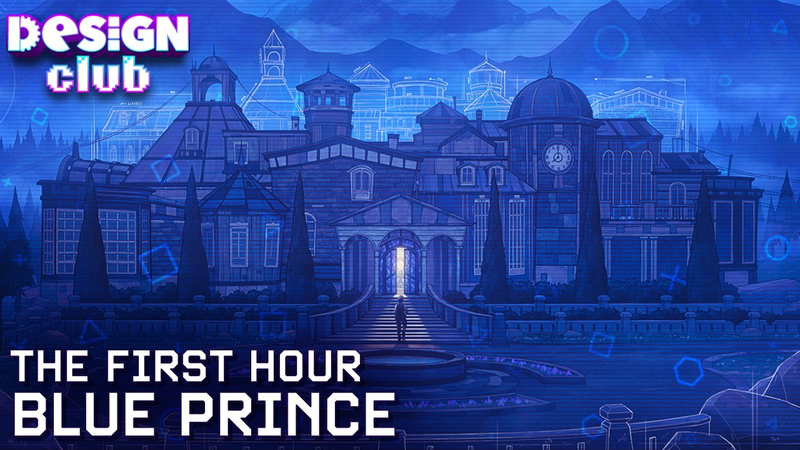
The First Hour: Blue Prince | Design Club
Blue Prince functions as a sophisticated puzzle-roguelike that challenges players to navigate a procedurally generated manor through a rigorous system of resource management and spatial logic.
- Blue Prince is a strategy-heavy puzzle game where players navigate a 46-room manor, managing a limited resource pool of 50 footsteps per run to uncover specific objectives.
- The game features a drafting mechanic where players click on doors to generate three potential floor plan options, though certain items allow for rerolls if the initial choices are unfavorable.
- Resource management is central to gameplay, requiring players to balance the acquisition of items like keys, gems, and coins against the cost of room transitions and specific environmental interactions.
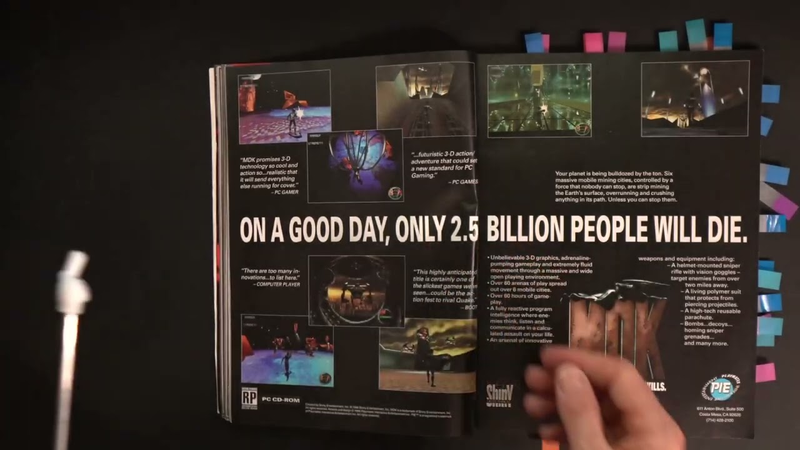
Review of PC Gamer March 1997
The mid-1990s PC gaming landscape was defined by a pivotal transition toward strategy, simulation, and immersive 3D experiences, signaling a departure from traditional point-and-click adventure games.
- In the March 1997 PC Gamer Awards, Civilization II was named Game of the Year, beating out high-profile titles like Quake and Tomb Raider.
- Looking Glass Studios, despite their focus on immersive sims like System Shock, produced a golf simulator during this period to generate revenue and offset the high costs of their innovative projects.
- PC gaming in 1997 was characterized by a heavy reliance on expensive, specialized peripherals like flight sticks and steering wheels, distinguishing the platform from the console market.
Let's look at PC Games Magazine Issue from June 1996
The PC gaming landscape of 1996 established a distinct cultural and design identity that continues to underpin the modern Steam ecosystem.
- PC gaming success is driven by a consistent preference for depth, narrative complexity, and mechanical agency, which distinguishes the platform from console-centric design philosophies.
- Sports titles were a dominant market force in 1996, accounting for nearly 30% of total PC game sales.
- The mid-90s PC market was defined by the dominance of strategy, simulation, and mystery-based narrative genres, which remain foundational pillars of the modern Steam ecosystem.
We Need To Talk About My Game "Twisted Tower" (5 Years Later)
After five years of development, the indie game Twisted Tower has reached a feature-complete state and is currently undergoing beta testing.
- After five years of development, Thomas Brush’s narrative-driven indie title Twisted Tower is currently feature-complete and undergoing beta testing.
- The project transitioned from initial publisher support by 3D Realms to self-funding through community contributions and educational course sales due to extended development timelines reaching into 2026.
- The developer employs a tiered beta testing strategy that scales from a small initial group to approximately 1,000 users to validate narrative resonance and game mechanics.
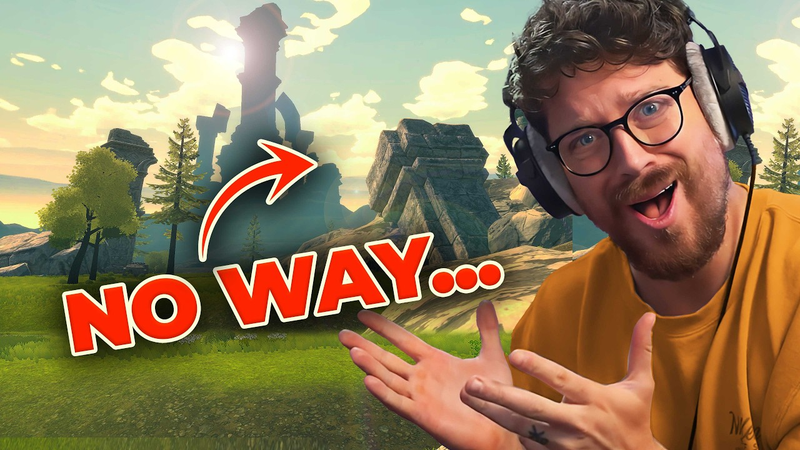
Making Beautiful 3D Games Is Easier Than You Think
Creating a high-quality, stylized 3D adventure game—modeled after the aesthetic of titles like The Legend of Zelda: Breath of the Wild—is achievable for independent developers using free assets and a disciplined approach to visual design.
- Achieving a stylized, Breath of the Wild-inspired aesthetic relies on a limited terrain palette of three to four textures, using hue shifting and saturation adjustments to ensure all environmental elements, such as grass, dirt, and stone, remain color-coordinated.
- To avoid visual repetition in terrain, use noise spreads for grass billboards and maintain a consistent tiling scale across all terrain layers to create a unified look.
- High-fidelity assets should be placed strategically to anchor the scene, as the human brain interprets the presence of a few high-resolution objects as an indicator of overall high-quality visual fidelity.
How To Make "Zelda: Breath Of The Wild" Workshop: Day 2 (Part 2)
Creating a high-fidelity, open-world environment reminiscent of The Legend of Zelda: Breath of the Wild requires a disciplined approach to asset integration, terrain sculpting, and atmospheric post-processing.
- Effective terrain sculpting relies on using specialized brushes for large-scale mountain creation rather than manual, single-brush detailing.
- Fog is a critical tool for managing visual depth and environmental cohesion, helping to blend distant terrain and improve the overall aesthetic of the game world.
- Manual painting of environmental details like snow and grass requires balancing artistic intuition with logical placement based on mountain topography to avoid a 'mappy' or unnatural appearance.
How To Make "Zelda: Breath Of The Wild" Workshop: Day 1
Replicating the distinct visual aesthetic of The Legend of Zelda: Breath of the Wild within the Unity engine requires a disciplined approach to asset management and color theory.
- Establish a consistent color scheme for environments and biomes early in the development process to create a cohesive visual foundation, even if deviations occur later.
- Implement Level of Detail (LOD) groups for all exterior assets to manage poly counts and texture sizes, preventing performance issues when rendering large-scale environments.
- Maintain strict folder organization for all imported assets to ensure project scalability and prevent workflow bottlenecks during development.

Want To Make 3D Games? It's Easier Than You Think!
This presentation outlines a streamlined, cost-effective workflow for achieving a stylized, Firewatch-inspired aesthetic in 3D game development using Unity.
- Achieve a stylized, Firewatch-inspired aesthetic by removing specular information from materials and applying image-editing filters like oil paint and smart blurs to textures.
- Maintain consistent environmental scale by using a primitive cube—specifically half the height of the character controller—as a universal reference point for all assets.
- Streamline iteration by converting all external assets into editable formats like PSD and Blender files, eliminating the need for repetitive re-exporting.
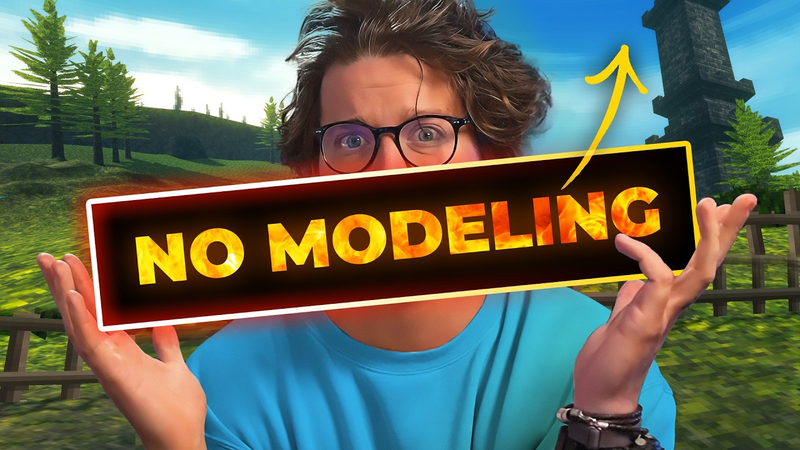
Making A 3D Game Is Way Easier Than You Think (Retro 3d Game)
The process of developing a retro-style 3D game, specifically one capturing the aesthetic of late-1990s titles like The Legend of Zelda: Ocarina of Time, can be achieved efficiently without advanced 3D modeling skills.
- Retro-style 3D games can be developed without traditional modeling skills by utilizing free assets, basic geometric primitives in Unity, and simple texture mapping.
- Visual cohesion in retro games is achieved by manually color-matching assets—such as grass, dirt, and water—to a unified palette and using a consistent skybox.
- To achieve a retro aesthetic, developers can apply post-processing effects like posterization to reduce color depth and use pixelation filters on textures to mimic early 2000s graphics.