Magic: The Gathering
Game
Documents about Magic: The Gathering

Hasbro Quarterly Report: Q3 2020
Hasbro’s financial performance for the third quarter of 2020 reflects a period of significant structural transformation driven by the $4.59 billion acquisition of Entertainment One (eOne).
- Hasbro’s net revenues grew 13% to $1.78 billion in Q3 2020, driven by the $4.59 billion acquisition of Entertainment One (eOne).
- The eOne acquisition significantly impacted the balance sheet, resulting in $3.15 billion in goodwill and increasing long-term debt to $5.18 billion.
- Net earnings for the first nine months of 2020 fell to $117.3 million due to high acquisition-related costs, amortization, and restructuring charges.
25 Years of Building Community at Wizards of the Coast
Wizards of the Coast leverages 25 years of experience in community-driven game design to modernize its influencer relations strategy, particularly following the launch of the digital title Magic: The Gathering Arena.
- Treating influencers as long-term partners rather than transactional marketing channels is the core strategy for driving player engagement and retention in digital gaming.
- Wizards of the Coast achieved a 477 percent increase in unique streamers during the first year of the Magic: The Gathering Arena open beta by diversifying their creator pool.
- Micro-influencers are prioritized alongside top-tier streamers because they consistently deliver more sincere content and foster higher levels of community involvement.
Learning to Play Magic - Part 5 - The Psychology of Magic: The Gathering - Extra Credits
Mastering Magic: The Gathering requires a shift in perspective from merely managing one’s own deck to actively engaging with the opponent’s decision-making process.
- High-level Magic: The Gathering play requires shifting focus from internal board management to actively manipulating the opponent’s decision-making process.
- Players can exploit hidden information by feigning threats, such as holding onto unnecessary land cards to simulate possession of counterspells or combat tricks.
- Strategic management of mana, specifically choosing which lands to tap when casting spells, can signal potential threats and force opponents into sub-optimal tactical choices.
Learning to Play Magic - Part 4 - Building a Deck - Extra Credits
Effective deck building in Magic: The Gathering serves as a creative extension of a player’s personality and strategic preferences.
- Maintain a 60-card deck limit to maximize the probability of drawing essential cards.
- Allocate approximately 40% of your deck to land cards to ensure a consistent mana base.
- Include 15 to 20 spells with a mana cost of three or less to maintain momentum during the early game.
Learning to Play Magic - Part 3 - The Stack - Extra Credits
The stack serves as the fundamental mechanic governing the order of operations in Magic: The Gathering.
- The stack operates on a last-in, first-out (LIFO) system, meaning the most recently played spell or ability is the first to resolve.
- Players can neutralize threats by responding to an opponent's action with a spell that resolves first, such as using a removal spell to invalidate a creature buff before it takes effect.
- The stack allows for resource optimization, such as sacrificing a creature to pay for an ability cost in response to an opponent's removal spell, ensuring the value is captured before the creature leaves play.
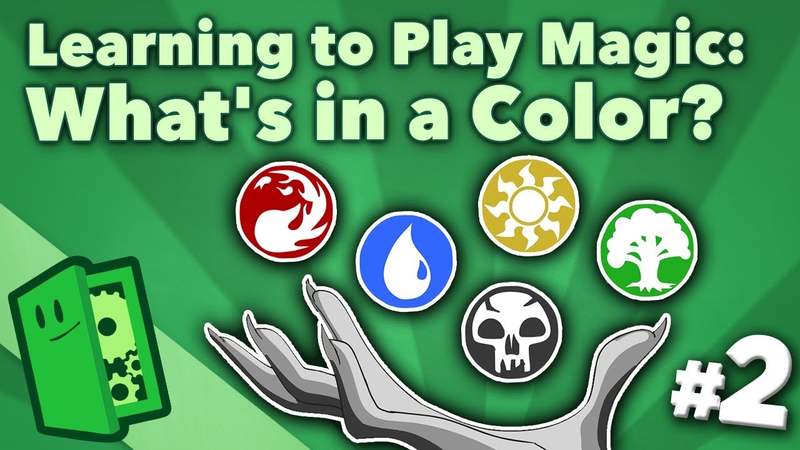
Learning to Play Magic - Part 2 - What's in a Color? - Extra Credits
The core philosophy of Magic: The Gathering is built upon a color-coded system that represents distinct psychological and elemental archetypes rather than a binary conflict between good and evil.
- Magic: The Gathering utilizes a five-color system—White, Blue, Green, Red, and Black—that defines distinct psychological and elemental archetypes rather than a binary moral conflict.
- White focuses on law, order, and protection, utilizing defensive strategies and large armies to overwhelm opponents.
- Blue centers on reason and intellect, employing control-based tactics such as counter-spells and manipulation to disrupt enemy plans.
Learning to Play Magic - Part 1 - Core Concepts - Extra Credits
This instructional overview outlines the fundamental mechanics of the collectible card game Magic: The Gathering, focusing on turn structure, resource management, and combat dynamics.
- The primary objective of Magic: The Gathering is to reduce an opponent's life total from 20 to zero using spells and creatures.
- Players must manage lands, which function as the essential resource known as mana, to cast cards and execute strategies.
- The game follows a structured seven-phase turn sequence: untap, upkeep, draw, first main phase, attack phase, second main phase, and end step.
The History of Roguelike Deckbuilders - From Playing Cards to CCGs and Beyond - Extra Credits
The evolution of card-based gaming traces a path from traditional playing cards to the modern roguelike deckbuilder genre.
- Slay the Spire served as the critical inflection point for the roguelike deckbuilder genre, refining procedural dungeon exploration and strategic card progression into a commercially successful and highly accessible format.
- The 2014 title Dream Quest was the first to successfully integrate roguelike procedural generation with deck-building mechanics.
- The 2008 release of Dominion revolutionized card gaming by shifting deck-building from a pre-game meta activity into a core, real-time gameplay loop.
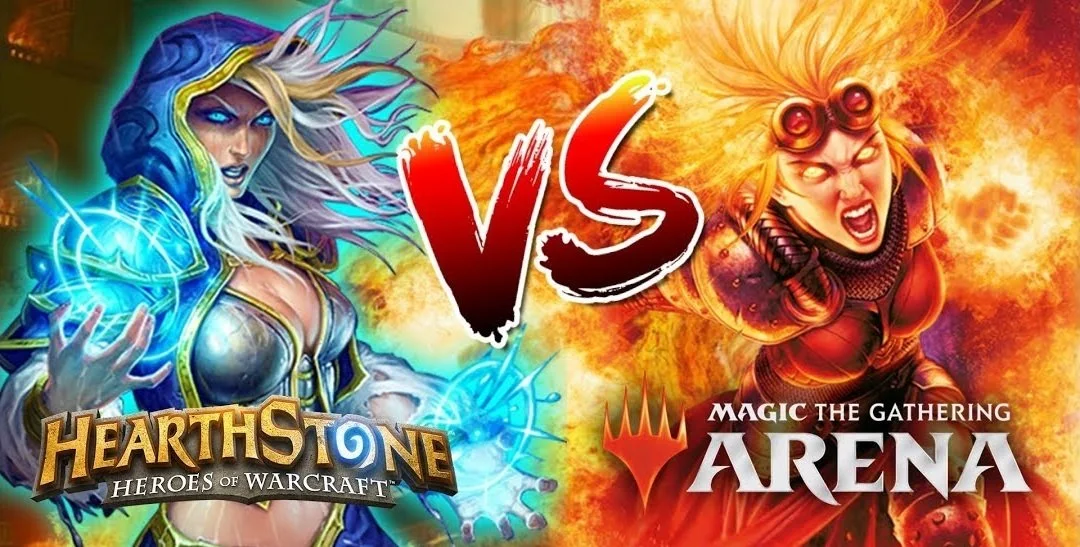
2019 Predictions: The Magical Storm Gathers Around Card Battlers
The mobile card battler market experienced a period of stagnation in 2018, characterized by a 46% year-over-year decline in downloads and a 4% decrease in revenue.
- Hearthstone currently dominates the mobile card battler market with a 35% share of downloads and a 46% share of revenue.
- Magic: The Gathering (MTG) Arena is positioned to challenge Hearthstone's market leadership in 2019, supported by a $10 million eSports prize pool that is 2.5 times larger than Hearthstone's.
- Hearthstone's daily Twitch viewership has declined by 50% since Q1 2017, falling from approximately 50,000 to 25,000 viewers due to infrequent content updates and meta-game stagnation.
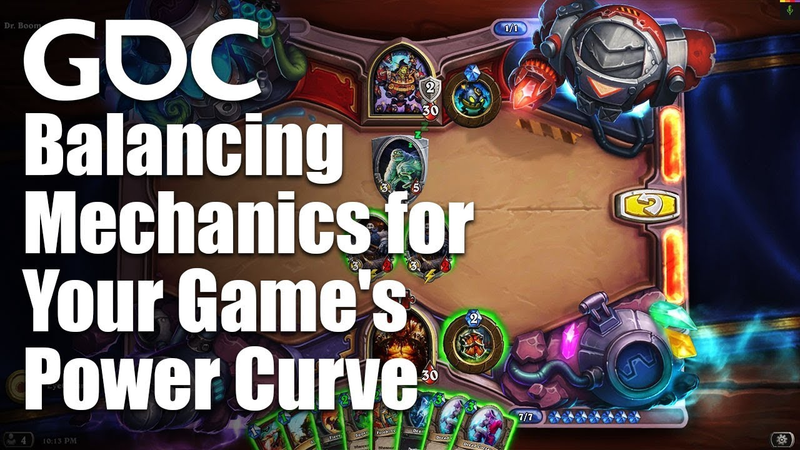
Board Game Design Day: Balancing Mechanics for Your Card Game's Unique Power Curve
Effective card game design relies on the strategic calibration of power curves, which are inherently non-linear due to the trade-offs between card cost, flexibility, and the risk of game termination.
- The power of a card is defined by its ratio of utility to cost, where higher-cost cards must provide significantly greater impact to justify the lack of flexibility and the difficulty of playing them late in a game.
- Games with automatic resource generation, like Hearthstone, require lower power ceilings for high-cost cards because players are guaranteed to reach those mana thresholds, whereas games like Magic: The Gathering must offer massive power payoffs to incentivize players to reach higher costs.
- Granularity in resource systems—such as Magic's ability to use color-specific mana or decimal-like cost adjustments—provides designers with more balancing 'knobs' compared to systems with rigid, chunky cost structures like Pokémon.

Overwatch League Finals Report
The Overwatch League (OWL) Grand Finals at the Barclays Center serve as a primary case study for the current state of the esports industry, demonstrating that high-budget, publisher-led competitive gaming can successfully cultivate a dedicated fanbase and diversify revenue streams.
- The esports sector is seeing significant capital investment, highlighted by Meg Whitman’s $100 million infusion into Immortals and Douyu’s pursuit of a $600 million to $700 million US listing.
- Publisher-led esports events like the Overwatch League Grand Finals demonstrate that high-budget production can successfully drive fan engagement, though traditional sports marketing formulas often fail to resonate with gaming audiences.
- Hasbro achieved a return to profitability by leveraging digital growth in Magic: The Gathering and Dungeons & Dragons, while Mattel faced revenue declines and workforce reductions.
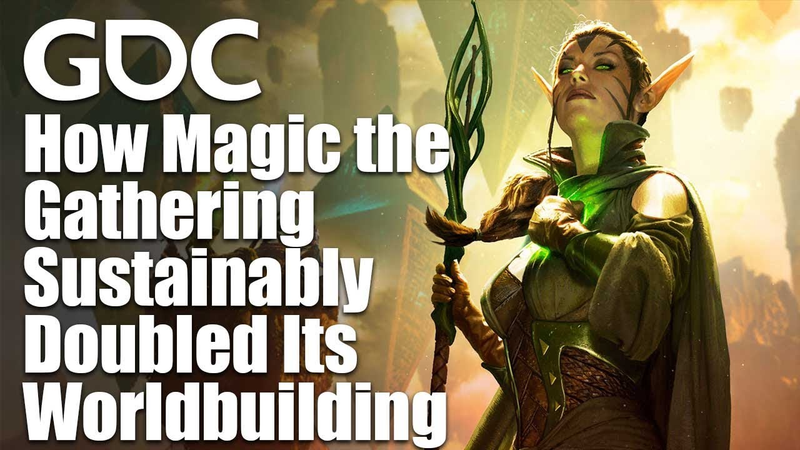
Achieving Two Worlds, Every Year: How Magic the Gathering Sustainably Doubled Its Worldbuilding
To sustain a release cadence of two new worlds annually, Magic: The Gathering has fundamentally restructured its creative operations by integrating game design and worldbuilding into a singular, collaborative pipeline.
- Magic: The Gathering doubled its release cadence to two new worlds annually by integrating game design and worldbuilding into a single, collaborative pipeline rather than using siloed handoffs.
- The production process relies on a concentrated three-week 'concept push' to finalize a comprehensive world guide that serves as the blueprint for all subsequent creative and mechanical development.
- To ensure aesthetic consistency across a global, outsourced illustration network, the team uses the finalized world guide to provide rigid narrative and visual boundaries for hundreds of individual card assets.
Companies behind it

As the documents state it.