Collectible Card Game
Documents

TWIG #309: EA’s AI problems, Monopoly GO’s decline, and Pokémon Pocket’s success
Electronic Arts is navigating a complex transition toward generative AI by isolating development initiatives from its core creative studios to mitigate internal friction. Despite possessing a sophisticated research division in SEED, the company faces criticism for appointing non-creative leadership to spearhead these efforts, raising questions about the integration of machine learning into long-term production pipelines. Simultaneously, the broader industry is experiencing a notable disconnect between critical acclaim and commercial reality, as evidenced by 2024 award nominations that favor niche titles like Balatro and Pokémon TCG Pocket over high-performing mobile blockbusters.
Financial activity across the sector remains robust, characterized by a shift toward lean development and strategic restructuring. A new Texas-based studio has successfully secured $5.5 million in seed funding for a co-op shooter, demonstrating the viability of small, veteran-led teams. On a larger scale, the industry is seeing significant capital movement, exemplified by Play Ventures closing a $140 million fund and Embracer Group divesting its mobile division, Easybrain, to Miniclip for $1.2 billion. This divestment has proven critical in stabilizing the company’s balance sheet by effectively eliminating its primary corporate debt.
Market performance in the mobile segment highlights the enduring power of established intellectual property. Pokémon TCG Pocket has generated over $100 million in revenue in less than three weeks, largely due to a highly effective monetization model that leverages the strength of the Pokémon brand to normalize loot box mechanics. Conversely, Scopely is pivoting its strategy for Monopoly GO! by deploying high-budget, celebrity-led marketing campaigns. This shift suggests that the title has reached a saturation point in traditional user acquisition, forcing a transition toward broad brand awareness to combat churn and re-engage lapsed players within the competitive North American market.
- Embracer Group has divested its mobile division, Easybrain, to Miniclip for $1.2 billion, a move that successfully eliminated the company's primary corporate debt.
- Pokémon TCG Pocket generated over $100 million in revenue within its first three weeks, driven by a monetization model that effectively utilizes the Pokémon brand to normalize loot box mechanics.
- Scopely is shifting Monopoly GO! toward high-budget, celebrity-led marketing campaigns to combat user churn and address market saturation in North America.
- Electronic Arts is isolating its generative AI development initiatives from core creative studios, a strategy currently facing internal criticism due to the appointment of non-creative leadership.
- Play Ventures has closed a new $140 million fund, signaling continued investor confidence in the sector despite broader industry restructuring.

Kress's Corner with Second Dinner's Matt Wyble, the creators of Marvel Snap
The success of Marvel Snap stems from an inside-out development philosophy that prioritizes polished, moment-to-moment gameplay before integrating meta-progression and monetization. While this approach fostered a strong core experience, the studio recognizes that the modern gaming landscape demands high-quality execution across all pillars—gameplay, progression, and live-ops—from the moment of launch. Consequently, the studio is shifting toward more robust, proactive live-service planning to avoid the operational strain of building systems post-release.
Supported by a $100 million funding round, the studio is scaling its operations to facilitate long-term growth for Marvel Snap, including expansion into the Chinese market and enhanced PC support, while simultaneously developing new, original intellectual property. This growth strategy relies on maintaining a sustainable, multi-hit studio model that balances disciplined, iterative development with the pursuit of projects that ignite team passion. To achieve these multi-platform ambitions, the organization is actively recruiting top-tier talent and leveraging artificial intelligence as a force multiplier.
Artificial intelligence is viewed not as a cost-cutting mechanism, but as a productivity-enhancing tool that functions like a mech suit for developers. By automating tasks such as code review, balance testing, and data analysis, AI allows the team to meet increasing content demands while personalizing player experiences. This technical agility is supported by a fully remote operational model, which remains a cornerstone of the studio’s recruitment strategy. By organizing the workforce into smaller, project-focused pods and maintaining a high-trust culture through biannual in-person summits, the studio successfully navigates the complexities of remote collaboration, ensuring cohesion and operational efficiency despite the lack of a physical office.
- Second Dinner is scaling operations following a $100 million funding round to support the long-term growth of Marvel Snap, including expansion into the Chinese market and enhanced PC support.
- The studio is shifting its development strategy from a core-gameplay-first approach to a more robust, proactive live-service model to avoid post-release operational strain.
- Artificial intelligence is being deployed as a productivity multiplier for tasks like code review, balance testing, and data analysis rather than as a cost-cutting tool.
- The studio is diversifying its portfolio by simultaneously developing new, original intellectual property alongside its ongoing support for Marvel Snap.
- Operational efficiency is maintained through a fully remote model that utilizes small, project-focused pods and biannual in-person summits to foster team cohesion.
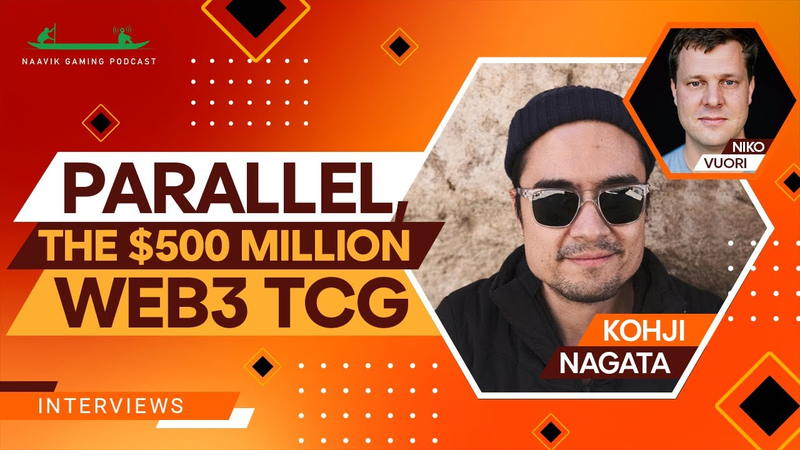
Parallel, the $500 Million Web3 TCG
Parallel represents a significant evolution in the trading card game genre, securing a $500 million valuation through a $50 million funding round. By moving away from traditional fantasy tropes in favor of a high-fidelity sci-fi aesthetic, the project aims to modernize the TCG experience for a sophisticated audience. The core gameplay distinguishes itself through a unique banking system that allows cards to function as energy, emphasizing strategic bluffing and decision-making over simple resource management. This design philosophy has successfully attracted professional players from established titles like Hearthstone, validating the game’s competitive depth.
The integration of Web3 technology follows a gradual, user-centric approach that prioritizes gameplay quality over blockchain mechanics. Digital ownership is facilitated through NFT-based assets and the PRIME token, while a replication system enables players to earn and mint new cards through active participation. This model effectively transforms the player base into the primary engine for asset distribution. To ensure long-term sustainability, the studio employs a hybrid revenue strategy, combining traditional card pack sales and cosmetic microtransactions with a 10% royalty fee on secondary market transactions.
Looking toward future expansion, the studio is leveraging its initial capital to front-load 3D asset development, creating a foundation for potential integration into AR, VR, and spin-off titles like Colony. Distribution efforts are equally ambitious, utilizing a wide-net strategy that includes major platforms like Steam and the Epic Games Store alongside proprietary channels. By balancing free-to-play accessibility with advanced digital ownership features and introducing innovative modes such as 3v3 team-based play, the project seeks to bridge the gap between traditional gaming enthusiasts and the emerging Web3 ecosystem.
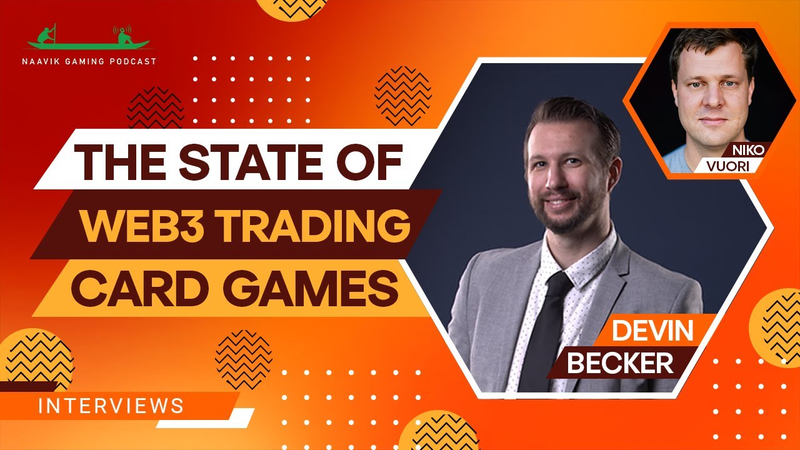
The State of Web3 Trading Card Games
Web3 trading card games represent a strategic evolution of digital collectibility, leveraging blockchain technology to formalize rarity and secondary market dynamics. While the sector has secured substantial venture capital and attracted industry veterans, it remains significantly smaller than the established Web2 mobile market, where titles like Marvel Snap command vastly superior monthly revenues. The industry is currently transitioning away from the speculative, bot-driven play-to-earn models that characterized its inception toward a more sustainable focus on polished gameplay, live operations, and genuine player engagement.
Despite the advantage of shorter development cycles, these projects face systemic challenges in balancing digital asset economies with core game design. Developers frequently struggle to adjust card mechanics without alienating players who treat their assets as financial investments. Furthermore, data transparency remains elusive, as blockchain metrics are often distorted by non-gameplay contract interactions. Consequently, even leading titles like Gods Unchained, Sky Weaver, and Parallel maintain relatively modest concurrent user bases, typically numbering in the low tens of thousands.
Long-term viability is further complicated by a fragmented regulatory environment and restrictive platform policies. Developers must navigate complex legal scrutiny regarding gambling and securities, as evidenced by ESRB ratings that classify certain mechanics as high-risk. While some platforms have created exceptions for blockchain integration, the industry is increasingly shifting toward a compliance-focused approach. Ultimately, the reliance on original intellectual property in a market historically dominated by established franchises creates a challenging landscape, leading to a cautious outlook for the sustainability of many current Web3 projects as they attempt to prioritize professional development over purely blockchain-native mechanics.
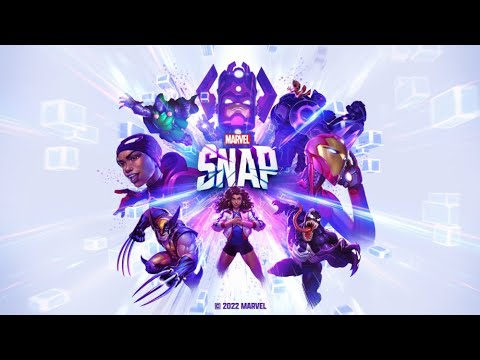
Guest Host Trio Debates Marvel Snap
Marvel Snap represents a significant evolution in the mobile collectible card game genre, successfully translating high-fidelity design principles into a mobile-first experience. By prioritizing short, three-to-four-minute sessions and introducing the innovative snap betting mechanic, the game creates a high-tension, strategic environment that mirrors the risk-reward dynamics of poker. Despite achieving 12 million downloads within two months of its global launch, the title faces a persistent tension between its polished, design-led gameplay and a monetization strategy that many consider overly restrictive.
The primary challenge to the game’s long-term financial scaling lies in its conservative approach to revenue. While the monthly battle pass serves as a highly effective monetization anchor with an average daily monetization cap of $3.66, other revenue streams are hampered by artificial spending caps on credits and gold. These limitations, likely rooted in a development philosophy that prioritizes player experience over aggressive monetization, suppress lifetime value and frustrate users seeking to accelerate their collection progress. Furthermore, the reliance on niche comic book aesthetics rather than broader Marvel Cinematic Universe iconography may be unnecessarily inflating customer acquisition costs and limiting the game's mass-market appeal.
To achieve sustainable growth, the game must evolve beyond its current horizontal progression model. Analysts suggest that implementing a drafting mode to create a high-engagement money pit, alongside more flexible currency systems for the rotating card shop, would provide the necessary depth to compete with industry leaders like Clash Royale. While the current creative and monetization choices present hurdles, the game’s high production value and strong short-term retention suggest a robust foundation. Ultimately, the title is positioned as a genre-leading success, provided the development team can refine its economic model to better balance player satisfaction with the demands of long-term profitability.
- Marvel Snap achieved 12 million downloads within two months of its global launch, establishing it as a significant evolution in the mobile collectible card game genre.
- The game’s core engagement relies on three-to-four-minute sessions and a 'snap' betting mechanic that introduces poker-style risk-reward dynamics.
- Monetization is currently constrained by artificial spending caps on credits and gold, resulting in a low average daily monetization cap of $3.66 per user.
- The development team’s prioritization of player experience over aggressive monetization has created a tension between high-quality gameplay and limited long-term financial scaling.
- Reliance on niche comic book aesthetics rather than broader Marvel Cinematic Universe iconography may be unnecessarily inflating customer acquisition costs.