Card Battler reports and market data
37 game industry reports, presentations and talks about card battler from writers such as PocketGamer.biz, Extra Credits and Game Developers Conference, newest from 2026. Every document has a summary and key insights with the page they come from, and 106 charts and tables are extracted as data.
Key figures
The U.S. has become a critical growth engine for card battlers, capturing 27 percent of the revenue market share and seeing a 53 percent increase in revenue per download.
Sensor Tower, 2021 · State of Card Battler Mobile Games Report 2021, p. 10
Card-battlers are a high-growth segment of mid-core strategy, accounting for 34% of total strategy revenue and experiencing a 17% revenue increase in Q1 2021.
Sensor Tower, 2021 · The State of Card Battler Mobile Games, p. 7
The United States has become a critical growth market for card battlers, accounting for 27% of global player spending in the first half of 2021.
Sensor Tower · The State of Card Battler Mobile Games 2021: An Analysis of the Card Battler Sub-Genre, p. 10
Documents
Gamescom reaction, Clash Royale drama, Rovio's studio closure, Google's AI hypeman and more
The mobile games industry is currently experiencing a significant shift in market dominance, as evidenced by the recent Gamescom event in Cologne.
- Supercell’s internal review of Clash Royale revealed that aggressive changes, such as removing the season shop, caused significant community backlash due to poor communication and lack of transparency.
- Rovio is closing its Copenhagen studio and cancelling the hybrid card-action game Sonic Blitz, impacting approximately 20 employees.
- Gamescom 2024 was dominated by Chinese publishers like Tencent, Hoyoverse, and NetEase, who are successfully launching cross-platform titles on mobile, PC, and console simultaneously, while Western studios increasingly lag in mobile integration.

Is This New Marvel Game the Next Big Mobile Hit?
Marvel Mystic Mayhem, a recent action RPG release from NetEase, attempts to differentiate itself within the crowded mobile market by blending squad-based collection mechanics with real-time, card-driven combat on a hex grid.
- NetEase's Marvel Mystic Mayhem has experienced a rapid decline in download rankings shortly after launch, indicating poor market performance and a likely contraction in daily active users.
- The game's core design choices, specifically the limitation to a three-hero squad and the inclusion of an autoplay feature, undermine its tactical premise and fail to align with current industry trends toward deeper collection metas.
- The broader Marvel mobile gaming ecosystem is currently facing significant revenue and engagement attrition, impacting established titles like Marvel Snap and Marvel Strike Force.

Cyberpunk: Legends FIRST GAMEPLAY LOOK with Mike Pondsmith and James Portnow
Cyberpunk: Legends represents a strategic effort to translate the high-stakes, narrative-driven essence of the Cyberpunk tabletop RPG into an accessible, cooperative card game.
- Cyberpunk: Legends is a cooperative card game for one to four players that utilizes poker-inspired mechanics and restricted communication to emphasize team synergy over individual heroics.
- The game is developed through a partnership between Talsorian and CD Projekt Red to ensure strict adherence to established franchise lore and the master timeline.
- The design features a modular, scenario-based structure that supports non-linear storytelling and long-term character progression without the need for a game master.

State of Card Battler Mobile Games Report 2021
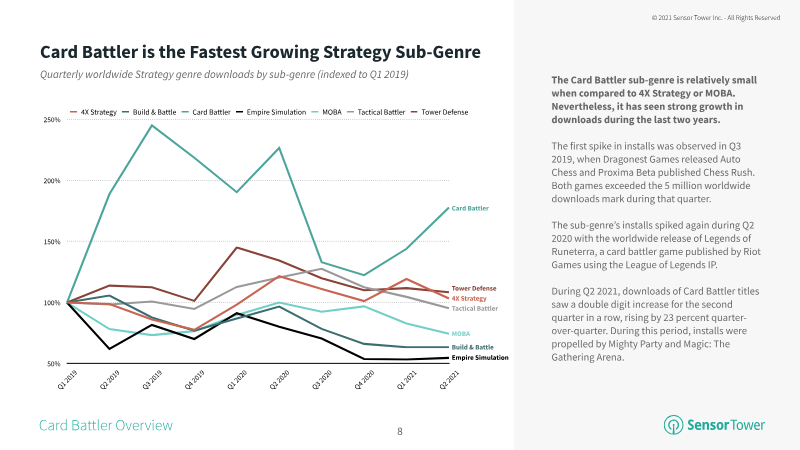
The mobile card-battler sub-genre represents a high-growth segment within the broader mid-core strategy market, characterized by strong monetization and increasing global diversification.
- Mid-core games drive 60 percent of total mobile player spending despite accounting for only 20 percent of worldwide installs.
- The U.S. has become a critical growth engine for card battlers, capturing 27 percent of the revenue market share and seeing a 53 percent increase in revenue per download.
- Mobile card battlers reached a new financial baseline of over $55 million in monthly player spending during the first half of 2021.
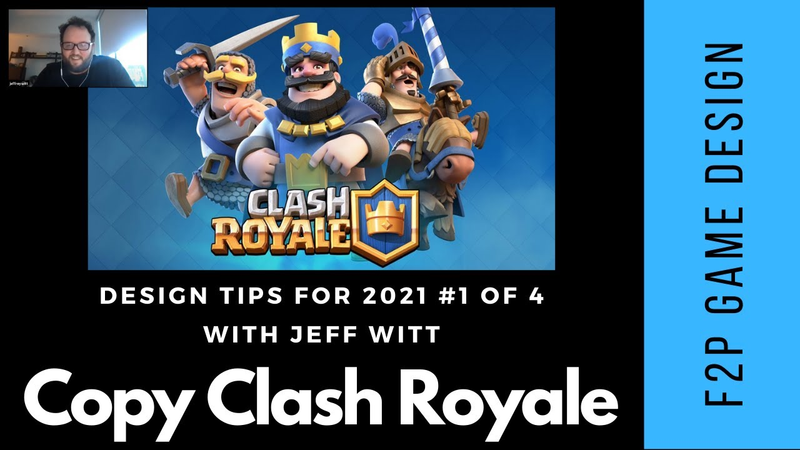
F2P Design Tips for 2021, Copy Clash Royale! (1 of 4) Ft. Jeff Witt
Game design strategy for 2021 emphasizes the importance of selectively adopting successful mechanics from established titles rather than replicating entire systems.
- Adopt the real-time, card-based combat mechanics of Clash Royale while decoupling them from its shallow card economy to avoid long-term engagement and monetization plateaus.
- Replace flat, steep stat-boost models with a granular progression system spanning 40 to 60 levels rather than the standard 12, ensuring more frequent rewards and consistent player achievement.
- Mitigate the frustration of long grinds by keeping players within 'striking distance' of the next milestone through more frequent, manageable progression rewards.

The State of Card Battler Mobile Games
The report examines the mobile card-battler sub-genre, focusing on global market dynamics and U.S. performance during the first half of 2021.
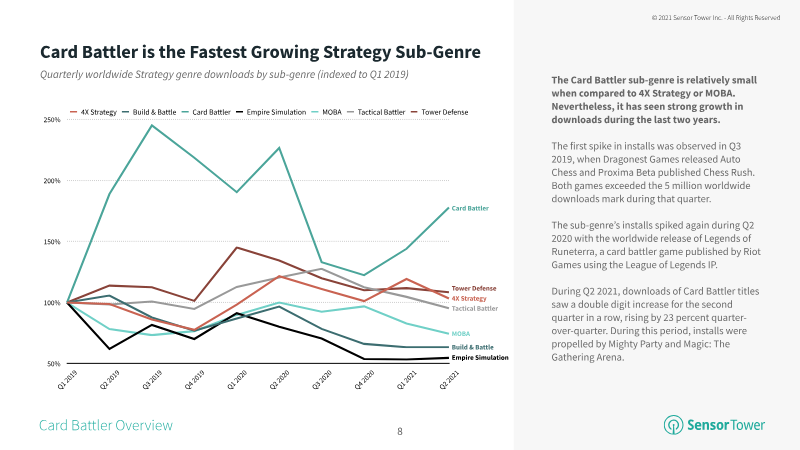
- Card-battlers are a high-growth segment of mid-core strategy, accounting for 34% of total strategy revenue and experiencing a 17% revenue increase in Q1 2021.
- The U.S. market is capturing a larger share of player spending, growing to 27% of global revenue in H1 2021, a six-percentage-point increase year-over-year.
- Card-battlers demonstrate strong monetization potential with a U.S. Revenue Per Download (RPD) of $19, which is double the global average and represents the fastest RPD growth (175%) among strategy sub-genres in H1 2021.
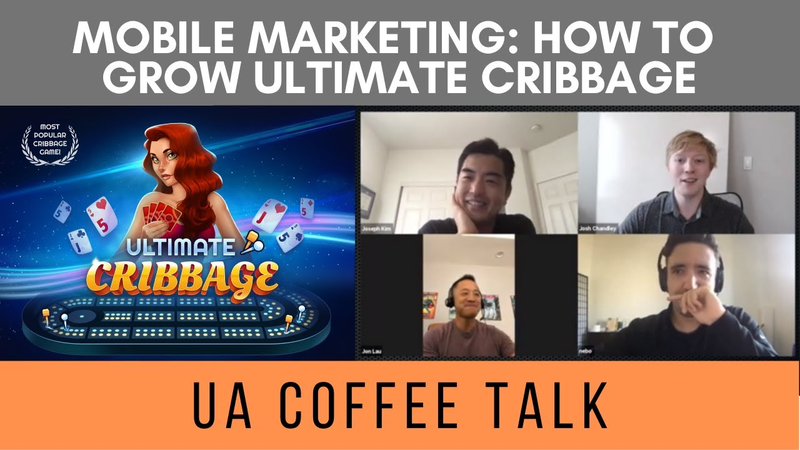
Mobile Marketing for Card Games | Growing WildCard Games Ultimate Cribbage (UA Coffee)
Scaling a niche mobile title like Ultimate Cribbage requires a disciplined approach to user acquisition that balances aggressive automated bidding with rigorous creative testing.
- Scale niche titles by using a tiered geographic strategy, starting in low-cost markets like India before expanding to higher-value regions like Canada and the United States.
- Target specific D90–D120 payback windows to ensure long-term profitability rather than focusing solely on short-term acquisition metrics.
- Diversify marketing channels beyond Facebook’s automated bidding to avoid unpredictable costs and fragmented data that obscure true player lifetime value.
Always Be Composing: The Flexible Music System of Plants vs. Zombies Heroes
The musical architecture of Plants vs. Zombies Heroes centers on a highly interactive, flexible system designed to mirror gameplay progression while maintaining distinct character identities.
- The music system maintains a cohesive sonic identity by utilizing a fixed tempo of 125 BPM and shared key centers across all hero-specific themes and combat sequences.
- Engineers achieved a complex, adaptive audio experience within a strict 60MB asset footprint by using a hybrid MIDI and wave-based framework managed through Wwise.
- The audio team optimized memory usage by developing a custom 24-instrument sample library and implementing shared reverb and strategic compression techniques.

Learning to Play Magic - Part 5 - The Psychology of Magic: The Gathering - Extra Credits
Mastering Magic: The Gathering requires a shift in perspective from merely managing one’s own deck to actively engaging with the opponent’s decision-making process.
- High-level Magic: The Gathering play requires shifting focus from internal board management to actively manipulating the opponent’s decision-making process.
- Players can exploit hidden information by feigning threats, such as holding onto unnecessary land cards to simulate possession of counterspells or combat tricks.
- Strategic management of mana, specifically choosing which lands to tap when casting spells, can signal potential threats and force opponents into sub-optimal tactical choices.
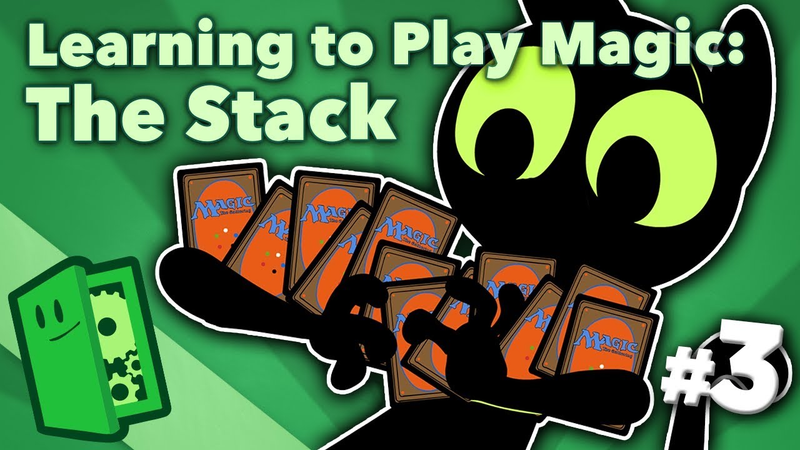
Learning to Play Magic - Part 3 - The Stack - Extra Credits
The stack serves as the fundamental mechanic governing the order of operations in Magic: The Gathering.
- The stack operates on a last-in, first-out (LIFO) system, meaning the most recently played spell or ability is the first to resolve.
- Players can neutralize threats by responding to an opponent's action with a spell that resolves first, such as using a removal spell to invalidate a creature buff before it takes effect.
- The stack allows for resource optimization, such as sacrificing a creature to pay for an ability cost in response to an opponent's removal spell, ensuring the value is captured before the creature leaves play.
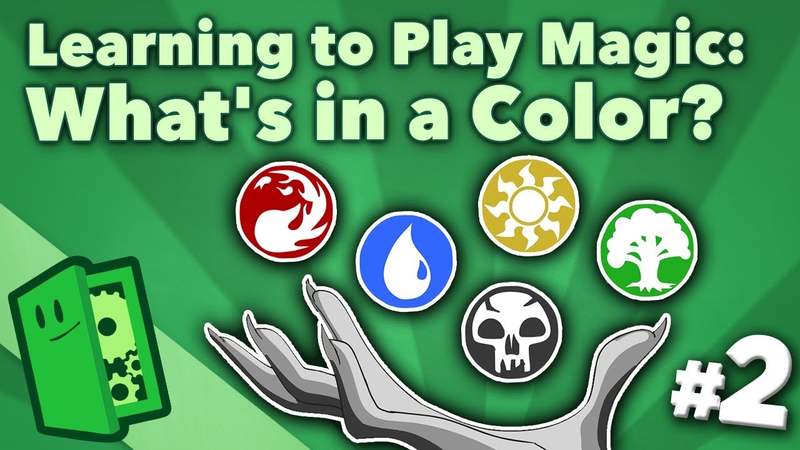
Learning to Play Magic - Part 2 - What's in a Color? - Extra Credits
The core philosophy of Magic: The Gathering is built upon a color-coded system that represents distinct psychological and elemental archetypes rather than a binary conflict between good and evil.
- Magic: The Gathering utilizes a five-color system—White, Blue, Green, Red, and Black—that defines distinct psychological and elemental archetypes rather than a binary moral conflict.
- White focuses on law, order, and protection, utilizing defensive strategies and large armies to overwhelm opponents.
- Blue centers on reason and intellect, employing control-based tactics such as counter-spells and manipulation to disrupt enemy plans.
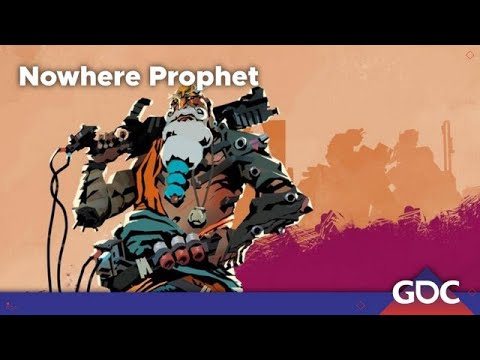
GDC plays Nowhere Prophet with Martin Nerurkar
Nowhere Prophet represents a strategic evolution in the deck-building genre, shifting the focus from competitive player-versus-player mechanics to a narrative-driven, single-player experience centered on convoy management.
- Developer Martin Nerurkar advises against solo development for large-scale projects, noting that the lack of internal checks and balances made the development of Nowhere Prophet an unsustainable and unhappy experience.
- The game's AI was optimized six to seven weeks prior to launch using a search algorithm that simulates multiple future move branches to evaluate and select the most effective strategic action.
- The visual aesthetic of Nowhere Prophet was heavily influenced by comic book art and graphic novels like Hellboy, specifically utilizing high-contrast black shadows and slim highlights rather than traditional 3D rendering.