Five Nights at Freddy's
Game
20 documents in the library are about Five Nights at Freddy's, from writers such as GameDiscoverCo, DiGRA and Stream Hatchet. Each has a summary and key insights with the page they come from.
Connections
Each row is a game or company named alongside Five Nights at Freddy's, each column a document, oldest first. A mark means that document names it. Select a row to see those documents.
Documents about Five Nights at Freddy's
Dead by Daylight’s Event Strategy on Streaming
Dead by Daylight's tenth anniversary in June 2026 makes it a useful case study in sustaining live streaming engagement for a live service game.
- The June 2026 launch of the Jason Voorhees chapter set a record for Dead by Daylight with 2.1 million hours watched in a single day, representing a 135% day-over-day increase in viewership.
- Event streams are the most effective driver of viewership, delivering an average 108% boost above baseline, followed by full chapter launches at 55% and Twitch Drops at 48%.
- Dead by Daylight maintains a high level of streaming engagement through a dense content calendar, with the game's baseline viewership holding steady between 0.5 and 0.7 million daily hours watched.
Deceptive Design in VR Games: Lies That Invite Surprise and Pleasure
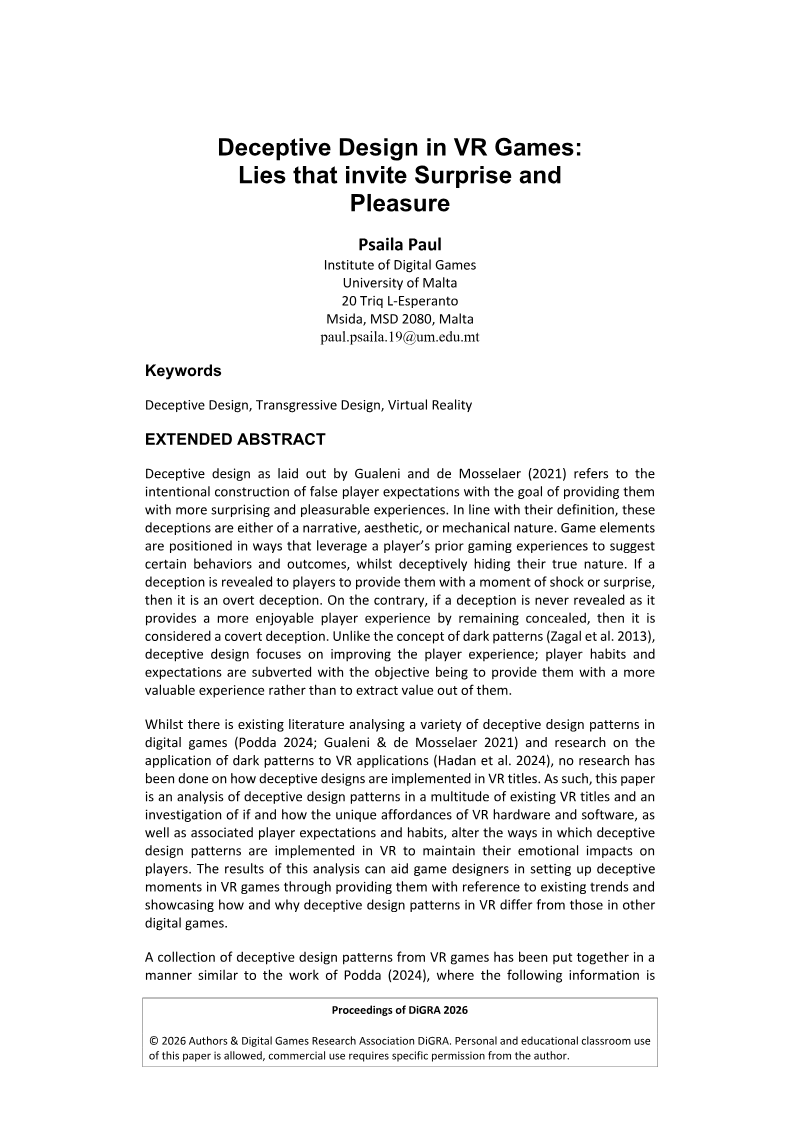
This paper examines deceptive design in virtual reality games, a topic it argues has received no dedicated research despite existing work on deceptive design in digital games and dark patterns in VR applications.
- Deceptive design, as defined by Gualeni and de Mosselaer (2021), is the intentional construction of false player expectations to create more surprising and pleasurable experiences, differing from dark patterns because it aims to improve rather than extract value from the player.
- Deceptions are classified as overt (revealed to produce shock or surprise) or covert (kept hidden because they make the experience more enjoyable), and as narrative, aesthetic, or mechanical in nature.
- The paper introduces a new 'Level of VR Dependence' categorisation: deceptions are either low (identical if moved to non-VR games), mixed (heavily altered), or high (break completely outside VR) in dependence on VR affordances.
How Old Are Your Players, and Does It Matter for Discovery?
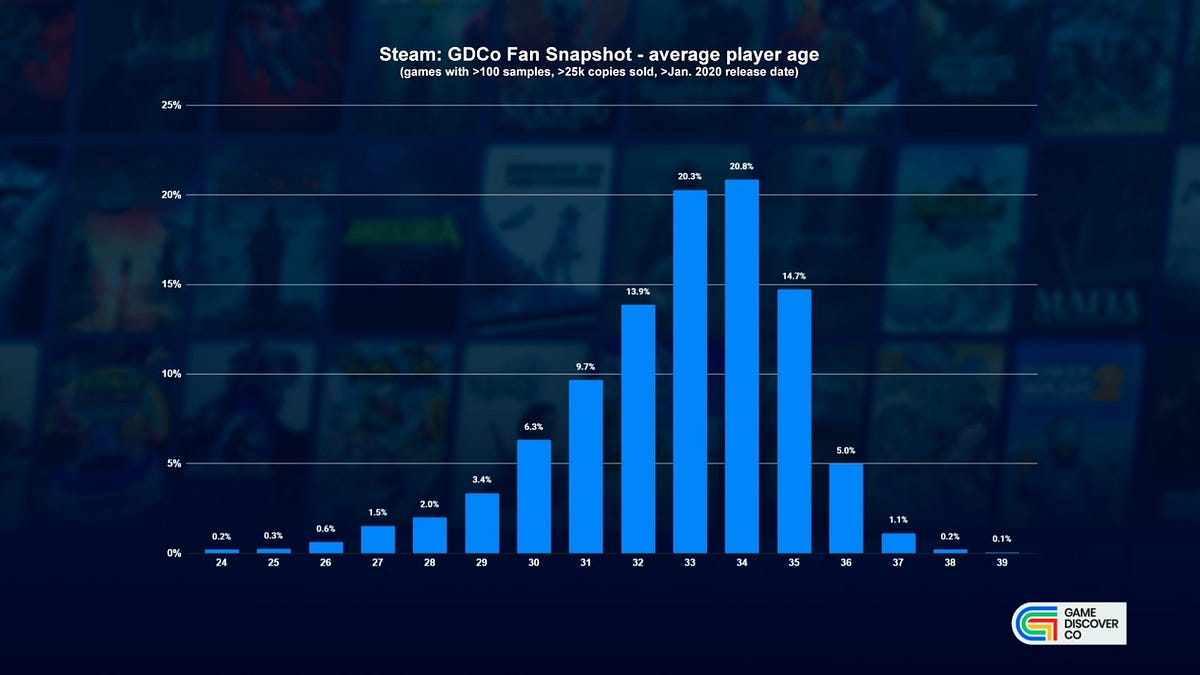
Average player age is an under-analyzed variable in Steam marketing, and GameDiscoverCo's Steam Fan Snapshot survey offers a first look at it.
- The median age of Steam players for games released after January 2020 with over 25,000 sales is 33, confirming that older players constitute the core demographic.
- Games with an average player age of 36 typically feature single-player and strategy tags, while those averaging 28 years old are five times more likely to feature multiplayer tags.
- High-average-age titles are predominantly single-player, strategy-heavy, or retro games like Titan Quest and Songs of Conquest that appeal to users with long PC histories.
How Poppy Playtime Made 'Free Game, Paid DLC' Work on PC
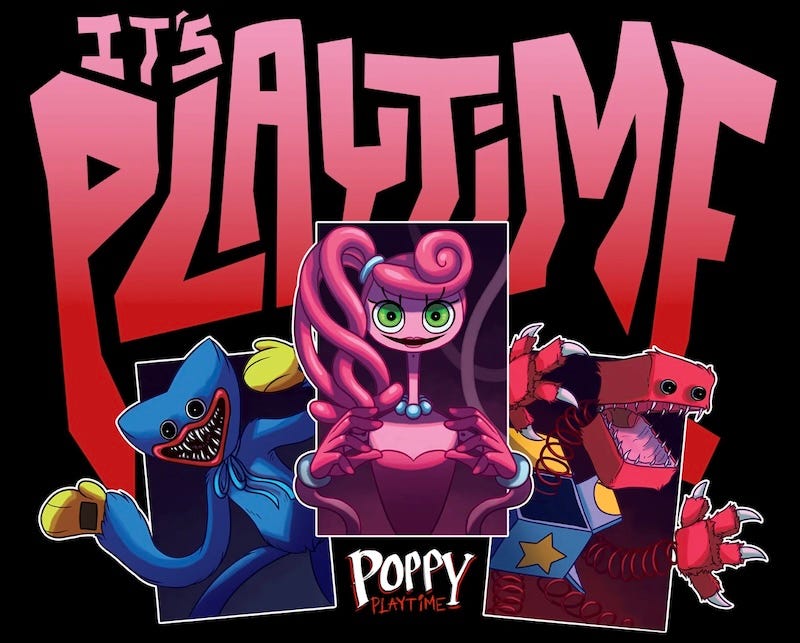
Poppy Playtime's "free base game, paid chapter DLC" model on PC turns out to be a major commercial success, even though its structure kept it off GameDiscoverCo's usual Steam charts.
- The Poppy Playtime franchise has generated nearly $100 million in total revenue, with over $30 million in gross sales from four DLC chapters on Steam alone.
- The model leverages a free-to-play base game that has secured over 2.7 million downloads on Steam and 360,000 on Epic since February 2026.
- Chapter 5, priced at $20, achieved 408,000 sales on Steam and 19,000 on Epic, demonstrating the commercial viability of premium episodic content.
ALDORA Leaderboard: Ubiquity Begets Success, January 2026
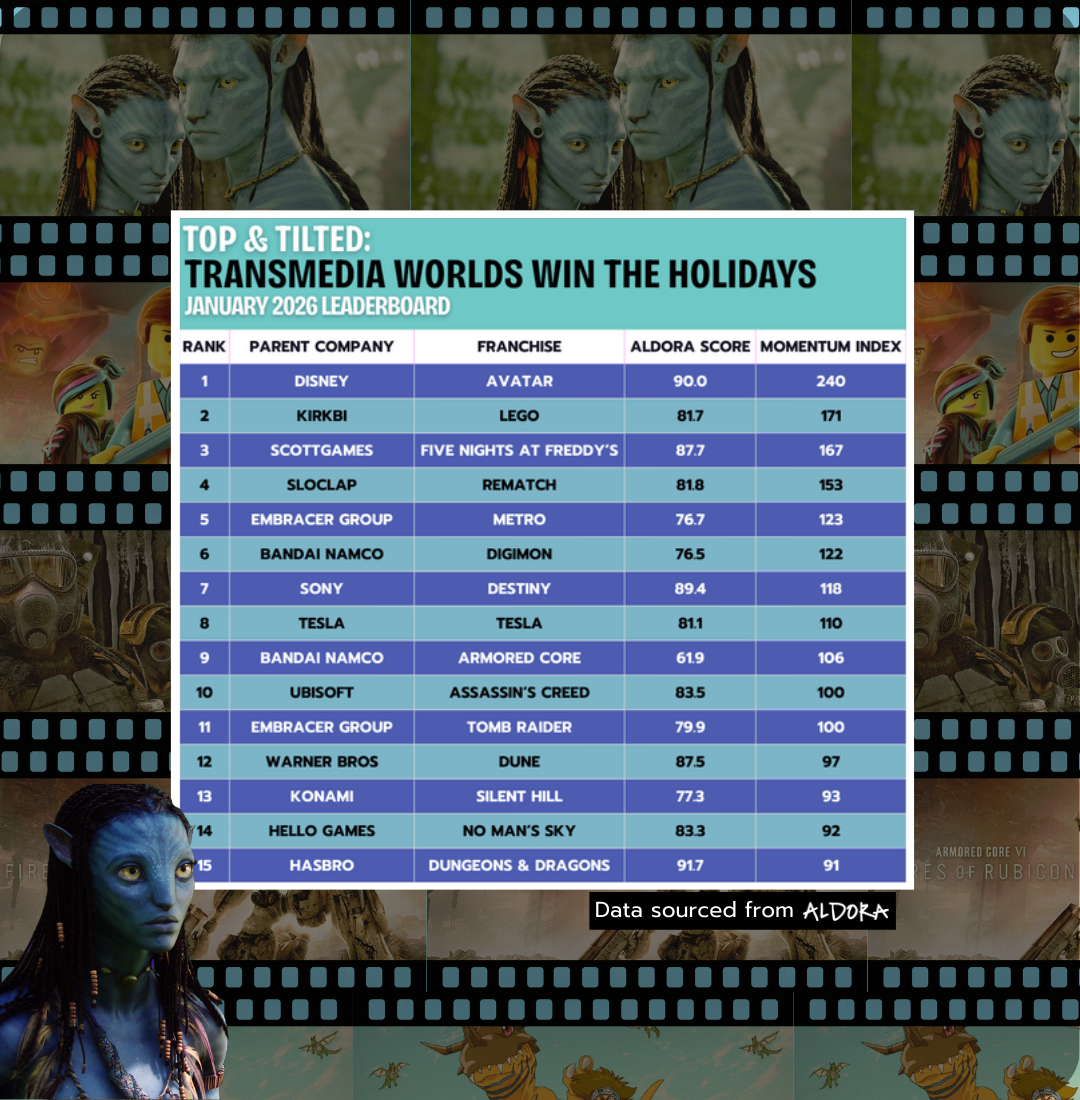
The January 2026 ALDORA Leaderboard identifies a structural shift in the entertainment industry, asserting that the most successful franchises are those that function as integrated, multi-channel ecosystems rather than isolated products.
- The most successful franchises in December 2025 were those that functioned as integrated ecosystems across film, gaming, merchandise, and social platforms, rather than relying on single-format content.
- Avatar led the January 2026 leaderboard with an ALDORA Score of 90 and a Momentum Index of 240, driven by its ability to accelerate engagement across gaming, video, social, and commerce.
- LEGO (81.7 score) and Five Nights at Freddy’s (87.7 score) secured the second and third positions by successfully orchestrating audience participation across diverse digital and physical touchpoints.
TWIG #361 WB Games’ Fate, CoD’s Apology Tour & the UA Financing Trap
The global gaming industry is currently navigating a period of intense structural realignment, characterized by aggressive media consolidation, shifting advertising paradigms, and evolving hardware strategies.
- Large-scale media consolidation, exemplified by potential sales of Warner Bros. Discovery and PIF interest in Electronic Arts, is treating gaming assets as secondary to broader streaming and sports ecosystems, threatening the stability of studios like Avalanche and TT Games.
- The mobile gaming user acquisition landscape is shifting as e-commerce brands increasingly outbid game studios for ad inventory, forcing developers to contend with higher costs and more complex financial leverage.
- Platforms like AppLovin are fundamentally altering mobile monetization by displacing rival game studios in ad space, which paradoxically helps developers by reducing player cannibalization while simultaneously driving up acquisition costs.
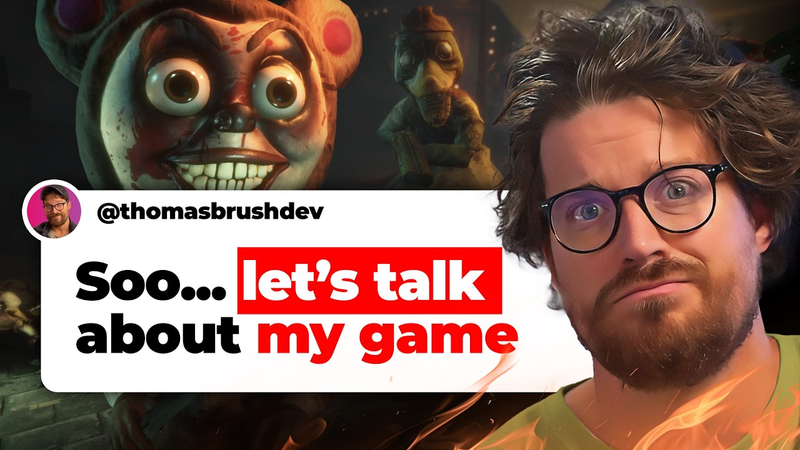
After 4 Years, We Need To Talk About Twisted Tower
The four-year development cycle of the horror title Twisted Tower serves as a case study in iterative refinement and the necessity of overcoming the sunk cost fallacy through strategic pivots.
- The four-year development cycle of Twisted Tower demonstrates that pivoting from a broad, self-directed vision to a focused, genre-aligned experience is essential for achieving commercial viability.
- Technical performance was significantly improved by replacing default real-time shadows with a minimal lighting setup, which simultaneously enhanced the game's horror aesthetic and ensured compatibility with hardware like the Steam Deck.
- Development shifted from melodic compositions to atonal, layered soundscapes to better manipulate player tension and improve atmospheric cohesion.
Make Your Indie Game Go Viral
Achieving viral success in the independent game market requires a strategic synthesis of high-concept design, psychological targeting, and data-driven marketing.
- Prioritize game concepts that mirror proven, high-performing media tropes—such as the narrative structure of popular TV shows—to ensure immediate market appeal and high potential for virality.
- Design games with a clear, linear narrative arc that introduces conflict at the start and resolves it at the end, as this structure significantly improves retention and content creator engagement.
- Optimize for YouTube marketing by incorporating distinct, recognizable character designs and vibrant color palettes, which increase both thumbnail click-through rates and overall game memorability.
Five Nights at Freddy’s on Live Streaming
The Five Nights at Freddy’s (FNAF) franchise maintains a robust presence on live-streaming platforms, driven by a highly engaged community that thrives on narrative mystery and fan speculation.
- The June 2025 release of 'Five Nights at Freddy’s: Secret of the Mimic' generated 3.8 million hours watched and a peak of 171,000 concurrent viewers during its debut week.
- The 'Five Nights at Freddy’s' (FNAF) franchise maintains a consistent baseline of approximately 800,000 monthly hours watched, with significant viewership spikes occurring only upon the release of new content.
- The 2023 FNAF film release triggered a 300% increase in franchise viewership, growing from 287,000 hours watched two weeks pre-release to a peak of 883,000 hours the week after.
Scary Business: Mascot Horror as Product and Reflection of Platformisation
"Scary Business" examines mascot horror, a subgenre of survival horror exemplified by Five Nights at Freddy's: Security Breach, Poppy Playtime, and Garten of Banban, as both a product and a reflection of digital platformisation.
- Mascot horror, exemplified by Five Nights at Freddy's: Security Breach, Poppy Playtime, and Garten of Banban, is framed as a postclassical survival horror subgenre defined by first-person perspectives and mysteries rooted in corporate wrongdoing.
- The genre was popularised through YouTube creator culture and extended through transmedia merchandising, and its themes are read as mirroring the precarity of online content creators and the dominance of capitalist realism.
- The authors argue mascot horror reproduces heteronormative gender stereotypes, citing Mommy Long Legs's emotionally unstable portrayal, gendered caregiver and protector roles, and the increasing sexualisation of Chica.
Press Start on Growth: Unlocking the Full Potential of the UK Video Games Industry
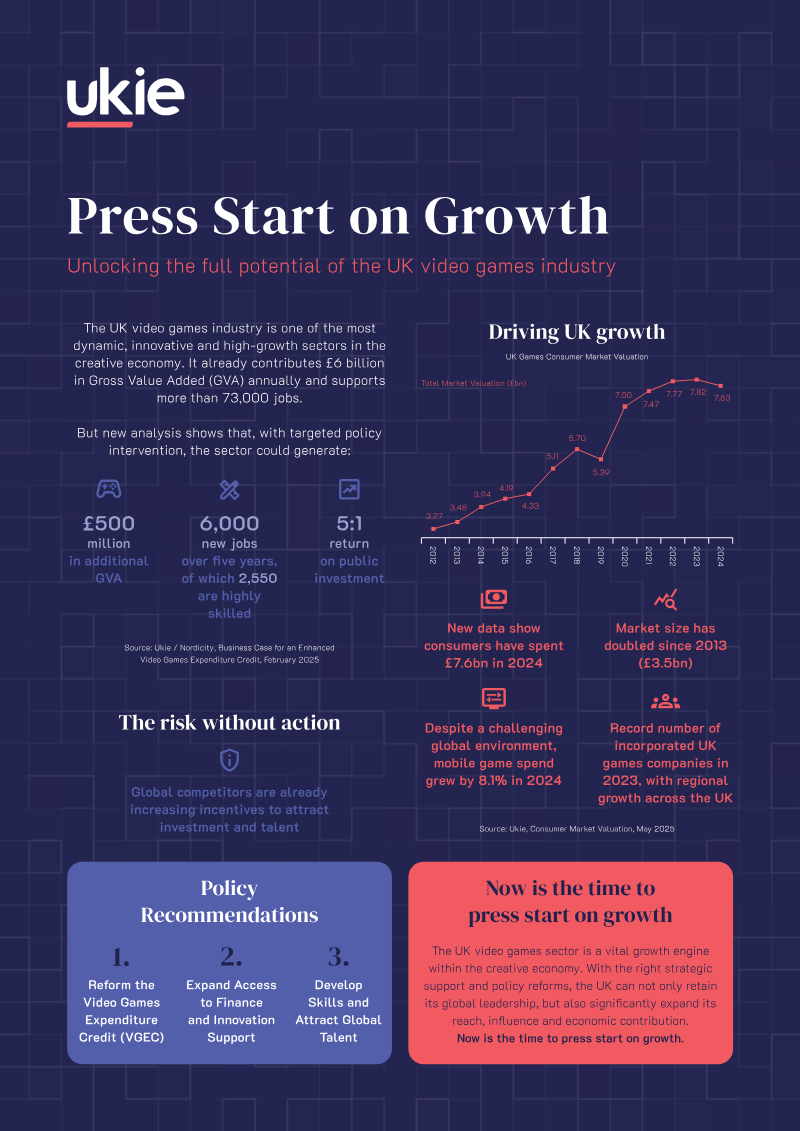
The UK video games industry is positioned as a high-growth creative sector that contributes roughly £6 billion in annual GVA and supports more than 73,000 jobs.
- The UK video games industry currently contributes £6 billion in gross value added (GVA) and supports over 73,000 jobs, with the potential to add £5.7 billion in GVA and 5.4 million jobs over the next five years through strategic policy intervention.
- Physical boxed software sales have collapsed, falling 34% year-on-year to represent only 4% of total market spend.
- Esports experienced a significant surge of 44% year-on-year, driven by an increase in UK-based tournaments, contrasting with a 15% contraction in live-event spending.
What does the Minecraft movie and Last of Us TV show do to game sales?
Adaptations of video game intellectual property into film and television have become a primary driver for sustained player engagement and commercial growth.
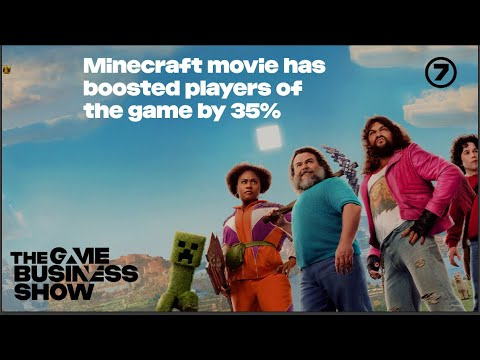
- Film and television adaptations of gaming IP, such as The Last of Us, Fallout, and the Minecraft movie, are driving double-digit growth in daily active player counts.
- Studios are successfully converting theatrical interest into tangible commercial growth by treating gaming franchises with cross-media strategies similar to those used for comic books.
- Media adaptations generate sustained momentum rather than fleeting interest when they maintain creator involvement and capture the core culture of the source material.
Companies behind it

As the documents state it.