1 free read left. Create a free account for unlimited reading + AI research.
Create free accountArticle DiGRA
1 free read left. Create a free account for unlimited reading + AI research.
Create free accountArticleDiGRA
Following Gualeni and de Mosselaer (2021), deceptive design is the intentional construction of false player expectations to create more surprising and pleasurable experiences.
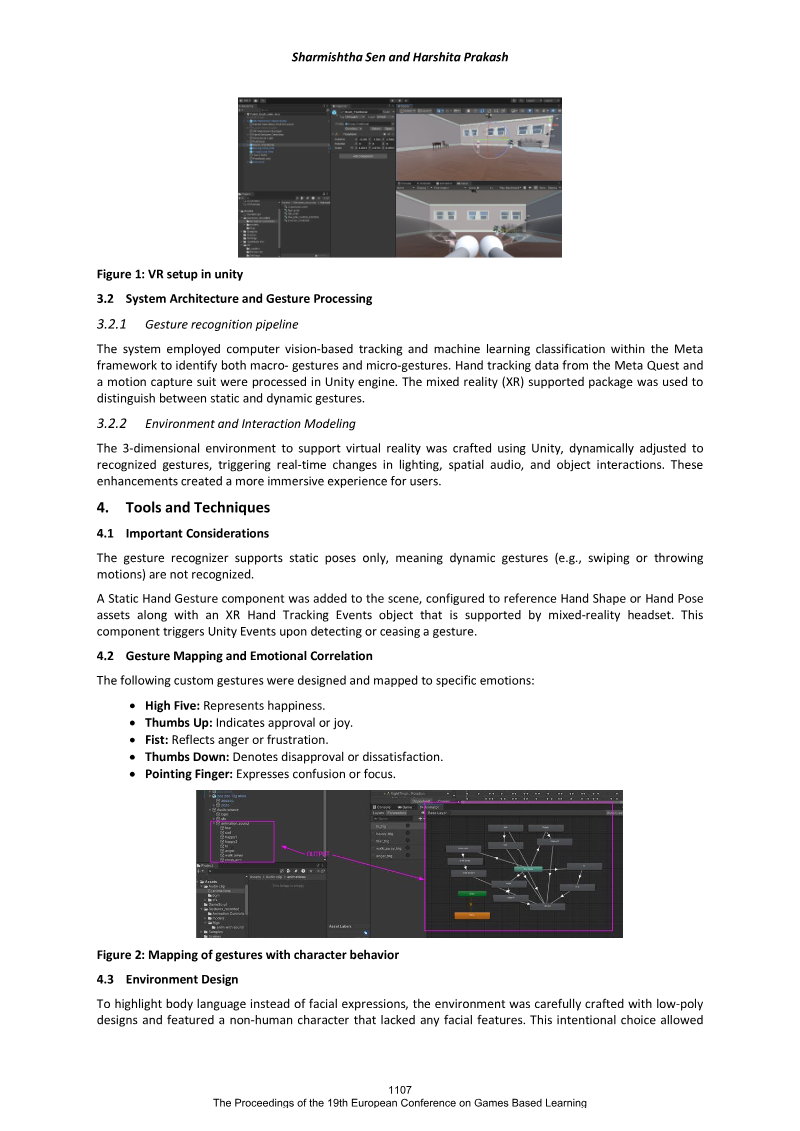
This paper examines deceptive design in virtual reality games, a topic it argues has received no dedicated research despite existing work on deceptive design in digital games and dark patterns in VR applications. Building on the definition of Gualeni and de Mosselaer, deceptive design is characterized as the deliberate creation of false player expectations to produce more surprising and pleasurable experiences, operating through narrative, aesthetic, or mechanical means and classified as either overt (revealed for a moment of shock) or covert (never revealed). The author distinguishes this from dark patterns by its focus on enriching rather than exploiting the player.
The study is an exploratory analysis of deceptive design patterns across a range of existing VR titles. Each pattern is catalogued by game of origin, design description, inferred objective, overtness, and the relevance of ludic knowledge, following a method modeled on prior work in mechanical deception. The paper introduces a new categorization, Level of VR Dependence, which rates whether a pattern would remain identical outside VR, change substantially, or fail entirely when transplanted into a non-VR game. Only patterns with mixed or high VR dependence are considered in the trend analysis, since low-dependence patterns do not reflect VR-specific practice.
Three trends emerge from this analysis. The first involves patterns that use VR-generated data, such as eye tracking and hand physics, to covertly smooth player actions, as seen in Half-Life: Alyx and Horizon: Call of the Mountain. The second concerns patterns that draw attention to the technological nature of VR itself, exemplified by Accounting+ and Virtual Virtual Reality, where recursive headset layers provoke questions about reality. The third covers the subversion of VR-specific conventions, such as the safe diegetic main menu, which Five Nights at Freddy's: Help Wanted breaches to heighten horror, a move that carries more force in VR because the convention is far more established there than in traditional games. The paper positions its taxonomy as guidance for designers and as a foundation for identifying emerging deceptive techniques tied to newer VR hardware.
 ValveCompany · United States · founded 1996 · 544 documents
 Guerrilla GamesCompany · Netherlands · founded 2000 · 15 documents
 Sony Interactive EntertainmentCompany · Japan · founded 2016 · 72 documents
 Half-LifeGame · Valve · 1998 · 56 documents
Each row is a game or company this document names, each column a document, oldest first. A mark means that document names it. Select a row to see those documents.
European Conference on Games Based Learning (ECGBL) · 2026
European Conference on Games Based Learning (ECGBL) · 2026
DiGRA · 2026
European Conference on Games Based Learning (ECGBL) · 2026