VideoDeconstructor of Fun
TWIG #361 WB Games’ Fate, CoD’s Apology Tour & the UA Financing Trap
11 Dec 202564 min video
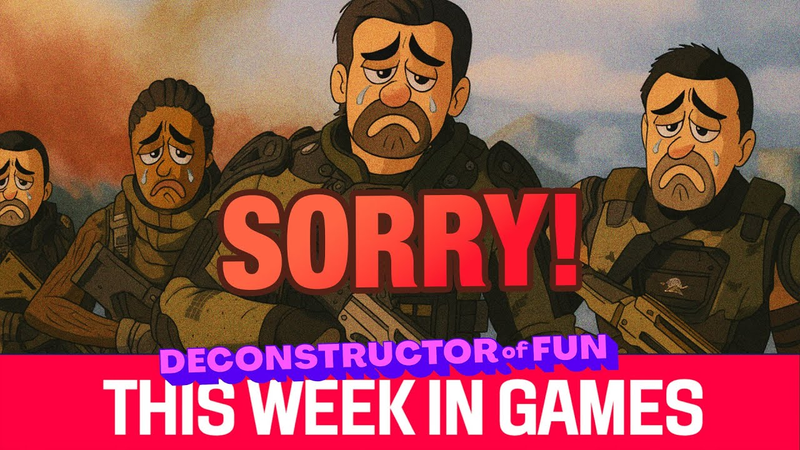
This is like two drunks holding each other up again, right? Netflix games and WB games. Like, come on, dude. They have neither know what the [ __ ] they're doing, right? [music] Hello everyone and welcome to This Week in Games 361. I'm Jen Dano. I filled the marketing and publishing Yoda role on the podcast. Today we have a special crew, very special crew. But first,
Eric Crest, Strategy and Investing.
It's Laura Toranto back for a one episode special. I guess it' be my last one before 2025. Write in your golden twigs and which is next week's episode. Golden twig nominations and I'll I'll say them for you.
A thank you. All right. and extra special guest and I'm excited to be on the same podcast as you this time you were here when I was out is
Josh Chanley performance marketing uh magician president and COO of Wild Card Games.
Oh, you're president now. You didn't update your Slack with that and I I
wrote Oh, sorry. Performance marketing magician because that's my definition of you.
I love it.
All right, awesome. All right, here's what we have today. There's a lot. We might not get to all of it, but I thought we would just at least tell you what we thought was in the news this week. So, we're going to assess Matthew Ball's EA PIF blog. I mean, you can imagine we have comments how the WB Netflix Paramount drama will impact games. We're going to speculate a little bit. The next playground aims to be the next kids console. I thought this was super interesting with my kids background to cover that. Nintendo makes an acquisition because Laura loves her Nintendo. UA Financing by Josh Chanley. It's a special episode. sort of apologizes for Black Ops 7 offering free weekends and promising no back-to-back Modern Warfares or Black Ops releases ever again. Not sure that was the problem everybody, but you know, we'll get there. Vibe coding as a Gen A platform. Laura wants to muse on that. Apploving kicking Google's ass on ecom.
Impressive. Impressive. Rise of countries battling big tech. So, is Germany going to help us get ATT killed and bring back IDFA? Crest would love this. And then Australia starts its ban on social media for kids under 16. Very much in the news these days. But first, um, video game IP is proving to get butts in theater seats cuz Hollywood can't seem to do it with their own stuff. So, I thought I would talk about another win for video games and movies. Five Nights at Freddy's two beat expectations at the box office. Uh, 63 million and it only cost 36 million. Uh, still, you know, [clears throat] very very early to see any impact, but Crest and, you know, I'm sure if Phil were here, you you would both start yelling at me. Uh, very early early impact. It only came out this weekend. VGI showed DAU increases on all of the Five Nights at Freddy's Skews across PC and console. Not a lot, but there's some increases on DAU. No impact that we can see on
revenue yet because it's still early, but I was just curious if movie one had a revenue impact, and it did. It was okay. It was only like 2 million bucks. Uh the bigger impact more recently was from the PC console new edition that they did in uh when was that 2021 or something like that. So Chris, I can imagine this is going this is on your mustsea list, right? Five Nights at Freddy's 2.
I might have a mice nuts. Mice nuts might be peppered around this whole podcast, but no mice nuts. No one cares. [laughter] And I don't watch scary movies anymore because my wife is deathly afraid of scary movies. So
I'm with your wife. They're terrible. Everyone likes sleep. Why would you not want to sleep?
So, let me do um a very quick shill. London PGC is coming up in January. Uh we've got a ton of events. So, basically for all of these, just subscribe to our newsletter. Go to deconstructorf fun.com, sign up. All of the links will be there for you to sign up and apply to attend these events. So, we have
roundts. I can now announce that the round table. The reason why I was hooting like an owl last episode is Mishka hadn't secured Duolingo as the location, but that is going to be our spot. So product folks, marketing folks, apps and games people, we're all going to get together. There's a supper club and a rooftop mixer with app charge. So super excited about that. No corrections. We're perfect, right, Chris?
There was one correction which I'm going to kind of wait for uh Mr. uh economist to come back [laughter] because he was make he was making some un he where wins meet some claims about that but that game's been around for a while evidently primarily cosmetic. So we'll we'll we'll wait till he gets back to talk about that.
Oh yeah, Hunter on my team had sent me that that had that game's been out for a while. It used to be primarily a cosmetics based economy, but they've added some kind of progression features in the mobile app. Yeah, I think that's a good one for us to touch base on.
Using clunky payment systems in your
game, that's like fighting a boss with a wooden sword. App Charge gives you the power up you need. Seamless inapp purchases, global payments, and analytics that don't require a PhD. Monetize smarter, not harder. App charge, because your game deserves better loot. In today's hyperco competitive digital landscape, understanding your app's journey from discovery to download isn't just insightful. It's the difference between scaling and stagnating. Enter Appslier, the undisputed leader in mobile attribution and marketing analytics. They've mastered the science of making every ad dollar work harder by revealing exactly where your players come from and how they interact with your app. Their platform transform mountains of complex data into clear actionable intelligence that separates winning campaigns from budget- draining experiments. And I know that many of the top game companies leverage Apps Flyier and are a key partner in their success.
Appslier, where your app's potential meets performance.
All right, let's get into the first story. Us going after Matthew Ball yet again. Crash, take it away. Oh, I no for the first time I think in a while I actually agree with his assessment of this EA acquisition. I think this is hopefully the last time we'll talk about the EA acquisition because I am actually quite bored with it. But he did write a very succinct piece. You know what I think it is is the brevity of the piece makes it much more easy to digest and therefore I can understand it better. I don't know. But anyway, he's talking about the deal with EA and basically he's basically saying the premium was a lot lower than it should have been given if it was an LBO. Like the report suggests that the PIFF really wants to uh expand their reach into other things and PIFF is going to own the most important thing is 93% of the company. So in essence, this is not an LBO. Fundamentally, this is not an LBO when
PIFF owns 93% of this company. This is a strategic acquisition which was obvious from the get-go, but many many many people got it wrong. We'll get to that in a minute. But what he goes on to say is that they basically want to build a sports platform using not only games but also to buy leagues by build a sports media ecosystem. They want to start with EA Sports app, betting and fantasy. They are looking for, you know, all kinds of different technologies to help like engage and interact with sports, predictive simulations, which they already have with Madden and FIFA, but to make that more ubiquitous and they're looking to buy live rights across the world on on games. So, broadcasting rights. So I think fundamentally this is the true vision for this acquisition is that again 93% ownership by PIP is a strategic acquisition. It's not LBO, right? So like people like Jason Shrier and all these other guys writing about
you know 30% layoffs and like this is going to be dramatic. They can't pay the debt. All that stuff was kind of [ __ ] And what I only wish that these guys, Jason Shrier, Juiced, Reese Elliot,
it doesn't matter. Simon Pullman, Mark Dura, David Cole, Michael Futter, all these guys retract their erroneous reporting and write a correction, but that will obviously never happen.
I don't know if EA is kind of the right people to execute against something like this. uh you know they don't really have the chops to actually execute against some kind of old you know uber you know media strategy certainly Andrew is not the right guy right he's a pretty face he has the right BMI but you I don't think he has the chops to pull this off and no one really at the company at EA has that type of skill set what I naturally think is that oh you're going to hire some huge media guy to do this but the challenge with that is that you take someone from media and they don't give a [ __ ] about video games and so they'll basically destroy the
interactive part of it. So, it's like and then people like Vince will leave and like all this it'll create this cascade effect that's not good for the industry. So, frankly, it seems like this impossible task, right? A Rubik's cube that cannot be solved type thing. So, we we'll have to see what ends up happening. But fundamentally, this is a strategic acquisition. That's the way it's always been from the get-go. And people's interpretation was completely off on this. Um, there will be layoffs. I am actually hearing that there are going to be riffs at a low reasonable level like 5% somewhere around there maybe 10% overall
and if you're not part of the core strategy tenants like if you're not sims
Apex
EA Sports
EA Sports guy you're being like my wife uh finishing my sentences
sorry sorry
if you're not EA Sports Sims
you guys are work husband work wife we kind of [laughter] are ironically
that drives me insane I can't have another please. Anyway, if you're not
part of the four tenants, then there may be some issues, but for the most part, those probably safe.
You're questioning can EA management do it? But then if somebody else do it as a can they do it without destroying the interactive part of the business? And that's kind of how I'm I'm kind of interpreting what you're saying. But like what I really want to know is like is EA's video game business really the primary source of revenue growth from this? And like if not, does PIF even need EA to pull off the interactive part if they get the relationships, the licensing and all of those things? Like how important is the execution there to the actual strategy? Maybe video games isn't the crux of this highle thing. It's all I don't know. This is where I get over my skis. Like it's it's all a lot of tech [ __ ] that like there's no way these media guys know how to do. you know, some guy who's doing deals to bring in leagues and bring in broadcasting rights. They're not going to know how to build an interactive tool that like helps you like simulate what's
happening on the field. There's something here here, but it's like so complex. That's why it's so hard to like kind of get my head around it. But I I do think that EA and the interactive portion is at the core of what the strategy may be. The question is like on the execution side,
Chris, you and I were there when even back in the day when they were providing a lot of the tech to ESPN or to some some of the sports networks, you know, to help media be better at showcasing why sports is great. So, you've got this interactive side with EA, you've got the old school media side, and there's nothing kind of pulling them together. And I think the vision is that this is going to be the first thing that pulls it together. But how do you do that when now the pendulum is like fe you know purely sitting with the interactive company that has to figure out how does it like you to your point is how do they bring in some media people to help like I can't they've done some deals where you can actually watch some of the the football games inside of this app which I'll show you in a second no one is
actually doing. I think that's the start of it. And so for me, I think this is an exercise in patience that they are going to need years for this kind of vision to come to fruition. Actually, let me show you that app. So this is the EA Sports app. So what Matthew Ball said in his piece, what was interesting is like this is newly launched. This has been out for a year. It doesn't look like I even have the right app to what everyone is describing. It looks like a media app from 5 years ago. uh just the UI and everything in here. So I guess you get live, you know, you get a lot of things that you get in other places and it to me it felt a little bit like Americans trying to make a a football app for Europeans and the Europeans being like what do what that's like so 5 years ago. Anyway, so you know at first I was like oh they had almost 3 million units that have been downloaded and then basically they've all come in the last month and 97.4% 4% of them were from India,
followed by Italy, Spain, and the US. And the US was like
really
52,000. Yeah. Like this is this is Jen's investigative reporting. Dun dun. I'm not even sure. Like honestly, I don't even know if I have the right app because this seems like it doesn't even match with what's going on. And a lot of this is, you know, how much EA has just decimated all of the mobile people. We talk about this all the time. So this app is free. There's no AP, so I imagine they aren't doing UA against this and trying to market it because it doesn't make today yet revenue itself. I don't know if there's ads inside to be honest. I didn't pop it open enough to see if there was ads. Maybe that's the case. But my only thing to think about is we have to have patience to see this strategy play out that the tech has to be built, the deals have to be done, but that the future and the idea of this is coming. I don't know. Chris,
the last thing I want to say is that look, EA stock, although it was at a reasonable price when it was bought, has
been kind of flatlined for a long time. EA management is particularly Andrew have been looking for an exit for years. Like they've been trying to sell this company for years. Like that is that is fact evidently. And what I found out was really funny is that Andrew and that guy from Goldman that we talk about all the time who's made more money in this space without ever working in the space. [laughter] They have like a house right next door to each other in Hawaii, dude. So they're like hanging out drinking my ties discussing who's going to buy this piece of [ __ ] company, right? It's like that's the way this [ __ ] works, you know? That's the way this [ __ ] works. And so like is Andrew really wanting to like do this kind of [ __ ] Does he really after all this time as a CEO of a publicly traded company, does he want to deal with the Saudis and all PIFF and Savvy and all the Scoply? I don't think so. That's why this is all [ __ ] This is all lipstick. You know, no one knows what the is going to happen, right? I think they actually literally probably need new management team in
order to execute anything like this, right? And hopefully it's not a media guy that destroys the interactive portion, which we are getting to right now.
Yes.
Yes. Let's do it. Let me do a little
I was going to comment. I had such a good joke lined up. I'm like waiting for my time to jump in. And my joke was going to be okay. Ready? We were looking at the screen shares. sorry, the screenshots of the game and I was like, maybe they should pull a Dolingo and hire a gaming company to help them build this app. And then I was like, wait, they are a gaming company. [laughter]
Well, maybe they need a media company to help their interactive app be a better interactive app. [laughter] It's probably reverse dual lingo. Yeah. No, that's a good call. Oh man, this is in all of my podcasts. The drama. So Netflix, Warner Brothers, Paramounts calling it a dating drama. It's like, you know, if in a couple years they're going to have TV movies based off of everything that's going on here. So I wanted to talk about this as much as we could from a game from a WB
games perspective. What happens to games? You know, this is going to be a lot of in a sense speculation, but here's what happened. Paramount on Monday launched a hostile takeover offer for Warner Brothers Discovery uh initiating a potentially bruising battle with the rival bit bidder Netflix to buy the company behind HBO, CNN and a fame movie studio along with the power to reshape much of the nation's entertainment landscape. You got even unions getting into the fray on what's going on. So the part that I wanted to do which was a little bit like rampant speculation is what is the future of WB Gaming? at first, you know, when it was just the Netflix deal, but now it actually might be under Paramount, which Paramount has a really robust licensing team. So, if the hostile takeover bid actually works, you know, by the way, here's what Netflix said when somebody asked them about, hey, you know, if you buy Warner Brothers, like, what are you going to do with the gaming assets? Like, here's what Greg Peter says. While they definitely have been doing some
great work on the game space talking about Warner Brothers, we actually didn't attribute any value to that from a get-go because they're relatively minor compared to the grand scheme of things. Ouch.
That's all you need.
Now, we're super excited because some of those properties that they built, Hogwarts is a great example. Thank god he at least mentions the, you know, multi-billion dollar game that came out. they've done quite well and we think that we can incorporate that into what we're offering. They've got some great studios, some great folks working there. Uh this is him basically backtracking like hey this doesn't matter. So we think there's definitely an opportunity there but just to be clear we haven't built that into our deal model end quote with sorry with my commentary. Uh, so based on that, let's play the game. Who's a better home for WB games, Netflix or Paramount? No matter what the home and then like what should happen. So, let me go first. It's my game. So, who's the better home? I'm going to say Paramount only because they understand
licensing, which is the beauty of this business. Many of you know I worked at Disney and I did licensing for consumer products for many, many years. I that business is stellar. That team is stellar. They get that. Maybe they could do a oneplus 1 equals 3 with, you know, all of the great brands that are coming in. I don't think it's a a home for the studios, however, is the only problem. You know, Netflix just isn't out to make any money. So, that's pretty pretty challenging. What should be done? I don't know. You carve it up is what I think you need to get rid of. Some of these studios, like TT needs to go to Lego, for example. Some of the studios need to go to really really good homes at other companies and and maybe give licensing to Paramount. I don't know. I'm not sure about Paramount. I feel like I'm watching a bad episode of Celebrity Matchmaker where like all these people are trying to like find like homes with each other and it's just not I feel like there's no vibe. I don't know. I feel like Disney should have been in the mix. I'm not sure how, but I look at Disney. Look at Netflix and
Paramont and WB. I don't I mean, yes, sure, they might have the licensing game down, but like is Paramount a better home? I'm not sure for WB games because I feel like they don't know what they're doing either. They they might have the licenses. Sure. But like you're going to license these things out and there's a whole life cycle to it, right? You put the games out there, someone buys it, they start building stuff. You need people that can actually evaluate it and I and say this is going to be a good game and then you know Josh you can chime in and say you know this they can evaluate whether they can scale it, right? So they need these these skills that I just haven't seen in the past have especially in mobile. So, I'm just letting them all kind of draw straws and see who's going to end up with each other. And I'm not sure any of them it's going to work out for WB Games at least.
Chris, from your expert strategy perspective, I I actually couldn't wait to hear what you're going to say about this.
All right. So, this is a really complex deal with all kinds of political drama going on, and I I really don't want to comment on all that. And frankly, I don't really understand all the drama behind a lot of these big media
conglomerates. So, not my rule really, but I want to be clear on this. All the big media companies were bidding on this and Netflix won and everyone else lost. Like that's that's the way a bidding process works. So,
this deal from Paramount is a hostile deal trying to put a monkey in the wrench of Netflix deal that was already agreed upon by the board, right? The board fundamentally rejected Paramount's deal initially and it rejected its current deal too. So this is this is clear and there's a lot of reasons for this right which we don't know that's internal. One of them which is the big one I think is that a Netflix deal likely will pass scrutiny with the FDC and other reg other agencies in the government right and
while a Paramont deal likely will not because of what Parammont is. So that is probably one of the reasons why the Netflix deal sealed better. So Netflix
was proposing $82 billion, but they were only going to buy studios and streaming. So that basically puts all their assets outside of that. It's a separate entity, which not quite ideal for shareholders, but nonetheless is what they agreed upon. Paramount deal is 108 billion, but that was all cash, right? And it's the whole company, right? Which is much cleaner from a perspective of shareholders, but again, regular scrutiny is a problem. There's like a six or eight billion dollar like breakup fee too that has to be paired. Not to mention the fact that they already have $40 billion from that from the discovery merger. So there's a lot of debt already. This company was only worth like 1520 billion dollars when they do this acquisition. Paramount, it's a huge pill to swallow. And that's probably the other reason that doesn't make sense to Paramount to do it. Netflix on the other hand could probably do have this kind of money in the on the in the couch. Right. At the end of the day, old media mergers like this don't pass scrutiny with the FCC, right? They don't want big media companies buying big media companies.
Netflix can be considered a media company, but it's also a tech company, so that might be easier. And it also likely excites investors as well, which is the other part of it, what investors might accept. All right, so I think the Netflix acquisition is likely going to happen, right? That's probably what's going to happen. It is going to take years for this to get through this [ __ ] right? This is almost as bad, maybe not nearly as bad as the Activision deal cuz you won't have as much international issues, but like so what what are the good things about this? Look, I mean, at the end of the day, from a customer perspective, dude, they have a gajillion franchises, right? Like having HBO, Game of Thrones, Lord of the Rings, DC, Harry Potter, this is brilliant for Netflix and it makes it so they don't have to build their own, right? They don't have to build their own Stranger Things, their own, you know, licenses and stuff and build that. So obviously this will be a huge streaming service right they will be able to charge a premium for this streaming service with all this content right 100% great also they are only taking the good assets right CNN TNT TBS none of these assets are really that
valuable and so like they're basically getting the best of the best from this this company
and there will be some cost efficiencies they there will be layoffs but it will probably more like central tech and things like that as if they did the deal with Paramont which is a lot more overlap with Paramont generally. The cons, obviously this is a regulatory nightmare, almost a $6 billion breakup fee if it doesn't happen. There will clearly be some union issues, right? There will clearly be some problems with union
people getting laid off. But the big thing I think and the one thing that people are not talking about is the culture clash between what Netflix does on a regular and what HBO does, right? So, it's basically HBO versus the algorithm is what I like to say. It's like Netflix is all about volume first. They do have some marquee franchises that are not like that like Stranger Things, but for the most part, it's volume. In essence, I think it would actually create a kind of like a not a very creator friendly type environment for HBO, which could lead to poor quality, generally speaking. So this is
my interpretation is like this may look good in the short term because you're getting a lot of content under the same service but I think what'll ultimately having happen is there'll be higher prices which with potentially weaker content because the content will be geared towards Netflix algorithm as opposed to HBO quality right and I think this will end up hurting the quality and the type of entertainment that you get on this service plus with increasing pricing. So, I don't think actually this is a long-term good necessarily. Like, I think a lot of things could end poorly for this, but it's likely going to happen ultimately. From a gaming place, no one gives a [ __ ] Okay? Everyone out there that's all hooing and hawing about games, no one [ __ ] cares. This is like two drunks holding each other up again, right? Netflix [laughter] games and WB games. Like, come on, dude. They have neither know what the they're doing, right? And from Peter's own world, I think what you made a mistake is that Peter is from Netflix. So yeah, he basically said the quiet part out loud, he said they are
doing great work in the games, but we don't attribute any value to that from the get-go because they're relatively minor compared to the grand scheme of things. That's all you [ __ ] need to know, right? Like they don't care. They don't give a [ __ ] And Paramount could give a [ __ ] too. Like they don't give a [ __ ] about games, right? So it doesn't matter in this equation at all. There's no trans media play here. These are just juggernauts in the media space that are consolidating because the regulatory environment is more forgiving right now, right? That's all this is. And gaming, no one cares. Nobody cares, right? So that's kind of where I'm at. Obviously,
it broke my heart. Laura, did it break your heart?
It broke my heart. But Eric, I have a question on this two drunks analogy. So if the two drunks are WB and Netflix, where's Paramount come in? Are they the bartender that cut the drunks off? And is Sprite Fox like the poor soul that the two drugs tripped over on the way out?
Yeah, I get your joke, but [laughter] this is the this is the games divisions
is what I'm talking about. Not not the merger.
We should have Heatherly here who's like an expert on all this stuff. Talk about like all the ins and outs and the history of all these relationships and like how this stuff is done like
and and how they came to this conclusion. But we will see what happens. Josh, what do you think?
If they can, I would just spin it out. Neither. I have no idea how that would work, but with licensing, but I I think that, you know, we're games people, so we want this to to matter. Maybe it just doesn't to them. I think that it's also kind of interesting from Eric's point of view, the idea of acquiring these Tempole franchises. I think you you made a point, Eric, about quality reduction, potential like quality reduction in price increases for streaming. I I think that's a really big risk here for us as consumers because the way I think about the Netflix kind of business model is they're tent poles like Stranger Things. They acquire us and they retain us, but they don't make money if that's all we watch. We need to watch the slop to make money per like minute. And so if they're
acquiring all this stuff to acquire and retain us, they're going to have a glut of that. And so we're probably going to end up with less quality content and what's going to remain the slop and the prices going up. That's my That's my personal take.
That's exactly what I was trying to say. It's like it doesn't end well really. Like,
yeah,
the incentives are not aligned right here to continue to do what HBO does.
So,
no. Super concerning. I I think they just need to find somebody to help do the licensing for the content wherever it lands and then sell the studios off to people who actually care. I think for gaming, this is a kind of a sad a sad thing all around. you know, th this is going to be rough for anyone if you're, you know, at WB, even if you're at Netflix, like I mean, that's a whole other topic, but, you know, they're they're clearly already not getting the love. And now if you're Warner Brothers games, who does who are like some of those studios like are like, you know,
Avalanche, who did Potter or you know, who did the Batman like there's some TT, right? Like these great studios are I mean, if I were them, I'd be like, [ __ ] like where am I going to land?
Yeah. Yeah, I mean they they they're kind of dead already to be honest. And and Netflix's strategy is completely different now, right? They're not going after
they don't monetize, right? Like their whole strategy is retention based. And so if you're a business coming in for Warner Brothers, like I just don't even know if they know what to do with that. So yeah, that's why I keep saying I think they're going to sell off anything that's not a retentionoriented gaming division for them.
I could actually see where they just stop gaming altogether, right? like this solves their content problem. They don't need games. Games is just distraction. I mean, they're trying to get to like a, you know, 10% engagement with gaming, but they're they're back down to like barely nothing now because they got rid of a lot of the stuff that was actually working right from that perspective, from that metric, which includes GTA, which is the irony.
Well, that's going away soon, too. Like,
because it's stupid. Now, Red Dead's coming.
Like, it's the whole thing is [ __ ] dumb, dumb, dumb, dumb. They're they're gonna they're going to collapse upon themselves. And if they're doing Think about this, if Netflix is buying WB games, why would they even care about what's going on in the gaming division? It's totally distraction.
Well, they don't. I mean, and that's that's the bummer is they they said they don't. So, this this relates a little bit to the next story that we have is, you know, so I've done a lot in, you know, kids and family gaming in my gaming career as well as in my toy career, but consoles and video games, you know, used to be for kids. Like I I don't know if you guys remember playing like Atari 2600 or NES. Okay, now I'm dating myself, but consoles used to be very very younger kid oriented and it's no longer the case. So the next playground is a $200 Androidbased console that just outsold a PS5 in unit sales in the US in November. So kind of an I thought that was like, oh, that's an interesting stat. So, it's proving
this kind of unmet market demand for subscription-based safe controller free family gaming device that the major platform holders have ignored. So, subscriptionbased model, it basically has a monthly play pass for unlimited access to the entire catalog. It's $50 for three months or 89 for a year. No ads, no AP. There's 50 games, a lot of licensed content. So, Blueie, Barbie, and Sesame Street. Again, very young. These are very young brands. younger than Roblox. Much much younger than Roblox. And unlike Roblox, this is a closed platform and Android open source project. There's no web browser, no chat, no thirdparty apps. So none of the challenges that Roblox is getting into right now with all of the privacy and you know naughty things going on, no interaction with strangers. And remember the connect everybody again dating myself. Uh Laura, I should be rocking my Xbox. Thank you again for my Xbox jacket.
But no controller. It uses a built-in ultrawide camera and AI motion tracking
technology to detect player movement. So, this is why I brought this up is I often talk about that there's a gap in the market for platforms and opportunities for younger kids. So, now that the Switch is, by the way, a base unit of Switch 2 is $450 US and you don't even get a game with that, right? So now you got to go buy a game which now Nintendo games are 80 bucks and you need another controller and you need a case and like $600 700 later a parent can now have their kid have a gaming platform. However, you know you also have PlayStation which pretend like you have a PlayStation in the house. They just absolutely crushed it with Astrobot. Roblox is a key reason why kids are announcing that hey I want a PlayStation so I can play Roblox. I know that sounds crazy but it is something that happens. On the other hand, on mobile, uh, Apple Arcade is actually doing a really nice job filling that gap. So, Netflix did announce that they're going after kids. It is a pillar for them. We haven't seen much coming out of them yet. I do think that that is at least something that
makes sense because you've got content and gaming come together. So, anyway, this story kind of highlighted the need for this younger kid market. It feels like it's really underserved. This could be a really good fit. this next playground crest. I know this is a smaller segment than gaming and I know this is a little bit mice nuts, but in a world of gaming is stagnant. This is an underserved audience. What do you think?
I think this is kind of like Wii 2.0 in a way.
Kind of. Yeah,
it does fit a niche that's very unsupported. The subscription makes sense for the children's market in particular. Hopefully, it gets them the off Roblox and that like deviant behavior on Roblox. It's really honestly not really clear what the viability is from a content perspective or profitability. I mean, I know the content's cheap. They can license some content that's motion control. I think the controller limits really the type of content that you can have on a device like this. So, that
but that also reduces the price. So, the entry level is a lot higher because controllers are expensive. You know,
they're pretty pretty sophisticated piece of tech, right? But this thing makes sense. Like this fs fills a niche, right? This compared this to Ouya back in the day, the first Android device, right? Like they had no content strategy, right? At all, right? They just threw this thing out there expecting to compete against the big boys, right? It made noing sense, right? Or Google Stadia, which was basically targeting an audience that was completely satisfied by the consoles, right? Like the the strategy was so dumb for Google. But
again, this device is great for families. has the right type of content for families. It has an attractive subscription model for families. It's basically Apple Arcade for home use type thing, right? And what I think is like Apple should acquire this thing and integrate it within the tech and with the Apple TV, you know, and make that like a viable device from that perspective, right? But
it is kind of mice nuts in a way like it's not going to scale, I would think. But it's still like a really smart strategy. Just a wellexecuted strategy
against a box like this.
Oh my god. I I can't believe I got this out of you. This is Thank you.
I'm surprised, too.
Some people are going to have to make plays at very specific audiences and deliver a product and a feature set in a price point that actually makes sense for them. And I think that they're doing that in a great way. And I think you're right. Given Netflix, given Apple Arcade, these are great. I mean, somebody should go buy them and build them into those services. So, you've got in a sense what that is. And you know, for me, I actually think we should bring back the old NES controller that just had the D-pad and two buttons for this kind of a market to make it just a simple, really basic controller. I don't think you need the $78 dual stick, Dual Shock PlayStation controller for a 5-year-old. I I I just don't think Let Let them graduate into that.
I'll play Eric Russ on this one. I don't love it. I think I think it's cute. I have a three-year-old and so I I want to find ways to start integrating gaming into his life over time. The connect analogy is is real. I had a connect and its primary job was gathering gusts and
so I worry about retention of of usage and if it's going to be a fad and not sell asset, not be selling consoles in a couple of years. The PS5 analogy is interesting, you know, but the the PS5 is 2x the cost and it's incredibly mature. And so I don't think we're going to see 5%. You know, the total units sold on a lifetime compared to a PS5. When the user base is that low and the revenue per game is going to like be that low and you're dealing with potential retention issue on the subside, is it really going to have long-term supports for game production? I worry about the lack of the connect effect and how engaging that way of interacting with a video game kind of retains over time with a sub plan, you know. Okay, maybe this is arcade, maybe it's game pass. I would like this to exist because I need this kind of a product for my kid, but I don't I don't think this is the one for me.
All right, I we're going to get you one and I want a full I want a [laughter]
full report. Okay.
I think he
he's only three though. I'm not totally sure. Like maybe in a year.
Okay. All right. Fair enough.
Actually, well, I have a question. If you get him if you get Josh this thing, Josh, what I want to know is your kids three now. My wonder is at what age are they going to grow out of this and then grad end up graduating to another console? So, what's the longevity in kid years of one of these devices?
That's actually really interesting.
Seven, eight.
Yeah.
For four years. But just think But that's okay. It's 200 bucks. I mean, just think of like when you take a kid to a movie, you just dropped 50 bucks.
Oh, I have no kids. I [laughter]
Sorry. When someone who has kids,
so when you think about and and so the fun per hour that you can get from a device like this is incredibly high versus you take a kid to a movie and buy them popcorn and you get two hours out of that experience for 50 bucks and now 4x that and now you can have hours and years of gameplay and it's active. So
the other thing we didn't talk about is the physical activity involved because if you think about so yes I agree connect sucked back in the day but with AI and motion control I bet that there's actually something there there now that we have better actually abilities to doing this you you limit everything. So anyway,
Connect sold like 10 to 15 million units in three [ __ ] months, right? That's more than Steam Machine sold in three [ __ ] years, you know? Like, and it failed, don't get me wrong. It failed miserably, right? But it was a good piece of tech and it was really well regarded by the folks out there, right? So, it's like that's actually a success in terms of like a peripheral, right? This isn't even going to even get close to that. And neither is the Steam Machine, right? The Steam Machine is never going to sell that many units. It's obscene. It's absurd.
But then my point though, if it is a little baby box that has the connect capabilities inside of it already, isn't that a play pattern that is has a proven use case that is now has better tech?
Yes. But if that didn't work from motion control perspective, then I don't know if there's an audience for this is what I'm trying to say, right?
I know. We'll see. Yeah. So, but but actually the only real last point I want to make before we move on because we spent way way too much time on this which is like a podunk thing total mice nuts versus the $82 billion merger, right? But is that
at least this was well thought out, right? They have a target, they have products, they have target market, they have like a subscription, right? versus the Steam machine, which wasn't thought out at all because 85% of the revenue that's driven out there and and there was some reporting on this after our podcast is that 85% of the games that people spend money on don't even work on the Steam machine, Steam OS. It's like it's crazy like you cannot build a product that has no compatibility, right? At least this is like servicing a well thoughtout product. All right, moving on.
Great. Game devs, here at Heroic Labs, we know
that great gameplay is what players love. But integrating metagame features like challenges, progression, and rewards is crucial for retention and monetization. But coding them is a tedious and timeconuming process. That's why top studios have turned to Hero from Heroic Clouds. Hero provides a complete suite of battle tested metagame features that are quick to implement, letting you [music] spend more time on the core gameplay experience. Ready to ship fully featured, engaging games? [music] Check out her today at heroiclabs.com.
Stay ahead of the competition with Sensor Tower, the trusted source for mobile marketing intelligence. Whether you're tracking trends, benchmarking performance, or scouting the next big hit, Sensor Tower delivers the data that drives strategy. Dominate the charts with Sensor Tower.
Hey, are you building a game, launching an app, or considering an acquisition? Well, in that case, Deconstructive Fund Consulting is here to help you out. We do everything from market research to go
to market strategies to live ops optimization and due diligence. We're trusted by some of the most beloved game development companies, makers of tools and tech, as well as some of the most renowned investors. Now, if you are building, launching, or buying, don't do it alone. Do it with us. Connect by emailing to consulting diggafon.com.
All right, Laura, talk to us about Nintendo.
Yes, I put this in because Nintendo buying a studio is like spotting a rare Pokemon in the wild. It's very It's very unusual and it doesn't happen often. So Nintendo is acquiring Bandai Namco Singapore Studios and this is it only its fifth acquisition in 5 years. So they do not they usually don't do they're not kind of into splashy big deals like you know Warner Brothers and Netflix. They they very much want smaller studios they've already worked with very into building trust partners
that can come and and be part of that first party Nintendo family. Singapore Studio they've supported titles like Splatoon 3, Tekken 8, Soulcalibur 4, Ace Combat 7 and has about 60 employees. So it's it's tiny and just you know it aligns with the general strategy of uh Nintendo CEO Furukawa uh expanding internal development capacity ahead of the Switch 2 era. So this is them setting themselves up for success that they have Switch to this now expensive device going head-to-head with next and Android's device. Not really but for dramatic effect. And what they want to do is just increase their output of titles per year and have major tempoles because yeah I love Nintendo. That's why I picked this in. I'm like oo wait Nintendo. But what I also want from them is like their game quality is super high. It's just very slow production. The only thing I wanted to call out is yes, is it is it good? Yeah, it's relatively low risk. The only thing I want to see Nintendo move into, and I don't see it with this acquisition, but hopefully this is the first of a couple, is that Nintendo is still pretty weak in one definitely in the mobile space and
then also in the cloud space. So, are they getting better with like kind of online multiplayer? Sure, they're getting a little bit better. I think what was it? Mario Party Jamberee, you know, the 20 players, but I don't think it's there. And um the Pokeball of M&A is still in Nintendo's grip. So, I do think that we're going to see a couple more, but I'm hoping that it's in more than just kind of putting in their big family and making it out a little bit bigger.
No comment on the jokes, but it's funny say I have a take. My first note is no real take here. [laughter] I mean, this is kind of interesting because purely the opposite of this big speculative Netflix thing and then this even more speculative EA thing where it's like super forward looking. This feels like they're just formalizing existing relationships and kind of methodically solving kind of just production capacity challenges without overly leaning on things like fully outsourcing. I think it's just disciplined and it's boring in a in a good way, but like it's it's a pretty just normal business move from my
perspective.
All right, let's go to Josh. Your top I'm so excited about this topic. It's my chance to learn about UA financing through a a news article. Go.
All right, let's do it. So, PBX taps more than $250 million for user financing. It's been committed across 20 companies. They also raised an almost $5 million seed extension. The model is essentially it's cohort financing. They fund your UA. You repay the principal and the cap revenue share from those cohorts. They claim to take some of the risk which is to some degree like technically true. And it is like a a very fast growing but still small part of the capital market for gaming. I'm not a massive fan of of this part of the industry. So, first like committed isn't deployed. It's a headline number. You I don't know how much has gone out the door. But non-dilutive
is their big selling point. And it it it sounds great until you remember like credit card debt is also non-dilusive. It is like nonsecured. It's non-dilusive. It's still very expensive debt. The reason that we're seeing so many people coming into this space is because they're they're charging extremely good yields from them from an IRR point of view because there's not a whole lot of other chances right now. If we were seeing more VC activity in this space or more investments in general, we'd be seeing a lot less of this. I've evaluated these companies very very closely and and it just wasn't economically viable for us. One of the big challenges is that when you start to hit really big scale, not scoply scale, but like you know big boy scale, you want to be hitting a 30% irr. Like even if you double your money, that means I'm saying you want to double your money over 2 3 years. And irrit
like your APR and there's very little regulation right now around this part of the industry. And so what isn't as clear is well the API of a credit card if you compare credit card debts to these kind of cohort financing tools the actual effective interest rates what they call an IRRa very similar to credit card debt.
What is it? What is the vig? Is it 13% 15% somewhere around there?
You have to talk to them and figure out what the deal they're willing to give you. But I mean think of it like this. If if the VI was 13% for PVX and for these smaller sized ones, like what would General Catalyst be charging? Because they're doing this with that scale clients, right? You know, if you're spending, you know,5$10 million a month, you're not working with PBX, you're working with General Catalyst
and then General Catalyst is giving PBX and these other smaller companies cash to go and do the smaller deals.
Right. Right.
Let's pretend the IRRa is like 10 15%
for General Catalyst to be worth it. Well, what's it going to have to be for PVX for them to both make money on that deal?
Yeah. Right. Probably 15 to 20 more.
What the numbers that I've heard are higher.
Okay. That's crazy.
I'm using the term credit card debt descriptively.
Yeah. Okay.
And the other kind of concern that I have is a lot of the marketing again cuz like there's not much regulation. You can say things around this kind of debt that you can't say around credit cards. And the other thing that you're going to hear a lot is, well, we take the risk with you. And so, let's talk about what that means. So, let's say you're buying at 150%, just to make it easy, right? And they're going to charge you 20%. That means if you have a really bad cohort, it underperforms 20%. So it goes from 150 to 120. They still get paid normally and you get nothing. How much
do they have to underperform? Do you have to underperform for them to really lose money on the deal? A lot. But when you're now basically increasing your CPI from 100% to 120%. Or whatever number it happens to be. What you're actually doing is you're leveraging. Instead of going from 150% to 130%, let's say, and you've got a bad cohort, you lose 20%. That would have been a 40% drop to your yield to run your business. Now, it's a 70% drop to your yield to run your business. So, what it does is these studios are taking on this debt to grow. They're accepting incredibly high volatility in their outcomes and they're targeting for in general, you know, companies that need to um use this financing that can't go with PVX yet or can't go with General Catalyst yet and bigger companies, not 100 million, $200 million companies, relatively less mature cohorts, relatively less mature organizations. These are the ones that going to have
that volatility in the first place. I've heard some stories for people working with PBX specifically where it's gone really well. I've also heard stories about financing in general in this area where it's gone like it's killed companies.
I had a keynote a couple months ago games forum in San Francisco and we were analyzing this kind of financing in real time at this time and we did a case study about what if we signed the deal versus if we didn't sign the deal.
For Wildcard I literally wouldn't have a job right now if we had signed the deal. So wild card is a case study where at the time it would have killed us. Now at the I can say that because well it wasn't cohort financing at the time. It was receivables financing like a different play with the same kind of interest rates. It was pollen VC and it was just like 2% a month basically interest rates which you know is a legit credit card interest rate. This is where I think it gets a little bit sketchy because they're talking to people that are very unsophisticated on financing. And when
you say 2% a month, it sounds like nothing, right? But 2% a month is aing lot ofing money, dude. It is. It is a lot.
But yeah, but you're only going to borrow for 3 months.
Yeah. Or is it really me? It's all opposed. But if you understand what their core tenants are, and you actually
said it not very eloquently, but you said it, is that [laughter]
General Catalyst wants to make 12%. or or more and PVX wants to make a percentage. So therefore, they have to make between 15 to 20 to 25% to be whole, right? You're going to pay that, right? So anyway,
well, if it's your only option to unlock scale, then maybe the risk is worth the reward if you other options.
The truth is the growth p capital is not cheap, right? And particularly if you're if you're buying equity like VCs coming in there and taking 20 to 30% of your company. I totally get that, right? Like that is com somewhat true, right? To maintain ownership of your company, but it's not cheap capital the way they
describe it in my opinion anyway. And there are [ __ ] ton of companies that are coming out of the woodwork doing this kind of financing. So it's meeting their return expectations in terms of total return.
I know what the [ __ ] So Bitcraft is doing it right. And when I was at the BitCraft conference, someone actually said to me, it's like first of all, this type of activity is noting venture capital, dude. That is insane that any venture capital company would actually do this type of thing because what he said was that venture capital is like mining for gold. UA financing is like searching for change in a seat cushion. [laughter]
All right.
So anyway, this [ __ ] makes no sense at all. Just so it's not entirely one side, I'll make the bullcase. Here's the bull case. you can scale up your business and even if it does it in a way where with the interest cost it's a net loss to you which would be a a hard deal to take but even if you did that if you're looking to get acquired in the next 12 to 24 months scaling up and showing an acquirer hey
this is the scale we can do this is what the yield looks like if you buy us this debt goes away because you have money you don't have to pay this this is now exactly the asset that you're going to acquire that has a BUSINESS CASE.
DUDE, WE'RE not doing a Ponzi levered buyout [ __ ] scheme, dude. What is this? Why are you Why are you suggesting that?
The final point. The final point
drisks for the acquirer side.
Oh my lord, dude. That's how that's how bubbles are created. Okay, so by the way, and then the $250 million in capital, they have access to 250,000 in capital. That that 250 million in capital doesn't mean they've deployed 250 million in capital. That's critical. And to put this in perspective, General Catalyst has 43 billion in their assets, right? They've just raised 8 billion in October. So this is absolute mice nuts for them. Okay, just to be clear, this is just one of many, many businesses for General Catalyst. So just to put that in perspective. So I apologize to Jeff
Cohen, Paul, friend of the podcast. He's probably going to puke all over this analysis. So maybe we'll bring him on to explain the merits of these type of arrangements. Yeah, I think he he's done a podcast with Mishka. Maybe it's in the feed. But I I think what was interesting to me as you brought this up is now there's like these different schemes. You know how buy now pay later was now like rebranded is something. I feel like they keep rebranding the idea and it's cohort based. No, it's monthly. And so, you know, staying on top of this. I think the piece I wanted people to take away is like this is complicated. Don't just do this unless you really have smart people looking at the numbers. This is an easy way to get capital. If you're scaling UA and you haven't even asked like, "Hey, okay, so I'm paying my big ad network 30. Hey guys, if we scale, can we do net 60?"
There are conversations that you should have first that would be much easier and possibly even free.
And I think it's disappointing that some studio executives don't even have those
conversations before they just layer on financial products.
That's a good that's good advice. Like just change your terms. They'll do it.
Yeah. Interesting. All right. Quickly, Chris, why don't we do this one because we have to.
I I mean, just quickly, Call of Duty is out there kind of apologizing for the state of their IP. And basically, they said they will no longer do back-to-back releases of Black Ops, which how on the do we get here to begin with? You know what I mean? Like, where's the miaulpa on why this was done at all, right? And so, like, this doesn't explain Jack's [ __ ] right? in terms of like why they're misexecuting on this. They've never done backto-back called
they did Modern Warfare back to back.
Did they?
Yes.
Okay. That was a mistake, too.
Yeah. The early Yeah. No, exactly.
The early aunts. Anyway, the point of the story is that like things are reallyed up in this division clearly and they're acknowledging the fact that they're struggling this year and part of it obviously is because they didn't
really innovate as much or we need to see innovation back in the in the franchise and I haven't heard anything about next year's version. So, we'll see what happens with that new year version. But if they really kind of screw the pooch next year, like you know, they are going to lose their dominant mark position. And that is all because of Microsoft. That has nothing to do with Call of Duty, Treyarch, and those it's Booty, it's Sarah Bond, it's all those guys that are managing this [ __ ] [laughter] into the [ __ ] ground. Okay, I just want to be clear.
Reflective of my opinions just in my life. [laughter] So like this is a direct result of an acquisition that should have never [ __ ] happened to begin with because they don't know how to manage studios. It's not strategic. Moving on. All right.
God topic.
So App1ven beats Google on inapp ads. Black Friday was a really big deal. We saw in October Appleven fully launched
their ecom on inapp ads. on Black Friday week. So, we saw something crazy happen. Apples just beat Google on their crown jewel ecom on Black Friday on Google's own operating system where they have the largest overall data advantage. The trend line of this story is kind of shocking to me where a year ago, you know, Google and Meta owned ecom almost entirely. you know, last month on inapp ads, it was a toss up on Android and now AppLin's, you know, pulling our heads. Um, I think this is a key story for mobile UA and how we grow our games because from two aspects like one is that Google and Meta should be deeply concerned like if if Google can't hold Android on inapp ads, what line can they hold? This was supposed to be their home turf. iOS was already decided. You know, AppL's taken 90% plus market share on
inapp ads for ecom. You know, Android is where Google should be catching up and running up the score. So, I I think that's just a a fascinating turn of events for the ad tech side, but for gaming, what we're seeing is an incredible growth in ecom on inapp ads. And that's actually a headwind for us as we're seeing Apple 11 do this. ignoring ad monetized games, just looking at the AP monetized games, if you're Scopely, you might have a third of your UA spend going to inapp ads. And if all of a sudden half of that inventory is getting bought up by ecom, that's a 15% reduction in your UA spend just from pure competition. That's a real headwind.
Dude, aren't you burying the lead here? Isn't there just more demand and therefore the price is going to go up? Right? If you have 15%, you're saying half your inventory has been taken by ecom and like don't you have to pay more to get that actual inventory back. Isn't ecom going to create this huge uptick in
terms of UA costs for Scopely and the rest of Dream and all these other guys?
Yeah,
it's very possible now for the admonetized gaming studios, they're doing great, but yeah.
Oh, right, right, right. Okay. So, yeah. So, yeah, but Admon is [ __ ] mice nuts compared to actually inapp purchases from from a gaming perspective
25%. Yeah. Well, he's on track for CPA. Yeah. No, for for you know, the UA side of things. Yeah. To Cresa's point, it I mean, I haven't seen that actually come to fruition. Like, I don't know if I've ever seen an ecom ad inside of a gaming app for forever. So, this must just be something that's taking off. But to Cres's point, that's correct. Like, if if the impact of this is increased competition, you know, do CPIs go up or do they in a sense go down because, you know, maybe they're moving through more,
right? This has always been the risk of them going into ecom so aggressively is that this inventory is going to be taken by ecom companies to the detriment of inapp purchase.
Correct. Yeah. No, if it's more expensive to acquire users, you're going to get less users from an acquisition
standpoint.
And this is the whole point. Apploving doesn't give a [ __ ] about
your company and user acquisition. They care about making money, right?
[laughter]
So it's like their incentives are super aligned with with doing as whatever they can in order to optimize their network whether it's ecom ua from they don't give a right and so like this is why this market is so dirty right because there is no partnership at all it's just it's it's it is literally like whoever has the highest bid right so it's like it's an auction house
yeah it'sing sucks right it sucks and UA costs are already up 60% since Apple's transgressions you can imagine what this is going to look like in two three years, it's going to be a disaster because there are no [ __ ] alternatives. We've heard from the grapevine that Facebook is actually really aggressively trying to get into back into the space. So maybe they can create some kind of alternative with some new tech, but like
at the end of the day like Apploving owns this [ __ ] and it's not good. It's not good for the industry.
Crazy. So, just as a fun fact for Jen
because she made an interesting comment. Two interesting facts that make targeting and ad targeting very interesting. One, I have also never in my entire life as an admonetized game studio owner seen an an ecom or ad like that in my game.
Yeah. And yet on both platforms for rewarded video and interstitial, the top advertiser is ecom, [laughter]
dude.
Yeah, exactly. Because you and I, we play video games and so they show us video game ads.
Yeah.
But our our top advertisers right now are by by volume are they're it's it's ecom and that's new.
Oh, okay.
The Yeah. It's absolutely insane the change that we're seeing. Thank you everybody for for buying my inventory through AppLeven. But the [laughter] ecom the ecom quality that we're seeing is garbage. Apploven's doing it with like the actual companies. So Google is
coming in with like Sakfth Avenue with Walmart Teu Amazon and then Appleven has like Saker Plus.
Who cares?
Which is like the Teeu of just hardware. See, this is the thing. Okay, Josh. Dude, you say this, but you don't give a [ __ ] As long as the bills are paid, as long as the bills are paid. So, you can you can make qualify about what kind of ads. Who gives a [ __ ] right? Like, give me the money. Show me the money, dude. No one cares, dude. That's what advertising is all about.
Yeah. So for the admonetized studios, this is probably a tailwind where what we're seeing is any challenges that we're seeing on the inapp ad space, we don't mind because if we lose a little bit of a volume buying through app and unity and etc. But our LTVs are spiking because of the competition. That just means we can go more easily buy on meta, tik tok, google, everywhere else where we were less competitive.
But now we can bid more, have the same rorowass. So for us, it isn't really impacting us. It it also has some
potentially positive effects where in ecom, if Scopely buys my ad and pulls a player away, that player just left my game. If Saker Plus shows an ad in my game and someone goes and buys a a [ __ ] wrench,
does that wrench cause them to permanently leave my game? And so, one thing we think about Admon is the revenue per turned user from an ad. And that is an interesting statistic
that ecom can actually compete against the admonet position. it it can drive not just higher CPMs but higher revenue per turned user because you're increasing both your ARP Dow and your average days played
so it's actually compounding on itself
well I imagine retention would be better I guess what you're saying is that you're not losing users your retention is better therefore that had the knock-on effect to that to all of your other KPIs is much better by showing more ecom in an ad driven product you said the tailwinds that you're getting allows you to then get go get more users because you're showing them
non-competitive ads inside your game unlike what traditionally has been true and Chris you talk about this all the time that the ads and rewarded video inside of games is typically for other games and so it's like this balance of like yes I can make money but then I lose a player because they're going to another game.
That's a fantastic summary. Yeah.
Yes. That that that is my job on the podcast.
We are way over [laughter] time right now.
Yes, we we are over time. So Josh, Laura, thank you for your guest appearance this week. And for everyone else, we will see you next week for Golden Twig nominations. Super exciting.
You did it. You made it to the end of the episode. As a fan of the show, it would help us out if you'd subscribe and leave us a review on the podcast service of your choice. Those stars and likes, while small action on your part, mean a lot to us and help to grow [music] the show. More importantly, are you a member of the Deconstructor of Fun Slack group? If you have 5 years or more of games industry experience, go [music] to
deconstructorofund.com/slack and apply to join. Join the games industry [music] best professional community filled with peers always willing to lend a hand or subscribe to our newsletter to get all the latest insights [music] from the deconstructor of fun content creators. Thanks for listening.
Auto-generated captions from YouTube — names and numbers may be misheard.
The global gaming industry is currently navigating a period of intense structural realignment, characterized by aggressive media consolidation, shifting advertising paradigms, and evolving hardware strategies. Large-scale acquisitions, such as the Public Investment Fund’s strategic interest in Electronic Arts and the potential sale of Warner Bros. Discovery, highlight a tension between traditional interactive entertainment and broader media-sports ecosystems. In these scenarios, gaming assets are frequently treated as secondary to streaming or broadcasting goals, creating significant uncertainty for established studios like Avalanche and TT Games, which face potential divestment or closure as parent companies prioritize core media retention.
Mobile gaming is simultaneously undergoing a fundamental transformation in its monetization and user acquisition models. The rise of high-interest cohort financing has created a precarious environment for smaller studios, while the dominance of platforms like AppLovin in the e-commerce advertising space is fundamentally altering the competitive landscape. As e-commerce brands increasingly displace rival game studios in ad inventory, developers are benefiting from higher lifetime values and reduced player cannibalization. However, this shift also intensifies competition for ad space, forcing studios to navigate a volatile market where the cost of acquiring users is rising alongside the complexity of financial leverage.
Hardware and development strategies remain bifurcated between niche innovation and disciplined expansion. While experimental, AI-driven family consoles attempt to capture underserved demographics, major players like Nintendo are opting for conservative, low-risk acquisitions to bolster internal production capacity ahead of new hardware cycles. Meanwhile, established franchises like Call of Duty face mounting pressure to innovate, as strategic missteps under new ownership threaten to erode long-standing market dominance. Ultimately, the industry is moving toward a more fragmented future where success depends on balancing the high costs of user acquisition with the ability to maintain brand relevance in an increasingly crowded and consolidated media landscape.

Deconstructor of Fun · 2026

Deconstructor of Fun · 2026

Deconstructor of Fun · 2026

Deconstructor of Fun · 2026

Deconstructor of Fun · 2026

Deconstructor of Fun · 2026

Deconstructor of Fun · 2026

Deconstructor of Fun · 2026

Deconstructor of Fun · 2026

Deconstructor of Fun · 2026

Deconstructor of Fun · 2026

Deconstructor of Fun · 2026

Deconstructor of Fun · 2026

Deconstructor of Fun · 2026

Deconstructor of Fun · 2026

Modern Times Group · 2026

Naavik · 2025

Deconstructor of Fun · 2025

Deconstructor of Fun · 2025

Deconstructor of Fun · 2025
Deconstructor of Fun · 2025
Naavik · 2024

InvestGame

The Game Business · 2026
Comments