VideoThe Game Business
What does the Minecraft movie and Last of Us TV show do to game sales?
10 Apr 202545 min video
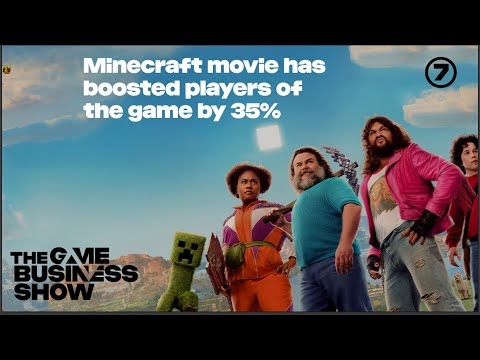
So, we've got to move away from the old way of making games where you had that fully staffed team no matter what the game required, no matter what players required, and move to something that's more flexible, more agile and certainly more sustainable. Minecraft cleaning up and the way it's done is definitely a really big win for the pictures division. The big question is if it, you know, is going to be on track to, you know, hit a billion or get close to it. Hello and welcome back to the game business show. This week on the back the hit Minecraft movie, we delve into the world of video game IPs going into film and TV. We also hear about a new game studio trying to both win over gen alpha players. We're also becoming a case study on how to be a modern agile game developer. And we also find out more about a new game event taking place in India designed to help India's growing indie. And joining me on this week's show is Corey Erikson, media analyst for Variety Intelligent Platform and Luminate. Have I got that right, Cory?
Variety Intelligence Platform, not just an intelligent platform. Yes. Um, how are you doing? Doing all right. Doing all right. I was at the video game bafters last night and I'm uh I'm starting to feel quite tired, so I apologize if I start to ramble. That was a repeat of the Game Awards. Astrobot did really well, right? Yeah, Astrobot cleaned up. I really enjoy the BAFTAs. It's always a really great event. But I have to say, so they have these inmemoriam sections which have really cropped up in video games the last few years. And somebody I met a couple of years ago, a chap called Brett Jones, who was the um one of the lead artists on Golden Eye and Perfect Dark, which two of my favorite games, did a panel together on the 25th anniversary of Golden Eye. Wonderful, wonderful guy. We got ill and he sadly died last year, but he was missing from the memoriam section, which which and he's actually won two BAFTAs. Um, so I was I was quite quite a wonderful event, lovely put together, and these things get missed. These things happen and and there's probably a process that need to be gone through to get them included. But I have to say it was the one thing about what
was a really good event that sort of soured it a little bit for me. Hopefully they'll they'll fix that. Well, we're here to talk about um uh well, the big topic for today's episode is the uh the Minecraft movie has just broken box office records. It continues to do exceptionally well despite uh uh relatively lukewarm reviews. I think that's even being generous and it's obviously having a huge impact on the video game as well. Have you seen the film? Have you Have you been to the cinema, rushed out to watch it? I have not seen the film. Um I have seen, you know, the various hub up around the film and how well it's done. Um I'm very impressed that it beat Barbie from a couple years ago by a little less than 1 million in its domestic opening and I think the global opening altogether is around 300 million. So, you know, it's the best opening of the year. so far the best since Deadpool and Wolverine last year, which is, you know, really fantastic for both, you know, gaming adaptations on the film side as well as Warner Brothers. What's so interesting about how well this film did is how, you
know, much of a win that's needed for both the film and gaming sides of Warner Brothers. Obviously, Warner Brothers games is not involved with Minecraft to any degree. You know, this is a Warner Brothers Pictures project altogether, but as we know, Warner Brothers games hasn't been in a great position this year. They closed three studios, including Monolith earlier this year. So, um, for a gaming adaptation to do this well in that ecosystem, I think is certainly important for that division. And it's also just as important for the two people running Warner Brothers Pictures, uh, Michael Duca and Pam Abdi, because, you know, there are a lot of high-risk films coming out this year that so far weren't off to a great start after the Mickey 17 opening. So Minecraft cleaning up in the way it's done is definitely a really big win for the Pictures Division. The big question is if it, you know, is going to be on track to, you know, hit a billion or get close to it. Um, I have a feeling for as good as the opening
is, the sort of enthusiasm around it and the attendance was is probably going to prove to have been concentrated towards the opening and not so much towards, you know, subsequent weekends. you know, just based on like all the viral videos I saw of people like losing their minds in the theater, it seems like, you know, this was sort of the opening was sort of the main event here and everyone with, you know, any kind of emotional stake in Minecraft, anyone who needed to take their kids to see something, you know, they all showed up for this main weekend. How it does after is going to definitely be the real test to see, you know, if it's another Mario. Yeah, I was going to ask because this is the same window, isn't it, of the the Mario movie which did um also similar. It did over a billion 1.3 billion. Yeah. Um in the box office it does seem to be billion seems to be almost a normal. I know Sonic it was across three films they've now done a billion dollars but it is certainly accelerating and every event I go to now has a entire series of panels now about Hollywood and games and the crossover
opportunity and of course it's not new but it seems it feels like from my point of view that games has become almost a new comic books somewhat. Um, I think the audience is certainly there for a lot of different gaming IP being brought into the Hollywood space. The trick is just how well the project, whether it's film or whether it's TV, can really match sort of the culture surrounding, you know, the core gaming experience. In this case, I think clearly the Minecraft film succeeded in that regard. And keep in mind, you know, it didn't review very well. You know, it was not a smash by critical standards by any means. I think this is just a film where they were able to really match the culture behind Minecraft and really map a lot of what people, you know, like about Minecraft as an experience onto a certainly loose but good enough narrative experience for, you know, the film to prove to be, you know, as valuable as it was to the theatrical experience because obviously it's never quite that simple. You know, last year we saw Borderlands not do very well in theaters despite having a lot of
stars attached. And I think it's just, you know, how well one of these projects does, you know, it could depend on various factors. It could depend on, you know, do you have a core character that's going to bring people out? You know, obviously that was the case with the Super Mario Brothers movie. And we'll see if, you know, that kind of enthusiasm extends to The Legend of Zelda next year or is that 2027? There's another Mario one next year, right? And then it seems to me Nintendo's moving to an annual schedule with their films. And The Legend of Zelda is going to come through Sony Pictures and not Universal because Universal does the Super Mario Brothers movies through Illumination, but Zelda is a Sony project. You mentioned about that culture element because I think Minecraft is an example of those games that just taps into what Minecraft fans like. And it's the same with I think of Five Nights at Freddy's as another film that didn't review greatly but seemed to really capture that audience and that franchise quite well to the point where there's a second film this year and it and it and it certainly I think that's the thing with video game films sometimes it's they
don't always lend themselves to sort of highquality um stories necessarily but if they're if they can tap into that cultural affiliation fans have for these things and they then they can do extremely well and they can be well loved. Well, what do you think of um this? There was another recent bit of news on, you know, the gaming adaptation film front where Death Stranding at A24 now has a director in uh Michael Cernowski. He last did A Quiet Place Day One for Paramount. Before that, he did a much smaller film called Pig for Neon, which was sort of, you know, more of an artsy Nicholas Cage movie. That to me is one I've been a little bit skeptical of just because, you know, for as critically acclaimed as Death Stranding is and, you know, its status as, you know, newer IP within the PlayStation ecosystem, a liveaction adaptation of that to me means a pretty big budget. So, for it to be made through A24 instead of Sony was something I found particularly fascinating. And I mean, if
they they've got a director attached now, they're, you know, they're a step closer to getting this off the ground. I just, you know, I think that is, you know, about as ambitious as one of these projects can get just because Death Stranding as a game, you know, that's a much more hi-fi graphically intense, you know, AAA gaming experience, which to translate that correctly over to film and have it look consistently good, that's going to require a pretty substantial budget. Yeah, I I don't think Death Stranding is a particularly big game in terms of commercial performance and success. You know, Kajjima, of course, was tied with Metal Gear Solid and was largely seen as AAA. His games still look AAA. They still punch above their weights, but I think they're more of an indie team now effectively. So, I'll be interested to see if that actually translates quite nicely to that sort of um um smaller budget um project. The other thing actually tied to this is I was I interviewed Sam late um Remedy's um creative director uh yesterday and he's
obviously one of I talked about the projects he's got coming up and one of the things he's most excited about is this deal with Anna Pererna and um and um Remedy in the terms of you know I I think of Sam Lake in Gideima as being quite similar game creators and they're almost they're involved in all elements of the creation of these things. They're writers as well as you know game directors and he was talking about you know the ability to get involved in these things. I think that's the other element of this, right? It's it's that particularly in recent years whether it was Ubisoft as well um and then Nintendo now there is more active involvement from the video game side and getting involved in these projects which I know is not they don't they don't know how to make movies that's not what they do but there is an element of that authenticity and that um um making sure you capture the essence of the of the the thing that you're trying to make which can that can theoretically help with which I think is what helped comic book movies sort of find their feet was when Marvel itself got involved in making them. Yeah. I'm not sure there was much of a point there, but it's Well, no, no, there I mean, so far when people think of successful gaming adaptations, obviously there's the Mario movie, you know, anything with a monetary value attached,
you know, Mario is so far at the top of how well gaming IP has translated over to the Hollywood space. But the other two, you know, people are very obsessed with and talk about all the time would be The Last of Us and Fallout. And of course, The Last of Us is um this uh this upcoming Sunday on HBO. Yeah. So that's going to be very much in the conversation again. But those were two projects where, you know, sort of the core people involved with them. We're closely involved with the adaptations. You know, with The Last of Us, you have Neil Duckman. He's co-creator, co-showrunner, co-writer, you know, directs one or two episodes each of these seasons. So, he is about as involved as, you know, a creator can possibly be with that. And then with Fallout, you have, you know, Todd Howard very, you know, heavy on the show as a producer. And and again, you know, that's for for people who want more Fallout. Yeah, sure you have, you know, Fallout 76 as a live service, but as as far as, you know, new Fallout games, Fallout 5 is still just like a ways and a ways away on the horizon. Bethesda has
to do um The Elder Scrolls 6 first before they can get to that. So, you know, Fallout the series on Amazon, you know, for people who want more Fallout, that's pretty much their only option for very likely the rest of the decade. For that show to work, Todd Howard does have to be very, very closely involved to keep it as, you know, Fallout of an experience as it possibly can be despite being a TV series instead of a video game. One thing I do want to mention um since you brought it up that Remedy Entertainment Annaberna pictures deal what's so interesting about that is it's not simply them licensing you know Control and Alan Alan Wake as IP to Annaperna to you know make potential film and TV projects out of the deal has Anna Pererna contributing to the actual funding of Control 2. I think as much as half of the game's budget, right? Which is a particularly unique deal because typically the way these deals go is, you know, it's just licensing one way or the other, you know, this is remedy saying,
you know, to Annaperna, you know, if you want our IP for your own purposes, you have to actually invest in the core IP and, you know, keep it alive because what we do is very high quality, which means it's also very expensive. And uh for as good of a deal as that was for remedy, it was a little bit messy on the Anaperna picture side because Annaperna Interactive had absolutely nothing to do with that deal. that deal sort of came together outside of, you know, their own effort to try to be spun off into their own separate company. And then, you know, as was reported in the news, the talks there kind of stalled to the point where most of the Enerno Interactive staff ended up leaving the company altogether. And now a bunch of them are forming, you know, a new company with some of the folks carrying over from private division. Yeah, I've got some stats. I hope you won't hate it, but uh any regular listeners know I'm a bit of a stat person. So I was interested to see what is the impact of these time movies on video games in particular. So the Minecraft movie obviously doing extremely well though it's a bit early
for sales data. We do have daily active players. So on the Saturday uh after the movie came out um so the fifth um daily active players for Minecraft grew 9% week on week and on Sunday players were up 17% week on week. Now that doesn't that's according to Ampair analysis. That doesn't sound like a lot, but that's because Moyang ran a bunch of activity, including releasing some Minecraft movie DLC for free the week before. If we go to the week before, the Saturday before the movie came out, daily active players were up 25% week on week, and Sunday numbers were up 14% week on week. So, that's two consecutive weeks of mostly double digit growth for a game that already boasts nearly 170 million uh monthly active users. We do actually have some data in GFK's uh uh in the UK. Um GFK Nielsson does the physical game sales and they've revealed that the Nintendo Switch copy of Minecraft rose 25% in sales week on week and in fact it rose 8% on sales week before as well. So you've got evidence here of some growth on the game side from the film. What this sends me down a
rabbit hole was uh how does this compare what normally happens? And the truth is it varies so much depending on the game and what the strategy is and all sorts of things. If we go back to the last major video game movie, which was Sonic the Hedgehog 3, um, for this film, Sega actually released a Sonic game designed partially to tap into the movie with Sonic Shadow Generations. Now, I know it's a that was technically a sort of remake remaster, but Shadow features in the film and the game, and that's why they did it. The game launched in October, a film released in December, and during December, Shadow Sonic X Shadow Generations monthly active players increased 46%. What might have actually had a negative impact on that, however, is the game was Sega placed Sonic Frontiers, which is another 3D Sonic game list a few years ago, into the PlayStation Plus subscription service. And as a result, Sonic Frontiers is actually the most popular Sonic game in terms of players during uh December. Not the game designed to tie in with the movie. But overall, I think from Sega's point of view, that's a really strong month for um um um Sonic.
Um I'm going to stick with movies for a bit. I went to Gran Turismo. remember that one? That one wasn't like a Borderland style disaster. I think it made it it did okay in the box office critically a little bit more mixed, but not too negative. Um, according to Ampair, players of that game did rise 20% month on month. Um, and across Europe, this is GSD data, video game sales actually grew 78% month for month for the game Gran Turismo 7. But we're not talking huge numbers here to be clear. Uh um Gran Turismo 7 was number 33 in August when the movie came out and the previous month was number 82. So it's a big jump but it's still number 33. It's not it wasn't a huge um driver of sales. It helped a little bit. Obviously that month's big disaster was the Borderlands movie. Um now the previous Bordlands game, the main Bordlands game was Borderlands 3 and it that actually had a big summer anyway because it was in also included in PlayStation Plus but like Sonic Frontiers. Um, it entered PlayStation Plus in July and reached 2.15 million players that month. Um, when the movie
came out, it rose to 2.16 million. So, a tiny 3% increase. Saleswise, however, August was huge for Borderlands 3. According to GSD data for Europe, Borderlands 3 sales jumped 418% and went from number 99 in the charts to number six. This was mostly due a lot of headlines were running around at the time saying Borderlands movie boosts game sales. And I'm sure it helped a little bit with maybe um but actually there was a 90% discount being made on Borderlands games particularly on Steam. Um and I think that probably have a bigger impact on the uh on the performance of that game over uh uh over the film. Um and the other one I mentioned I mentioned it earlier was Five Nights at Freddy's. It wasn't Critical Darling, but fans enjoyed it and the monthly active user count for the first game in the series on the month that Five Nights at Freddy's came out was 100% up month on month. To put that into actual numbers, at the start of October, the game had around the first game in the Five Nights at Freddy's franchise had around 10,000
active daily users and that rose to 50,000 daily active users during the first week of the movie's release. So, there's lots of evidence here of success, but it kind of depends on the approach to it. The Mario movie, um, which happened, you know, you know, all the games shot up in the charts and that was partly because Nintendo did a big bundle around the film Remote Mario Kart and and and the Mario games. there wasn't a lot of discounting going on by Nintendo and it did it did cause a boost in Switch sales um but you know things like The Last of Us the first Last of Us Sony did very little in terms of promoting it but we can talk about TV shows but yeah it it's it varies but it seems to me you need to don't think again how well it does largely depends on how good the product is and how much the publisher or leans into um leans into that uh uh opportunity well in in the as you did mention this in terms of the Sonic movie, but the norm used to be tie-in games alongside any kind of movie release that's largely gone out of the way with, you know, the embrace of live
services like Fortnite and Roblox as promotional platforms, but also too for IP that is gaming based. And you you just covered this, but I think the new the new trend going forward is, you know, obviously it's too hefty to try to make, you know, a new gaming experience tied to the movie. what we can do is take the existing ones and, you know, discount them, put them on a subscription service, make them easily accessible. And you you did mention how you felt you you you didn't see Sony do too much of this with The Last of Us, but that's not actually true because when The Last of Us was up for Emmys at the beginning of 2024, um you know, the Emmy ceremonies, yes, were delayed because of the writer strike and actor strike in Hollywood. So, they happened in January 2024, if I remember correctly. That is the same month they, you know, basically updated The Last of Us Part Two to a PS5 version. They kind of timed those two together just because since it was up for so many Emmys, they
knew they were going to be promoting The Last of Us show at the same time. Yeah. Well, let's see. Let's talk about The Last of Us because actually I say it didn't do very much. It did do very well. It aired in January 2023. um the show and like you know we can talk about Fallout in a minute as well because the Fallout TV show everything went up at the same time and of course the Last of Us was was uh released weekly. Um there was an oddly what I find really fascinating is there was initially a spike in game sales at the start as you'd expect. So IDG um reported a 38% jump in sales of the game. Not a huge jump but it's a decent jump compared with pre-show sales. But then when the show finished it jumped again, this time by 75% compared with pre-show sales. So actually this is a phenomena here where the Last of Us actually caused a spike in sales after the game after the series has finished. I don't know if that's because people tend to binge watch these things and that's when actually there was a huge spike in in viewers at that point or if it was um linked to people wanting to go back and experience the story um after enjoying the TV show. I I
don't know what the phenomena is there as can speculate. Um, but uh it had two spikes uh of Last of Us game sales. Um, in terms of engagement though, it's actually just huge. The Last of Us Remastered, which I think was the PS4 remake of The Last of Us, hit 1.8 million monthly active users during January when the show launched, which is a rise of a,000% month on month. Last of Us Part Two, which was the the sequel, rose 440% in monthly active users with 1.4 million people. And the Last of Us Part One, which is the PS5 version of the first Last of Us remake, yeah, rose 347% in players to nearly 600,000. And it was released the I think I believe September 2022, so a few months before the show premiered on HBO. Yeah, indeed. Um, so um, that success continued into February actually because The Last Free Master jumped again by 417% as the show continued. 2.2 million monthly players. Part two jumped to just shy of 1.6 million players.
That's up 178%. And then part one dropped um 62%. And then the show finished in March and things were still pretty strong in March. Um but it's actually its monthly user count though didn't go back down to pre-show numbers until the summer. And there's a similar phenomena happened with Fallout. So um obviously Fallout was a massive hit because it was I think it's Amazon's Prime second biggest TV show after Rings of Power I think Lord of the Rings show. Um, and the last Fallout game, Fallout 4, that I reported on this at the time on Games Industry is it shot to the top of the charts, um, or uh, came out 9 years before the TV show. It sold over half a million units across Europe during that month. Uh, and according to IG again, the sales were up 345% at its peak versus pre-show sales. And now, it's worth noting it was severely discounted. So, they followed the sort of Borderlands thing. So, it wasn't just the fact there was a hit TV show. The game was really, really cheap. was also in uh subscription services and they had updated it to PS5 as well in
tandem with the show. Yeah, there was there was a lot they really lent in. What I think was most interesting though because is their player numbers. So according to Ampair, Fallout 4 had 10 and a half million monthly active users during April which is when Fallout came out. Um that was more than that was 9 million users up over March. But come May, things dropped but only to 9 and a half million. So of course the show all aired at the same time. This maintains so um yes it dropped again to around 4 million in in come June but actually it wasn't until September that the user numbers on Fallout went back to March levels. So although although the big spike was at the beginning it's the same with the last of us or actually spike at the end for the last of us. Um the the the there was an impact on in terms of players play playing that game for long after the show had finished. It wasn't just a a quick enjoy play a game to tie in with the thing that I'm playing. It sort of stretched out across um uh across the months and months and months. Um which is um which is very good. I'm
interested though to see how The Last of Us Part Two will do because um there's in the TV show um the TV show I suspect will do very very well. But the impact upon the games and the only thing I've really got to base this on is the Halo TV show. There were two series of Halo, right? That's the reason why I find this interesting. And according to IDG, when the first show launched in 2022, sales of the game rose over a,000% um,090%. Now, it's from a very low base. That's why that number's so high. Um, however, the second series, which I had last year, barely had any impact on the game sales at all. Um, which I mean, it's not unsurprising to suggest that the first series is the one likely to have the biggest sales impact. And I think it's not unreasonable to suggest that will be the case for Last of Us as well. Although they believe they've just they've done the whole new PC version of of part two. So there is there is something there that might boost it. But actually in engagement terms, TV show did help uh the second series of TV show did help encourage players back to the
game. According to Ampair, Halo Infant and Halo Master Chief Collection saw monthly active users rise around 300% each during February 2024, which is when series 2 debuted. And the Master Chief Collection then rose again by 100% in March as the series continued, making the biggest month, the Master Chief Collection since November 2022, and then the series was cancelled. So, it's um I'll be interested to see the second series impact upon the Last of Us games, whether it have that same influence or not. Well, I think the prospects for that are pretty good on account of the fact that this upcoming season of The Last of Us season 2, it's not covering the full part two of the video game. And I'm I'm glad it's not doing that because this is only a seven episode season versus the 9 episode first season. And you know, part two is double the length of part one the game essentially. So, um, the fact that it's only going to cover a partial amount of the story, I think, is going to very likely drive viewers who haven't played part two yet
back to part two to, you know, see the rest of the story because, you know, we're in the age of sometimes as much as two years passing between new seasons of TV. So, there's no guarantee, you know, a season 3 of The Last of Us comes out in for in quick enough succession for people who are dying to see the rest of the story. instead they have part two the game that they can go to. So that's going to work out very well for them. Um um what I'm particularly interested to see is you know and it it does seem like they're starting to kind of mentally prepare people for you know the realistic amount of the Last of Us seasons given that you know after part two there's there's not much more of The Last of Us. Um they they have yet to really make any kind of commitment to a part three over a Naughty Dog and PlayStation. Um obviously Naughty Dog is doing a pretty high-profile space game uh as their next project. Um they announced that at the last game awards. Um so that is going to be a pretty hefty
endeavor before, you know, they can really, I think, see if they have enough resources to, you know, work on a Last of Us Part 3 concurrently with that. Neil Duckman has sort of kind of said some wishy-washy things about how realistic a part three is. Um cuz I know that when The Last of Us first became a huge hit, you know, as glad as I as glad as I was to see that, as much as I liked the show, what I was nervous of is like, oh, is this going to be the next, you know, Game of Thrones George RR Martin situation over at HBO where the show's so big it just kind of continues on its own past the material from the actual creator because obviously the thing with Game of Thrones was, you know, Winds of Winter, the novel, had not come out and the show just kind of went forward with, you know, the established plot line anyway instead of that book coming out. So, it right now it doesn't seem like that's likely to happen with The Last of Us, but I guess depending on how well season 2 does compared to season 1, you
know, we we don't know that for sure. Obviously, you know, this is not Warner Brothers IP by any means. So, realistically, I don't think they would be in a situation where they could easily just continue the show into material past part two. But, you know, right now the future of the show is a little bit uncertain in terms of how much more they can get out of it seasonally, especially if you know there are no current reported plans for a part three. I do wonder why Neil Neil said that, you know, Neil the um other shower said they wouldn't go past the games, but I I don't know why when you've got the person that can write that wrote the games who could possibly write you the next series. I I just or at least plot it out. I I I don't know why that's not a possibility, a way of continuing the story. Um if if the game developers want to try and do something else, um do something new. I I personally think it's fine, but well, I guess I understand the concern of of sort of getting that wrong, but Well, do do you think Amazon, especially as a company that does have
its own gaming division, even if they're not a high output gaming division over at Amazon, um do you think now that they have a hit show in Fallout that, you know, there is a desire there for, um, you know, more Fallout on the gaming side to be expedited to, you know, better serve interest in the show or because Fallout the show is its own story that is canonical to the Fallout universe but not adapted from any specific Fallout game. Does it then not matter as much? It's a good question. You know, do you if can the TV show replace be be the uh u the replacement for the lack of games or or is it actually the thing that might spark the um development of new projects? I think Fallout's an interesting one cuz Fallout's gone to other developers before including a Microsoft owned Obsidian. Um um so it is you think that a possibility there but um I don't know if Naughty Dog would ever although let's talk some Uncharted being given to another studio. So I don't know. Change
topic completely for a second. I've got a couple of extra stories that I had a couple of interviews this week with game developers and game people. Now one of them is about a new game studio has been formed by video game veterans that want to show the way in how to be a modern game studio. Dragon Snacks Games is a new team formed by Amazon and Xbox executive Jim McClean, Scopia veteran Chris Noski, and strategy games expert from Oxide and Foraxis, Michelle Manard. Um, their game is they had a chat with them uh early in the week. I was only planning to run it for this. It was a really good interview, so I might run the full thing. In fact, I will. um they're targeting Gen Zed and Gen Alpha as their audience, which involves them speaking directly, get getting those people in to help them make the game and watching the behaviors of the audience through things like Tik Tok and Discord. Uh they talked about creating social spaces, spaces with games that can appeal to that generation sort of craves that sort of instant fast-paced uh uh experiences. Um here's actually a bit from CEO Jen McClean. I was really privileged in my role at Xbox to have a
team that managed the largest thirdparty partnerships and to see the data for games and studios like EA and Epic and Roblox and Riot. And I also co-led nextG content strategy. And so I got to see a lot of research in addition to being a mom of an 8-year-old and a 12-year-old and a 20-year-old. And so I would watch my 12-year-old play Roblox with her phone propped up next to her and she's FaceTiming or Discording or WhatsAppapping with her friends while she's playing because she's got these social needs that are not being met. My 8-year-old spent 45 minutes on his Roblox avatar and was crushed when no one noticed because he's not playing with his friends, he's playing with strangers. And that comes with a lot of disadvantages and problems and a lot of scary parts to that as well. And so for me it was really thinking as the industry evolves, as our players evolve, what do we need to do differently to meet our players needs and to meet our players where they are. You from my
perspective, I have no interest in building a 200 person team. They're slow, they're expensive, they're big, they're challenging. We've been able to do more with a small team of six than teams of 60 because we all know the vision that we are building to. I want to make sure that we are doing something that the future gamers want that gamers of today and tomorrow want not gamers of yesterday. And I want to make sure that we're doing it in a way that's sustainable because we all know or have been impacted by layoffs. Nobody wants to do that again. And so being really smart and deliberate about using outsourcers, using codev. The reality of making games is that you are not going to have a consistent need for every position at every part of development. And so we've got to move away from the old way of making games where you had that fully staffed team no matter what the game required, no matter what players required, and move to something that's more flexible, more agile, and certainly more sustainable. From my
perspective, and this has been true my entire career, the best thing about the game development community is that we help each other out. Uh, and by being able to say, look, this is where we think the industry is going. This is how we're doing it. This is how we think about sustainable game development. This is how we think about reaching an audience and really building for their needs. If this inspires one person to do things differently, I think it's a win. because if we don't change as an industry, we will continue to decline. No one wants to see that happen. That's uh Jen McClean there from Dragon Snacks Games is sort of talking about the sort of movie model there of having a small central team and then utilizing outsource um uh developers. There's a fun thing I I we did a piece on on the game business a couple of weeks ago about game investment and this studio basically ticked every box that the investors were saying they want to see from games. They want to see a game studio that doesn't necessarily be making games themselves, but actually want to make games for a specific
audience. They want a a game developer that's working with that audience from the beginning and getting them involved in making the games. They want studios that can be small and lean and make use of modern production techniques, including AI, which they're doing. Um, and honestly, Dragon Sax Games mentioned all of that in my interview. This is all the things they're doing. I felt like they were it was an investor tick box, but actually they talked about the fact that it's important that this is how modern games are going to be made. smaller teams, more outsourcing, um utilizing latest production methods and um and sort of being really laser focused on on trying to speak to audiences that perhaps are being distracted by other things like Tik Tok or or being won over by other things like Tik Tok might be the uh um the suggestion, but they're interesting team. Um and um they talked about social spaces as well. Speaking to that, um what's their plan to wrestle, you know, uh younger potential gamers away from Fortnite, Roblox, Minecraft, you know, their usual home spaces? Well, they they're almost targeting people, not so much Roblox, but younger than that. And um but one of the things is is
to be an addition rather than the replacement. And um I mean, I thought I think that's I think they've got a challenge. I'd asked them this question. For them, it's it's about being on the side of those things as opposed to as a replacement for it, but also doing things that's a little bit, you know, that really looking at how they engage with Tik Tok, looking at how they engage with Roblox and working out how they can they can sort of tap into all of that. We'll be seeing there's lots of companies that would love to succeed in this place, but hey, these people have, you know, they are Jim McLean's been at Xbox, been at Amazon, been around a while, so they certainly know the theory. Well, I think it's difficult for the gaming space in that um yes, if you can if you can have a socially derived gaming experience that appeals to younger gamers where you know your your game itself can act as a platform for you know them and their friend groups to spend a lot of time in that could be very valuable but you know people age and taste and interests and interactive experiences change as people age. So I think I think you know what's tricky and what there are no easy
solutions to for you know any any game studio especially ones that are launching in the space is you know how h how do you really approach a specific demographic or you know try to create a gaming experience that can appeal to as many demographics as possible because younger gamers have a lot of time to devote to an experience but um you know you don't know that you're going to actually have them for more than a year more in two years. And you know, there are still older gamers who might be more, you know, easygoing towards a new experience and not necessarily tied down to a Fortnite or a Roblox. So, you know, do you necessarily want to like put them to the side as well? I I think the gaming industry is really struggling with, you know, trying to strategize around various demographics. It's it's Yes. But I I think what's interesting is that phenomena of young people like quicker game quicker experiences, you know, fast and more
instant gratification, but also older gamers don't have the time for these big long wy, you know, a generalization obviously um experiences. I wonder if those there's an actual there's a meeting here of the two sort of worlds. Um time poor adults and um and uh I don't use the word impatient. It sounds like I'm being mean, but sort of impatient young people might actually allow for an experience that um can cross crosswave well between the between the two. We'll see. I see seeing what they what they build on it. And certainly in terms of creating a studio that's designed to be sustainable and affordable and they can scale a little bit easier and you're not you're not holding to to big teams. Um, the last story I've got um is actually about a new uh video game business and consumer event that's launching in India this weekend uh or this week called Indie Game Usaf designed to help accelerate India's I hope I got that right. Designed to help accelerate India's gamedev scene on the global stage and they described it as a festival for Indian indie games. It takes place at
Comic-Con India in Mumbai. It is being organized by Ivich Singh who is the co-founder and game director at Nodding Head. uh that's the studio famous for Raji and ancient Epic which is one of India's most successful PC and console games. I think they're going to have it's certainly uh there's going to be as well as the opportunity for consumers to go hands-on with these games. There's opportunity for publishers to meet the developers. There's also going to be some um workshop that they already they've already done some ahead of the event as well. And here's Sing himself sort of talking about the project. Comic-Con India has also been trying to do video games since 2014 or something if I'm not wrong. I have seen some very old photos of games being played at Comic-Con Bangalore and that's where the picture got completed that we would uh make this a home for Indian gamers which is the ComicCon audience very anime uh all anime fans pop culture fans everyone's there's even a video game
cosplay category so definitely lot of gamers visited and uh now It just rolled into a big thing honestly. We had sessions with Raw Fury. There's a session with Devolver on the 8th. There's a session with Epic for Indies and uh we got nine publishers on the floor. There's a Poland publisher, Untold Tales coming in. Uh Singapore there two publisher coming in and uh from Japan we have Danjen Entertainment, Exola uh Xbox, Intel saw the value and became sponsors. So you know that's the aim to make this home for developers. So publishers can fly in because a lot of developers here do not have the funds or the means to fly to say GDC. While now there are some uh developers doing that. it is still a big risk because they end up spending roughly $10,000 or slightly less eight8
to$10,000 which is a lot and could be a year uh a lot of fund for you know a studio which is just a couple of people so I'm trying to create those opportunities here so far publishers have been very supportive and developers have seen the value so we have I think 45 46 confirmed games as us know that's singing they're talking about um indie game the stav um alongside the event there's a steam sale dedicated to indie games that's set to take place I think there's 116 games involved I think that's what he said the last time this happened was in 2021 there was only 54 games involved um it's it's an interesting story this because um India's a India's been best known as an outsource as a game the game dev scene is best known for outsourcing and it's um its development scene is best its sort of audience is best known for mobile games. Nikico Partners says that 77.9% 78% of total revenue spent on games in India was spent on mobile
games. Just 14 and a half% spent on PC and just over seven and a half spent on consoles. Um but it is attracting a lot of international attention um and platforms looking to discover new titles. We've seen the Xbox developer accelerator program which has been used a lot in India. um where PlayStation have launched its hero project in India which is again trying to incubate games in that territory in that territory. Epic Games India has been given grants to studios. Craftton also has an incubator. I think there's a recognition here that if you're going to be want to be successful in India what might be the way to do that is to have games that are very much speak to that audience. This is the country where the movie the biggest movies in India are Indian movies and uh the biggest music is Indian music. they they a very it's very much um a part of uh that culture. So they you know the PUBG game that's very popular in India has an India version. I saw a game at DDC called Detective Dotsson which I thought was amazing which is a wonderful game obviously very much uh uh uh set in that
sort of world and culture and I actually found it fascinating somebody who knows very little about that world to uh to to discover it but equally um I think that's the sort of stuff that's going to probably resonate best in that country or at least that's the theory I think from some um of the bigger international companies that are looking to invest in this in this area. Yeah. Well, I mean India alone is u a bit more than 1.4 billion people. So that's a I would say that's a pretty uh appealing factor to you know looking for what whatever growth there is is still to find in the gaming industry you know focusing on you know the world's biggest population centers is certainly one way to go. Yeah. Yeah. actually and I do have one more bit from Singh who talks about um the fact that the the market is a big opportunity for studios and also talked about the fact that uh some of the things that companies are doing here he is the numbers were always with India if you if you just look at mobile gaming the numbers are crazy and especially for free-to-play games these add a lot of
value and I worked at Zingga I uh for two years where I worked on Farmville and Empires and allies So as much as hey India might not be the top paying nation for some of these games I know Wales cannot exist if you know there's there's no ecosystem of other gamers so I think India does provide a lot of value plus I have seen crazy numbers being spent from India as well even in palm will umpires and allies so people do like to spend it it's a matter of value are you able to provide that value in your product be it a movie, be it a music album or be it video games. There are some cultural nuances of course but slowly everything is changing in India. Uh Raji was played uh by a prime minister last year uh and that yeah and it was like uh a event they conducted with streamers some
famous video game streamers. So there was definitely that message being sent out that hey uh this is the next big thing and I think uh uh a cultural change is almost here because people now know a lot about games like blacksmith myth and there's a huge question going on out there where's the next blackmith is it from India blah blah blah so that's still far Sony hero project just got here xab all these things have just started so hopefully and uh I I have personally seen the quality go really high in just few years. Yeah. Sing there. And he also talks about X XDAP is the Xbox developer accelerator program. I've never heard it called that but that's what he calls the thing. The event by the way which is on this weekend um is co-organized by the Indian esports company Nwin. Um we're running out of time. We had a lot to cram into this episode. I'd like to thank uh Cory for taking part. But you've got a gaming report coming out. Isn't that right? Yes. So, uh, Variety
Intelligence Platform, uh, my team over at Luminate, we put out special reports on a monthly basis. So, our May report, which is going to go live May 1st, is going to be all about gaming. also IP uh it's sort of about gaming and IP together and what you know the gaming medium is coming to mean to the IP space where the opportunities are there but also you know some typical core you know gaming industry data and stats from a variety of you know third party providers but also uh incorporating some of luminate's own data on the film and TV side and streaming side as well. So, when was that out? Did you say May 1st? I look forward to that. And thank you for joining us on on the Game Business Show today. Yeah, thanks for having me on, Chris. Thank you for joining us this week on the Game Business Show. We'll be back next week, our feature show and our news analysis show. And maybe we'll have a bonus episode or two in there as well. Until then, thank you for tuning in.
Auto-generated captions from YouTube — names and numbers may be misheard.
Adaptations of video game intellectual property into film and television have become a primary driver for sustained player engagement and commercial growth. By treating gaming franchises with the same cross-media strategy historically applied to comic books, studios are successfully converting theatrical interest into tangible spikes in game sales and active user counts. High-profile examples such as the Minecraft movie, The Last of Us, and Fallout illustrate that when adaptations capture the core culture of the source material and maintain creator involvement, they generate long-term momentum rather than fleeting interest. These media events often trigger double-digit growth in daily active players and significant increases in physical game sales, particularly when supported by strategic discounting and integration into subscription services.
The industry is currently shifting away from traditional, standalone tie-in games in favor of agile, sustainable development models that leverage existing titles through frequent updates and cross-platform promotions. This evolution reflects a broader trend toward maximizing the lifecycle of established games. As studios refine these strategies, the focus remains on balancing product quality with effective marketing to ensure that screen adaptations translate into lasting community growth.
Simultaneously, the global landscape of game development is expanding, with regions like India emerging as significant hubs for innovation. Initiatives such as Indie Game Utsav are fostering local talent and bridging the gap between regional developers and international publishers. While the Indian market remains heavily concentrated in mobile gaming, increased investment and a focus on culturally resonant content are positioning the region as a vital growth opportunity. This shift toward decentralized, agile development, combined with sophisticated cross-media integration, defines the current trajectory of the global gaming industry as it seeks to capitalize on the increasing cultural prominence of its most popular franchises.

The Game Business · 2026

The Game Business · 2026

The Game Business · 2026

The Game Business · 2026

The Game Business · 2026

The Game Business · 2026

The Game Business · 2026

The Game Business · 2026

The Game Business · 2026

The Game Business · 2026

The Game Business · 2026

The Game Business · 2026

Anzu · 2026
Two & a Half Gamers · 2026
Deconstructor of Fun · 2025
Sensor Tower · 2025
Newzoo · 2025

Fandom · 2024
Fandom · 2024
Newzoo

InvestGame

Deconstructor of Fun · 2026

Two & a Half Gamers · 2026
The Game Business · 2026
Comments