Five Nights at Freddy's
Game
Documents about Five Nights at Freddy's
Dead by Daylight’s Event Strategy on Streaming
Dead by Daylight's tenth anniversary in June 2026 makes it a useful case study in sustaining live streaming engagement for a live service game.
- The June 2026 launch of the Jason Voorhees chapter set a record for Dead by Daylight with 2.1 million hours watched in a single day, representing a 135% day-over-day increase in viewership.
- Event streams are the most effective driver of viewership, delivering an average 108% boost above baseline, followed by full chapter launches at 55% and Twitch Drops at 48%.
- Dead by Daylight maintains a high level of streaming engagement through a dense content calendar, with the game's baseline viewership holding steady between 0.5 and 0.7 million daily hours watched.
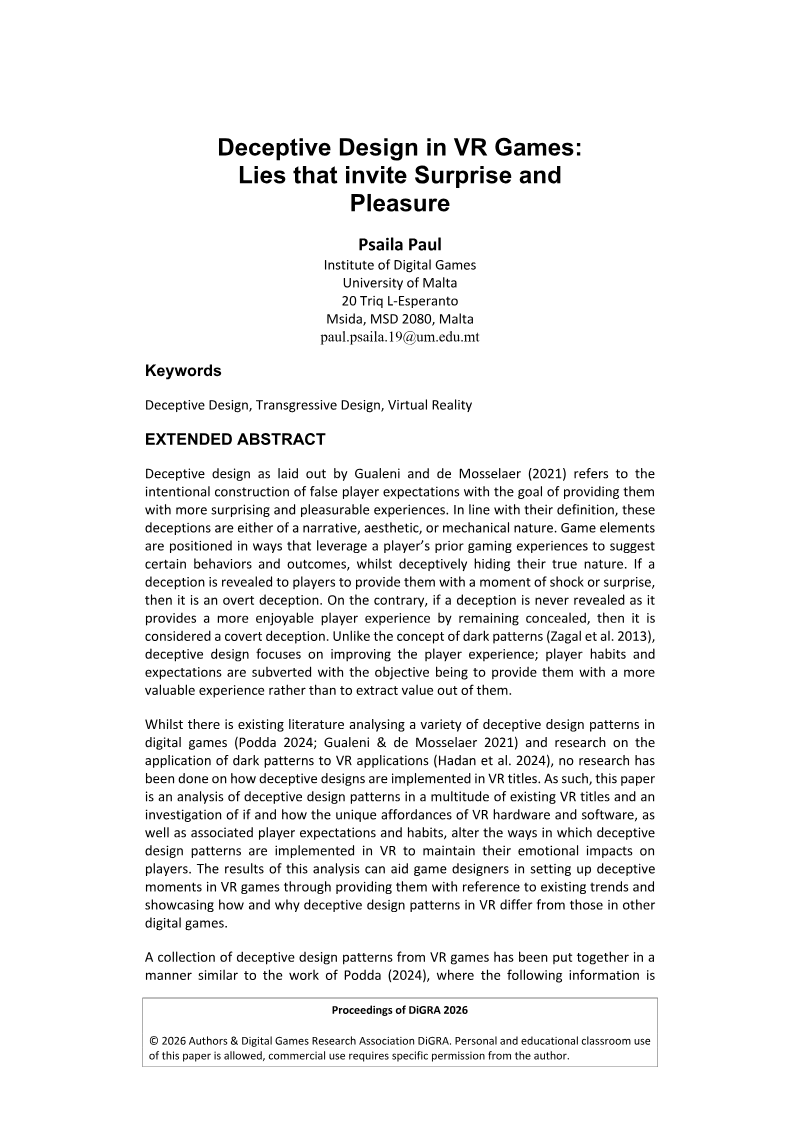
Deceptive Design in VR Games: Lies That Invite Surprise and Pleasure
This paper examines deceptive design in virtual reality games, a topic it argues has received no dedicated research despite existing work on deceptive design in digital games and dark patterns in VR applications.
- Deceptive design, as defined by Gualeni and de Mosselaer (2021), is the intentional construction of false player expectations to create more surprising and pleasurable experiences, differing from dark patterns because it aims to improve rather than extract value from the player.
- Deceptions are classified as overt (revealed to produce shock or surprise) or covert (kept hidden because they make the experience more enjoyable), and as narrative, aesthetic, or mechanical in nature.
- The paper introduces a new 'Level of VR Dependence' categorisation: deceptions are either low (identical if moved to non-VR games), mixed (heavily altered), or high (break completely outside VR) in dependence on VR affordances.
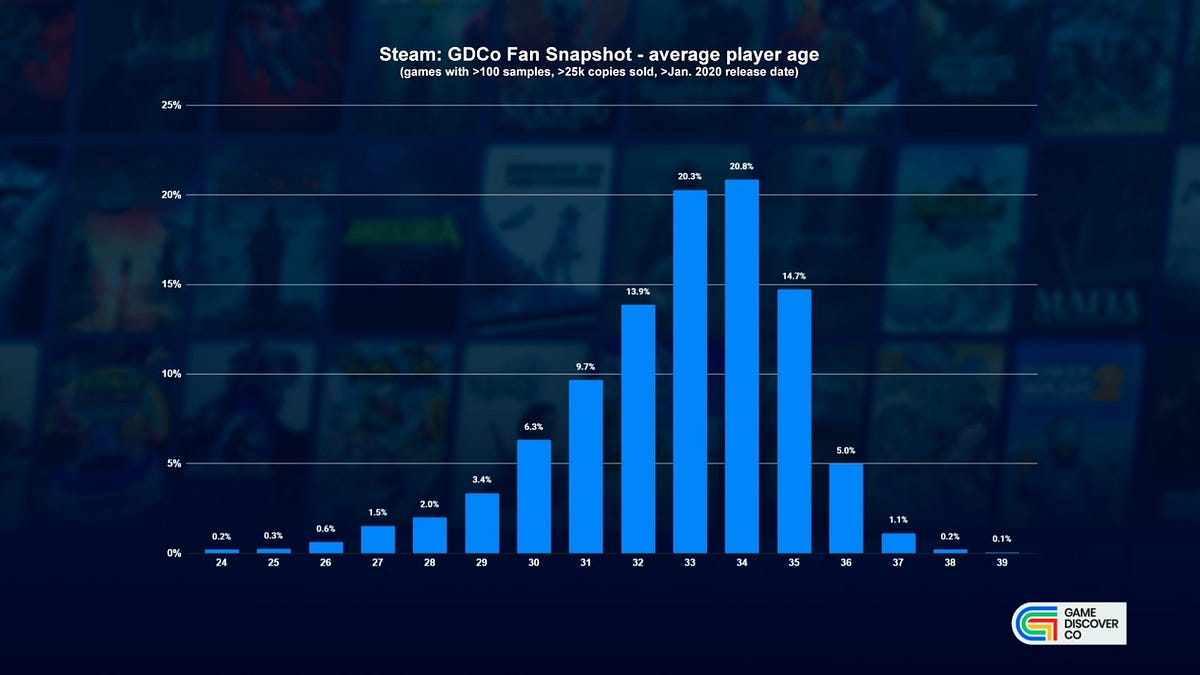
How Old Are Your Players, and Does It Matter for Discovery?
Average player age is an under-analyzed variable in Steam marketing, and GameDiscoverCo's Steam Fan Snapshot survey offers a first look at it.
- The median age of Steam players for games released after January 2020 with over 25,000 sales is 33, confirming that older players constitute the core demographic.
- Games with an average player age of 36 typically feature single-player and strategy tags, while those averaging 28 years old are five times more likely to feature multiplayer tags.
- High-average-age titles are predominantly single-player, strategy-heavy, or retro games like Titan Quest and Songs of Conquest that appeal to users with long PC histories.
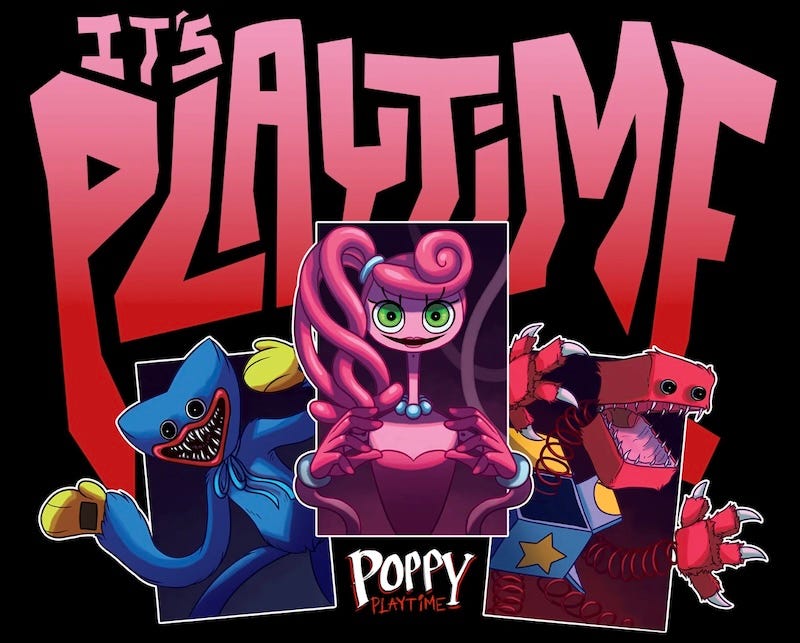
How Poppy Playtime Made 'Free Game, Paid DLC' Work on PC
Poppy Playtime's "free base game, paid chapter DLC" model on PC turns out to be a major commercial success, even though its structure kept it off GameDiscoverCo's usual Steam charts.
- The Poppy Playtime franchise has generated nearly $100 million in total revenue, with over $30 million in gross sales from four DLC chapters on Steam alone.
- The model leverages a free-to-play base game that has secured over 2.7 million downloads on Steam and 360,000 on Epic since February 2026.
- Chapter 5, priced at $20, achieved 408,000 sales on Steam and 19,000 on Epic, demonstrating the commercial viability of premium episodic content.
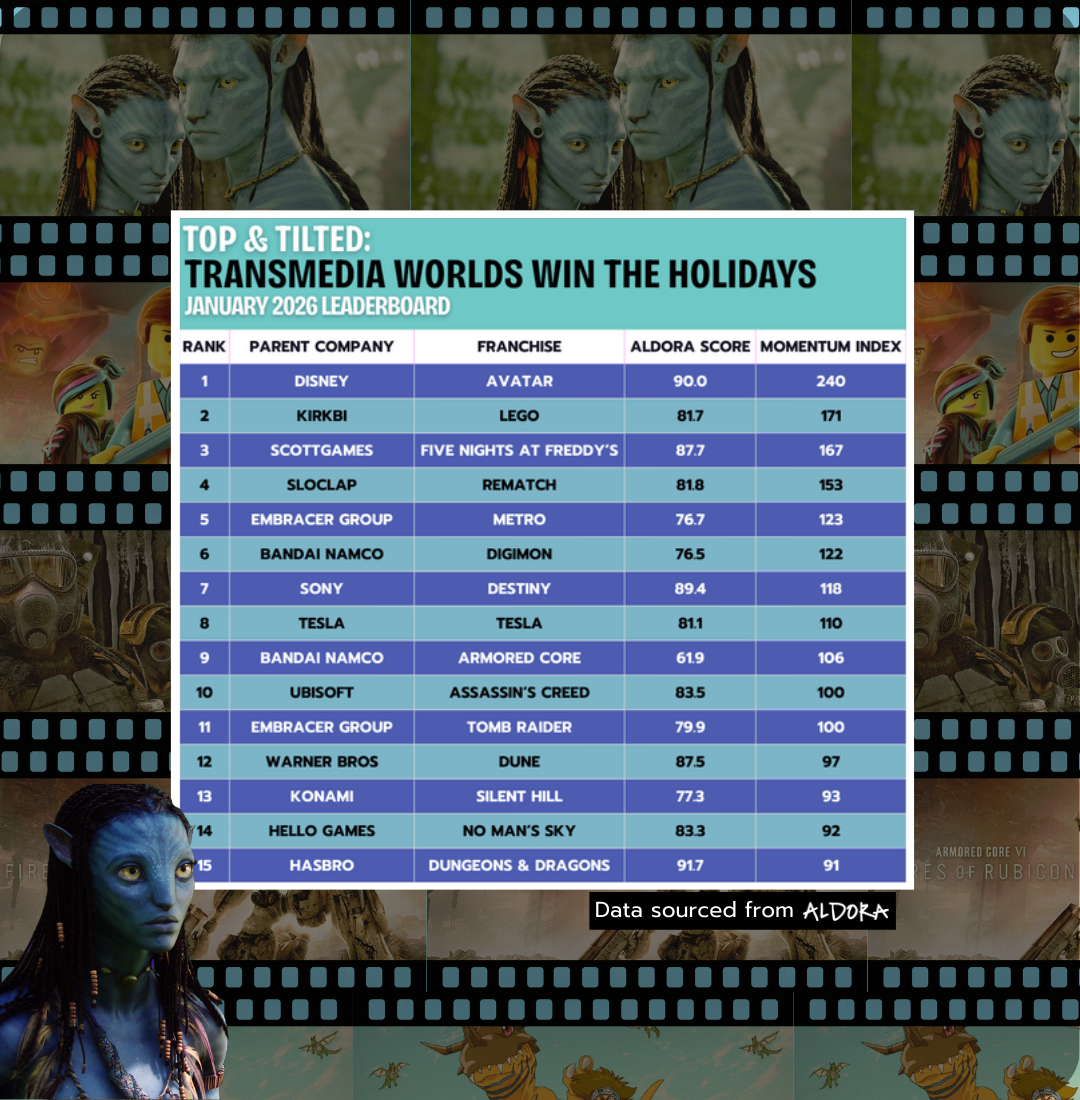
ALDORA Leaderboard: Ubiquity Begets Success, January 2026
The ALDORA Leaderboard for January 2026, based on December 2025 data, asserts that success for brands and franchises is increasingly driven by their ability to establish ubiquitous presence across diverse channels for audience interaction and engagement.
- The most successful franchises in December 2025 were those that functioned as integrated ecosystems across film, gaming, merchandise, and social platforms, rather than relying on single-format content.
- Avatar led the January 2026 leaderboard with an ALDORA Score of 90 and a Momentum Index of 240, driven by its ability to accelerate engagement across gaming, video, social, and commerce.
- LEGO (81.7 score) and Five Nights at Freddy’s (87.7 score) secured the second and third positions by successfully orchestrating audience participation across diverse digital and physical touchpoints.
Five Nights at Freddy’s on Live Streaming
The Five Nights at Freddy’s (FNAF) franchise maintains a robust presence on live-streaming platforms, driven by a highly engaged community that thrives on narrative mystery and fan speculation.
- The June 2025 release of 'Five Nights at Freddy’s: Secret of the Mimic' generated 3.8 million hours watched and a peak of 171,000 concurrent viewers during its debut week.
- The 'Five Nights at Freddy’s' (FNAF) franchise maintains a consistent baseline of approximately 800,000 monthly hours watched, with significant viewership spikes occurring only upon the release of new content.
- The 2023 FNAF film release triggered a 300% increase in franchise viewership, growing from 287,000 hours watched two weeks pre-release to a peak of 883,000 hours the week after.
Scary Business: Mascot Horror as Product and Reflection of Platformisation
"Scary Business" examines mascot horror, a subgenre of survival horror exemplified by Five Nights at Freddy's: Security Breach, Poppy Playtime, and Garten of Banban, as both a product and a reflection of digital platformisation.
- Mascot horror, exemplified by Five Nights at Freddy's: Security Breach, Poppy Playtime, and Garten of Banban, is framed as a postclassical survival horror subgenre defined by first-person perspectives and mysteries rooted in corporate wrongdoing.
- The genre was popularised through YouTube creator culture and extended through transmedia merchandising, and its themes are read as mirroring the precarity of online content creators and the dominance of capitalist realism.
- The authors argue mascot horror reproduces heteronormative gender stereotypes, citing Mommy Long Legs's emotionally unstable portrayal, gendered caregiver and protector roles, and the increasing sexualisation of Chica.
Plus: Hellblade II – More Niche on Steam Than We Thought?
Analysis of recent market performance reveals that Senua’s Saga: Hellblade II has seen a more niche reception on Steam than initial projections suggested.
- Senua’s Saga: Hellblade II underperformed on Steam with a peak of only 3,900 concurrent users, leading to estimated first-week sales of 100,000 units and under one million Game Pass downloads.
- The limited commercial reach of Hellblade II is attributed to its linear, arthouse design, which failed to capture the mainstream audience expected of a major first-party Xbox title.
- Steam wishlists are proving to be an unreliable predictor of success, as evidenced by titles like Crown Wars: The Black Prince and Synergy failing to convert high follower counts into active player bases.
Here Comes Hellblade II: How Will It Do?
Market analysis of mid-May 2024 game releases indicates a period of high-performing PC ports and mixed results for established strategy franchises.
- Ghost of Tsushima's PC launch exceeded expectations, peaking at over 60,000 concurrent users and establishing itself as a top-performing PlayStation-to-PC conversion.
- Senua’s Saga: Hellblade II is projected to have a moderate Steam debut with an estimated peak of 5,000 to 15,000 concurrent users, hindered by a relatively low follower count of 22,000.
- Homeworld 3 and Men of War II faced mixed user reception due to technical issues and high fan expectations, which may negatively impact their long-term sales performance.
Plus: What Were December's Top Grossing PC/Console Debuts?
Analysis of PC and console market performance for December 2023 reveals a highly concentrated landscape where a few breakout hits dominate total revenue.
- The December 2023 PC market was highly concentrated, with only two out of 1,147 Steam releases exceeding $10 million in gross revenue and just 28 titles surpassing $100k.
- The free-to-play shooter The Finals was the month's top performer, generating $23.5 million in gross revenue on Steam and reaching 5.8 million players across PlayStation and Xbox.
- Warhammer 40,000: Rogue Trader led the premium segment for December, achieving $12.5 million in gross revenue on Steam.
How Did ‘The Plastic Duck Game’ Become a Discovery Hit?
The unexpected commercial and viral success of Placid Plastic Duck Simulator serves as a primary case study for modern game discovery.
- Placid Plastic Duck Simulator achieved top-20 review status on Steam by leveraging streamer-friendly, physics-based gameplay that allows content creators to generate their own narratives.
- Nearly 40% of the game's sales originated from Japan, South Korea, and Taiwan, driven primarily by regional VTubers and influencers before expanding to Western audiences.
- Niche platforms like Tumblr, which hosts 300 million monthly active users, are critical hubs for sustaining long-term interest through character-driven fanart and microscene engagement.
Plus: December's Steam Debut Hits So Far – From Icarus to Wartales
This analysis evaluates the performance of premium PC and console game debuts during the first half of December 2021.
- Survival and tactical titles are currently outperforming casual games, with RocketWerkz’s Icarus achieving a strong 0.23 Hype-to-Reality (HTR) ratio.
- Shadow Tactics: Aiko's Choice demonstrated high market conversion with a 0.29 HTR, while Mechajammer failed to gain traction, recording a low 0.03 HTR due to technical issues.
- Steam’s sales charts prioritize individual SKU performance, whereas Epic Games Store charts provide a broader view of revenue by including in-game purchases and DLC for titles like Genshin Impact.
Companies behind it

As the documents state it.