Battle Royale
Game
Documents about Battle Royale

Is AR a Failed Consumer Category or a Successful Mobile Gaming Genre?
Augmented Reality (AR) has failed to establish itself as a broad, mass-market consumer category, despite significant investment from major technology platforms and developers.
- Augmented Reality (AR) has failed to emerge as a mass-market consumer category, as it lacks broad adoption outside of a single, isolated success story.
- Niantic’s Pokémon Go remains the only mass-market AR-centric product, having generated approximately $3 billion in lifetime revenue as of the end of 2019.
- AR functions effectively as a niche genre within the mobile gaming industry rather than a standalone consumer category, similar to how puzzle-and-decorate games function as a sub-category for companies like Playrix.
Epic Games Primer (Pt V): Fortnite & How It Built the Epic Flywheel
Fortnite serves as the central engine of the Epic Games ecosystem, functioning not merely as a video game but as a foundational social platform and a critical research and development vehicle.
- Fortnite functions as a social network rather than a traditional game, with users spending significant time 'loitering' in virtual spaces to socialize, fish, or dance rather than engaging in competitive gameplay.
- The platform has three primary modes: Battle Royale (competitive), Party Island (non-violent social space), and Creative Mode (a user-generated content engine similar to Roblox).
- Fortnite generates approximately $2 billion in annual revenue through a free-to-play model that relies exclusively on non-competitive cosmetic purchases, proving the viability of this monetization strategy at scale.

Japan Gaming Market with Serkan Toto
The Japanese gaming market, valued at approximately $13 to $15 billion, remains a distinct and highly lucrative ecosystem dominated by mobile platforms, which account for roughly 70% of total revenue.
- The Japanese gaming market is valued at $13–$15 billion, with mobile platforms accounting for approximately 70% of total revenue.
- High barriers to entry exist due to a top-heavy market structure dominated by legacy titles like Monster Strike and Puzzle & Dragons, alongside AAA mobile production costs that frequently exceed $10 million.
- International competitors from China and Korea, such as NetEase, are successfully capturing domestic market share by introducing innovative genres like Battle Royale that challenge the traditional dominance of gacha-based RPGs.

New Genre Taxonomy and Why We Need It
The mobile gaming industry faces significant challenges in market analysis due to the rapid emergence of hybrid game archetypes and the inherent fragmentation of the digital marketplace.
- GameRefinery implemented a three-layered taxonomy—Category, Genre, and Subgenre—to address the fragmentation and difficulty in categorizing modern, hybrid mobile games.
- The taxonomy enforces a 'singularity' rule where each game is assigned to exactly one Category, Genre, and Subgenre to ensure accurate market research and performance comparison.
- The system uses a hierarchical structure where Subgenres are defined by specific game mechanics and features, which then roll up into broader Genres and Categories.
2020 Predictions: Who Will Reap the Rewards as Fortnite Declines?
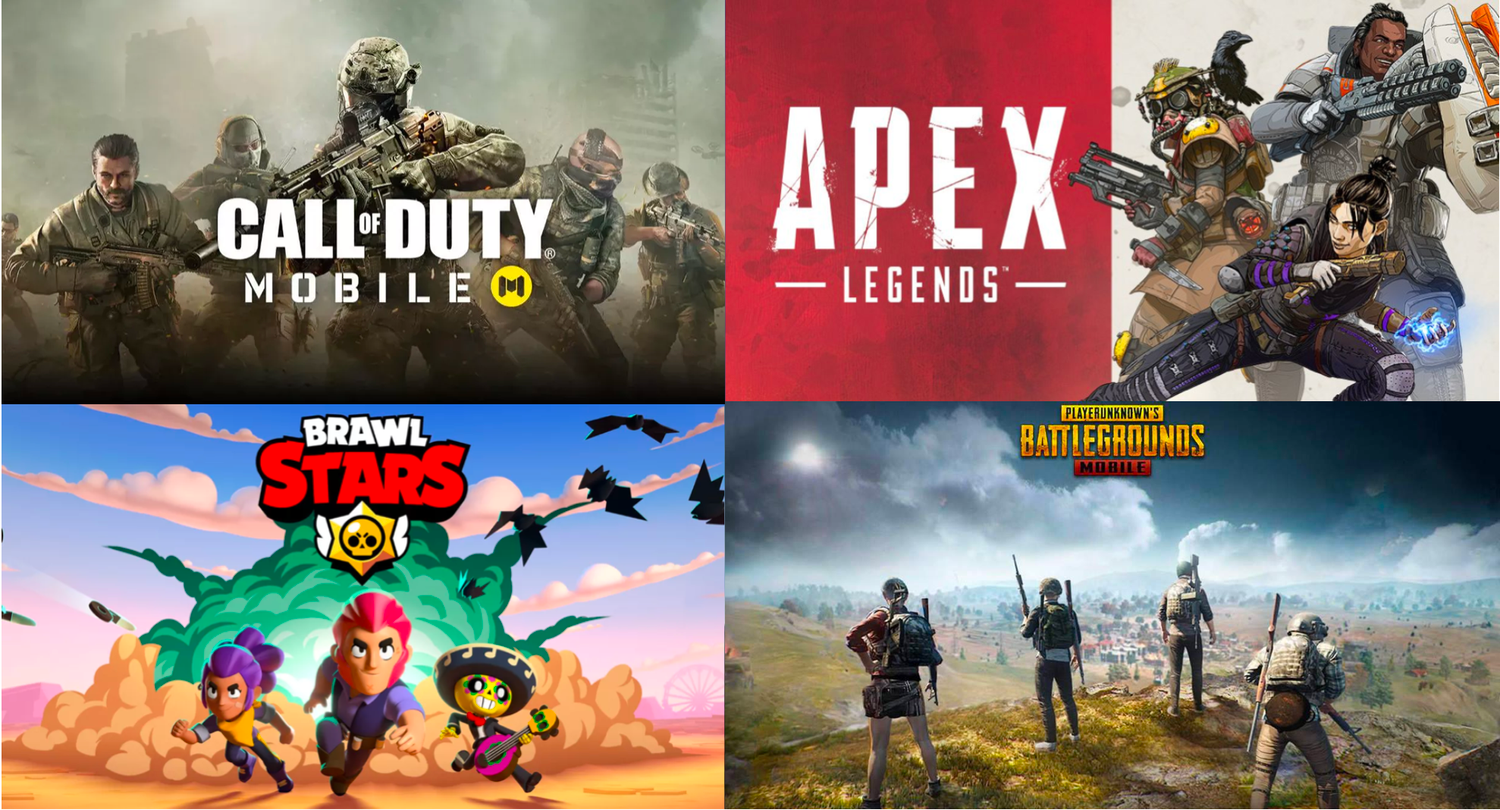
The mobile shooter landscape is undergoing a significant transition as the industry moves away from the peak of the Battle Royale craze toward more specialized sub-genres.
- PUBG Mobile dominated the Western Battle Royale market in 2019, capturing 30-40% of sub-genre revenue, a figure that doubles when including the Chinese version, 'Game for Peace'.
- Effective cosmetic-only economies require massive production pipelines; for example, Epic Games produces over 200 unique items per Fortnite season, including more than 80 full geometry-change outfits.
- Call of Duty: Mobile achieved the highest launch downloads of all time, but its initial revenue per player lagged behind competitors, signaling that Tencent and Activision will likely ramp up monetization strategies in 2020.

Will Midcore Mobile Games Be Squeezed Out of the Market?
The mobile gaming industry is currently experiencing a shift in market dynamics that threatens the traditional dominance of midcore titles.
- Midcore mobile games face significant market pressure from the growth of hyper-casual titles, which offer lower development barriers and instant playability, and hardcore titles, which are increasingly dominated by high-profile ports like Fortnite and PUBG.
- Fortnite mobile demonstrated massive market demand by surpassing 100 million downloads in just 138 days following its 2018 release.
- PUBG Mobile achieved top-ranking status on free app charts in 17 countries within 24 hours of its launch, signaling the strong commercial viability of hardcore titles on mobile devices.

Store Intelligence Data Digest: Q2 2020
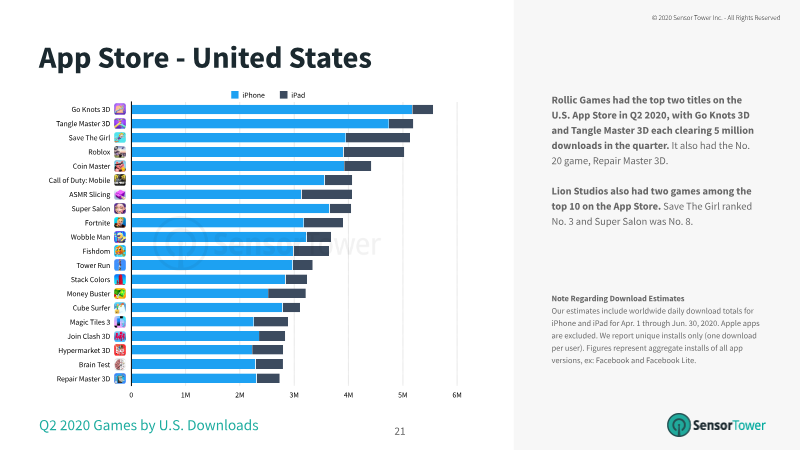
The global mobile app ecosystem experienced unprecedented growth in the second quarter of 2020, driven primarily by the societal shifts resulting from the COVID-19 pandemic.
- Worldwide mobile app downloads reached a record 37.8 billion in Q2 2020, a 31.7 percent year-over-year increase driven by pandemic-related shifts in work, education, and entertainment.
- Google Play game downloads surged by over 50 percent to 12.4 billion, with hypercasual titles leading in volume and Sandbox and Battle Royale genres flourishing as social hubs.
- Business category app installations peaked at 176 percent above pre-pandemic levels, with Zoom becoming the third app in history to surpass 300 million installs in a single quarter.

Battle Pass is a Hot Trend in Mobile Games
The mobile gaming industry has experienced a significant shift in monetization strategies, with Battle Pass systems evolving from a niche feature in Battle Royale titles to a widespread standard across diverse genres.
- Battle Pass adoption in the US iOS top-grossing 100 games grew from a few percent at the start of 2019 to 21% by December 2019.
- The Battle Pass model has expanded beyond the Battle Royale genre into diverse categories, including Build & Battle (Clash of Clans), Match3 (Gardenscapes), and Idle games (Idle Miner Tycoon).
- Most mobile Battle Pass implementations, such as those in Clash of Clans, Clash Royale, Gardenscapes, and Mario Kart Tour, utilize a $4.99 monthly price point.
PUBG Mobile: World's Highest Grossing Mobile Battle Royale Title
PUBG Mobile has established itself as the world’s highest-grossing mobile battle royale title, driven by significant year-over-year revenue growth and a successful monetization strategy in China.
- PUBG Mobile became the world's highest-grossing mobile battle royale title with $167 million in global player spending during July 2019, a 748% increase year-over-year.
- The game has generated $860 million in total lifetime revenue, surpassing competitors Fortnite ($725 million) and Knives Out ($771 million).
- Following its relaunch as 'Game For Peace' in China, the market accounted for $241 million in revenue—28% of the game's total lifetime earnings—within just 60 days.
NetEase Battle Royale Title Cyber Hunter Surpasses 5 Million Installs in First Two Weeks
NetEase’s sci-fi battle royale title, Cyber Hunter, achieved significant early momentum following its global release on April 22, 2019.
- NetEase's sci-fi battle royale title, Cyber Hunter, reached 5 million global downloads across the App Store and Google Play within its first two weeks following its April 22, 2019, launch.
- In the Japanese market, Cyber Hunter achieved 1.1 million installs during its initial 14 days, outperforming the two-week launch performance of NetEase's own hit title, Knives Out, which saw 980,000 installs in the same period.
- While Cyber Hunter has shown strong early adoption, its initial global revenue is approximately $350,000, with $154,000 generated from Japan.
Legal Battle Royale: Not Boring Edition
The gaming industry faces a complex web of legal challenges that scale alongside commercial success.
- Developers must conduct rigorous, asset-by-asset risk assessments for intellectual property, as there are no universal legal standards for creative assets like dance-move emotes.
- Regulatory bodies are actively monitoring influencer marketing, requiring developers to ensure all material connections are disclosed through clear and conspicuous labeling.
- Data privacy compliance, particularly under standards like GDPR, requires a shift from blanket consent models to transparent, specific data collection practices.

Gaming Spotlight 2018 Review
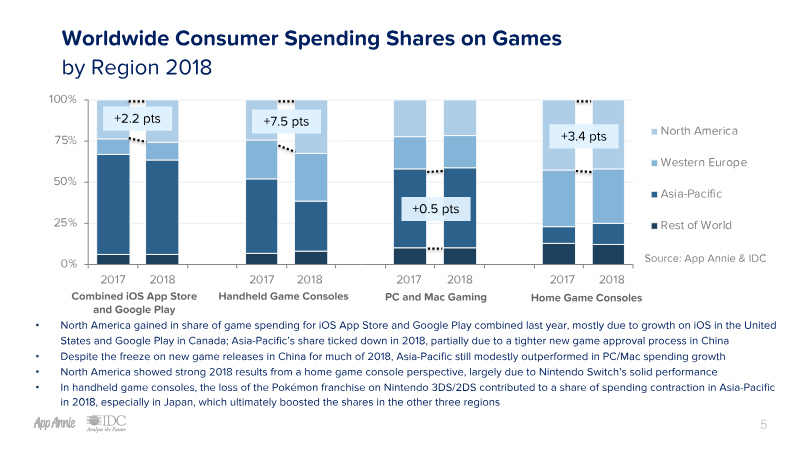
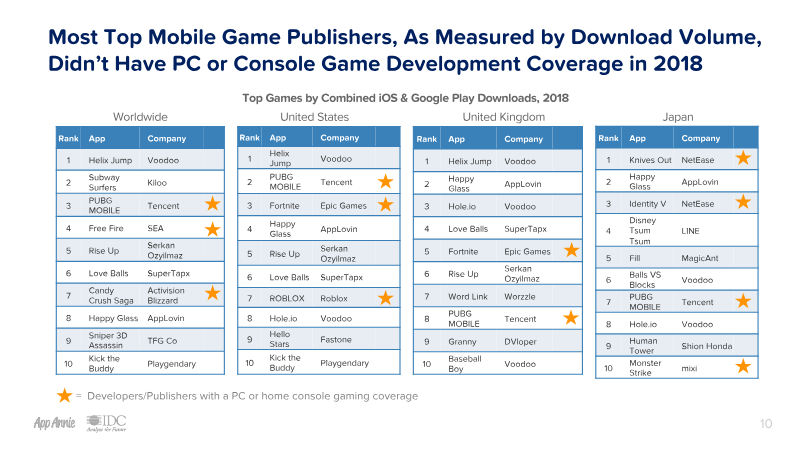
The 2018 Gaming Spotlight Review analyzes the global gaming landscape, focusing on the shifting dynamics between mobile, PC, and console platforms.
- Mobile gaming solidified its market dominance in 2018, with consumer spending exceeding the combined totals of PC, home consoles, and handheld consoles by nearly 20%.
- Mobile games accounted for 75% of total consumer spend on the iOS App Store and Google Play, despite representing only 35% of total app downloads.
- The Asia-Pacific region accounted for over 55% of global mobile game spending in 2018, maintaining its lead despite a nine-month freeze on new game approvals in China.