windows
Company
Documents about windows
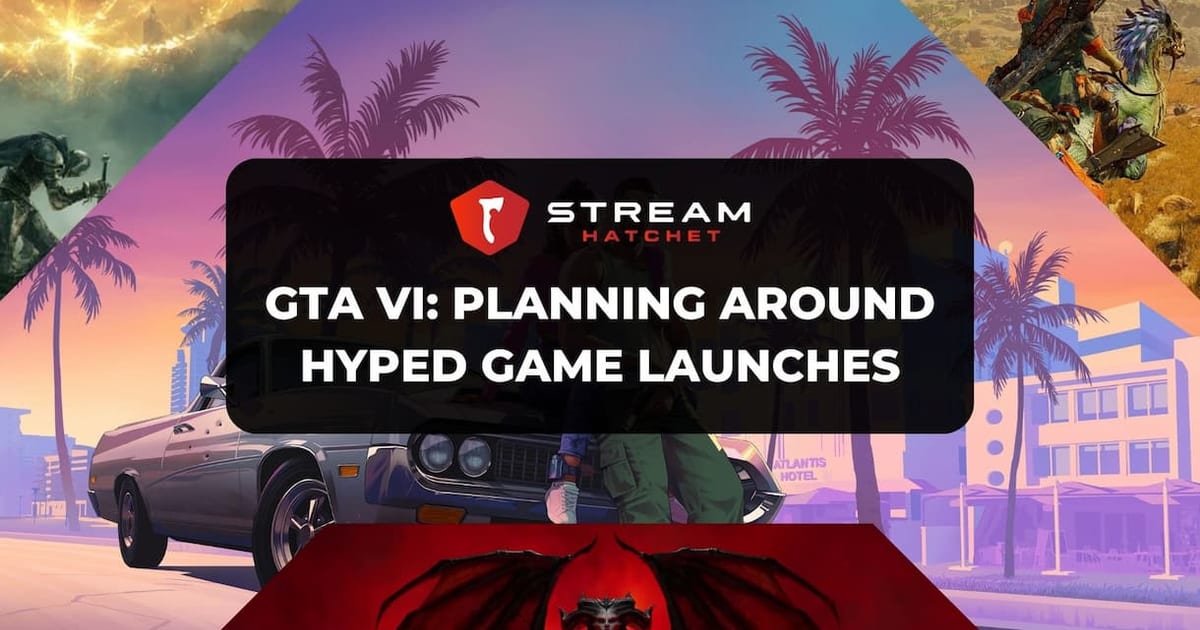
GTA VI: Planning Around Hyped Game Launches on Live Streaming
The gaming industry faces significant strategic challenges when planning around high-profile releases, particularly with the upcoming launch of Grand Theft Auto VI.
- Grand Theft Auto VI is expected to capture over 10% of total live-streaming viewership upon its May 2026 release, significantly exceeding the 6.5% peak viewership share previously set by titles like Diablo IV.
- Historical data shows that major hyped releases can cause viewership for competing titles in the same genre to plummet; for example, Path of Exile’s weekly hours watched dropped from over 4 million to approximately 200,000 during the launch month of Diablo IV.
- Influencers frequently pivot to cover major releases to capitalize on viewership spikes, with some streamers experiencing rank increases of over 1,000 positions and follower growth exceeding 120% by focusing on high-profile titles.

📊 Is 24-Month Payback the New Normal? Real ROAS Benchmarks Revealed!
The mobile gaming industry is currently navigating a period of significant financial strain characterized by a widening gap between user acquisition costs and monetization growth.
- Payback windows for mobile games are extending significantly, with many titles now requiring 12 to 24 months to achieve full return on ad spend (ROAS).
- M1 ROAS serves as the primary predictor for long-term success, where a 40% M1 ROAS typically correlates to a 6-month payback, while under 25% indicates a payback period exceeding 12 months.
- Hybrid monetization is becoming the industry standard, with traditionally IAP-heavy genres like 4X and strategy games increasingly incorporating rewarded ads, and ad-heavy games adopting IAP-focused VIP tiers.

How Indie Mobile Devs Can Get Noticed: PR Approach That Work
Indie mobile studios can achieve significant market visibility by shifting away from generic marketing tactics toward a strategy rooted in authentic narrative building and consistent brand identity.
- Indie studios should prioritize human-centric communication over AI-generated content to build the trust and credibility necessary to stand out in a saturated market.
- Sharing verifiable revenue figures and user metrics provides the objective data required to attract investment and secure attention from media outlets.
- Studios should diversify media outreach by targeting tech, business, and niche vertical publications rather than relying solely on traditional gaming press.

Timeboxes Aren’t Deadlines—They’re Quitting Criteria
The primary purpose of this analysis is to redefine the function of timeboxes within game production, arguing that they should serve as strategic quitting criteria rather than rigid delivery deadlines.
- Timeboxes should be treated as strategic quitting criteria rather than fixed deadlines, allowing teams to stop work immediately if a project fails to meet predefined success outcomes.
- Teams should define specific, measurable success states and exit plans before beginning work to ensure that stopping early is viewed as a disciplined, successful decision rather than a failure.
- Timebox durations must be variable and situational, tailored to the specific level of risk, uncertainty, and business value of the task rather than defaulting to standard sprint or release cadences.

Nintendo Told Me Why Their New System Doesn't Use Achievements
Nintendo’s long-standing exclusion of a platform-wide achievement system, including its absence in the upcoming Switch 2, stems from a fundamental design philosophy that prioritizes player discovery over extrinsic rewards.
- Nintendo has confirmed the Switch 2 will not feature a system-wide achievements platform, maintaining a long-standing design philosophy that prioritizes player exploration and discovery over external reward systems.
- Electronic Arts is laying off 300–400 employees and has canceled development on a Titanfall-themed extraction shooter at Respawn Entertainment.
- Take-Two Interactive has moved the release date of Borderlands 4 forward to September 12, 2025, a rare shift that industry analysts suggest may signal potential delays for other titles like GTA VI or Mafia: The Old Country.

Duolingo: How the $15B App Uses Gaming Principles to Supercharge DAU Growth
Duolingo has achieved significant market dominance in the education sector by leveraging sophisticated gamification strategies to transform language learning into a daily habit.
- Duolingo has quadrupled its user base since 2020 by positioning its platform as a 'gap-time' activity that competes with entertainment apps for 3-5 minute daily windows.
- The platform maintains over 100 million monthly active users by utilizing gamification strategies to maximize daily retention and habit formation.
- Engagement is driven by a three-pillar system: Meta (goal-setting and subscriptions), Fun (difficulty balancing and social leaderboards), and Lock-In (streaks and time-sensitive notifications).
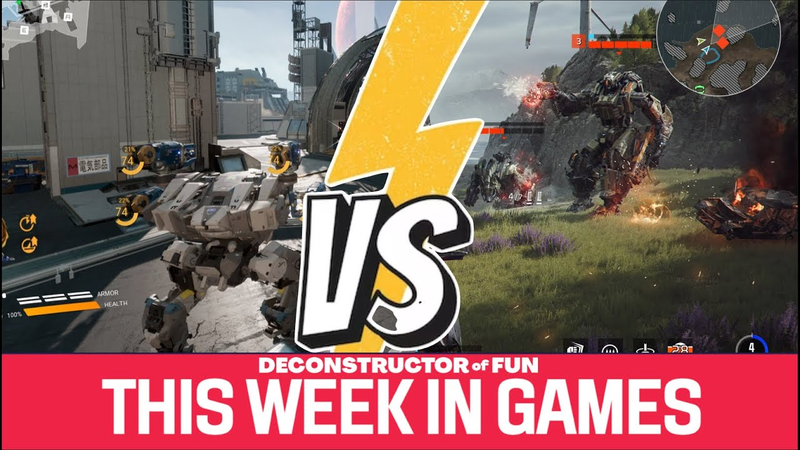
Steel Hunters vs. War Robots: When UE5 Makes You Feel… Generic?
The current landscape of the mech-shooter genre is defined by intense competition and a struggle for market share, as evidenced by the simultaneous emergence of titles like Steel Hunters and War Robots Frontiers.
- The mech-shooter market is stagnant, meaning new titles like Steel Hunters and War Robots Frontiers must cannibalize existing player bases rather than expand the total audience.
- PC remains the dominant platform for the mech-shooter genre, requiring developers to prioritize PC-first optimization to achieve market success.
- Widespread adoption of Unreal Engine 5 is contributing to a 'generic' aesthetic and standardized ballistics, making it increasingly difficult for new games to establish a distinct visual or mechanical identity.

TWIG #326 Supercell Goes VC while Minecraft Kills at the Box Office
The global gaming industry is currently defined by a stark dichotomy between the massive success of transmedia adaptations and the structural challenges facing traditional game development.
- The Minecraft film's $313 million global opening establishes a new benchmark for video game adaptations, proving the high commercial value of Gen Z-focused franchises in transmedia.
- Corporate venture arms, such as Supercell’s investment division, are facing criticism for a lack of strategic cohesion and insufficient mentorship compared to traditional VC firms like Andreessen Horowitz.
- Investors are shifting toward a more selective strategy, prioritizing studios with established intellectual property and clear paths to profitability amid mobile market stagnation.
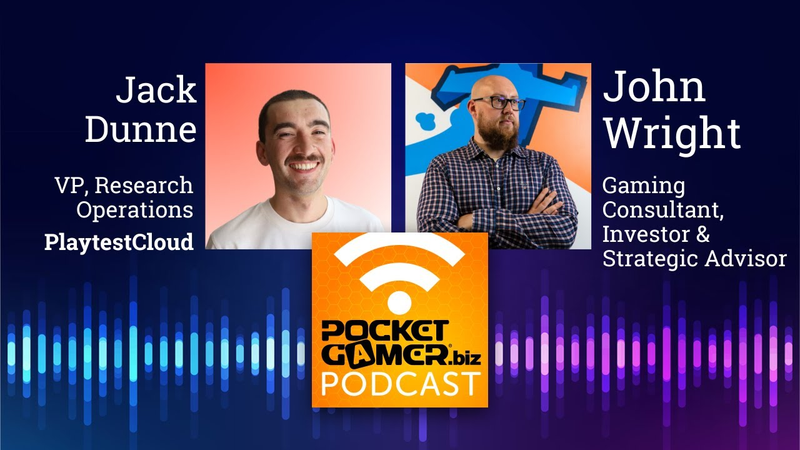
Steal This Strategy — The One Top Studios Use to Save Millions
Top-performing mobile game studios have shifted away from high-budget user acquisition strategies, moving instead toward a model defined by rigorous, multi-stage playtesting.
- Top-performing mobile studios treat playtesting as a continuous, iterative process throughout the entire production cycle—from MVP to hard launch—rather than a one-time event.
- Early-stage playtesting of the First Time User Experience (FTUE) can prevent costly development pivots, potentially saving studios six figures by identifying friction points months before a full launch.
- Successful developers now test their games for extended durations, ranging from two-hour sessions to a full week of content, to ensure long-term engagement and meta-game viability.
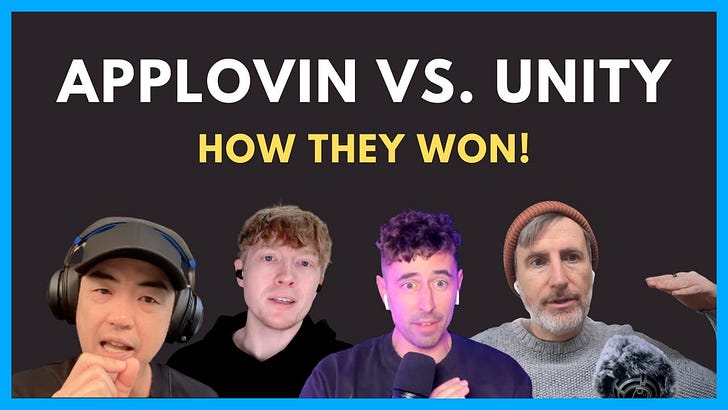
AppLovin vs. Unity: How AppLovin Has Been Winning It All
The mobile advertising landscape has undergone a significant shift since the failed merger between AppLovin and Unity in August 2022, resulting in AppLovin’s emergence as the dominant force in the market.
- AppLovin has achieved dominance in the mobile advertising market by capturing approximately 80% of the mediation market through its MAX platform, creating a significant customer lock-in effect.
- AppLovin’s competitive advantage is driven by its ability to leverage granular, first-party data to improve ad-ROAS, which has effectively marginalized competitors since the failed merger with Unity in August 2022.
- Unity has struggled to compete due to poor operational execution, internal fragmentation, and weak algorithmic performance following its acquisition of IronSource.
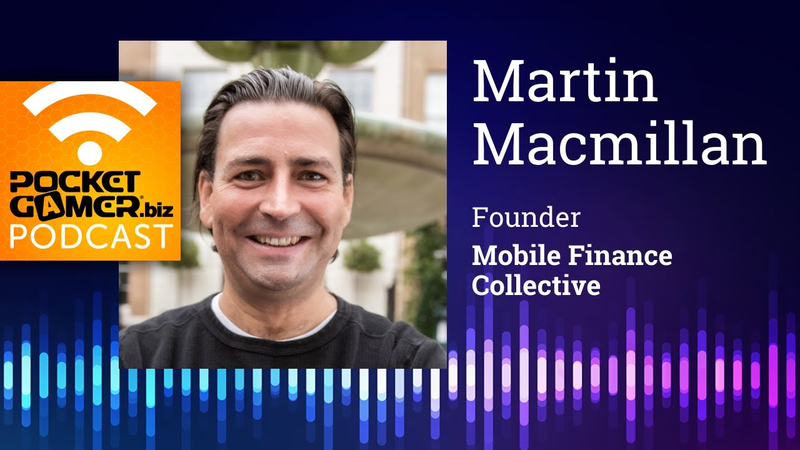
Inside the Mobile Finance Collective
The Mobile Finance Collective (MFC) serves as a specialized community and support network for finance professionals—including CFOs, VPs of Finance, and COOs—operating within the mobile gaming and app industry.
- The Mobile Finance Collective (MFC) provides a vetted peer-support network for mobile gaming finance executives, including CFOs and COOs, to mitigate the professional isolation common in the sector.
- The collective focuses on standardizing industry-wide financial metrics, specifically addressing inconsistencies in attribution windows and install definitions across different organizations.
- Members collaborate on complex operational challenges such as resolving cross-departmental data discrepancies, managing remote HR structures, and navigating international regulatory compliance.

Are Publishers Right to Flee Grand Theft Auto 6? - THE GAME BUSINESS SHOW Episode 1
The global gaming industry is currently undergoing a period of profound transition, characterized by a widening gap between thriving studios and those struggling with funding shortages and labor instability.
- The impending release of Grand Theft Auto 6 is forcing major publishers to aggressively shift their release schedules to avoid being eclipsed by its market dominance, following historical data where its predecessor captured two-thirds of UK game sales in its first three weeks.
- The gaming industry is becoming increasingly fragmented as companies abandon traditional trade shows like GDC in favor of proprietary events, threatening long-term professional networking and collective industry cohesion.
- A widening gap exists between thriving studios and those facing severe labor instability and funding shortages, creating a landscape defined by distinct winners and losers.