windows
Company
Documents about windows
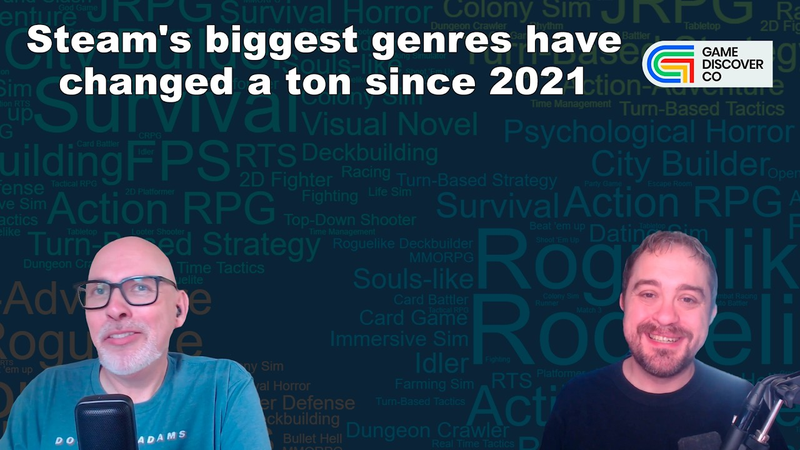
Steam's biggest genres have changed a ton since 2021
Valve maintains a dominant position in the PC gaming market by prioritizing a holistic, independent strategy that emphasizes long-term stability over aggressive, infinite expansion.
- Rogue-like and Rogue-lite tags have surged to become the number one and number two most prevalent genres for successful new Steam games (those selling at least 50,000 copies) as of 2025.
- Steam is shifting its storefront strategy toward algorithmic personalization, moving away from monolithic charts in favor of tailored recommendations based on individual user data and play history.
- Steam is currently testing a new personalized approach for its midweek deal slots, which have historically been curated, front-page features.

🎯 The 2026 D2C Survey: Why 41% of studios still DON'T have a web store (and why they're wrong)
The mobile gaming industry is currently undergoing a strategic pivot toward direct-to-consumer (D2C) channels, with 59% of studios now operating web stores.
- Direct-to-consumer (D2C) web stores now account for 30% to 46% of total revenue for studios that have successfully integrated them.
- While 59% of mobile studios currently operate web stores, 41% remain hesitant due to perceived technical, legal, and platform-friction barriers.
- Studios are shifting their primary D2C motivation from margin optimization to gaining brand visibility, first-party customer data, and control over pricing and promotional strategies.

Live Workshop: 3 Secrets To A Gorgeous 3D Game (Easy, No Modeling, Bonus Q&A)
High-quality 3D indie game development relies on prioritizing intentional scene composition and environmental storytelling over the pursuit of high-fidelity assets.
- Indie game developers should prioritize level design by strictly limiting player movement to guide them through the experience, rather than creating large, open-world environments that lead to optimization issues and player confusion.
- Level scale must be determined through iterative playtesting to ensure the environment matches player movement and mechanics, preventing the common issue of players feeling bored or disoriented in overly large spaces.
- To make a scene feel alive and unique, developers should inject personal creative 'flair' rather than relying on generic, AI-generated tropes that result in uninspired, average-looking content.

Puzzle Monthly #4: $60M Marketing, $65M Revenue, What Happened to Good Job Games?
Good Job Games represents a cautionary case study in the mobile puzzle market, illustrating the limitations of prioritizing rapid asset exits and visual polish over sustainable, player-centric design.
- Good Job Games' title Match Villains generated $65 million in lifetime revenue but likely operated at a loss, as marketing expenditures for the project reached $83 million.
- The studio's failure to compete with industry leaders like Royal Match stems from a reliance on aggressive, punishing level design that prevents the retention of high-value users.
- Match Villains suffered from flat revenue-per-download metrics and an over-reliance on lower-tier geographic markets, preventing the game from achieving necessary scale.
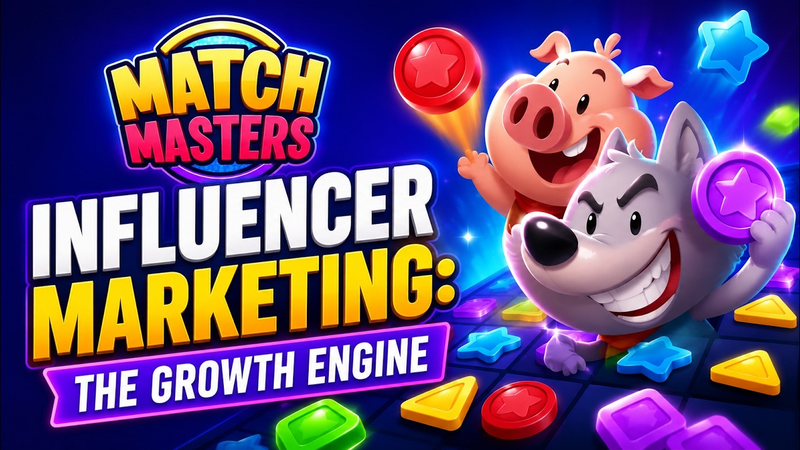
Match Masters' Secret Growth Engine? Influencer Marketing
Influencer marketing has evolved from a peripheral experimental tactic into a core, permanent growth pillar for mobile gaming studios.
- Influencer marketing acts as a core growth engine that can drive up to 30% growth in organic installs by leveraging creator-led trust to attract higher-quality, more engaged users.
- Short-term attribution models significantly undervalue creator partnerships, as influencer-driven installs can continue to accrue for over a year, with some campaigns seeing a 50% increase in attributed installs by day 365.
- Influencer activity creates a positive feedback loop where install spikes improve app store rankings, which subsequently fuels further organic discovery and stabilizes daily active users.

Match Masters' Influencer Marketing Playbook: 8 Years of Always-On Growth
Sustainable growth in the mobile gaming industry requires transitioning influencer marketing from an experimental tactic into a permanent, always-on pillar of the acquisition strategy.
- Transitioning influencer marketing from an experimental tactic to an always-on strategy is critical, as abandoning these programs can accelerate install declines by nearly threefold.
- Deploying a blitz approach, where multiple creators publish content simultaneously, triggers organic uplift and improves App Store rankings while enhancing the efficiency of paid user acquisition.
- Influencer marketing functions as a 'brandformance' tool, attracting higher-intent users who demonstrate superior retention rates compared to those acquired through traditional paid media.
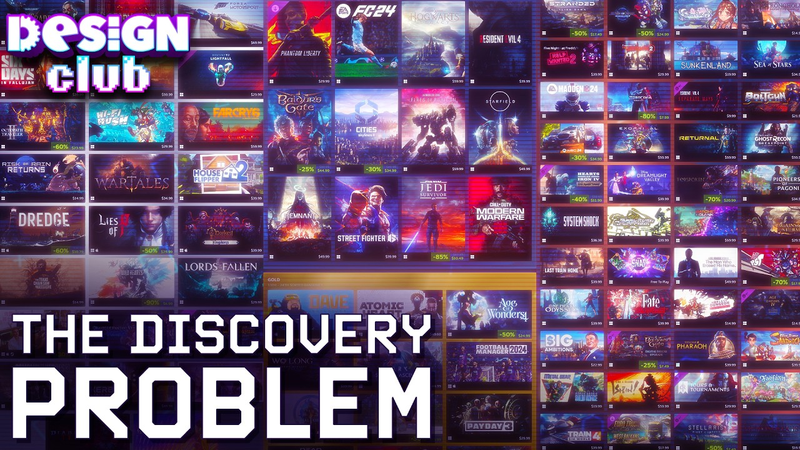
The Discovery Problem | Design Club
The primary challenge for independent game developers in the current digital landscape is navigating the discovery problem, which remains a manageable hurdle for those targeting the dedicated Steam audience.
- The primary driver of game discovery is the ability for players to immediately identify a game's genre and hook from its store page, as shoppers make rapid decisions based on visual clarity.
- Steam's algorithm prioritizes games based on opportunity cost, meaning even highly-rated games may struggle for visibility if they fail to convert impressions into sales compared to other available titles.
- Steam's discovery queue is effective because it targets 'tastemakers'—highly engaged players who act as gatekeepers; if these users engage with a title, they often drive organic growth through word-of-mouth recommendations.

UA Monthly #2: AppLovin's Social Network, Google Fee Cuts & Unity Vector
Unity is aggressively challenging the current user acquisition landscape by introducing D28 in-app purchase ROAS campaigns powered by its Vector engine.
- Unity is testing D28 in-app purchase ROAS campaigns using its Vector engine, moving beyond the industry-standard seven-day optimization window to better identify high-value players.
- Google has reduced Play Store fees from 30% to 20% for new installs, providing developers with marginal improvements in unit economics and increased bidding power for user acquisition.
- AppLovin is exploring expansion into e-commerce and social networking to secure first-party inventory, though analysts view this as a high-risk departure from its core B2B ad-tech expertise.
UA Monthly #1: Meta’s New Playbook, Reddit Ads, & the State of UA
The mobile gaming industry is currently navigating a volatile landscape defined by aggressive monetization tactics and an intense creative arms race.
- AppLovin maintains a dominant market position due to its proprietary Axon technology and superior data moats, while competitors like Liftoff struggle with significant debt and a lack of high-value inventory data.
- Meta is driving short-term revenue growth through intrusive ad formats like forced playables and end cards, though these tactics risk degrading long-term user retention and lifetime value.
- The mobile gaming market is increasingly bifurcated, as top-tier publishers use AI-driven personalization to produce thousands of ad variations per quarter, creating a high barrier to entry for mid-sized developers.
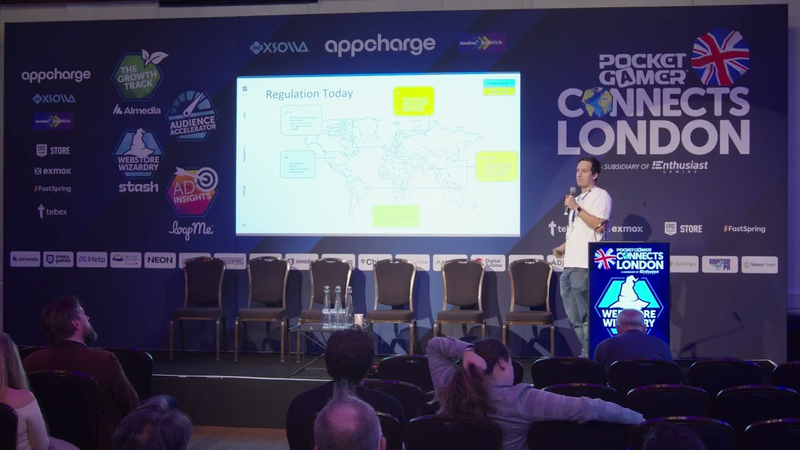
Session: The End of Global DTC: How Regulation Is Forcing Regional Player Flows - Archie Stonehill.
The global landscape for direct-to-consumer (DTC) game distribution is undergoing a significant transformation driven by a patchwork of regional regulations and legal challenges.
- The global DTC landscape is shifting from a uniform model to a fragmented, country-by-country regulatory framework that requires developers to adopt agile, region-specific distribution strategies.
- In the U.S., the dismantling of anti-steering restrictions since 2021 has enabled link-out strategies that now account for over 50% of transaction volume for some developers.
- Regulatory environments currently fall into three archetypes: traditional (restrictive), open steering (U.S.-style, allowing tax-free web checkouts), and taxed/mixed (EU-style, which often includes new fees or UX limitations).
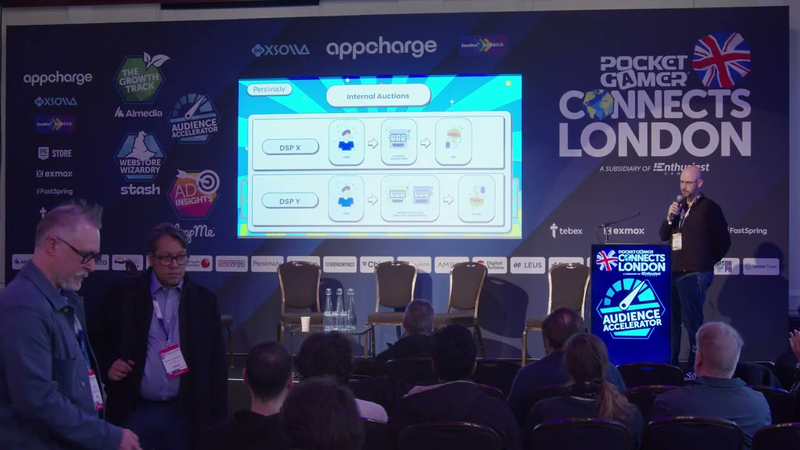
Session: Re-Engagement In 2026: How To Design & Scale Winning Retargeting Campaigns - Joseph Iris.
Retargeting has evolved into a critical component of mobile marketing, now accounting for approximately 30% of total app marketing spend.
- Retargeting now accounts for approximately 30% of all mobile app marketing spend, driven by shorter user attention spans and the maturation of probabilistic retargeting on iOS.
- Probabilistic retargeting, which matches IP addresses to users, has seen a 600% growth in industry adoption over the past year as a primary method for measuring iOS campaigns.
- Inactivity windows—the time before a user is considered dormant—are trending shorter, with many apps shifting from 7-day windows to 4-day windows or 28-day windows to 14-day windows to remain competitive.
8 Reasons Most UA Strategies Fail as They Scale
User acquisition strategies frequently falter during scaling due to the misattribution of organic growth to paid channels, which leads to inflated return on ad spend projections and inefficient capital deployment.
- Scaling failures often stem from misattributing organic growth to paid channels, which leads to inflated ROAS projections and inefficient capital allocation.
- Studios must transition from aggregate performance targets to granular, campaign-specific profitability metrics that account for the distinct lifetime value curves of specific audience segments.
- To maintain the stability of machine learning algorithms, studios should limit budget fluctuations to a maximum of 20% and strictly respect defined conversion windows.