Transcript
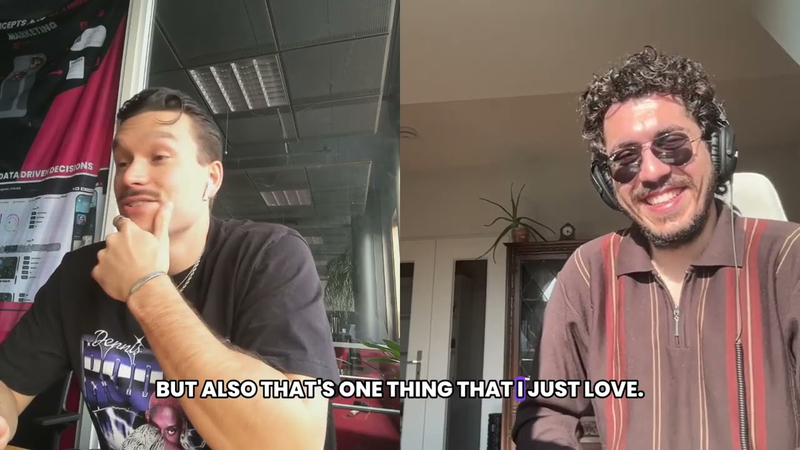
Before you look at anything, it's like what is your company about? What are you about as a person? Now, we know investors are attracted to strong figureheads or strong organizations which have a good story and everyone has a good story somewhere. There's like a very particular audience for you and you will know your audience better than anyone. Hey everyone, welcome to another episode of Tangent Air11 and today we'll talk about PR PR for mobile games. I have a special guest, the man with the best background in the business, Rana from Raptor PR. Hi Rana. Hey Robin, how's it going? All good. So good. Um, yeah, if you haven't uh seen Rana, this is his typical background. It's not it's not artificial. It's a real thing.
Yeah. It's a labor of love. Yeah. Real geek. Um and works in PR. So this is why I thought that'd be a very untypical uh topic for us to see how indies can benefit from PR and we worked together with Rana. So and I know from my own experience he knows a lot. So he prepared uh for us a short deck about the PR for Indies. Rana, feel free to start sharing the screen. Tell us more about yourself, about the company. Yeah, awesome. Well, Robin, thank you so much. It's awesome to be finally doing this with you and uh Okay, so I'm Rana uh founder and CEO of Raptor PR. I've been in communications for 25 years. Uh share my screen. Raptor is, you know, it's it's it's the world's only pure B2B tech agency engineered for
the global games industry and we work a lot in mobile. Um, so I I mention our positioning line because that's that's kind of our positioning oneliner which is easily understandable. So this links to messaging which we will chat later. Um, you know, no Roman for a while. You know, this is all part Yeah. Look, uh, Rana, can you click on the slideshow so it's Oh, yes. Yeah. Yeah. Is that better? Yes. I just want to see myself. Yeah. This is at a time in 2022 and I actually wasn't comfortable at games injury conferences and we were just chatting away bitching about it. But, you know, we've grown over the last three years. Uh, but that was one of the I think it's the only time I met you, Roman. But it's um so what do we do? Um so we work with a whole bunch of companies um in the games industry. We have quite a mobile focus. Uh you know we work with Ten, we
work with publishers like Sandoft, tech companies like Apptoid, we have alternative mobile app stores. So, we live and breathe in the tech world behind the business and marketing of of video games with quite a specialism on mobile, right? PR for indies. Um, so there are like four key pillars for the state-of-the-art of communications and PR for any company in the world, but this has been like really crystallized over the last four years specifically for the games industry. And Roman, just just clarify, this is for like your business communications. This is like from your company vision. This is like, you know, who do you want to reach and why? and what's your value proposition? What's so good about your game or studio? So, this is all about the B2B side. You're not going to learn anything from me about reaching gamers. That's not what I do. But if you're looking to,
you know, um, cement your position as a thought leader, be part of vital communities and reach investors, for example, then you'll gain a lot from this presentation. Okay. So, let's let's summarize. We need PR if we want to raise money. It helps. It helps. It helps because Yeah. So, for from an indie perspective, um, so we've got a client called Mijiwan and they don't want to raise money, but they want to they wanted like recognition from the industry because they've had 20 million organic downloads. They wanted people to know about the studio, not just about the game, the Battle of Poltopia. Uhhuh. So we started working with them two years ago and our role was to basically for them to champion quality mobile gaming content which doesn't aggressively monetize. That was their thing and still is their thing. So we're all about getting them on stage, position them as thought leaders and um getting their
message across that it's quality community and dialing down monetization uh strategy. That's that's their story. Gotcha, man. So then I think it's the same way if you want to help your HR department and you want to portray yourself really as a expert on the field. Yeah, I think it it comes down to this. If you walk into a room and no one knows you, are they going to trust you? Or if you walk into like if you're on a holiday and you walk into the supermarket, you don't recognize the brands which you're surrounded with in this weird supermarket and you go, "What do I go?" you're gonna go for something which you understand and know and trust. So it's the same in any industry. So in the games industry, indies are the lifebloods. And that's a [ __ ] cliche. Sorry, Roman. They are they they're basically making games incredibly tough conditions, macro, microeconomics, and so forth. But there's still the passion for it. And I'
I'd argue that most indies are driven by passion. And some are like, I want to be the next singer. I want to be acquired by, you know, a massive studio. I want to get like 20 minutes to scare that game. It's fine. But what's really important before we jump into any tactical things, you need to know what your business vision is. And I'm sure studio heads will have a clear vision or they might be thinking about it or they just want to make money or they want to make meaningful mobile gaming experiences which, you know, transcend platform. I I kind of personally love those ones because I love mobile. It's got a huge audience and it's it's it's such a rich vein of talent and creativity. Um so first is vision before you look at anything. It's like what is your company about? What are you about as a person? Now we know investors are attracted to strong figureheads or strong organizations which have a good story and everyone has a good story somewhere.
there's like a very particular audience for you and you will know your audience better than anyone. So that's like you know research bit. So before you do anything, communications, social, newsletters, YouTube videos, you need to think about what the [ __ ] am I going to tell the world and that'll come best for you. And sometimes use a PR agency to work on that angles and vision piece, but you know for indies you could do a lot on your own. Marketing theory is accessible anywhere. You know, it's it's easy to find. You can find in chatbt. But you need it's the human being who's got the vision is building the company. They're the only ones who know what to say and when to say it to market. So there's, you know, there's still still room for humans, I hope, in this world. Robin, is that quite clear? Yeah. Yeah. Yeah. So let's say I have the vision and then I go to the communication pillar. Yeah. Yeah. Sure. So maybe let's take an example. Let my
vision be. I need to come up with a vision now. I want to create games. Oh, I know. Uh I want to create games that do not need internet connection on mobile or something like that. Is it a good vision or that's not? It's really good. It's really good. So it's it's basically creating strong content offline content which doesn't need internet connection. That's that's that's fascinating because you know so many games are hampered by the need for an internet connection and if you're traveling on a plane or you're underground like in London undergrounds you Yeah. Yeah. Precisely. Yeah. It's not my idea as I already for our example for our so you know there's there's a strong message that maybe you're an expert at created these offline games then you need to study who else is doing these offline games. So there's commercial reason for these
offline games existed because there's demand for it. Now if you position yourself as a thought lead or an expert, you can take that to market across a different variety of channels. So the state-of-the-art of what we're doing at Raptor is to create to deploy creative communications campaigns which are multi- channelannel. So you're basically reaching your right audience and engaging with them wherever they are like you it could be in pocket gamer it could be you know you're speaking on stage it could be you know social content it could be YouTube content but you kind of need to do the analysis where your audiences which is important to you where are the investors where are these specific publishers where do I need to be what conferences do we need to go to what value can I give to my community in terms of getting them to think about the value proposition ition of offline gaming content
and uh maybe we can break it down with this four pillars. Yeah. Yeah, sure. So, I'll ask you Robin, what's fame? Why is why do you think fame is important? I think it's recognition, right? Like that's the main proxy of fame. Yeah, it's it's it's recognition um in in the right way. Fame is a very general term, but when I think of fame in the games industry for indie developers, it's like it's very small audience the B2B landscape. So, it's like how do you become known for a certain thing, one or two things, let's say it's offline games. So fame could be, you know, getting into like the games industry outlets, but now like fame could equate to how many podcasts am I going to be on over the next quarter discussing offline gaming content or vibe coding for example. So fame is relative to the person or organization. Now the benefits
for that. So, if you've got an unknown product, but it's kick-ass, you know, you're not going to succeed as well as someone with a kick-ass product and a trusted profile. It's human nature. You want to you want to learn about companies. You want to trust individuals and, you know, trust is built up over time. You know, it's it's it's it's it's a constant commitment to deliver your story and thought leadership and hopefully have fun along the way and whilst retaining a high degree of authenticity in however you communicate, wherever you communicate. So, the fame pillar is kind of like where people hire us because, you know, PR agencies have got like deep media relationships like Dean Teahashi or Business Insider and stuff like that, but there's still tonsies could do on their own. For example, um I know for a fact like the guys at Pocket Gamer or Neil Long at Mobile Gamer, they love to speak to indies, successful indies, because this
because there's so many tech vendors trying to pitch them stories, but there's like a demand to speak to pioneering, innovative, entrepreneurial game makers. If you think about Robin, it's a crazy time to launch a studio. It is. It's like there's so many things against you, but people still do it because they [ __ ] love it. So, you know, initial steps, recommendations you could do, you know, you can you can have a conversation. You can reach out to journalists like like Craig Chapel, for example. That's fine. Just make sure what you send them is newsworthy or interesting. you might not get a response, but if you if you can kind of work out what makes a good story and sometimes you may need to refer to a consultant like you know me for example that's fine. Um but fame is usually brand awareness, positioning, thought leadership and building trust which ultimately you know is massively important for any business or individual.
Gotcha man. So just to synthesize this Yes. Uh we want um no developers have a sort of an advantage compared to the vendors like I'm on the vendor side right now and they can definitely use it when talking to industry journalists. Yes, absolutely. And uh we will have a list I think towards the end of those slides where you show us some of the websites. Yeah. Yeah. Where they can basically pitch their their ideas if they like want to do some PR, right? Yeah. It's like anyone can do it. You know, there's it's easy to find this stuff. We'll talk about it, but it needs to be, you know, if you're going to expose yourself, make sure what you take to market is right. It's authentic. It's it's newsworthy. So, sometimes there's the media route doesn't have to be the only route, and it's not. What's really powerful right now um is the community pillar which
overlaps with the fame pillar. My community is is exactly what you're doing right now Roman. It's the rise the last six to 12 months we've seen the rise of the B2B games industry influencer you know like John Wright yourself uh you know mate there's there's loads of them and they are eroding the audience size of the macro outlets but both coexist because the macro outlets like PG Adventure B they're quite broad whereas your show you can talk about MMPs you can get nitty-gritty it's it's for niche audiences they both coexist and that's we're seeing I mean community is like so important and is really coming to its own and this is the real opportunity for indies today. It's like every indie has the ability to provide value to its community in which it lives, to discuss subjects, to share best practices, to share issues, you know, to get through stuff. And when I
say community, I'm talking about, you know, podcasts, going to mixers and events, building those human connections, giving value via your social media or blogs. Try not to be commercial, but it's okay to be a billboard sometimes and say, "We've got an awesome game and this is what we're doing." That's fine. But community is all about reaching and engaging with those audience most important to you and building those relationships over time. So that's like a thousand% the most interesting pillar right right now in the games industry for me personally. Yeah. Yeah. Makes a lot of sense. Um, we at Tension have a Discord community. Yeah. For developers that self-publish games. And this is where I get a lot of questions and where I get the inspirations for the video. Yeah. But another example that it is even uh
bigger than our community is a guest that we had. His name was Anul and he started discord community around the VIP coding. Yes. Even before it was VIP coding. Oh, really? Yeah. Yeah. Yeah. He was doing like no code and we've done a video with him on that during like chat early chat GPT days. I I will link it somewhere. Wow. Ahead of the curve. Yeah. Yeah. Yeah. And he has already like more than 1,000 developers that want to watch games. Yeah, it's uh I mean slightly right now is the most disruptive time I've ever seen in the games industry because of new technologies. Now I came out of GDC with a kind of like an informed viewpoint because I was asking CEOs, studio heads, what the hell is going to happen over the next few years? And the most common answer is that small
to mediumsiz studios are the ones which will lead tomorrow's games industry. So they're the ones that could be most agile and embrace new technologies to create content which you know larger say double A or AAA uh big publishers would have hard to pivot in. So right now there's like I think the the battle map for game making is being redrawn in real time. I'm just a PR guy but you know I've been chatting to a lot of people at sea suite. Uh it's a hugely transformative time. Now these these topics like vibe coding you know the job markets you know investment these are all subjects which every indie developer will have an opinion on and you can share that opinion on platforms like this. You can share your opinions of like Craig and Pocket Gamer. Um, you can share your opinion at events. You can apply for speaker positions. You know, in advance of every conference, they look for speakers. Just submit yourself and what
you can talk about. Everyone specializes in what they do and that's that's your that's your killer weapon. Yeah. Another advantage as a developer versus vendor. They will Yeah. will gladly take anyone as a speaker if they are developing games. Yeah. And not I think it needs it needs to be the right balance but we need to bring it back to the fact that people still make games and focus on the artistic entrepreneurial efforts of indie developers as a lifeblood. It is sadly being lost from what I see. If you go to trade shows, there's lots of tech vendors and so forth, but they're the ones with their severe marketing budget which can afford companies like Raptor and so forth. But there lies an opportunity because the journalists and people like you is really important to support and celebrate and explore new ways of making games and incoming new content in the market.
I see the data here like one of the pillars is data. Can you talk more about this? Yeah. So, if you have messaging like if you say, you know, we've got 400,000 players or, you know, you make a claim that, you know, you made $20 million last year in revenue. Having data to support what you say is really important, facts. So, it it's a foundational pillar. If you can get the data, use it to support what you say to market. So at Raptor we use data we do developer surveys uh publisher surveys gamer surveys to explore you know pain points in the industry. You know last year we did a survey for Sansoft Saudi based publisher investor looking at what the hell do developers think of publishers because they wanted to attract more developers into their ecosystem.
But from an indie perspective, if you've got a little money, you can still find data points to support what you say to market. And when you do that, it makes you more credible. You know, an experienced opinion is great, but you back it up with fact and data, then it's bulletproof. You can't you can't dispute it. I see. So, my chances of raising money for my no internet games is higher if I'll show that I already earned 1 million bucks. Absolutely. If you can demonstrate that to market and you bring in some of the like um you've got a case study to show the performance for example if you're doing something innovative in the space like an offline gaming like I don't how do you serve ads in an online game? I don't know maybe there's a piece where you speak to like an ad tech company and it's a joint story for example. Um
yeah, gotcha. No, no, gotcha. Gotcha, man. It is clear. And the last is consultancy. And I see that you've prepared a present for us. Very kind of you. Absolutely. So consultancy human beings like me. So, myself and fellow director Thomas Huxster, we are happy to provide uh a one-to-one communications consultation with all of Roman's followers and fans. Uh we want to meet you guys. We want to meet smart people. We want to learn. Maybe we'll work together one day. Who knows? But consultancy is where you get people my age, you know, providing strategic recommendations about what you could do in terms of your um companies or studios communication strategy for the next 12 months. So if your goals are like, you know, R, I want to raise money, okay, this is probably what you could do or RA, I want some ideas for um, you know, what to talk about in a webinar, why do a webinar or what do I do in social? Um happy to chat to your
your followers on that point. Super. We will leave the link to the website. Yeah. Uh just mention Tangent AI 101 and yeah Ra will give you the 30 minutes consultation. Awesome. No strings attached. No strings attached. I'm not a heavy-handed salesperson as you know Robin. Um so consider who your audiences are. Now the mobile games industry is vast. There are lots of intersecting technologies and you know I would you know in terms of your audience there are innovators out there. There's different size of indie studios. So you might when you think of games industry media or platforms you might just think of like pocket gamer or mobictim or you know rumors podcast or narc gaming podcast there's a ton of different industries out there which you could consider so for example if there's some web3 tech in
your game that's another audience you could explore um if you're doing something innovative in act you know you you can take that story to um influencers of media in that space um Mina Mina loves to hear about innovative game makers because there's so much investment and you know um opportunity there. Um business and tech. So that's usually reserved for companies which you know generally have that pioneering piece of tech and looking to disrupt something have like you know you kind of go towards business and tech media if you've you you kind of got a reasonable amount of success and if you're looking to raise money I've been told by many people CEOs and founders that they often ask for media coverage to support you know their application for say I don't know $10 million for example. So there's many different routes into markets. This kind of may be too complex for indies
but I just wanted to flag it because you know if you're doing stuff which crosses say adtech web 3 games industry then there's like triple the amount of opportunity you might think because you might think oh there was just Craig Chapel or oh there's just you Rob's podcast but actually there's plenty more avenues you can look at in terms of like a global audience and different uh vertical sectors to look at. Yeah, that's basically like for me it's a list, right? Especially first two columns here for our mobile clients like this is the the list. So you can just make a screenshot and whenever you do your next uh PR story or even with your first PR story, let's see what people are writing can. Yeah. So you know games industry that's it's media outlets and there platforms like PGC connects or you know um WN for example. So there's a lot there you can
explore and if you're in the if you're making indie games you will know this stuff but then it's like you know looking at the substacks the newsletters the podcast and there's a ton there as an indie developer that's really fertile ground to engage with that can be really rewarding uh personally and professionally to start building your social profile with these kind of entities. Nice. Cool. um messaging. So this is something I believe you can do on your own, but you need to think about the first step is like what's the vision? What's the business goal for the company? Is it to 2x number of gamers? Is it to get a bunch of investment? Is it to attract the best talent? Is it to become the best vibe coding community in the world? Whatever it is, you kind of need that vision piece before you can look at messaging. And the best messaging is really simple. It's it's understandable in a heartbeat
for your intended audience. So, we've anonymized this, but this is for um an alternative app store and I'm not going to say who it is, but the key message X company is the original independent app store and then some supporting messages which supports you know it value proposition for developers. It supports, you know, its market positioning. It's challenging monopolies. So, this is like you could do this. You could use tools like ChachiBT. But, you know, if you're going to do this, I would have a consultant to check it just in case it's not 100%. But if you know yours really well, you could do this kind of stuff. Use your 30 minutes with a runner to validate. No, but for real, I think the if you just give it like generic chat GP prom, yeah, it will give you some sort of BS
in return. Do you know Do you know what? We we're looking at tech all the time. Roman, right now we can't do what we want it to do, but one day it will. But it will need an expert to understand what the [ __ ] is coming up is good. Mhm. Feels like um a human with a this. It's like a a guard dog with a human controlling. Yeah. Yeah. Getting the most out of it. It's useless without humans. And when you're dealing with your reputation, you need a human to check it. Yeah. Absolutely. It can't be trusted just yet. I mean, I'm trying, but I can't get to do it right now. And we're like, you know, training it on like stuff we've done before, but the output's just not good enough. It will be one day. Yeah. Not too soon. Um, and then it's like, what does your brand sound like? You know, what I see a lot of smaller organizations is that they'll they'll talk about a billion different things and they'll sound different to different posts and there's a lack of consistency. So, when you have a brand voice or a personal brand, it's
it's a good idea to think about what you're going to say, the value proposition, and how your brand sounds. So this is like a tone of voice slide which can kind of bring your brand to life. And one really cool take out for recommendation for all studios. You don't have to be boring when doing B2B coms. You can use human language. You can use excitable copy. But this industry, you know, you can dial into that. Yeah. And I guess if you're in you have to be different. Yeah. You can't be corporate. No. No. It kind of depends on your size and your intent. Yeah. You know, but on the whole, I agree with you. It's like you need to be creative and singular and find, you know, your role in all of this conferences. So, there's loads in every country. Uh very community- based.
So, this is um Christian uh the CEO of Miji. So, we got him a speaking opportunity at DevCom, Gamescom, and he was talking about his story is you don't need to overly monetize to have a successful game. And that's that's the narrative. That's what they want to be like champions for best-in-class gameplay and community engagement. And that works for them. And there's Thomas, one of my guys at Mobile last year. Uh there's Christian again talking about pocket game in London about um live ops um parties and mixers. So this is really important because you often you have the main event but it's it's really the mixers is where you see the human beings and you can have fun and maybe have a business conversation as well. So like in every big event there's a ton of mixers to go to. So you kind of need to get into that community to understand what's the
coolest party to go to. Like GDC is like mental. Gamescom is like, you know, it's it's like a it's like a festival. You know, there's so many different events. You kind of need to be strategic about what kind of events are right for you. And I think it's going to be trial and error. You know, you need to do this conference circuit for a number of years to really understand what's right for your business. Um that's it in a nutshell. Got it. Um, what I have final question for you. We're almost on time, but I need to ask that. What do you think indies should never do in PR? Like couple of maybe bad examples. Okay, first one, don't stalk journalists too hard. M if you're going to reach out to Craig Chapel for example, don't like
send him 10 emails in a week. Just be quite considerate. These are human beings who get loads of requests to do stories. Um it's a cliched one, but it's very true. If you're a CEO, a studio, write like yourself. Don't [ __ ] use AI to do it. Don't sanitize your language. you know, include the imperfections in your language. So, you know, since the advent of AI, my LinkedIn feed is just a wash with very similar looking, you know, content, which is okay. It can get you, you can hack the algorithm, but for the people who know, I know lots of like people in Turkey and different countries and they not sounding like themselves on LinkedIn. Yeah, that's same point as I had with the messaging, right? So, it's Yeah. not there yet. Yeah. What what about all of the trendy stuff? Um, for example, Gibli images of yourself or
action figures. I personally think it's [ __ ] because it it deviates from what your brand is about. Now, a good brand is essential if you're looking for market success. So, you kind of need that brand identity, what it stands for, its values, its intent. So branding is it crosses many different you know disciplines. So I strongly believe in um consistency in branding and messaging. So if you're able to achieve that you're in a strong place. If you keep changing your identity every month it's going to be really [ __ ] confusing for your audiences. People want to be reassured that you stand for something. These are your values. This is what you're about. You're an expert in XYZ. Like at Raptor, we we try not to do CEO ghostriting on LinkedIn. Why? Because how the hell can my team who are like between 21 and 30 years old
simulate the thoughts of, you know, an entrepreneur or a CEO realistically? Maybe they kind of get it right, but really I'm a really firm believer on this. It's like if you're a CEO, you need to show yourself a little bit, show some transparency and engage because you've got incredible knowledge and expertise. It is it's really hard. Maybe you could train an AI, you can get the CEO to type loads of [ __ ] in, but you know that I don't see that's really practical. Um I don't think you need to be a slave to the LinkedIn algorithm, for example. Just just embrace what's right for you. You know, have a narrative which is right for you. So, I prefer digital because I hate being on stage. I don't feel comfortable. I've got ADHD. I think about too much. But virtual, I love that. I don't have that pressure. I kind of know what we're going to talk about. We talk about this three years ago. With such a background, of course, you nothing to worry about. Yeah. I mean, I do more from this room. I go to conferences often. Oh, yeah. I I can
totally see it. Yeah. And Oh, there's another piece more of a recommendation than do don't do. Um, if you have a consistent story, you can push that all year round. Some people just push try and push the stories around Gamescom or GDC or PGC. That's important, but not everything. You're more likely to reach an audience like like an investor community or a publisher outside of those big audiences because around big shows, you've got all the big brands with all their, you know, hard messaging across every channel and billboards and everything like that. So be strategic about when you drop your stories, especially if you're smaller, but you can't compete with the market budget of like an Excel or something which buy everything, which is great. That works for them, but if you're a small company, you be really smart and strategic where you appear and what you say. Nice one. I I think we should end on this note. Be strategic about what you say and when. We'll also ask Rana to
answer any of your questions if you leave it in the comments. Awesome. Um remember about this uh great gesture from Rana to give anyone from our community consultation. Give us a like. It could go longer. Myself and Thomas Huxter. He's he's the strategic lead. We love this space and if we can help people along their journey, that's great. Super. Well, thanks a lot, Rana. A pleasure. Anytime. See you on my show in a few weeks. Take care. Bye.
Auto-generated captions from YouTube — names and numbers may be misheard.
Key insights
Distilling the key insights…
Ask AI about this video
Cite this video
Citation
Generating citation…












Comments