VideoDeconstructor of Fun
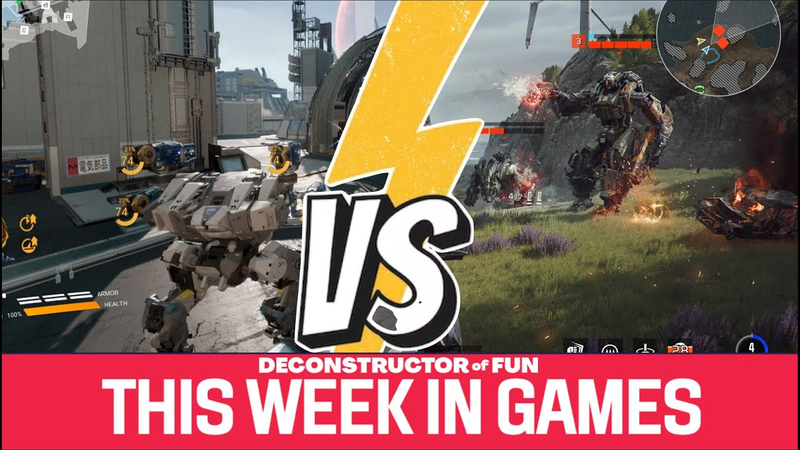
Steel Hunters vs. War Robots: When UE5 Makes You Feel… Generic?
11 Apr 202513 min video
Transcript
[Music] So, a pretty quick update here on a game called Steel Hunters. It's made by Wargaming. They went to early access last week and it's a PVP PVE mech shooter. Again, PvP PVE. There's extraction elements. Again, the genre names suck. Like, we have not figured out a right way to call these games, but it's a PVP PVE mech shooter. It's made in Unreal Engine 5, which I'll talk about a little bit later. The only interesting thing that I've noticed so far is like one it has a four-week early access. So something I want to talk about is like having a four-week early access and like what is the goal here. The next one is like they have a lot of currencies. So it feels like they are going to go down a free-to-play mobile monetization strategy which would be interesting on Steam PC and console. There's no real like that type of microtransactions but I could see Wargaming doing this based on their history. They have a three- tiered battle pass, which is really what you see like with the Black Cell in Call of Duty. They have a three- tier one called
the Pro version. You can't actually access it in the early access, but I thought that was interesting to see three tier. Still a linear battle pass, still pretty boring, still pretty basic. The last thing I was going to say is like it's a 4-week early access. And whenever I see games like this go into early access, you have to ask like what is the goal of this early access? And I cannot figure out what the goal here is. typically in an early access at least from my perspective is that you're either going to use it from a data like bug fixing perspective or you're going to use it from like a marketing hype perspective. Those are kind of like the basic ways you would use it. And whenever you have a four-week alpha, you remove kind of that marketing hype element. The goal of the early access at the end is that players want more. That's the goal of the early access from a marketing perspective in my opinion. And for having four weeks with like one hour of gameplay makes zero sense. The second is like if they're just testing out like bugs and stuff, I just feel like this is a weak way to do it and it doesn't need to be four weeks. It should just be a weekend. I'm very confused by the goal here. The last thing is around Unreal Engine. This is not necessarily
against Steel Hunters. This is a shooter aspect as a whole. As I play a lot of shooters, whenever you play any of these like Unreal Engine shooters, they all feel the same. They're all like using whatever Unreal's like default ballistics are. They all feel the same. And it is very frustrating because I think on the dev side it logically makes sense like oh we get all this stuff for free when we use the Unreal Engine so it saves on dev cost. It saves all this stuff which is all true. And that's like what the entire industry feels like it's like narrative has been. And these games release and they feel all the same and generic. And I think there's like this issue where regardless of what you put on top of that, like from a system standpoint, even an art standpoint, IP is a different argument, but regardless of what you put on there, they feel the same. And I think that feeling is something that like we are not really able to kind of like predict or argue is going to be good for a a product or or whatever. And so you're seeing these games come out and they just feel all the same and all bland.
And I just see like all these games like there's no way in the world this game is successful in its current state. Oh wow. It makes zero sense. So I I love Chris's analysis because he's like if you guys watch the car YouTube videos, I watch them all the time or like when they like test the car and they're like the chassis, they talk about the chassis. I'm like I never feel the chassis but you can feel the chassis. And that's what Chris is saying like how it feels different. And that's like the next level of understanding. It looks quite generic. First of all, Seal Hunters is the most coolest name you can find. Yeah, great name. Yeah, you got the mech dog. You got the mech guy. It's It's like they're not like very polished. They're more like, you know, dystopian bit of a looking little rusty and so forth. It's much faster than typical war gaming games because like wargaming shooters are shooters for old men. That's why I love them. Like I play World of Warships. Oh my god. like it takes forever. It takes a minute to load
the guns and you you know it's like but that's the whole thing. It's like you're in that real battle. You make your shot. You just don't run around and blast around. That's for kids. That's for Gen Z. This is for millennials. And this shooter doesn't look for millennials. So they're also going for a much younger audience. I mean it looks amazing but it also looks kind of generic to be honest now that you said it. You can take a screenshot and you know it's unreal. Yeah. Like I like you can just tell like looking at it. you know, it's unreal. And I think that like that's like a broad problem that like has not really been discussed or like manifested or like had an impact. I mean, at the end of the day, if you were to make your own gaming engine, that's insanely complicated. Like, I totally understand the reason for going with these off-the-shelf engines, but I think there's something in how they're being used on the dev side that is translating to this like generic feeling when you play them. Such an interesting interesting point that you're making about, you know, is UEE causing a number
one is it democratizes the ability to make a shooter. However, it also makes it generic and how do people get around that feeling to to be something different. I wanted to talk a little bit about your early access point and yet again to quote Adam, Adam believes early access is a launch and I think what they perhaps mistakenly did here I again offline you told me it was about an hour of gameplay but they have a four-week kind of early access window. I think you really have to follow a closed beta or a beta system that allows you to number one is have specific goals. to your point, what are your goals? Is it tech? Is it retention? Is it monetization? What are you trying to do? How do you want to build hype getting to there? And then also making sure that you have the right content for the right moment. What Marvel Rivals did incredibly well, and I know it's not exactly the same type of thing, was each one of their betas was a certain amount of time with a certain
goal with a driver for players to go and they would collect a skin. they would get something for that for participating that felt like it was the right amount of time. You would also see when you looked at their Twitch or streaming numbers or any of the other kind of social numbers is it would peak the first couple of days and because players were checking it out and then they were leaving. So, I think what people have to really do is think about these moments in time that you're marketing instead of these bigger windows, especially as we talk about younger audiences. people aren't going to come and stick around for a very long time if you are in an early stage or a pre so you really don't have to do maybe an hour of content maybe you need to do a little bit of less content make it playable but give people like a real reason for doing these things so anyway I thought that was interesting and then one other thing I wanted to point out too is NewU actually this week just released their 2025 PC and console gaming report and
it's just a light Matthew Ball it's it's half a Matthew Ball. So, it's 94 pages of free content. So, it's not half a Matthew Ball because they have original research. Well, I I meant the length. I meant the length. Okay. Meant the length. Although, I think he was 230 pages if I remember correctly because we we talked about that. The one thing about shooters that I thought was interesting, I looked at play time, right? So, share of time, which is a metric I think is super important for us. and they had this chart that was 2021 to 2024. And as a group, shooters and battle royale have stayed constant. So what this means is it's a fight for share. It's a fight to take share from each other. And the pie isn't necessarily growing in the shooter market. And so what I do like here is like, hey, it's something different. It's mechs. The mechs have a bit of a hero shooter element to it where, you know, you do maybe want to like have an expertise in a certain mech. They're
trying something different. However, to the very astute Chris's point, this isn't necessarily the right thing. But if you're going to make a shooter, you have to know going into it, you're taking share from somebody else and you're not necessarily growing the total pie, which makes me super super nervous. The other thing that I noticed as well from the research is PC is the number one platform for shooters. Shooters are much much lower on console. So other genres, battle royale, Fortnite basically takes a bit more of the cake. Sports games take more of the cake, but you got to make sure you're optimizing for PC if you are going after like the shooter category. Chris, do you find that to be the case? You got to like optimize for PC. Back when it was like mobile first and then like you know the rest later. how it's like PC first and the rest later. I mean, mobile is kind of still its own different thing. But a a point you made there about like the early access and what is the goal of all of this. There could be a point that this is just meant to be for a smaller
niche audience and that's their goal. And if that's their goal, then like I think that that's a fine goal. I've said before that, you know, when I said like I don't think it'll be successful, that's coming from the big AAA mindset. that's not necessarily coming from, you know, hey, we want to make this for a 100,000 people. We're going to have 10,000 DAU and they're going to spend like crazy and that's going to be our sustainable business. I definitely think that could be something that Steel Hunters does here. But from a broader shooter perspective, the problems I brought up are more what I'm just talking about from the market itself. I was about to show you War Robots Frontiers gameplay, which is also PC and console, and it kind of gets to a point where like what are we doing? Like we're launching two games at the same time that are essentially, you know, essentially the same. Well, yeah. It's like which which robot do you want? Like like this is this is more like spacey, but here's what I like about the Frontiers. It actually is feels slower.
So an old guy like me can actually jump into it. And I haven't played either one, but the Frontiers came in earlier into early testing. I don't think it's launched fully. And what War Robots has done is like they they'll do a lot of this like suboptimization like with different guns have different elements and so forth. So it's like super sci-fi, but it's still like more true to the Mech Warrior roots than the new Steel Hunters because Steel Hunters to me doesn't feel like a war gaming game at all. like it's straight up action game versus war robots feels to me more like what I would expect from a mech game from war gaming. So interesting stuff here. But both of these are having this tough competition and who's the killer in vehicular shooters on mobile and now the war robots is is coming on PC console and then Wargaming is striking back with their version of robots fighting each other to death. Oh, interesting. Yeah. Where's Mech Warriors? Isn't that the IP? Our IP.
Exactly. They lost the game a long time ago. So, yeah. And War Robots just collected over a billion dollars in in revenue on mobile. So, I think they're they're doing pretty well. So, interesting to see how this evolves. But based on the videos that we've been looking at, I'm I'm actually more into War Robots, dear. I say, uhoh. Uh oh. Yeah. This if I would have to play either one of this and I would actually like to play War Robots. It looks pretty cool. The other one looked cool but generic. All right. Well, we will wrap up here. Chris, thank you for joining us for a very special episode. Thank you for having me. Appreciate it. Thanks for shooting. Have you Yeah, no worries. You should get together with Black Adam and do the vehicular shooter episode. Oh, yeah. We should do that. That'd be fun. Yeah, I can come on that. That one I know shooter is my jam. Old man shooter games. Oh, that's so funny. Well, and then I think you all are going to do more shooter episodes. It's awesome to get,
you know, your expertise in that and we'll fill in here and there as well. Laura, good to see you again. It's been a while. And all right, everyone. We'll see you next week. And Crest will come back and [ __ ] on everything that we said. I cannot wait. If they let him out, I'll stumble. All right, see you guys next week. Bye-bye. [Music]
Auto-generated captions from YouTube — names and numbers may be misheard.















Comments