windows
Company
Documents about windows
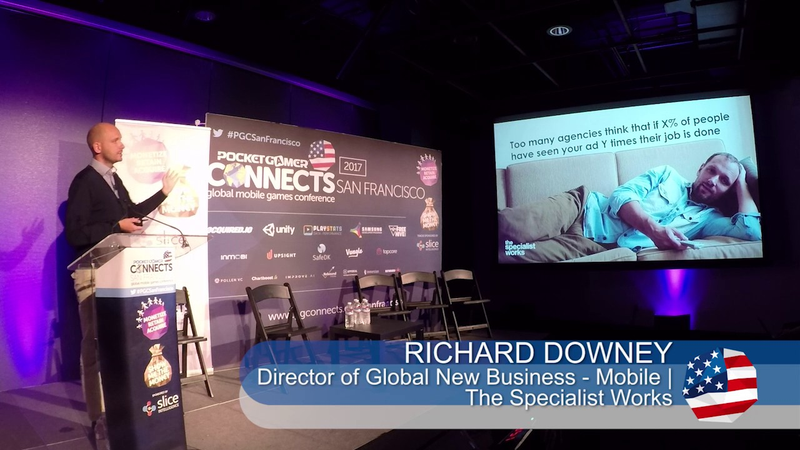
Using TV to drive app downloads at scale
Television remains a powerful tool for large-scale mobile app user acquisition, yet traditional advertising models often fail to meet the needs of modern mobile publishers due to their inherent rigidity and lack of performance-based data.
- Mobile publishers should shift from traditional broad-reach TV buying to a performance-based model that prioritizes agility, real-time optimization, and clear attribution.
- Attribution for TV campaigns is most accurately measured by monitoring organic install baselines and daily uplifts rather than relying on short-term, granular click-through windows.
- Performance analysis should utilize 24-hour cycles to account for the delay between viewing a TV spot and the user completing an app download.

Why Do We Ship Buggy Games? - A Look Behind the Scenes - Extra Credits
The release of buggy AAA games is rarely the result of developer laziness or malice, but rather the consequence of complex, early-stage production decisions and rigid scheduling constraints.
- Shipping buggy games is primarily a calculated financial decision where the cost of fixing deep-seated technical issues outweighs the projected returns of further development.
- Fundamental bugs often originate from core engine architecture or third-party middleware, creating dependencies on external partners that are difficult to rectify late in the production cycle.
- Rigid marketing campaigns and high-cost advertising placements are locked in months ahead of time, making it logistically and financially difficult to delay a release.

Early Access Lessons from Raw Data
Raw Data established a significant milestone in the virtual reality industry by becoming the first title to surpass $1 million in revenue within its initial 30 days.
- Raw Data achieved the first $1 million revenue milestone for a VR title within its initial 30 days of release.
- The game’s success was driven by a design philosophy prioritizing high-fidelity, active physical engagement and intuitive weapon handling over rigid realism.
- Cooperative, social gameplay served as the primary engine for long-term player retention and organic market growth.

Balancing League of Legends for Every Player, from Bronze to Bengi
Balancing a competitive title like League of Legends necessitates navigating a massive skill gap that often exceeds 1,000% between casual participants and professional competitors.
- Riot Games balances League of Legends by targeting the 'sweet spot' of High Platinum to Low Diamond skill tiers, as this range provides the best intersection between the high volume of players and the sensitivity to balance changes.
- Designers must interpret raw data with nuance, such as accounting for 'experience bias' where a champion's high win rate may reflect the player's mastery of that specific character rather than the champion being objectively overpowered.
- Balance changes should be iterative and systemic; when simple tuning fails to resolve an outlier, developers should pivot to broader structural updates, such as the preseason overhaul of assassin items and stealth mechanics.

How The Specialist Works tracks mobile app downloads from TV ads
The Specialist Works provides a framework for integrating offline media, specifically television, into mobile user acquisition strategies.
- The Specialist Works enables performance-based TV advertising by correlating broadcast schedules with organic download spikes to attribute mobile installs to specific TV spots.
- Attribution is achieved by establishing baseline organic download rates and monitoring deviations within specific windows following a broadcast.
- Once installs are attributed to a TV spot, mobile SDKs track post-install metrics like lifetime value, retention, and in-app purchases to measure campaign ROI.

How Build Away! integrates rewarded video ads
The idle mobile game Build Away, developed by Helsinki-based studio Futureplay, serves as a case study for the integration of rewarded video advertising as a primary monetization strategy.
- Futureplay’s Build Away! utilizes rewarded video ads as its primary monetization strategy rather than relying on traditional direct in-app purchases.
- The game’s core loop incentivizes ad consumption by offering players tangible benefits, such as doubling offline earnings, accelerating production timers, and extending resource delivery windows.
- The design prioritizes a low-friction, minimalist experience to achieve the massive user scale necessary to make an ad-supported revenue model lucrative.
Still Skeptical of V.R. - Five Challenges for Virtual Reality - Extra Credits
The primary thesis regarding the viability of virtual reality (VR) in the gaming industry is that significant structural and economic challenges threaten its path to mass-market adoption.
- VR faces a 'death spiral' of market fragmentation because it remains an optional peripheral rather than a standard hardware requirement, forcing developers to split resources between niche VR users and the established console/PC base.
- The lack of hardware standardization across competing manufacturers creates a development environment similar to the fragmented Android ecosystem, complicating production and distribution.
- High costs of entry act as a significant barrier to global market penetration, limiting the potential user base needed to justify large-scale development investments.

Game Writing Pitfalls - Lost Opportunities in Games - Extra Credits
Video games face a unique narrative challenge: they possess a significantly lower word count per minute compared to other media like television or film.
- Games face a severe narrative constraint with an average of only 16 words per minute, compared to 120 words per minute in television scripts.
- Every line of dialogue must serve at least one of four functions: world-building, character development, plot progression, or revealing information about other characters.
- Functional gameplay instructions and filler dialogue used to mask transitions often result in flat, unengaging narratives, as seen in the case of Destiny.

Zynga's CEO rebound, Amazon's CryEngine move and Apple Watch gaming
This analysis covers three significant developments in the gaming industry during the second week of April 2015: Amazon’s strategic investment in Crytek, the sudden leadership transition at Zynga, and the initial market reception of the Apple Watch.
- Mark Pincus has returned as CEO of Zynga following the departure of Don Mattrick, who failed to improve the company's stagnant share price and quarterly losses despite a $500 million acquisition of Natural Motion.
- Amazon has secured a licensing deal for Crytek’s CryEngine, with estimated investments between $50 million and $70 million, signaling a strategic effort to strengthen its internal gaming infrastructure.
- Amazon’s investment in Crytek follows its $940 million acquisition of Twitch, reinforcing the company's aggressive, capital-intensive expansion into the gaming sector.
Used Games - Ownership in the Digital Age - Extra Credits
The debate surrounding used game sales centers on the tension between consumer property rights and the financial interests of developers and publishers.
- The transition from physical to digital distribution has effectively shifted the consumer model from ownership to leasing, granting corporations the power to revoke access to purchased content.
- Publishers argue that the secondary market for physical games deprives them of essential revenue, leading them to use digital rights management (DRM) to restrict resale and distribution.
- A proposed solution to the loss of resale value is the implementation of publisher-managed digital trade-in programs, which would allow users to exchange digital titles for store credit.