1 free read left. Create a free account for unlimited reading + AI research.
Create free account
How The Specialist Works tracks mobile app downloads from TV ads
Key insights
6 takeaways- 01The Specialist Works enables performance-based TV advertising by correlating broadcast schedules with organic download spikes to attribute mobile installs to specific TV spots.
- 02Attribution is achieved by establishing baseline organic download rates and monitoring deviations within specific windows following a broadcast.
- 03Once installs are attributed to a TV spot, mobile SDKs track post-install metrics like lifetime value, retention, and in-app purchases to measure campaign ROI.
- 04Real-time feedback loops allow advertisers to optimize budgets by shifting spend toward specific channels or time slots that demonstrate higher conversion efficiency.
- 05TV advertising is a viable acquisition strategy for both large-scale publishers reaching digital saturation and niche titles targeting specific demographics like parents or older audiences.
- 06Independent developers can utilize smaller, targeted TV channels as an affordable entry point, proving that broadcast advertising is not limited to high-budget, mainstream campaigns.
Ask AI about this video
Transcript
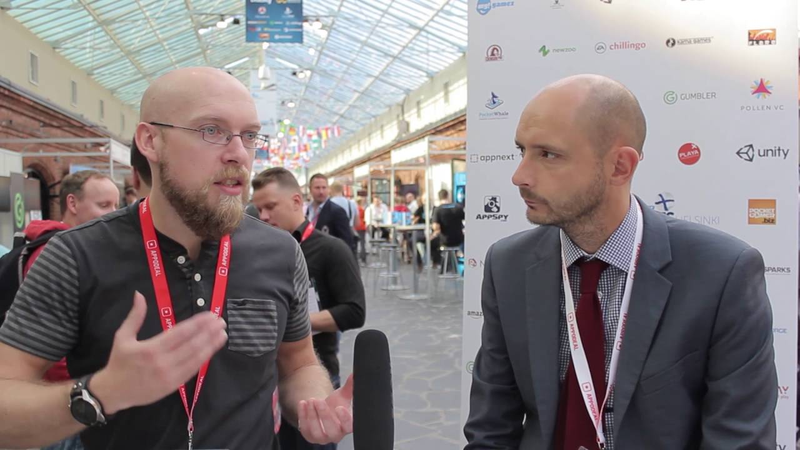
hey guys we are back at Papa gamer connects Helsinki 2016 I'm here with Richard Downey from the specialist works tell me about the specialist okay so the specialist works is a independent advertising agency based in London but with offices all around the world including a very newly opened one in New York really exciting and what specific areas of this ministry do you focus on because obviously there are lot of strands to the whole yeah so I've run the mobile division so we have a team of mobile user acquisition experts that help clients at publishers generally with you a clients across games gambling dating travel all kinds of sectors but over and above that I'm also at the forefront of pushing a quite an exciting
and kind of pioneering way of using offline media especially TV to drive trackable and accountable that's what I was interested in cuz we've had a lot of stuff about people pushing things through ads and through like pushing games players to other games within a particular network you're taking the thing off the line and actually doing TV based advertising out a how does that work out what kind of audience is out tracked and now trackable other results yes so so there's been a trend over the last couple years or so forth you know the bigger boys in the world of mobile games to be using TV as you've all seen game of war and mobile strike and all the others what got me kind of really interested in this was that these companies that have built their whole business on trackable and optimizable data LED media decisions kind of left all that at the door going into the traditionally untrackable world of TV so we've worked quite hard to to
work with the major attribution partners like tulip flower just to to try and get to a point where by we can make TV and the information of result to get from TV similar in terms of detail to that mobile you a so I mean just thinking about it from the outside looking here an advert runs at a certain time on a certain day and then presumably your software then sets about tracking perhaps spikes in downloads that sort of thing and then you actually log the users who do that and work out how they behave differently is that correct well yes so we we have attribution windows so we we are able to calculate when a TV our dessert we're then able to interrogate the organic download data that comes from the attribution in the farmers and then once we've done some pretty clever modeling of what that house normal organic download take up is
like we're able to then confidently attribute specific actions back to TV spots then of course using the attribution SDKs not only are we able to match installs to TV spots but then we're able to follow those users right the way through their lifetime so we can look at in app purchases like time value and loyalty things like that that's the attribution side of it and so that's using the attribution solutions which were built and are mainly for paid acquisition to really interrogate the organic information and see what we can take out of that but then what we do with that as well which is also quite special is through the way that we buy our TV were able to optimize and change direction in terms of the TV ads that we're buying while the campaign is live so so you can tweak it as you go along to the feedback exactly so if we if the data tells us that MTV drives more downloads and Comedy Central then we can look to move that the budget into MTV in exactly the
same ways people would do with a portfolio that networks them using okay and you mentioned that the big boys kind of tend to go towards a TV and presumably that's to do with advertising budget they've got the money to spend on their TVs not cheap is the only reason not to advertise on TV simply the affordability of it or does it not work for everyone so there's a couple at discovery reasons for the lights of you know machines own and people like that they see themselves as more than just a strict performance metric right they see themselves in an entertainment brand and therefore an element of branding around TV works for them but also a big part of it is the fact that you know for these guys they've kind of bought all the mobile ads you know they reach a point of saturation whereby they see their cost per install go or not they see the level of response slowing down because the game is so well established the everybody that can be reached by one of their mobile ads has been a Beachcomber that I don't about you but you know after 50 times I've seen a game of war
ad I'm either a game war player or I'm probably never going to be a good so TV offers an enormous scalable way of reaching an audience that maybe don't see mobile absolutely so there is an acquisition element to it there's a but the smaller games also you know we we work with a couple of companies that have kind of more female focused games and you know they're not nest and of audience that's a kind of you know kind of soft games they're not necessarily going to be in places where they see mobile apps you know so for a look for some games are certain demographics actually one of the first and kind of earliest outreach in terms of acquisition could be targeted and see they you know if you are if you can put a TV show jewel together that can reach a certain demographic of people and get it tracked and attributed for some people for some games for some projects that actually could be as valuable in the early stages and this TV for apt how
affordable a solution is this is this really going to be limited to a slightly bigger companies or can small Indies afford this kind of service so realistically for Indies I mean what we say is the cheapest the most effective way of generating users for your game is always going to be by a mobile UI because of the the the targeting because of the retargeting visible and the clever things you can do without networks these days yeah so if you have a game which is mainstream shall we say only think about TV when you're certain that you are coming to the end of the point of usefulness for mobile you a right so that becomes a connect stage and yeah when you breach that kind of saturation point we're talking about for the really video course if your game is niche okay so if it's a game which let's say is is aimed at kids okay then mobile you a might not be the right role for that I'll actually you know some TV
targeted in and around kind of kids TV programming where the parents may get to see that advert and feel reassured that that's a game that's going to be safe for their for their kid to play and in that concept TV could be brought on at an earlier stage like you said you know TV TV doesn't have to be expensive it's not all about ITV and Channel four there are hundreds and hundreds of kind of smaller audience slightly more niche more affordable and more flexible TV channels so it doesn't have to be millions of pounds and if people wanted to get involved how would they reach you and main concepts so you meet me at Richard Downey which is Bill W any live and have the specialist like bum okay or our website is www.pevs.com and you can find my details on their fantastic alright pleasure to me man yes thanks
Summary
The Specialist Works provides a framework for integrating offline media, specifically television, into mobile user acquisition strategies. By bridging the gap between traditional broadcast advertising and digital performance marketing, the agency enables mobile publishers to treat TV spots as trackable, data-driven assets. This approach allows companies to move beyond the limitations of purely digital advertising, offering a scalable method to reach audiences that may be unreachable through standard mobile networks.
The methodology relies on advanced attribution modeling that integrates TV broadcast schedules with organic download data provided by mobile attribution partners. By establishing specific attribution windows and calculating baseline organic download rates, the agency can isolate and attribute spikes in user acquisition directly to individual TV spots. Once an install is attributed to a specific broadcast, the system utilizes mobile SDKs to track the user’s lifetime value, including in-app purchases, retention, and engagement metrics. This feedback loop allows for real-time campaign optimization, enabling advertisers to shift budgets toward channels or time slots that demonstrate higher conversion efficiency.
While large-scale mobile publishers often turn to television once they reach saturation in digital channels, the strategy is also applicable to niche titles. For games targeting specific demographics—such as parents or older audiences—television can serve as an effective early-stage acquisition tool. The agency emphasizes that TV advertising is not exclusively for high-budget, mainstream campaigns; smaller, more affordable, and highly targeted channels provide a viable entry point for independent developers. Ultimately, the strategy positions television as a performance-based channel that complements, rather than replaces, traditional mobile user acquisition, provided the game has reached a sufficient level of maturity or requires a specialized demographic reach.