1 free read left. Create a free account for unlimited reading + AI research.
Create free account
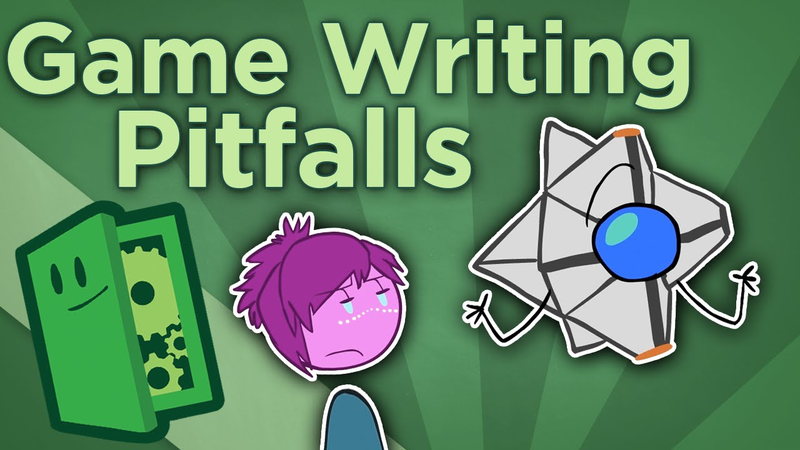
Game Writing Pitfalls - Lost Opportunities in Games - Extra Credits
Key insights
6 takeaways- 01Games face a severe narrative constraint with an average of only 16 words per minute, compared to 120 words per minute in television scripts.
- 02Because dialogue is a finite resource in games, writers must prioritize narrative depth over purely mechanical utility to overcome the medium's inherent word-count limitations.
- 03Functional gameplay instructions and filler dialogue used to mask transitions often result in flat, unengaging narratives, as seen in the case of Destiny.
- 04Developers should utilize traversal time—often treated as dead air—to deliver meaningful, character-driven dialogue rather than filler.
- 05Every line of dialogue must serve at least one of four functions: world-building, character development, plot progression, or revealing information about other characters.
- 06The Witcher 3 serves as a benchmark for transforming brief gameplay windows into emotionally resonant narrative opportunities through character-focused conversation.
Ask AI about this video
Transcript
Video games can be enormous sprawling affairs that take up huge portions of our consciousness. In terms of raw time investment, a movie usually requires 1 and 1/2 to 3 hours. A TV series might take 10 to 20 hours per season. Even the average novel with a word count of about 75,000 words only takes the standard reader 6 hours and 15 minutes to complete. Games are, of course, all over the place, taking anywhere from under an hour or two to, well, every waking minute of your life. But, if we think specifically of AAA games with a narrative focus, we're generally looking at a 15 to 40-hour commitment. So, I think it's fair to say that these sort of games tend to ask us for at least as much of our time as watching a season of a TV show. And yet, in terms of ponderable narrative information delivered, games often provide us with far less than a film or a television show. Why? The reason for this is simple. Games get to use far fewer words per minute than
any other narrative medium, because most of the time you're playing a game, you are playing the game. When you're in the middle of the action, all the game's going to throw at you are a few vocal barks and voice stabs. Now, one estimate I saw said that TV scripts, on average, end up with about 120 words per minute of dialogue. So, recently, I timed my play on a few narrative-heavy games: The Witcher 3, The Last of Us, and Final Fantasy XIII. And I got an average of 16 words per minute. Now, that's a very small sample size, and my counting probably wasn't perfect cuz it's hard to keep track of the number of unique vocal barks you're hearing in the middle of combat, but I'm not off by a factor of 10. 16 compared to TV's 120 is an enormous difference, and that difference is compounded by the fact that a lot of those 16 words are not directly used for narrative or characterization. No, no, they're used for something that no other medium has to deal with: information for the player. Much of the dialogue we put in has to be dedicated to letting the player know that there's a doodad they've got to get, or warning them that
they're getting shot, or telling them that they're headed the wrong way. Ultimately, this means that for a video game, every word, every line of dialogue is precious. We have to get the most out of every phrase we write, including lines that give the player instructions. And herein lies the cardinal sin of so many games. Today, I'm going to pick on Destiny in particular because wow, if you've wondered why the storytelling in that game feels so incredibly flat, it's not that their world is boring. They've actually got a pretty interesting world to play with, and it's not the voice acting's fault, either. That game has got a pretty incredible cast of actors who are given nothing to work with. Now, I'll tell you why the story feels so flat. If you look at all the dialogue written for the ghost, who is arguably the game's main character, he's got far more lines than any other character in the game, practically every single line the ghost says is either instructional text or a throwaway line. So, first, let's talk instructional text. When I say instructional text, I don't just mean a
character saying press X to open the door. We've gotten a bit more subtle about it over the years. Today's instructional text is instead often masked by a character simply talking about what they're doing or what's going on in the world at the moment, but it's all meant to clue you into something. Like in Destiny, when the ghost says, "I don't need an access key to break into this. DOS is more complicated." That really fiction-breaking gag is mostly there just to tell you that he's still working on unlocking that computer you told him to unlock. But there's the problem. If all of your instructional text is a comment on the present situation with no other contextualizing information, it serves no narrative purpose. Functionally, it's just words without meaning as far as your story is concerned. But there's no reason that this is all that instructional text has to be. With a little bit of effort, it can do a whole lot more. Like, okay, in Metal Gear Solid 5, they do do all the time, often showing the interrelationship between the characters or making small comments about the world through the way they tell the player about their objective. Now, of course, that's not to say that you should look
to Metal Gear 5 for all of your storytelling lessons, but in this one particular area, the series has generally done very well. Which leads us to the second reason that Destiny story falls so flat, throwaway lines. Throwaway lines are simply lines that are just there to fill space. Maybe the word count is too low or maybe somebody felt like this one stretch of time in the game felt weirdly silent, so somebody should say something. These lines have no subtext. They add nothing, and yet they're all too common in video games. So, how do you avoid these lines in your own writing? Well, it can help to ask yourself these questions. First, what does this line tell me about the world? Second, what does this line tell me about the character? Third, what does this line tell me about the other characters? And fourth, does this line move the plot forward? Every line you write should do at least one of those four things or at the very least be so artistically valuable, like so beautiful or just so funny, that it stands up on its own. If it's not, then it's a
throwaway line that doesn't serve your narrative. If you have only got 16 words per minute to work with, the more of them you waste on lines like these, the weaker your narrative's going to be. In the grand, complex world that Bungie's tried to set up for Destiny, they have given themselves such a huge story to tell that they cannot afford to waste dialogue on purely informational text, and they definitely can't afford to waste it on throwaway lines. And yet, just as an experiment, try applying those four questions I listed before to basically any line the Ghost says, and you will quickly see just how much this ends up costing them narratively. Given how few words per minute they have to work with, you can see how rapidly their dialogue is consumed with these lines that do nothing for the game, and how quickly their ability to tell their story's overwhelmed by the inefficiency of having a script mired in throwaway lines. In games, throwaway lines are very common during traversal. When you've got to get your character from one place to another place without much else to do along the way, the designers often fear that you're going to get
bored, and the easy go-to solution for that is to throw in a line of dialogue to keep the players occupied. From an engagement perspective, they're a way to mask a transition that's otherwise just not very engaging. And yet, it's exactly that sort of dead time that's perfect for more narratively dialogue. You've basically got the player's full attention right then. As a designer, you should be noting the places where you can fit in a line of dialogue that's not going to have to compete with gameplay for the player's attention. Why waste that opportunity by just throwing pointless words into those spaces so the player doesn't notice how boring those sections would be otherwise? Again, try listening to those lines in Destiny because you will hear plenty of them as they zip you from mission to mission. Then compare that with something like The Witcher 3. Look at the scene in The Witcher where they're dealing with the luggerkin. They spend five words on informational text so the player knows where to go, and then they spend the rest of the traversal having the Witcher and the baron discussing whether or not the baron ever gave his stillborn child a name. And that conversation is powerful. It's emotional. It tells you
about the world. It tells you about the characters, and it tells you how they relate to each other. This is some amazing transitional dialogue. They have essentially created a full-blown scene out of the player's trip from A to B, and there's not a throwaway line in that entire walk. I hope that helps to give perspective on why some game narratives fall so flat. But avoiding throwaway lines is simply the first step in packing more narrative into the few lines of dialogue we get to have our characters deliver in a game. Join us next time as we talk about another important technique for squeezing more meaning and narrative information into your sentences. See you then. Woo!
Summary
Video games face a unique narrative challenge: they possess a significantly lower word count per minute compared to other media like television or film. While television scripts average approximately 120 words per minute, narrative-heavy games often average only 16 words per minute. This disparity is compounded by the necessity of using dialogue for functional gameplay instructions, such as objective markers or combat warnings. Because every line of dialogue is a precious resource, the industry must prioritize efficiency to ensure that narrative depth is not sacrificed for mechanical utility.
The primary pitfall in game writing is the reliance on instructional text that lacks contextual meaning and the inclusion of throwaway lines designed merely to fill silence. When dialogue serves only to mask transitions or provide basic instructions without contributing to world-building, character development, or plot progression, it results in a flat, unengaging narrative experience. Using Destiny as a primary example, the analysis demonstrates that even with a rich setting, a game’s story can fail if its central characters are relegated to delivering purely functional or filler dialogue.
To improve narrative quality, writers should evaluate every line against four criteria: does it inform the player about the world, the speaker, other characters, or the plot? Effective game design utilizes moments of traversal—often treated as dead time—to deliver meaningful character-driven dialogue rather than filler. By contrasting the ineffective use of dialogue in Destiny with the emotionally resonant, character-focused conversations found during travel in The Witcher 3, it becomes clear that even brief windows of gameplay can be transformed into powerful narrative opportunities. Every word must serve a purpose to overcome the inherent limitations of the medium.
















Comments