Time
Company
Documents about Time
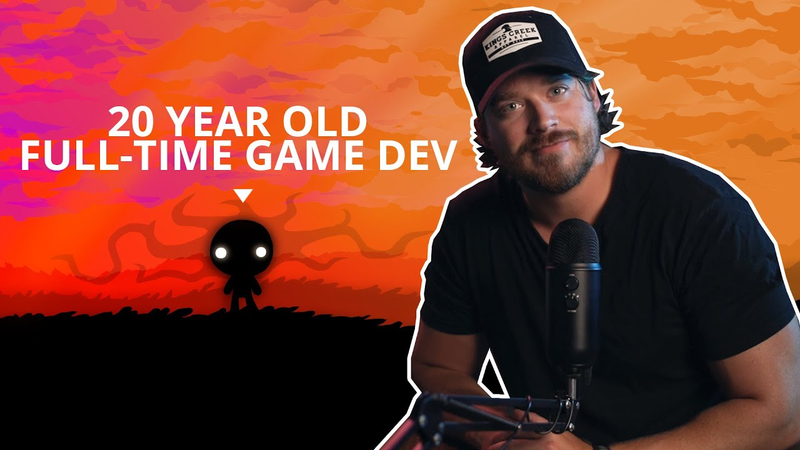
How This 20 Yr-Old Went Full Time Game Dev!
The transition to a full-time career in independent game development is increasingly achievable for young creators by diversifying revenue streams rather than relying solely on game sales.
- Achieving full-time independence in game development requires diversifying revenue streams beyond game sales, utilizing a mix of YouTube ad revenue, Patreon support, and educational content.
- Aspiring developers should treat game development as an entrepreneurial venture, layering multiple smaller income sources to ensure financial stability during the time-intensive production cycle.
- Building an audience by documenting the development process through video logs creates a sustainable brand and income stream that can support a developer before their games achieve commercial success.

Vacation-Based Dividends: Time Off in the Games Industry
The games industry operates on a seasonal cadence driven by major events and product deliverables, yet many organizations fail to align their labor practices with these natural fluctuations.
- Institutionalizing time off as a predictable dividend rather than a reactive measure is essential for retaining the highly specialized talent whose departure can cause eighteen-month recruitment and training setbacks.
- Major publishers like Riot Games and Epic Games have historically implemented company-wide breaks only as reactive responses to intense expansion or public scrutiny regarding crunch culture.
- Rapid valuation growth, such as Epic Games tripling its value to nearly $18 billion in two years, frequently leads to management errors that prioritize scale over employee well-being.
When a Game is Too Long - Respecting the Player's Time - Extra Credits
The core thesis of this analysis is that game developers must prioritize player time as a valuable resource, shifting the industry focus from quantity of content to the quality of engagement.
- Developers must shift their design philosophy from prioritizing arbitrary game length to maximizing the quality of player engagement.
- Excessive content padding, such as repetitive fetch quests and artificial grinds, leads to player burnout and diminishes the overall value of the experience.
- Non-engaging tasks like obtuse user interfaces, unskippable technical hurdles, and tedious inventory management act as barriers that should be streamlined to keep players focused on rewarding gameplay.
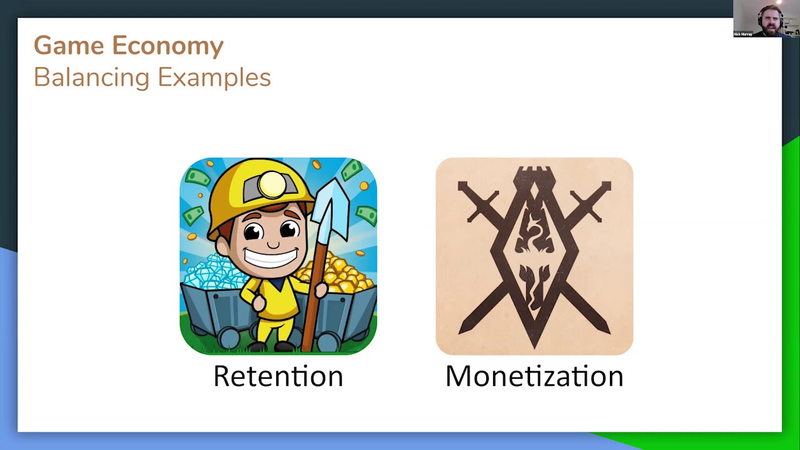
Building & Running Game Economies PG Connects Digital #2
Sustainable game economy design hinges on the strategic balance between player retention and monetization, with long-term engagement serving as the primary foundation for financial success.
- Sustainable game economies rely on a dual-currency framework where soft currency drives gameplay progression and hard currency is reserved for time-saving mechanics or exclusive cosmetics.
- Developers should anchor hard currency value in real-money equivalents to manage inflation and ensure that in-app purchases remain the primary acquisition method over free rewards.
- Resource management requires balancing sources and sinks by monitoring cumulative currency gains against spending objectives to identify and resolve progression bottlenecks.
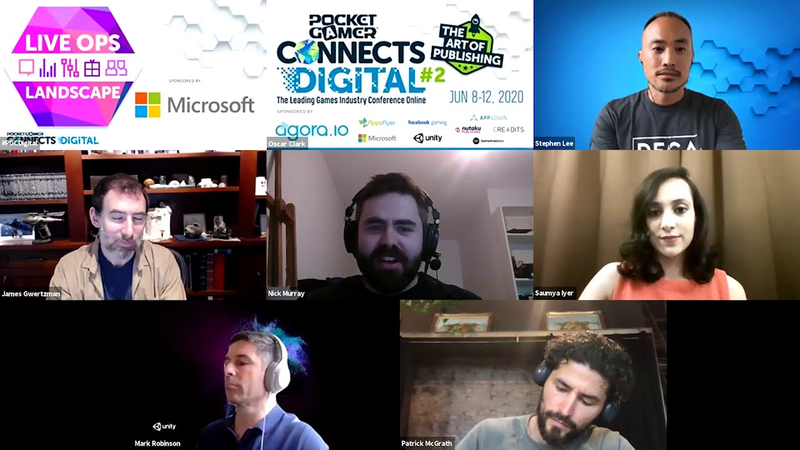
Panel: When is the Right Time to Start Thinking, Testing & Delivering Live Ops? PGCD#2
The transition from traditional, static game development to a service-oriented model is essential for long-term commercial viability in the modern gaming industry.
- Live Ops should be integrated into the development process as early as possible, ideally during the pre-launch and soft-launch phases, to effectively balance game economies and validate lifetime value assumptions.
- Automation is essential for effective Live Ops, as it frees up team capacity to focus on new content and sophisticated, personalized player experiences rather than repetitive manual tasks.
- Game developers should treat their titles as 'nightclubs' that require constant management and engagement rather than one-off 'rockstar performances' that end at launch.

It's About Time: System Design for Mobile Free-to-Play
System design in mobile free-to-play games centers on the universal resource of time.
- System design in free-to-play games must be anchored in time as the universal resource, balancing player progression against energy limits, session frequency, and the time required to acquire content.
- Designers should establish a progression model by defining the desired time-to-level, then calculating the necessary daily payouts based on the number of sessions and actions a player performs.
- When tuning upgrade costs, a common formulaic approach is to increase costs by a fixed percentage—such as 250% per level—while rounding to larger increments to ensure the UI remains clean and readable.
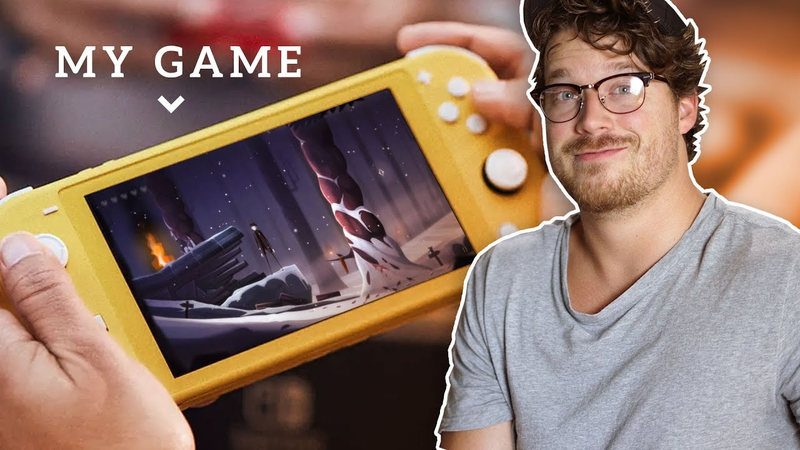
How I Became a Full Time Game Developer
The narrative outlines the professional trajectory of an independent game developer, detailing the transition from a traditional corporate career to full-time game creation.
- Securing $28,000 in the first 24 hours of a Kickstarter campaign provided the necessary capital to complete the game Pinstripe, serving as the primary catalyst for transitioning to full-time development.
- Achieving professional viability in the indie sector requires a hybrid strategy of leveraging community support, crowdfunding platforms, and publisher partnerships to mitigate financial risk.
- The developer successfully scaled their career by building on early validation from Flash-based games, which garnered millions of plays before moving to larger commercial projects like Pinstripe and the critically acclaimed Never Song.
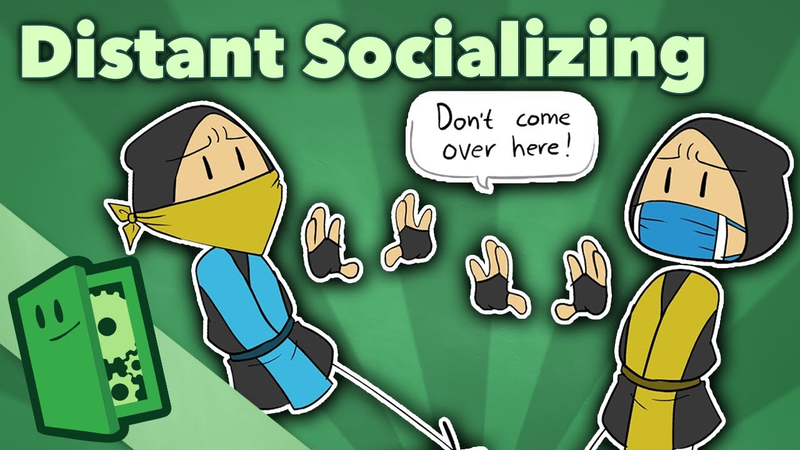
Distant Socializing - Gaming in the Time of COVID - Extra Credits
The gaming industry experienced a significant surge in engagement and sales during the COVID-19 pandemic as individuals sought digital alternatives to traditional social interactions.
- The COVID-19 pandemic drove a significant surge in gaming engagement and sales as digital platforms became primary tools for maintaining emotional connections during periods of physical isolation.
- Nintendo Switch achieved record-breaking unit sales in the United States during the pandemic, fueled largely by the widespread popularity of accessible, family-friendly titles like Animal Crossing: New Horizons.
- Gaming platforms effectively bridge the gap between simple video communication and meaningful social interaction by facilitating collaborative, goal-oriented tasks.
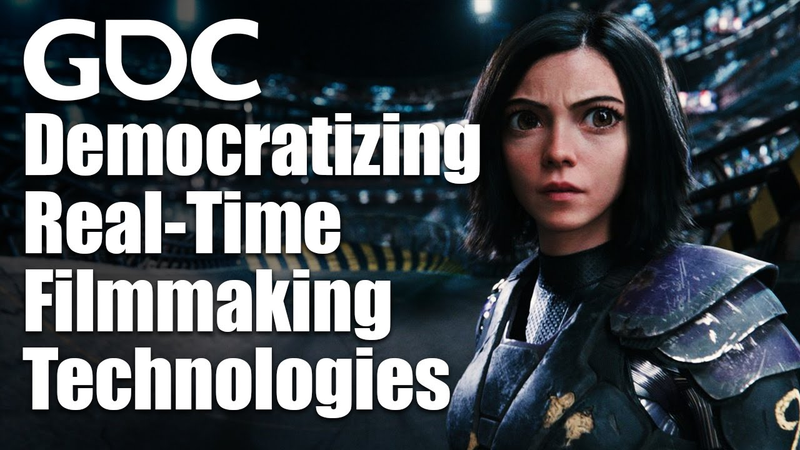
Democratizing Real-Time Filmmaking Technologies for Indie Game Developers
The democratization of real-time filmmaking technologies represents a significant shift in content creation, driven by the convergence of cinema and game engine capabilities.
- Real-time rendering technology has reached a level of quality that approximates pre-rendered cinematics, allowing independent developers to achieve visual fidelity previously restricted to major studio productions.
- The shift toward virtual production is driven by the convergence of game engine capabilities and affordable, consumer-grade hardware that replaces expensive, bespoke studio equipment.
- Virtual cinematography and performance capture tools allow creators to digitize actor movements and emotions while viewing rendered scenes interactively.

Games Industry in the Time of COVID-19 (in association with Tamatem) - PocketGamer.biz RoundTable
The global gaming industry experienced a period of unprecedented growth during the COVID-19 pandemic, characterized by record-breaking engagement and revenue as players sought social connection and escapism during lockdowns.
- The games industry has experienced a net positive impact from the pandemic, with digital revenue surging as players seek entertainment and social connection during lockdowns.
- Remote work has introduced operational challenges for AAA development, with teams struggling to maintain the streamlined, multi-disciplinary collaboration required for complex production pipelines.
- Companies are successfully launching major titles during the pandemic, such as Tilting Point’s release of a SpongeBob game following 18 months of development, despite the difficulty of coordinating final production phases remotely.
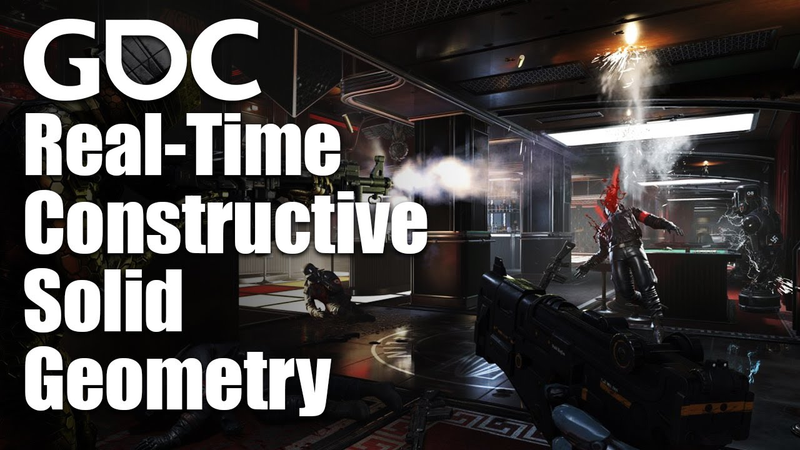
Geometry in Milliseconds: Real-Time Constructive Solid Geometry
Constructive Solid Geometry serves as a foundational methodology for game level design, facilitating rapid prototyping and iterative workflows by allowing designers to manipulate geometry in real-time.
- Modern CSG implementations have shifted from inefficient Binary Space Partition (BSP) trees to per-brush computation, treating individual convex brushes as the primary unit for real-time processing.
- The system utilizes boolean operation lookup tables and routing tables to categorize polygon pieces against brush planes, effectively determining which surfaces are discarded and which remain visible.
- To minimize redundant data and optimize processing, the framework encodes branching paths into indexable structures and utilizes row caching.
Custom Tool Time: Make More in Less Time
Custom tool development serves as a critical strategic investment for game studios, functioning primarily to preserve the creative flow state of designers by eliminating repetitive manual labor.
- Prioritize the development of iterative, project-specific tools over polished, generalized software to eliminate repetitive manual labor and preserve designers' creative flow.
- Focus tool development on high-impact, low-effort utilities—such as visual debugging aids, object snapping, or automated asset rotation—to reduce cognitive load and accelerate production cycles.
- Adopt a pragmatic engineering philosophy where 'hacky' or incomplete tools are preferred over over-engineered systems if they effectively streamline a workflow.