Tilting Point
CompanySpain
Documents about Tilting Point
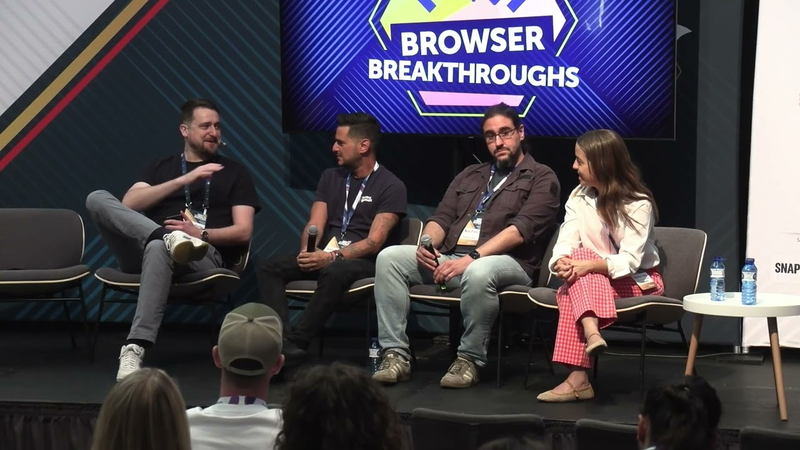
Panel: Browser Renaissance: Can Web Games Be The Driver For Growth?
The browser gaming sector is undergoing a significant renaissance, driven by the strategic necessity for mobile publishers to diversify distribution channels and circumvent the restrictive policies of mobile app store ecosystems.
- Web gaming is evolving into a critical distribution channel for mobile publishers to reach new audiences, particularly younger demographics, without the friction of app store installs.
- Third-party platforms like Crazy Games allow mobile developers to validate game performance and audience interest on the web before investing in proprietary web-based infrastructure or marketing.
- Modern web gaming infrastructure has matured significantly, with reliable payment providers like Xsolla enabling secure in-app purchases that build user trust comparable to mobile environments.

2026 World Cup Effect on Games
The 2026 FIFA World Cup serves as a catalyst for significant shifts in the mobile football gaming landscape, highlighting a divergence between established market leaders and the governing body’s own interactive efforts.
- Konami’s eFootball has surpassed EA’s FC Mobile in cumulative revenue, reaching $1.9 billion compared to FC Mobile’s $1.6 billion.
- While eFootball leads in total revenue, FC Mobile maintains a larger daily active user (DAU) base, highlighting a divergence in monetization strategy versus user reach.
- Major football titles have abandoned traditional seasonal resets in favor of continuous progression and power inflation to reduce user churn.

UA Financing Reshapes Mobile Publishing with Tilting Point
The mobile gaming industry is undergoing a fundamental transformation, shifting away from traditional third-party publishing models toward flexible, data-centric financing and strategic studio integration.
- Tilting Point launched a $150M user acquisition (UA) fund to provide non-dilutive, risk-sharing capital to mobile developers, allowing studios to scale live titles without sacrificing equity.
- UA financing functions as a predictable, capped-fee model where the publisher funds future cohorts and takes a small, fixed percentage of revenue, leaving the remaining upside to the developer.
- Tilting Point has shifted its business model from third-party publishing to a dual-pillar strategy focused on UA financing and first-party acquisitions of independent studios.

Tilting Point’s Enric Pedró On Leveraging IP On A Shoestring Budget
Leveraging intellectual property in mobile gaming serves as a powerful catalyst for user acquisition and long-term engagement, even for studios operating with limited capital.
- Studios with limited capital can lower cost-per-install and increase player lifetime value by leveraging culturally resonant trends or dormant, public domain characters instead of expensive, high-profile licenses.
- Developers should pitch IP partnerships by presenting clear metrics on downloads and engagement to demonstrate competence to potential licensors.
- To secure partnerships, studios should propose revenue-share models or minimum guarantees to make mobile gaming an attractive proposition for brand holders.

two & a half gamers session #22 - How to predict game performance? What is Tilting Point's secret?
Tilting Point maintains a competitive edge in the mobile gaming market by integrating rigorous data-driven analysis with a collaborative approach to developer partnerships.
- Tilting Point evaluates potential publishing partners by requiring a clear product roadmap, viewing the absence of one as a primary indicator to decline a partnership.
- The company targets an 85% confidence level in their ability to scale a game before committing to a full publishing partnership, though they acknowledge that predictive LTV models often fluctuate once UA spend reaches 45k–60k per month.
- The UA team is structured with dedicated managers for specific game portfolios alongside network-specific representatives who maintain direct relationships with platforms like Facebook and TikTok.
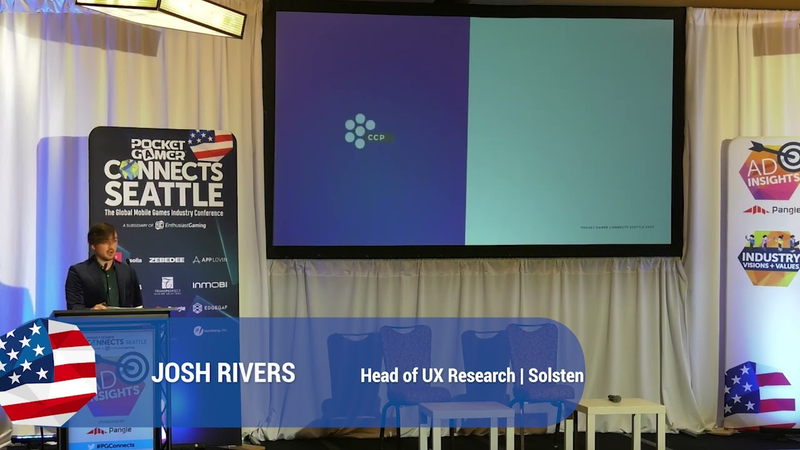
Keynote: Discovering the Why: Launching New Games & Features in 2022
The primary objective of this presentation is to advocate for a player-centric development strategy that prioritizes understanding the underlying motivations—the "why"—behind user behavior.
- Development teams should shift from surface-level demographic data to a four-step framework that integrates psychological profiling and ethnographic research to identify the 'why' behind player behavior.
- Voodoo increased day-one retention by 14% in the game Plantopia by identifying and addressing specific underlying player motivations.
- Tilting Point successfully pivoted the design of Linguinis after research revealed that their target audience preferred collaborative gameplay over the initially planned competitive leaderboards.

two & a half gamers session #3 - Is Roblox evil mega corp or money making machine?
Roblox functions as a highly profitable, closed-loop economic ecosystem that effectively leverages its $38 billion valuation to maintain dominance in the gaming sector.
- Roblox maintains a dominant 75.5% revenue share by classifying its content as 'experiences' to bypass traditional store-within-a-store restrictions.
- The Roblox internal economy uses Robux to create developer friction, requiring paid subscriptions for withdrawals and incentivizing reinvestment over cash-out.
- Rewarded interstitial ads are currently underperforming, with market data indicating poor competitive bidding and declining eCPMs for developers.

TWIG 143: Reactions to Tilting Point raising $235M
Tilting Point recently secured $235 million in equity financing, led by General Atlantic with participation from Red Ventures and Camar.
- Tilting Point secured $235 million in equity financing led by General Atlantic to scale its publishing model, co-development efforts, and studio acquisitions.
- The company provides infrastructure for live operations and user acquisition to a network of over 40 developer partners, acting as a growth engine for studios lacking those internal capabilities.
- Tilting Point’s business model is frequently compared to Scopely’s historical trajectory, though analysts note that the current market features higher valuations and stiffer competition for top-tier studios.

Liveops: Mapping Player Journeys (Andre Cohen Head of Data Science Tilting Point)
Player journeys function as dynamic, evolving frameworks essential for optimizing game performance, monetization, and retention.
- Linear 'golden path' funnels are often inaccurate because they fail to account for the diverse, non-linear ways players naturally engage with games.
- Data scientists should replace static funnels with state-based visualizations that map players across multiple dimensions, such as retention duration and level progression.
- K-means clustering should be used to identify distinct, multi-dimensional player segments, enabling personalized LiveOps and targeted A/B testing.

Data Science at Games Studios | Andre Cohen Head of Data Science at Tilting Point
Data science functions as a critical third pillar of revenue in modern game studios, operating alongside in-app purchases and ad monetization to drive profitability.
- Data science functions as a critical third pillar of revenue alongside in-app purchases and ad monetization, focusing on optimizing user acquisition bidding and return on ad spend.
- Successful data science teams prioritize robust data engineering, quality management, and pipeline maintenance over complex machine learning research.
- Studios should focus on pragmatic, short-term projects that directly address core business constraints rather than esoteric, long-term research initiatives.
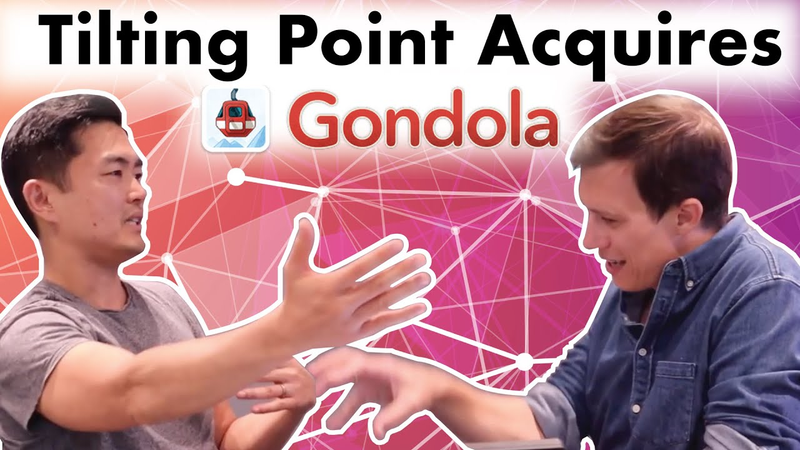
Gondola Acquisition by Tilting Point | With CEO Niklas Herriger
The acquisition of Gondola by mobile publisher Tilting Point marks a strategic shift toward integrating advanced machine learning infrastructure into the broader mobile gaming ecosystem.
- Tilting Point acquired Gondola to integrate automated machine learning infrastructure into its mobile publishing ecosystem, shifting focus from aggressive user acquisition to maximizing player lifetime value and retention.
- The merger aims to replace manual, static A/B testing with dynamic, automated systems to overcome industry-wide SDK fatigue and streamline product management workflows.
- Gondola, originally founded in 2013 as an indie studio, transitioned into a B2B provider before the acquisition, highlighting the difficulty of scaling independent B2B infrastructure due to long sales cycles and constant product validation requirements.
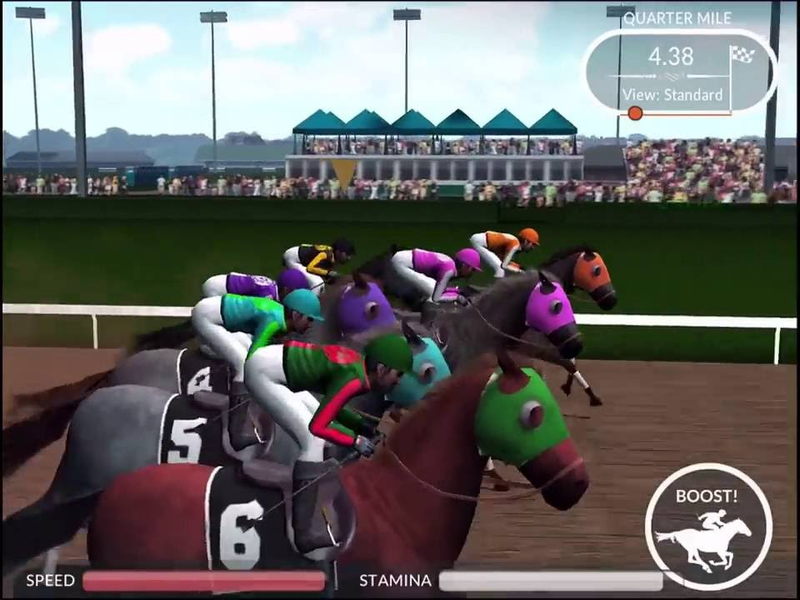
Monetizer: Photo Finish Horse Racing
Photo Finish Horse Racing serves as a case study for the efficacy of post-launch publishing partnerships in the mobile gaming industry.
- A publishing partnership with Tilting Point enabled Photo Finish Horse Racing to achieve a 32-fold increase in total revenue and a 1,000 percent growth in downloads.
- Strategic alignment of user acquisition campaigns with the real-world US horse racing season was a primary driver for the game's commercial revitalization.
- Post-launch implementation of advanced analytics and refined monetization systems resulted in a nearly 2,000 percent increase in daily player retention.