1 free read left. Create a free account for unlimited reading + AI research.
Create free account
Keynote: Discovering the Why: Launching New Games & Features in 2022
Key insights
6 takeaways- 01Voodoo increased day-one retention by 14% in the game Plantopia by identifying and addressing specific underlying player motivations.
- 02Tilting Point successfully pivoted the design of Linguinis after research revealed that their target audience preferred collaborative gameplay over the initially planned competitive leaderboards.
- 03CCP Games improved new player engagement in EVE Online by utilizing qualitative research to develop a collaboration-focused tutorial.
- 04Demographic data alone is insufficient for predicting player behavior, necessitating the use of qualitative interviews to bridge the gap between stated preferences and actual in-game actions.
- 05Development teams should shift from surface-level demographic data to a four-step framework that integrates psychological profiling and ethnographic research to identify the 'why' behind player behavior.
- 06The player-centric strategy of treating the audience with deep psychological understanding is applicable across all industry segments, from mobile gaming to long-standing MMOs.
Ask AI about this video
Transcript
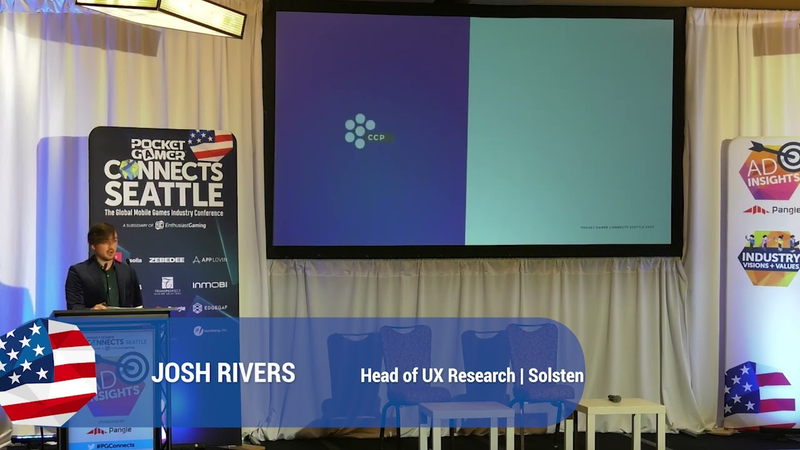
[Music] we're back on track for the next presentation which is coming from from josh uh rivers from soulstone um that's about discovering the why um launching new games and features in 2022. um just a quick reminder the track sponsored by pangal we're very grateful to pango for their sponsorship so please welcome josh rivers all right good morning everyone uh thank you all for attending today's talk and to the organizers for a great event so far i'm josh rivers like was mentioned i'm the head of ux research at soulston where we're seeking to empower the future of human-centered experiences in gaming we're doing that by trying to
holistically understand the people that play games so that leads me to my goal for today my aim with my presentation is pretty simple i want each and every one of you to leave this room asking what's the why that may sound odd at first but i promise that by the end of this talk i'll have given you not only the reason to ask what's the why but also handed you a starter toolkit of sorts with which you and your teams can begin answering that very question in a way that can radically alter your development practices and strategies for the better so let's start at the beginning why even ask what's the why the landscape of gaming has dramatically changed over the last decade i think we're all pretty aware of that as video games and especially mobile games have come into their own as a valued and widely spread form of entertainment at the same time players have never had so much choice at their fingertips no matter their device as more and more developers have waded into the waters of mobile gaming mobile gamers of all sorts have been inundated with options
it's probably not news to most of you or most of the people in this room or even those listening to this talk that launching a new game or even a new feature in an existing game is indeed a difficult task in today's gaming landscape so if your team is wading into the waters of developing and launching a new game or even a new title then you're working from the start to swim towards a solid product market fit by finding your game's audience attracting said audience to the experience that you're offering and then keeping them coming back again and again if you have any existing games already on the market then you're going to be thinking about how you can avoid cannibalizing those other audiences too all the while your team is going to be stretched then trying to get your game over the finish line and to the market with little time to stop and think that's why considering the audience from the start and asking yourself what's the why that drives my audience to play games is really the key to success here but let's say you don't have a new game to develop what then well even something as deceptively simple
as launching a new feature in a game and i say that with the largest air quotes one can summon is fraught with potential pitfalls so if your team embarks on a journey to release a new feature into an existing game especially if it's a largely successful one already it's crucial to understand why your audience is there playing your game before you implement or change anything if you don't and i have seen this first hand then it's really possible that your beloved game is suddenly going to be last week's news your retention rates are going to plummet and purchases are going to drop through the floor all because you implemented a feature that doesn't resonate or you made a change that doesn't resonate with the players you already have similarly for games that could use a bit of a let's let's call it a boost to their numbers understanding what it is that potential new players are looking for in an experience all while still considering the drives of those dedicated core players is a pretty tough balancing act to say the least so where do we begin well we begin with the
why when i first started working in gaming it was actually from the relatively removed vantage point of the ivory tower that's called game studies i'm not going to delve into my academic past too much except to say that the path to my phd in anthropology taught me two things first as my advisor told me before i started my very first ethnographic project no one is psychic second as i would come to learn and attempting to prove him wrong and develop psychic-like research skills the key to success in any endeavor but especially in research and product development is a truly holistic understanding of who people are beyond mere demographic data as well as a strong grasp of why they do what they do beyond just observational data and observed behavior so since then i've transitioned into working directly in the gaming industry across the pretty wide portfolio of games i've worked on from mmos to mobile games and mobile adaptations of popular pc games even i saw and i continue to see the most
successful projects start their work with their audience's motivations personalities values and culture at the core of what they're doing so let's take voodoo games in berlin for example who realized pretty early in their soft launch testing for plantopia the players simply weren't coming back to play the game again after they'd already tried it or after their first day the team saw that there was a problem that problem being early retention and rallied around the question of what's the why for our audience so with a little bit of help from the soulstone team voodoo actually found an answer that led to a 14 increase in day one retention and then returns as well focusing on their audience's motivations and personality voodoo was able to answer what's the why and then create an experience that better engage their audience which led to profitability shortly thereafter this is all seen in the path forward that they took and ultimately in the results that they achieved because they took the moment to ask why is our audience here and what are they looking
for and what about new features well let's take a look at tilting point and their game linguinis the team at tilting point had a successful game on their hands but they wanted to make it better to increase engagement and sales while bringing value to their players the team had an idea introduce competitive gameplay with leaderboards and other games leaderboards are a fantastic motivator they work very well but the team actually stopped and they asked themselves what's the why for our audience before they move forward with that ranked leader board plan before they entered actually integrated this solo-based game play they took a step back and said what is it our players are really here for so what's the result well again working with salston they uncovered that their players were actually interested in more collaborative gameplay they didn't want solo competition they wanted to work with friends together to achieve a goal so instead of launching a feature that likely would have turned their existing audience off of the game they actually launched crew events instead and in its
place this collaborative feature what they actually implemented saw a huge boost to engagement as well as sales for the game so again here asking what's the why for those players in that game helped the tilting point team to craft an experience that engaged their audience in a measurably impactful way so we've seen how asking this question and deeply understanding the game's audience can impact new games and a new feature within a game but what about a kind of new part of an existing game that's really old what about a new first time user experience how am i asking what's the why not only retain new players and engage existing ones but actually attract entirely new cohorts to an existing game for that i'm going to speak to my own experience in working to attract a truly unique kind of player to a really old game eve online this is outside of the mobile space but a lot of these lessons actually still apply within mobile gaming so when i was at ccp games i was the the
lead ux researcher as part of a new player experience team we were a group of people dedicated to breathing new life into the now actually almost 20 year old mmo while part of the team focused on improving the user interface and the gameplay interactions those are really important just to note it's really important to get your usability correct those are incredible hurdles for new players times and they lead to satisfying experiences accordingly so while the team did that i actually chose to pivot we understood those problems we knew what was the struggle there what i wanted to ask instead was i wanted to venture a bit further and see so why do people play eve online anyways what's the motivation here why are people even coming to the game i dove into the research we already had available and i found it pretty wanting to be honest sure i was able to see what players had said was their motivation but as an anthropologist and an experienced researcher i knew and i had seen firsthand that what people say doesn't
often align with what they actually do so what we did then was i actually partnered with soulston where we were able to deeply delve into the why of our existing audience in order to attract new like-minded players to the game similar actually in fact to tilting point we discovered that our players were motivated not by competition for the sake of competition or for the sake of dominance but by collaborative competition they wanted to compete together they wanted to work with their friends to overcome struggles and if that struggle was another group of human beings fantastic but it also didn't have to be so working together with a really strong team of designers and a lot of producers a lot of product managers we actually did just what they were looking for and delivered a new for tui that focused on teamwork collaboration and overcoming challenges as part of a larger group the game saw an instant bump to its retention double-digit numbers and new player engagement as well as completion rates for uh that tutorial and fatoui experience
so looking at voodoo tilting points and then my own experience at tcp games it's hopefully clear through their example and my own that the people who ask what is the why and then design experiences that engage and resonate with that why are not only creating the most successful games to date they're also breathing life into games that maybe once would have actually been considered to be put somewhat into the dreaded term maintenance mode but let's not talk too much more about what has been instead let's talk about how all of you the people attending this talk or even listening to it later can actually start asking yourself and your team what is the why of our audience and then take it one step further and apply it to the development work that you're doing so just how did voodoo tilting point and then ccp find the answer to that question it all begins with psychology so while my advisor was and i really begrudgingly admit this quite correct that no one is psychic combining psychological insights with rich ethnographic data and rich
ethnographic research on a population is the key to empowering your teams as well as those three teams i talked about in order to grasp the why the ability to understand an audience as if they were your lifelong friends really happens when the science of psychology meets the richness of ethnographic research and behavioral data synthesizing a deep understanding of an audience's psyche with the observed behavior of a set of players it grants us a truly holistic view into the lives of the people playing our game so speaking from first-hand experience gamers are always going to surprise you the people playing your game will always behave in a way that is at first glance completely unpredictable i certainly thought so when i looked at the data on the future for eve online and since have looked at data for other games and i know that the teams that we work with at solston now have often mentioned experience in a similar pain point something along the lines of yeah we just don't get why this player acted this way we just don't understand why they engaged with this this feature in a
certain way and then they turned around and acted in a completely contradictory manner uh humans of course and hopefully we all agree on this are pretty complicated creatures but science has come a long way in uncovering the nuances of our psychology and behavior so trusting in that science and in the psychosocial data that you can get whenever you combine psychology with ethnography is really an approach that's going to lead to results okay okay i trust the science you're going to say now what how do i actually do this well it all begins like i mentioned with psychologically assessing your audience or at the very least putting your finger on the pulse of their personality and motivations as well as their values that's where it begins remember though and this is really important what people say they're motivated by is is really never the full picture what do i mean by that well let's go back to that tilting point example to learn a bit more about how they answered what's the why for their linguini's audience when the fir team first came up with that idea
for a competitive gameplay they actually started by looking at personality and motivators of their audience that they had captured through working with us at soulstone they saw then that their players were highly altruistic and they sought out friendship in a gameplay experience the linguini's players were driven by interpersonal relationships not by competitive dominance they wanted like i mentioned to work with friends together to overcome hurdles not to compete in order to be the the singular best combining these insights with a touch of observed behavior the team there actually pivoted their project from one of competitive solo leader boards to collaborative team-based gameplay the team started by questioning their assumptions that's always the first step question every assumption you make and asked what is the why of our audience they found their answer in a really rich set of psychological data peppered with some observational research and ultimately were able to find their answer it worked at ccp games we did the same thing i started by ethnographically researching our existing players as well as interviewing those who had decided not
to continue playing the game we collected these players answers on why they chose to engage with our virtual world or not in some cases while actually participant observing them playing the game over multiple sessions still i knew something was missing and i knew that their answers and the actions that they were actually doing didn't quite line up but i didn't have a bridge between those two things so that's really where psychology actually saved the day working with the full psychological profile of our audience personas we actually were finally able to understand why players were so involved in pvp content yet at the same time seemed to actually hate it or express a really deep dislike for it especially when they were new and the reason for this is they wanted to play with friends or with a buddy they wanted to overcome challenges pvp was the ultimate challenge in that game so that's what they were engaging in but they were hungry for a collaborative element of that integrating this insight into the work we did to revamp the fatoui made a huge difference in how players engaged with their first moments
in game with an admittedly sorted reputation and a huge learning curve so working together across psychology and anthropology we helped players work together and then we saw the success that came from that so at this point i hope i have convinced you that asking what's the why is probably one of the best ways forward when developing a new game or a new feature in today's market how exactly do you do this though how can you mimic the results of voodoo tilting point ccp and others well like i said it starts with the psychology of it all the first step is to uncover the full psychological profile of your audience whether you're running a live game or hoping to launch a new one there are many paths to unlocking this data but be really careful it's highly protected and researchers have to work with extreme caution and ethical care when you're delving into someone's psyche this is doubly true if you're dealing with psychological profiles for an entire audience so once you you've navigated that path your team is going to want to start by asking who are my players really look beyond the demographic data so the experience of one 28 year old canadian woman may be
vastly different from another 28 year old canadian woman based on their lived experiences instead dive into what similarities people share with their mental models and psychological approaches to the world of course you can chart this out on your own but sultan has unlocked a powerful and scientifically validated approach to getting exactly these sorts of answers we're here to help with this step if you want our help but what comes next well next you're going to investigate your players behavior spend time in your game or with your players in an observational setting ideally this is a form of contextual inquiry where you're watching people play games in their natural setting take extensive notes not just how people play the game but how they interact with the whole world around them then ask them questions interview them and compare how their spoken answers match or differ from their behavior this is pretty classic ethnography actually then what do you do finally the secret here is to combine the two look to the psychological data to answer why people have acted in a certain way synthesize the two to understand not
only how a target audience or existing audience approaches your game experiences just get to why they do so in that manner and finally ask yourself and your team what is the true why that drives our audience with all of this data in hand you'll be well equipped to do so so remember the four-step process here that's the final takeaway uncover the psychological one observe the behavioral two synthesize them together three and then ultimately answer what's the why with this method in hand i'm pretty confident you're gonna see success so thanks for your time i look forward to any questions [Applause] so we're a bit tight on time but do you have any questions is there a question for let's just answer here um you know you spoke briefly about kind of the ethics of delving into the psychological profiles of players and and what that can mean do you have any insights on how you know that can be treated with the utmost care especially when talking about games that are targeting
potentially a younger audience like kids yeah it's a great question so i'll start by saying that we actually haven't delved too much under the water of working with children's psych profiles yet there's a lot of reasons for that if you look into the actual psychological data oftentimes the human brain isn't fully formed obviously our psychology isn't really firmly cemented in place until like our our mid-20s really so we tend not to work with children too much at this step i would say though that when dealing with that the best lesson that we have is just don't attach a person to that data work with that data and understand your audience through personas that's kind of the model that we work with to generalize it a little bit so that you're not actually attracting and working towards singular psych profiles basically the best best ethics is to not know whose that is right and that's kind of the approach i would take for an indie studio and trying to figure out that audience psychology what are some things actionable things we can do surveys or anything specific
yeah it's an awesome question um so especially when you're smaller and a little bit limited on the scope of what you're able to do surveys are a great tool i actually would go beyond surveys and work more on interviews so like i mentioned working beyond demographic data is really key so don't just look towards okay we want 24 year olds who are maybe based in the u.s ask yourself what kind of person is going to play this game so what kind of gamer is interested in what we're working on and then talk to them i think this is like the secret to ux research across the industry you can talk to people it's it's a kind of wise insight and it's really simple but it's the one that i see people not taking go ask people questions now to dive into the psychology of it you're going to need to actually assess people and that's a much more rigorous process but a good first step to even understanding who your potential target audience is is just to talk to gamers that you might think fit your profile
Summary
The primary objective of this presentation is to advocate for a player-centric development strategy that prioritizes understanding the underlying motivations—the "why"—behind user behavior. By integrating psychological insights with ethnographic research, development teams can move beyond surface-level demographic data to create more resonant, successful gaming experiences. This approach is presented as a critical tool for navigating the modern, saturated gaming market, where developers must balance the needs of core audiences with the necessity of attracting new players without cannibalizing existing titles.
The methodology emphasizes a four-step framework: uncovering the psychological profile of the audience, observing behavioral patterns through contextual inquiry, synthesizing these two data streams, and finally, aligning development decisions with the identified motivations. This process is illustrated through several industry examples. For instance, Voodoo improved day-one retention by 14% in Plantopia by identifying and addressing specific player motivations. Similarly, Tilting Point avoided a potential misstep in Linguinis by discovering that their audience preferred collaborative gameplay over the competitive leaderboards originally planned. The speaker also cites personal experience at CCP Games, where applying this research-heavy approach to EVE Online led to a successful, collaboration-focused tutorial that significantly boosted new player engagement.
The scope of these practices spans various industry segments, including mobile gaming and long-standing MMOs, and is applicable to teams of all sizes. The analysis concludes that while demographic data is useful, it is insufficient for predicting player behavior. Instead, developers should prioritize qualitative interviews and psychological profiling to bridge the gap between what players say and how they actually act. By treating the audience with the depth of understanding one would afford a lifelong friend, studios can ensure that new features and games are built on a foundation of genuine player needs, ultimately driving higher retention and long-term profitability.
















Comments