indie
CompanyUnited States
Documents about indie
It's OK: The Meh-ening of Indie Console Game Sales
The primary thesis of this analysis is that the era of "console versions saving a game" is ending for independent developers.
- Console versions are no longer a reliable growth driver for independent developers, as unit sales often barely cover the cost of porting.
- On the Nintendo Switch eShop, a top 200 launch typically yields 10,000 to 20,000 initial sales, but daily volume frequently collapses to fewer than 50 copies within 30 days.
- Indie games comprise 95% of the Steam library but generate only 40% of units sold and 28% of total revenue.
Nightmare Reaper: Doing a 1.0 Steam Release the Right Way
The transition from Early Access to a 1.0 full release on Steam represents a critical inflection point for indie developers.
- A successful 1.0 launch can drive massive momentum, as evidenced by Nightmare Reaper selling 10,400 units in six days—50% of its total volume accumulated over three years of Early Access.
- Strategic marketing for the 1.0 release, including a 70-streamer Twitch event and high-reach YouTube coverage, helped nearly double the game's wishlist from 39,000 to 75,000.
- Maintaining an 'Overwhelmingly Positive' review status throughout the development cycle is essential for securing long-term discoverability and consumer trust.
Phil Spencer Answers Xbox One's Struggles | Games ReCAP Episode 010
Microsoft is fundamentally restructuring its gaming strategy to pivot away from traditional console-centric competition toward a service-oriented model defined by Xbox Game Pass.
- Microsoft is pivoting from a hardware-centric model to a service-oriented strategy centered on Xbox Game Pass to mitigate the historical underperformance of Xbox One’s first-party software.
- The company is bridging Xbox and PC platforms to secure recurring revenue and reduce dependency on the volatility of traditional console hardware cycles.
- The industry is shifting toward digital distribution to bypass retail intermediaries, increase profit margins, and eliminate the secondary resale market.
Make Games, Better with Rupie.io | Game Dev Unchained Episode 194
Rupie.io serves as a comprehensive infrastructure platform designed to professionalize the independent game development sector by automating essential back-office operations.
- The game industry currently faces an 85 percent failure rate for development projects, primarily due to poor business management, inadequate resources, and ineffective feedback loops.
- Rupie.io provides an infrastructure platform that automates back-office operations, including logistics, scheduling, and payment processing, to stabilize early-stage indie studios.
- The platform operates a vetted marketplace that connects independent developers with experienced professionals displaced from AAA studios to improve project viability.

Build Your Own Reputation and Help Others with Marketing with Derek Lieu | GduX.me
Establishing a sustainable career as an independent creative requires a deliberate strategy of niche specialization and proactive reputation management.
- Specialize in a narrow professional niche to transition from a generalist freelancer to an essential expert, which reduces client risk and builds long-term authority.
- Document and share your specific creative workflows and knowledge to establish trust and create a sustainable marketing engine for your services.
- Price your work based on the tangible value delivered to the client and market impact rather than the perceived effort or time required to complete a task.
Socialist Revenue Sharing in a Indie Studio with Matthew Viglione | GduX.me
SomaSim utilizes a decentralized, socialist-inspired revenue-sharing model to maintain financial independence and creative autonomy within the independent game development sector.
- SomaSim operates as a collective of independent contractors who are compensated based on total hours contributed to a project rather than traditional fixed salaries.
- The studio utilizes a decentralized, socialist-inspired revenue-sharing model that grants every contributor full access to financial data and a pre-defined percentage of earnings.
- By funding future development through the proceeds of previous titles since 2014, SomaSim maintains financial independence and avoids the pressures of external venture capital or stakeholders.
Building Up a Indie Company with Karla Zimonja | GduX.me
Professional growth in the game industry requires a proactive approach to skill acquisition, particularly for those transitioning from large-scale AAA environments to independent development.
- Transitioning from AAA to indie development requires moving from rigid specialization to cross-disciplinary knowledge to handle the multifaceted demands of running a studio.
- Studios should prioritize hiring a dedicated producer once the team reaches approximately ten people to manage operational scaling and reduce bureaucratic friction.
- Remote-first indie teams must prioritize hiring individuals who demonstrate proactive communication skills and the ability to execute tasks independently.
Leveraging the Turbulent Roller Coaster of Life with Richard Lico | GduX.me
Game development achieves its highest potential when mechanics serve as conduits for genuine human emotion rather than mere functional progression.
- Game mechanics should be designed as conduits for human emotion rather than functional progression, prioritizing character soul over mechanical motion to foster player empathy.
- Professional longevity in the game industry is best achieved by diversifying skill sets across complementary disciplines like rigging, modeling, and scripting to hedge against market volatility.
- Transitioning from major studios to independent development requires rigorous financial planning and full accountability for output to mitigate the inherent instability of the indie sector.
Full Indie: Taking the Leap of Faith with Jeff Spoonhower | GduX.me
Transitioning from a stable career in AAA game development to the independent sector requires a fundamental shift in mindset, moving from a specialized creative role to an entrepreneurial one.
- Independent game development requires a shift from a specialized AAA creative role to an entrepreneurial mindset focused on disciplined execution and commercial viability.
- To mitigate financial risk, developers must secure at least one year of financial runway before transitioning to independent production.
- Maintaining a strictly limited project scope is essential for completion, as it helps manage the unforeseen technical and creative challenges inherent in small-team development.
THIS IS A WARNING! - Indie Game Devlog
This account of indie game development provides a realistic, unvarnished look at the daily operations of a professional developer.
- Professional game development is defined more by tedious maintenance, bug fixing, and administrative tasks than by creative design work.
- Post-launch success for a title like Islanders requires managing significant technical debt, including verifying save-file compatibility and resolving platform-specific issues on Linux and Mac.
- The daily reality of an indie developer involves substantial bureaucratic burdens, such as legal entity formation and tax documentation, which frequently consume time intended for game production.
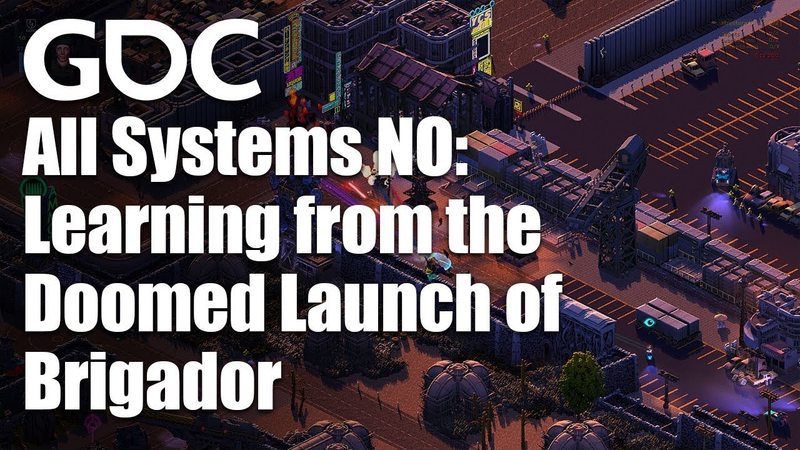
All Systems No: Learning from the Doomed Launch of Brigador
The debut of the indie title Brigador serves as a cautionary case study on the disconnect between critical acclaim and commercial viability.
- Marketing must prioritize conveying the subjective player experience over technical feature lists, as traditional trailers often fail to communicate a game's core value proposition.
- Personality-driven outreach and candid discourse on public forums can be highly effective, with such efforts accounting for approximately one-third of total sales for niche titles.
- Indie developers should prioritize intuitive onboarding over complex tutorials, as the majority of players drop off within the first two hours of gameplay.
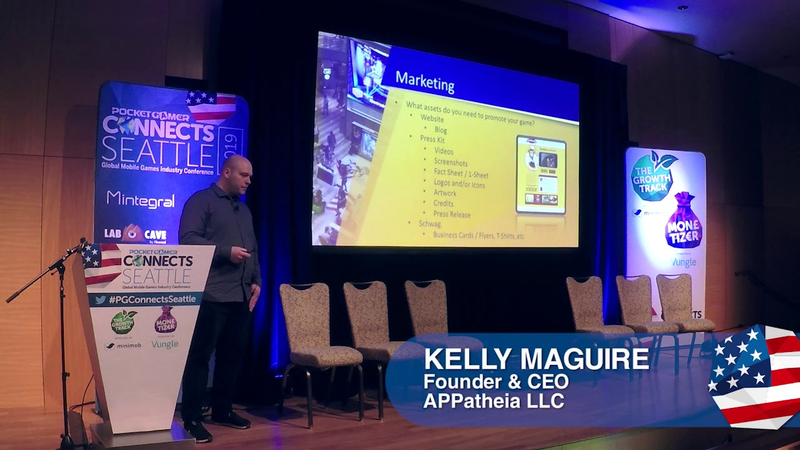
Marketing and business on a budget for indie developers
Indie game development requires a shift in perspective from viewing a project as a creative passion to treating it as a commercial product.
- Indie developers must treat marketing and monetization with the same level of rigor and resource allocation as the actual game development to succeed in a competitive market.
- Marketing strategy should focus on identifying a unique selling proposition and communicating it through concise, digestible content tailored to short attention spans.
- Paid acquisition should leverage sophisticated targeting on platforms like Facebook, Instagram, and Google, while utilizing cost-per-install networks and micro-influencers for scalable growth on limited budgets.