Game Studio
Company
Documents about Game Studio

So Your Kid Wants To Start A Game Studio...
Establishing a successful independent game studio requires a combination of psychological resilience, collaborative support, and a commitment to continuous learning.
- Success in independent game development is primarily driven by persistent, stubborn dedication rather than innate genius or technical perfection.
- Forming a partnership with at least one individual who possesses complementary skills is essential for sharing workloads and maintaining momentum during periods of doubt.
- Developers should prioritize achieving the final product over the pursuit of the most efficient or 'correct' technical methodology.
Starting A Full Time Indie Game Studio At 20 YEARS OLD
Establishing a successful indie game studio requires a strategic balance between creative ambition and the pragmatic humility to seek mentorship.
- Commercial viability in a saturated market is best achieved by pairing proven gameplay mechanics with a distinct visual style to target niche audiences rather than competing directly with AAA studios.
- Achieving significant sales benchmarks, such as surpassing 100,000 units, requires persistent iteration, high review scores, and a long-term commitment to project scalability rather than relying on an initial launch spike.
- Crowdfunding campaigns should avoid the common pitfalls of over-promising on stretch goals or platform-specific ports, as these commitments often lead to technical debt and compromised product quality.
My #1 Secret To Building An Indie Game Studio
Building a sustainable indie game studio relies heavily on cultivating a direct, mutually beneficial relationship with a community through consistent social media engagement and content creation.
- Building a sustainable indie studio depends on cultivating a direct, mutually beneficial relationship with a community to secure financial independence and creative autonomy.
- Platforms like TikTok and YouTube function as essential tools for gathering real-time feedback on specific game design elements, such as enemy mechanics and environmental details.
- Consistent content creation, specifically through weekly devlogs, serves as the foundation for building a loyal audience prior to launching a crowdfunding campaign.

We Raised a $10M Series A | Game Studio Funding Mistakes! 💰
The gaming industry is currently navigating a period of significant capital influx, characterized by an abundance of venture funding and rising early-stage valuations.
- Investors now prioritize operational discipline and proven scalability over conceptual pitches, reflecting a shift toward a power-law distribution where only category-defining businesses secure sustained funding.
- Seed rounds have evolved to mirror traditional Series A requirements, necessitating tangible proof points such as playable prototypes and clear infrastructure plans before capital is committed.
- Founders must avoid the pitfall of over-raising, as excessive capital can lead to unrealistic growth expectations and unnecessary equity dilution.
He Started A Game Studio In HIS DORM (Conversation with Conrad Grindheim)
Independent game development requires a transition from solo creation to disciplined studio management, where success is predicated on financial diversification and rigorous project planning.
- Achieve financial stability by diversifying revenue through secondary streams like freelancing, asset sales, and educational content to supplement primary game development.
- Prevent scope creep and project bloat by utilizing comprehensive game design documents and strictly enforced, time-bound milestones.
- Use crowdfunding platforms like Kickstarter to secure initial capital while simultaneously validating market interest before full-scale production.

How to Brand a New Game Studio with Joe Nickolls, President of Timbre Games
Establishing a new game studio in the competitive Vancouver market requires a strategic shift toward human-centric employer branding.
- Prioritizing a values-driven, human-centric culture over traditional corporate prestige allows new studios to differentiate themselves and attract high-quality talent in competitive markets like Vancouver.
- Timbre Games achieved a workforce composition that is 67% women by removing exclusionary, jargon-heavy language from recruitment processes and prioritizing transparent communication.
- Operational success is driven by the philosophy that internal culture directly dictates creative output, ensuring team cohesion translates into high-quality player-facing game design.
Why Sell Your Game Studio? And Why Not?
This analysis explores the strategic motivations behind studio acquisitions and examines the performance metrics of downloadable content (DLC) on the Steam platform.
- Studio founders are increasingly selling to mitigate the financial risks of scaling development, particularly when transitioning to AA or AAA projects with budgets exceeding $30 million.
- DLC demonstrates superior performance metrics compared to standalone games, featuring a significantly lower refund rate of 0.4% versus the 5% to 8% industry standard.
- Platform holders like Xbox and PlayStation are driving market consolidation to secure reliable content pipelines for subscription services such as Game Pass.

Silent Hill Creator Teams Up with Other Industry Legends to Form Bokeh Game Studio
Bokeh Game Studio was established in Tokyo on August 13, 2020, by a trio of prominent industry veterans: Keiichiro Toyama, known for his work on the Silent Hill, Siren, and Gravity Rush franchises; Junya Okura; and Kazunobu Sato.
- Keiichiro Toyama, creator of Silent Hill, has founded an independent studio called Bokeh Game Studio alongside former colleagues Junya Okura and Kazunobu Sato.
- The studio was officially established on August 13, 2020, following Toyama's departure from Sony’s Japan Studio.
- The founding team consists of CEO and Creative Director Keiichiro Toyama, COO Kazunobu Sato, and CTO Junya Okura, all of whom previously worked on titles such as Silent Hill, Siren, and Gravity Rush.

How To Start A Game Studio (LEGALLY)
Establishing a game studio as a Limited Liability Company (LLC) serves as a critical step for independent developers to manage legal risks and tax obligations.
- Forming an LLC establishes a corporate veil that protects an owner’s personal assets from business-related lawsuits, including claims of negligence or tort liability.
- LLCs utilize pass-through taxation, which prevents the double taxation typically associated with corporations by taxing profits at the individual owner level.
- Developers can reduce their tax burden by deducting legitimate business expenses, such as game development costs, bug fixing, and operational overhead, from their gross income.


Paradox Interactive Interim Report: January–September 2020
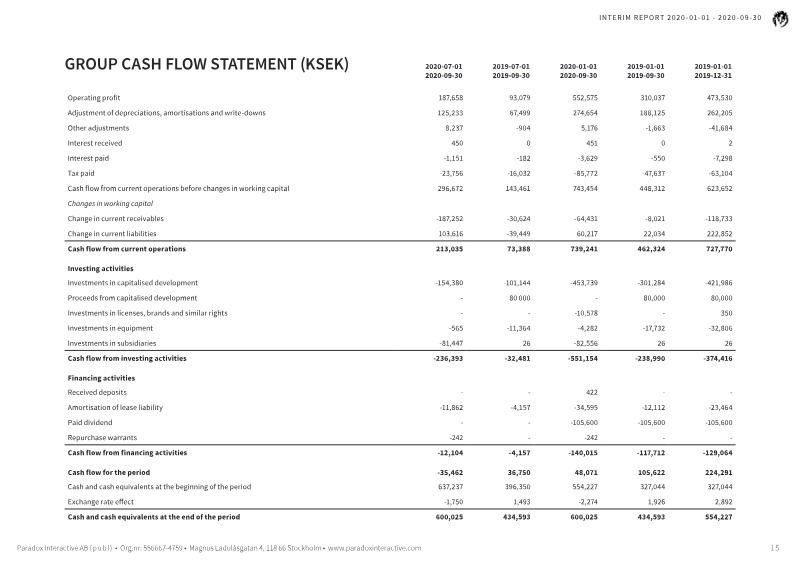
Paradox Interactive experienced substantial financial growth during the first nine months of 2020, characterized by a 50 percent increase in revenue to MSEK 1,360.1 and a 78 percent rise in operating profit compared to the previous year.
- Paradox Interactive reported a 50% revenue increase to MSEK 1,360.1 and a 78% rise in operating profit for the first nine months of 2020.
- Third-quarter revenue surged 75% to MSEK 494.8, driven primarily by the successful launch of Crusader Kings III.
- The company expanded its internal development capacity by acquiring Playrion Game Studio and Iceflake Studios.
Starting a New Game Studio | 3 CEOs Talk Funding!
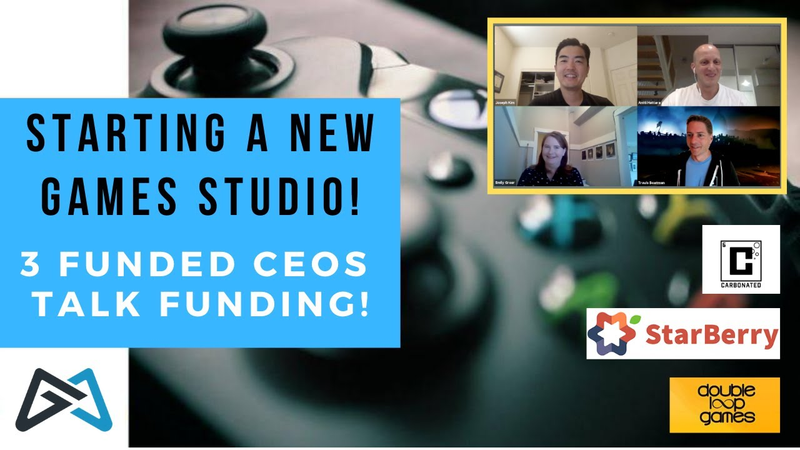
The current landscape for launching a game studio is exceptionally favorable, driven by a rapidly expanding global market, the democratization of development tools, and a surge in venture capital interest.
- Founders must align their long-term business strategy with their chosen funding model early, choosing between bootstrapping for creative independence or seeking venture capital for mass-market scaling.
- Financial planning for new studios requires a 50 percent capital buffer to effectively mitigate risks associated with development delays.
- Investors prioritize teams that demonstrate concrete progress through playable prototypes, making the fundraising process a relationship-driven and time-intensive endeavor.
Game Studio Leadership: You Can Do It
The primary role of a game studio leader is to serve as a protective buffer against external chaos, allowing creative teams to focus entirely on the development process.
- The primary function of a studio leader is to act as a protective buffer, shielding creative teams from external chaos to ensure focus on the development process.
- Leadership should prioritize team composition over rigid top-down planning, allowing the collective expertise of talented individuals to shape the studio's product vision.
- As studios scale, leaders must transition from direct game creation to organizational design, implementing structured feedback loops and clear career paths to replace informal communication.