Game Studio
Company
Documents about Game Studio

TWIG #395: Xbox Prices Explode, Roblox's Worst Day Ever, and Merge Eats Puzzle
The global gaming industry is currently navigating a period of significant structural volatility, characterized by rising hardware costs, shifting platform economics, and the rapid evolution of mobile subgenres.
- A global memory supply crisis, driven by AI data center demand, has forced Microsoft to increase Xbox console prices by up to 50% in European markets.
- Roblox has withdrawn its full-year financial guidance for the first time, as a strategic pivot toward long-term retention over immediate monetization led to a sharp decline in stock value and average bookings per user.
- The mobile puzzle market is shifting from traditional 'Match 3' games to 'Merge 2' titles, driven by standardized live operations and aggressive user acquisition strategies from Eastern publishers.
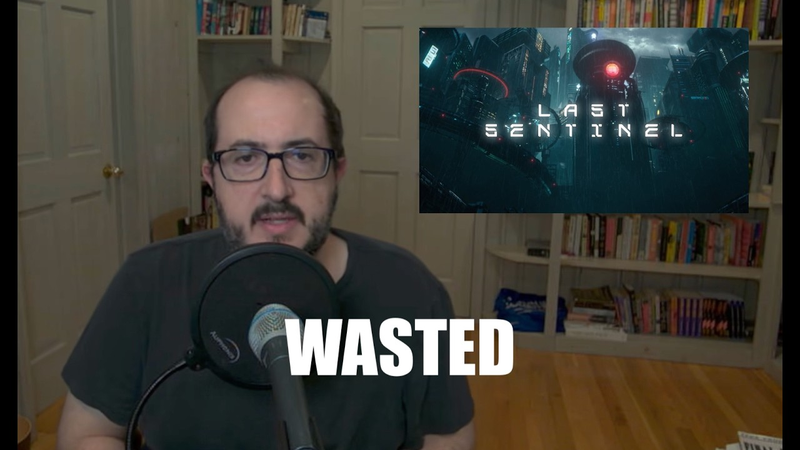
How One Game Studio Wasted Six Years Trying To Beat Grand Theft Auto
The collapse of Lightspeed LA’s ambitious project, Last Sentinel, serves as a cautionary tale regarding the challenges of replicating the success of established industry giants.
- Lightspeed LA, founded in 2020 by former Rockstar San Diego head Steve Martin and backed by Tencent, failed to deliver its open-world cyberpunk game 'Last Sentinel' after six years of development.
- The project was cancelled and 80 staff members were laid off following a failed 2026 playtest that resulted in an unmet ultimatum from Tencent.
- The studio struggled to bridge the production gap between its team of a few hundred employees and the 2,000-person workforce typically required to build high-fidelity, open-world titles like Grand Theft Auto.
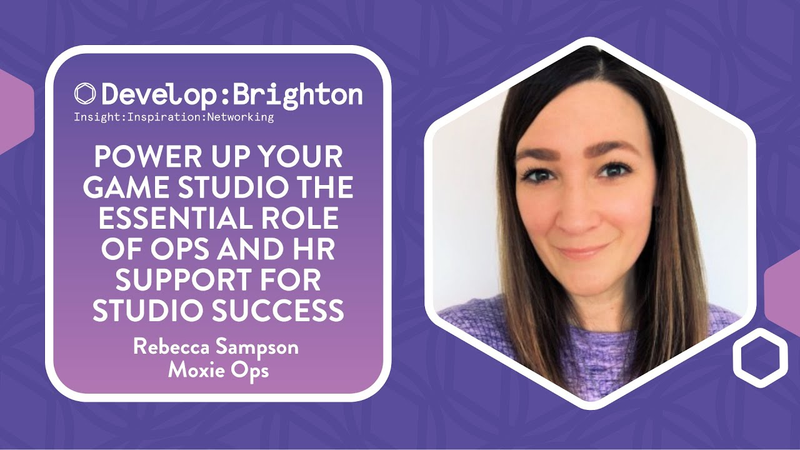
Power Up Your Game Studio: The Essential Role of Ops and HR Support for Studio Success
Game studio founders frequently encounter severe burnout by attempting to balance creative direction with the complex demands of administrative, financial, and human resources management.
- Integrating Operations and HR support early in a studio's lifecycle reduces leadership stress by 33% and increases confidence in business potential by 30%.
- Founders often experience burnout by attempting to manage all administrative tasks; delegating these responsibilities to specialists allows leadership to focus on core game development.
- Essential operational pillars include managing legal compliance, NDAs, contracts, cash flow, budget procurement, and health and safety policies.
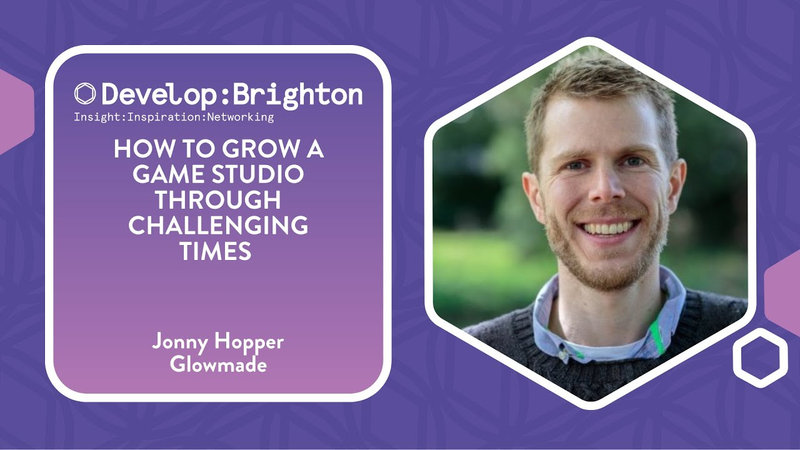
How to Grow a Game Studio Through Challenging Times | Develop:Brighton 2024
Sustaining a game studio through long-term industry volatility requires a disciplined balance between creative ambition and pragmatic business operations.
- Studio growth requires a balance of three core pillars: a clear plan, a consistent pot of cash, and the right people to execute the vision.
- Glowmade scaled from three founders in 2015 to a team of over 60 developers by 2024, navigating significant financial volatility and project pivots along the way.
- Maintaining a studio culture based on core values—specifically 'nurture,' 'fulfill,' and 'be brave'—was critical to retaining staff during the 2020 pandemic-era furloughs.

What Does a “Good Game Studio Culture” Actually Look Like in 2025?
The modern game studio landscape is characterized by a fundamental misunderstanding of organizational dynamics, where the focus on abstract concepts of culture often masks a failure to implement effective institutional policy.
- Organizational health in 2025 is driven by structural design, reporting hierarchies, and incentive systems rather than abstract cultural values or team-building exercises.
- Effective studio leadership relies on clear, codified policies regarding performance, hiring, and firing to dictate behavior, as culture is an emergent outcome of these institutional rules.
- Investor confidence is currently prioritized toward leadership teams with proven track records rather than novel technologies, reflecting a broader skepticism toward high-risk ventures like AAA Web3-integrated shooters.
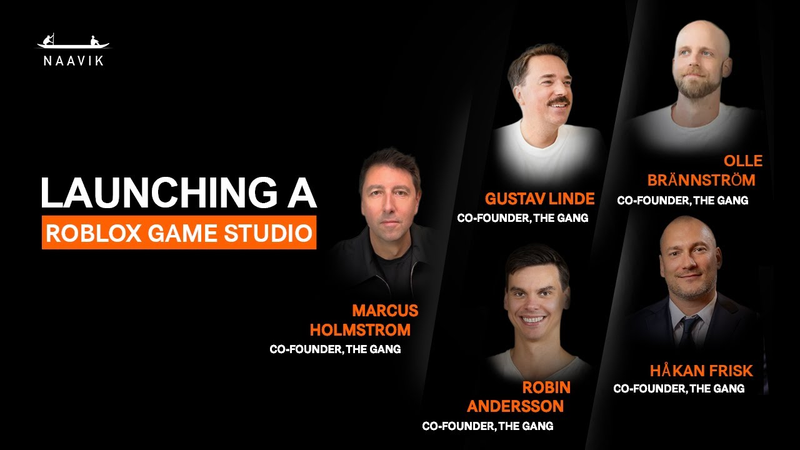
Launching a Roblox Game Studio with The Gang
The Gang has evolved from a five-person startup into a 220-person organization by capitalizing on the rapid development capabilities of the Roblox platform.
- The Gang scaled from a five-person startup in 2020 to a 220-person organization by leveraging the rapid development cycles of the Roblox platform.
- The studio employs a dual-track business model that balances revenue-stable branded experiences for partners like Netflix and the NHL with the development of original IP.
- Operational strategy mandates a strict separation between client-facing brand work and original game development to maintain focus and discipline.
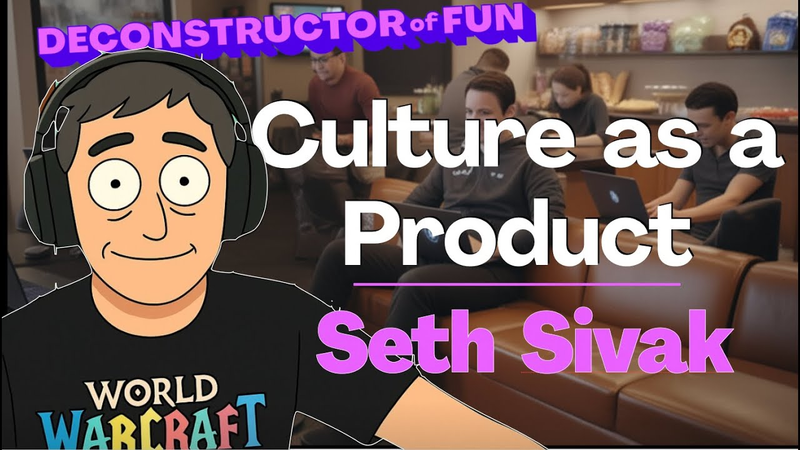
Product Managing Game Studio Culture with Seth Sivak (ex-World of Warcraft Boston Studio Head)
Company culture functions as a critical, actionable tool for organizational success rather than a passive byproduct of hiring or branding.
- Treat company culture as a product that requires constant iteration and intentional design rather than a passive byproduct of hiring.
- Avoid the 'busyness trap' by ensuring team efforts are aligned with strategic outcomes that drive product-market fit rather than just efficient execution of tasks.
- Define culture through explicit incentive structures, as rewarding behaviors like heroic crunch creates unsustainable norms that damage long-term morale.

Scaling 100+ Mobile Games: PSV Game Studio Shows How They Use Tenjin
PSV Game Studio, a Cyprus-based mobile gaming firm established in 2014, manages a portfolio of over 250 titles and provides publishing, marketing, and monetization services for 20 external gaming studios.
- PSV Game Studio manages a portfolio of over 250 titles and provides publishing services for 20 external studios, utilizing Tenjin as its centralized data infrastructure to scale operations.
- The studio tracks day-zero return on ad spend (ROAS) as its primary benchmark to evaluate the success of user acquisition campaigns across more than 100 active applications.
- Analytical strategies include granular performance breakdowns by channel, campaign, and geographic region to identify high-performing segments for scaling and underperforming assets for adjustment.
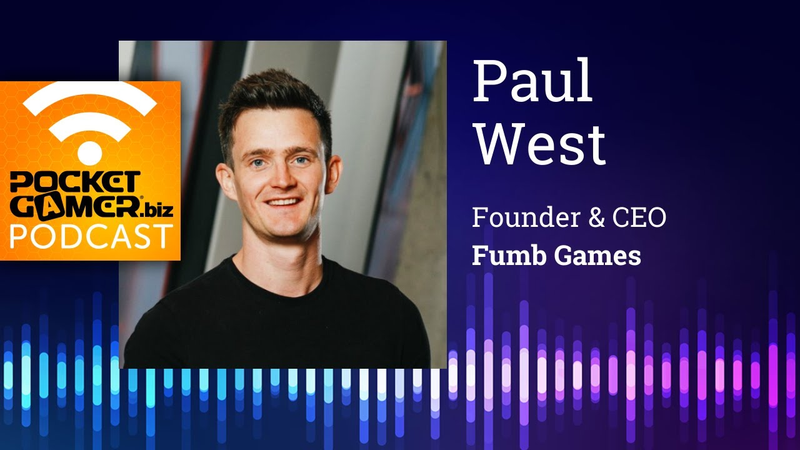
How This Small Game Studio 10x Their Revenue in an Industry Downturn
Fumb Games achieved a tenfold increase in revenue during a challenging 2024 industry downturn by focusing on a strategy of iterative testing, transparent monetization, and operational efficiency.
- Fumb Games achieved a 10x revenue increase in 2024 by focusing on iterative testing and operational efficiency rather than relying on a single breakthrough.
- The studio’s revenue model is anchored by a hybrid approach, with approximately 70% of total income generated through advertising.
- Fumb Games tested roughly 100 game concepts over a two-year period to identify high-performing mechanics and scale successful titles like Bitcoin Miner and Idol Miner.
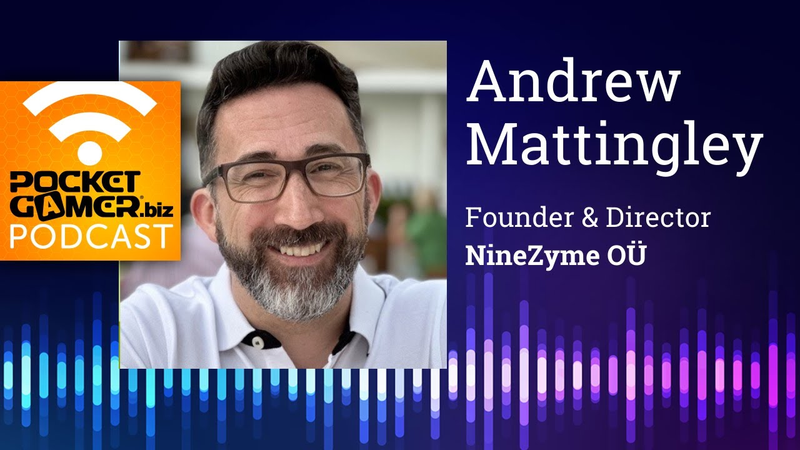
How to Score Treasure as An Indie Game Studio
The mobile gaming industry presents significant challenges for small independent studios, particularly regarding user acquisition and monetization strategy.
- NineZyme OÜ, a four-person indie studio, successfully modernized the classic tile-sliding puzzle genre by integrating character-driven narratives and vibrant animations in their debut title, Tiles Tales: Pirates.
- Indie studios must remain agile by prioritizing direct experimentation and data-driven testing of monetization models over following generic industry-standard advice.
- Transitioning from a premium to a freemium model proved necessary for NineZyme OÜ to broaden audience reach and better align with player behavior.
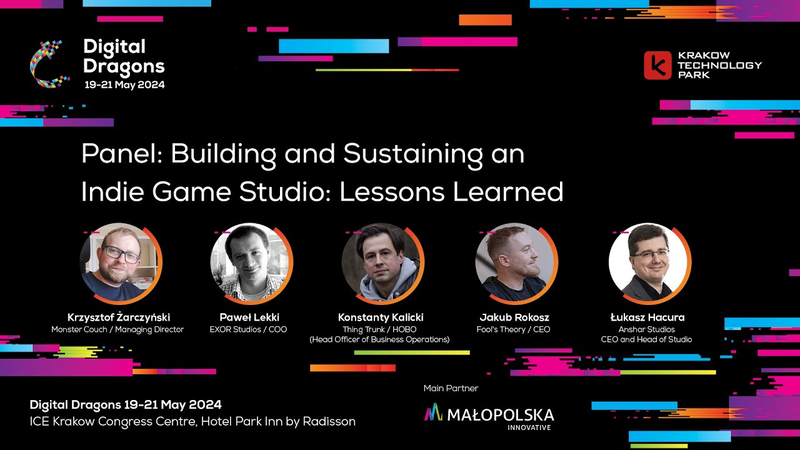
Panel: Building and Sustaining an Indie Game Studio: Lessons Learned
Achieving long-term viability in the independent game industry requires a strategic blend of financial discipline and operational agility.
- Studio sustainability is best achieved through a 'brick-by-brick' approach, where profitable external engineering projects or contract work fund the development of original IP to avoid reliance on publishers.
- Scaling a studio beyond 8 to 15 employees creates significant communication friction, requiring a shift from informal, open-space collaboration to structured, remote-first communication protocols even for on-site teams.
- To maintain lean operations, studios should prioritize automation and internal technology development, such as building proprietary engines and scripting tools to reduce repetitive manual tasks during production.
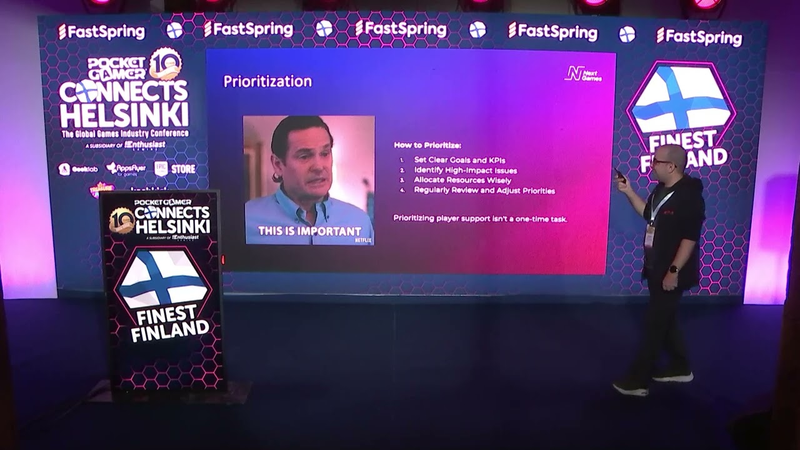
Session: The Early Agent Gets the Worm, André Mendes, Next Games, a Netflix Game Studio
Effective player experience (PX) management in game development requires a proactive, integrated approach that begins during the pre-production phase.
- Next Games achieves a 91% FAQ deflection rate, ensuring the vast majority of players resolve issues without needing to open a support ticket.
- The studio utilizes a tiered automation strategy consisting of 51% fully automated responses, 48% partially automated data-gathering workflows, and less than 1% fully manual intervention.
- Player Experience (PX) teams should be integrated during the pre-production phase to allow sufficient time to understand game mechanics, define support workflows, and align with development goals before launch.