Game Studio
Company
Documents about Game Studio
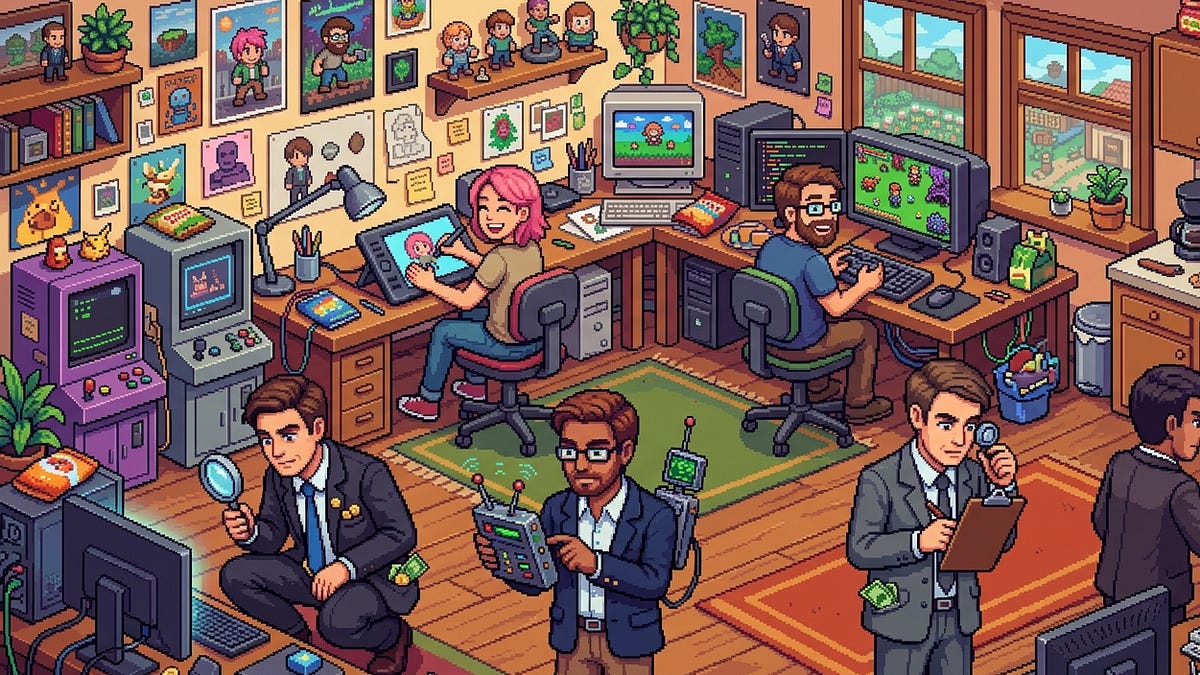
Game Studio Due Diligence: Publisher and Investor Perspectives
Investors and publishers evaluate game studios through a comprehensive framework that balances creative output with organizational stability.
- Game studio due diligence involves evaluating seven key areas: the game, the team, leadership, culture, technology, work systems, and finances.
- Self-assessment is crucial for studio founders because they are uniquely positioned to address issues uncovered and often lack objective perspective due to emotional investment.
- Key cultural metrics include eNPS (above +20 is good, +40 is strong), internal mobility (healthy studios fill 15-20% of roles internally), and crunch (IGDA 2023 survey found a third of developers still crunch, with output per hour falling past 50 hours/week).

Senegal’s Teranga Game Studio Selected for EVA 2026
Senegal’s Teranga Game Studio has been selected to participate in the European Videogame Acceleration Program 2026 (EVA), becoming the sole African studio invited to this highly competitive initiative.
- Senegal’s Teranga Game Studio has been selected as the sole African representative for the European Videogame Acceleration Program (EVA) 2026.
- The EVA 2026 program, hosted by Spielfabrique, provides independent studios with mentorship, networking, and business development support to facilitate global market entry.
- Teranga Game Studio joins an international cohort of developers from France, Germany, the Czech Republic, and Canada.
To Prove We Haven't Reached AGI, the ARC Prize Foundation Built a Game Studio
The ARC Prize Foundation has established an internal game studio to develop the ARC-AGI-3 benchmark, a collection of 135 unique puzzle games designed to test the limits of current artificial intelligence.
- The ARC Prize Foundation created the ARC-AGI-3 benchmark, a collection of 135 unique puzzle games, to prove that current AI models lack true general intelligence.
- Top-tier AI models have failed to solve a single level of the ARC-AGI-3 set, scoring below 1% compared to consistent high performance by humans.
- The benchmark uses a tiered structure of 25 public, 55 semi-private, and 55 private games to prevent data leakage and memorization.

Tencent Closes TiMi Montreal Game Studio
Tencent has officially shuttered its TiMi Montreal studio, marking the end of a five-year operation that failed to release a single title.
- Tencent has officially closed its TiMi Montreal studio in February 2026, ending a five-year operation that failed to release any commercial titles.
- The studio was established in 2021 with a mandate to develop AAA, open-world, multi-platform games, but no internal projects reached the public during its tenure.
- The closure reflects a broader strategic retreat by major Chinese firms like Tencent and NetEase, which are scaling back international satellite studios that have not produced viable products.

Why Your Game Studio's Organizational Structure Is the Real Problem: Not Your Talent
Organizational structure, rather than a lack of individual talent, is the primary driver of inefficiency and failure in modern game studios.
- Traditional game studio structures, organized by craft silos (e.g., separate design, engineering, art departments), create significant friction, leading to endless iteration, communication breakdowns, and features that miss their mark.
- The core problem in many game studios is organizational structure, not a lack of talent; optimizing for craft silos instead of outcomes leads to inefficiencies where handoffs lose fidelity and original intent.
- An 'outcome team' framework, consisting of small (5-9 people), cross-functional units with clear missions, success metrics, and authority, significantly outperforms traditional specialized departments, reducing iteration timelines from 6-12 months to 2-4 months.

The AI-Native Game Studio: A New Blueprint for Team Structure
The rapid advancement of artificial intelligence necessitates a fundamental restructuring of game studios, moving away from traditional, siloed organizational models toward an "Organizational Meta."
- The 'Organizational Meta' is a framework for continuously reconfiguring roles, teams, and workflows to align with the evolving capabilities and constraints of AI.
- The atomic unit of an AI-native organization shifts from a specialized individual role, such as a frontend engineer, to a human-AI hybrid capability that combines creative judgment with AI-driven execution.
- AI-native teams should be smaller, faster, and cross-functional, potentially allowing a 5-person team to outperform a traditional 20-person team by reducing coordination overhead.

Theorycraft vs. Singularity 6: Is the Biggest Investment Thesis in Gaming at Risk?
The gaming industry is currently reevaluating a prominent investment thesis that favors funding veteran-led studios, particularly those founded by former Riot Games and Blizzard employees.
- The acquisition of Singularity 6 by Daybreak Game Studio has cast doubt on the investment thesis that veteran-led teams from companies like Riot and Blizzard are guaranteed successes, with rumors suggesting a minimal sale price that may wipe out common equity.
- Theorycraft has emerged as the new bellwether for the 'ex-Riot/Blizzard' investment thesis, with its upcoming title Supervive being closely watched to determine if such teams can effectively compete with and potentially cannibalize market share from established giants like League of Legends.
- Amazon Games is pursuing a strategy to become a top-tier publisher with eight titles in development, including high-profile projects like Tomb Raider and The Lord of the Rings, though its lack of a clear, unified strategy compared to Amazon's core business model remains a point of industry skepticism.

Agile Risk Management in the Game Studio
Agile risk management functions as a critical framework for modern game development, shifting the industry away from static, predictive planning toward iterative, adaptive workflows.
- Agile risk management should be treated as a proactive, strategic process that identifies both negative threats and 'positive risks'—opportunities that can drive project innovation and performance.
- Risks must be distinguished from issues: risks are future uncertainties that require planning and mitigation, while issues are current, tangible problems that require immediate resolution and stakeholder communication.
- Effective risk identification should utilize an 'if-then' format to clearly define the cause-and-effect relationship, allowing teams to better understand the potential impact on project timelines and costs.
Why Sell Your Game Studio? And Why Not?
This analysis explores the strategic motivations behind studio acquisitions and examines the performance metrics of downloadable content (DLC) on the Steam platform.
- Studio founders are increasingly selling to mitigate the financial risks of scaling development, particularly when transitioning to AA or AAA projects with budgets exceeding $30 million.
- DLC demonstrates superior performance metrics compared to standalone games, featuring a significantly lower refund rate of 0.4% versus the 5% to 8% industry standard.
- Platform holders like Xbox and PlayStation are driving market consolidation to secure reliable content pipelines for subscription services such as Game Pass.

Silent Hill Creator Teams Up with Other Industry Legends to Form Bokeh Game Studio
Bokeh Game Studio was established in Tokyo on August 13, 2020, by a trio of prominent industry veterans: Keiichiro Toyama, known for his work on the Silent Hill, Siren, and Gravity Rush franchises; Junya Okura; and Kazunobu Sato.
- Keiichiro Toyama, creator of Silent Hill, has founded an independent studio called Bokeh Game Studio alongside former colleagues Junya Okura and Kazunobu Sato.
- The studio was officially established on August 13, 2020, following Toyama's departure from Sony’s Japan Studio.
- The founding team consists of CEO and Creative Director Keiichiro Toyama, COO Kazunobu Sato, and CTO Junya Okura, all of whom previously worked on titles such as Silent Hill, Siren, and Gravity Rush.
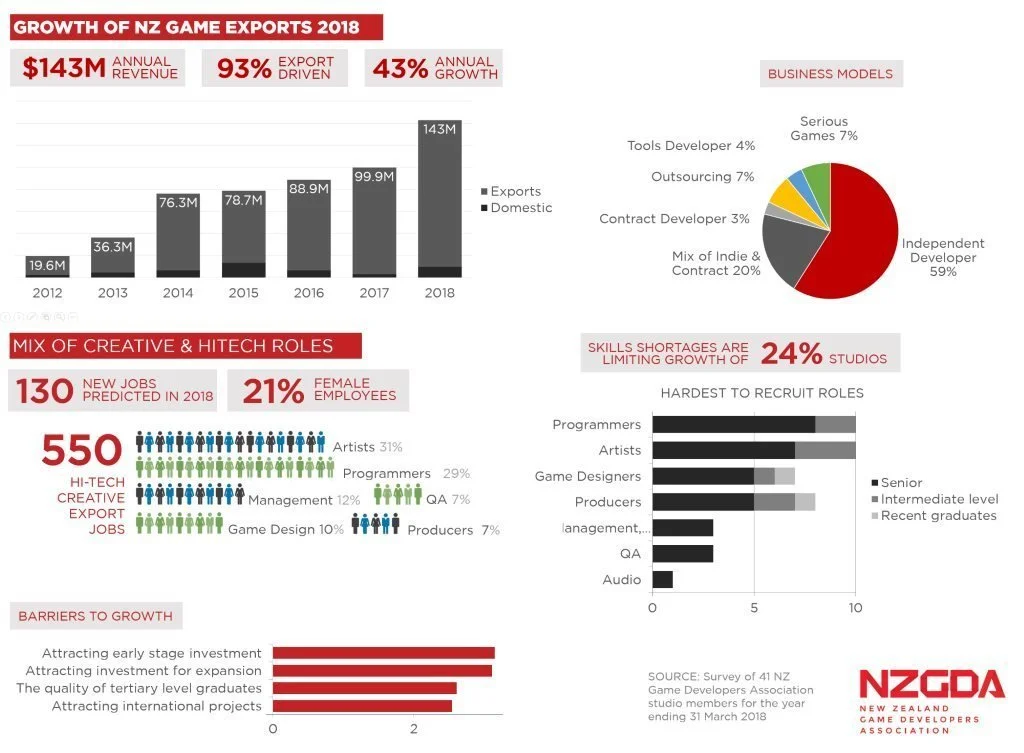
NZ Game Studio Revenues: 2018 Survey
The New Zealand game development sector experienced significant growth during the 2018 financial year, with total studio revenues reaching a record $143 million.
- New Zealand game studio revenue grew 43% year-over-year to a record $143 million for the financial year ending March 31, 2018, with 93% of that total derived from exports.
- The industry is highly concentrated, as the ten largest studios—averaging eight years of operation—account for 94% of total revenue and 81% of industry employment.
- Developing original intellectual property remains the primary revenue driver at 77% of total earnings, significantly outpacing contract work at 12% and in-game advertising at 7%.
7 Characteristics of a Successful Game Studio
The global gaming industry is currently navigating a period of significant structural transformation, characterized by a cooling of startup funding, evolving platform regulations, and the rapid integration of artificial intelligence into creative and operational workflows.
- Gaming startup funding is currently experiencing its weakest year in a decade, while capital is increasingly shifting toward consumer apps.
- Successful game studios like Voodoo maintain high-velocity production pipelines, producing up to 2,000 prototypes annually to identify and scale hits.
- Strategic M&A in the gaming industry, such as Loom Games' $1B sale to Scopely, is heavily dependent on relationships established years before a deal is finalized.